





The White House Tetris clone has vanished, leaving four other games on the government’s online arcade. The Tetris Company publicly denied helping create Build the Wall: Zombie Border Siege and raised copyright concerns. By September 8, news outlets reported that players could no longer access the block-stacking game. Neither side has confirmed why it disappeared. What happened between the company’s warning and the empty space on Arcade.gov? [1, 2]
White House Tetris Clone Vanishes
Players looking for Build the Wall on September 8 found that the White House arcade had lost one of its five games. IGN reported its absence less than a week after launch. Rock Paper Shotgun described a 404 error (a page-not-found message) where the game had been. The rest of the collection remained available, so visitors could still enter the arcade and play its other titles. [1, 3]
PC Gamer narrowed the timeline through the Internet Archive’s Wayback Machine, which stores snapshots of websites. According to its report, the game still appeared on the site around 9 p.m. Eastern Time on September 7. Reporters noticed its absence the next day. The exact removal time remains unknown. The archive observation establishes a recent appearance, without revealing who ordered the change or what prompted it. [4]
The White House had promoted the arcade on social media with references to familiar gaming brands, including Nintendo and Sega. Its block-stacking entry soon drew a response from the company behind the game it resembled. The White House Tetris clone then disappeared while the other four titles stayed online. The timing drew attention across gaming outlets, but the company had announced no specific enforcement plan in its public statement. [1]
Tetris Distances Itself
The Tetris Company addressed fans directly in its social media response. It described its community as a place where play brings people together across differences. Then it denied any role in creating the White House game. GamesIndustry.biz reported both that denial and the company’s warning that it takes copyright infringement seriously. The company did not present the arcade entry as an authorized collaboration. [5]
The company also spoke to The Verge, according to IGN and Dexerto. It pointed to more than 40 years of people playing Tetris across generations and cultures. Its spokesperson described the familiar objective: arrange falling pieces with enough care to clear lines. The company said it was reviewing the matter. That response connected its objection to the game itself, alongside its message about bringing players together. It offered no timetable for completing the review and announced no specific legal action in the statements those outlets reproduced. Meanwhile, players had already noticed a striking difference between the White House Tetris clone and the puzzle they knew. [1, 2]
The blocks kept falling. According to IGN’s account of player reports, completed rows stayed on screen until the pile reached the top. [1]


Blocks Become a Border Wall
Build the Wall turned falling blocks into a barrier along the southern border. GamesIndustry.biz described players stacking pieces to stop characters crossing it. The full title, Build the Wall: Zombie Border Siege, made the immigration theme explicit. Dexerto likewise described a zombie siege and a game-ending condition when blocks reached the top. The familiar puzzle format carried the administration’s border message into the player’s immediate task. [2, 5]
IGN reported that players could not see a way to win. In their accounts, filling a row failed to clear it, so each new piece consumed more of the screen. The pile kept growing toward game over. Those reports describe the experience players encountered; they do not establish whether developers intended that behavior. IGN did not identify an explanation from the White House for the apparent gameplay problem. [1]
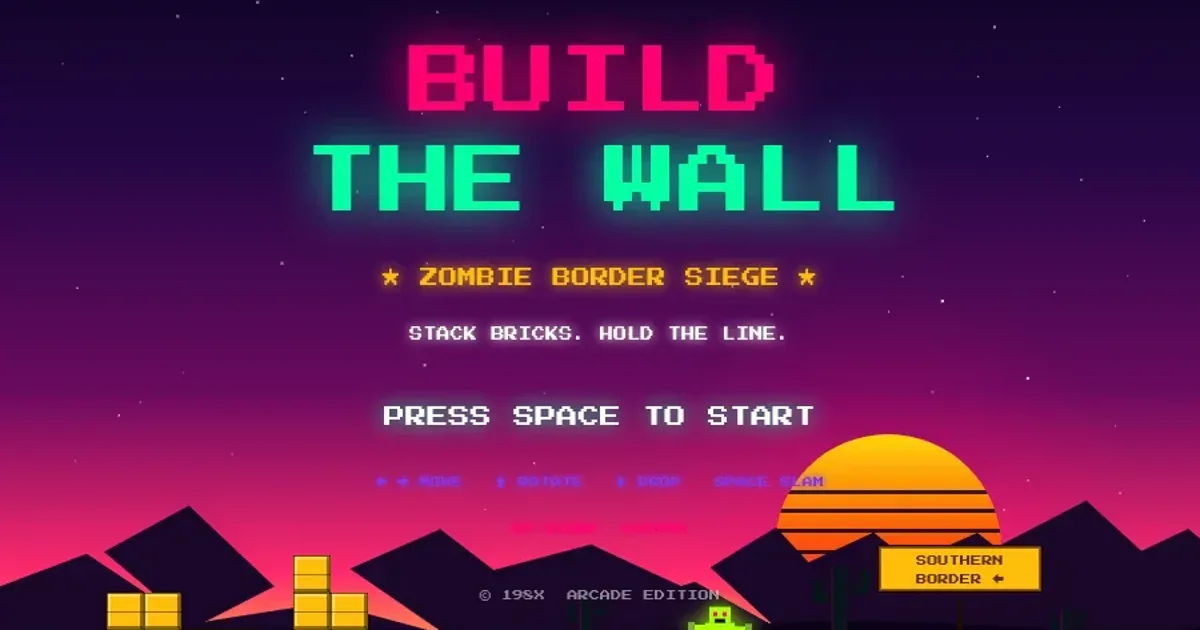
Tetris had emphasized clearing lines when it explained its position to The Verge. The White House version asked players to keep building a wall, while reports described rows that would not disappear. Even before the removal, the game therefore faced criticism over both its political premise and how it played. When the White House Tetris clone vanished, however, neither side said whether gameplay complaints had influenced the decision. [1, 2]
Four Games Stay Online
Visitors still had four choices after Build the Wall disappeared. Dexerto listed Flappy Bill, a game resembling Flappy Bird; Supply Line, which draws on Tapper; and Rio Run, which follows Snake-like gameplay. Trump Savings Tycoon rounded out the collection with a money-collecting task tied to Trump Accounts. The arcade itself remained online. Rock Paper Shotgun also reported a placeholder promising another game, without identifying what would fill it. [2, 3]
The White House’s border theme extended beyond its block-stacking game. GamesIndustry.biz described Rio Run as a Snake-style parody that put players in the role of Border Patrol at the southern border. Rock Paper Shotgun described Flappy Bill’s playable bird as a bald eagle. The remaining titles continued to pair recognizable game formats with the administration’s messaging, even after the entry that drew Tetris’s response disappeared. [3, 5]
Gaming properties had already featured in government posts before the arcade launched. GamesIndustry.biz recalled the Department of Homeland Security’s use of Halo and Pokémon material. The Pokémon Company said it had neither helped create or distribute the relevant content nor granted permission. DHS (the Department of Homeland Security) had separately told a journalist it intended to keep using familiar entertainment references to reach audiences. How far would another company’s objection change that approach? [5]
The Removal’s Cause Remains Unclear
Several outlets linked the disappearance to the warning in their coverage. Kotaku suggested that the copyright message, and possibly a lawyer’s letter, had prompted the removal. A lawyer’s letter remains speculation. Dexerto explicitly reported that neither side had confirmed direct contact or a cease-and-desist letter (a formal demand to stop an activity). The available reporting establishes the sequence of events, without proving what caused the White House to act. [2, 6]
PC Gamer also cautioned that no confirmed connection tied the company’s response to the takedown. Its reporter contacted both The Tetris Company and the White House for an explanation. IGN likewise said it had requested comment. Neither supplied a response explaining the removal in the reports provided here. The White House Tetris clone’s disappearance therefore leaves the company’s review and any private discussions between the parties unresolved. [1, 4]
The Tetris Company has publicly denied involvement, while the White House arcade has stopped offering the game. An explanation from either party could establish whether copyright concerns drove that change. A confirmed account of any direct contact would also clarify what followed the public warning. For now, the unanswered question sits with the two organizations: who decided to remove Build the Wall, and why? [1, 2]
- ONLINE NEWS Cripe, M. (2026, September 8). White House Build the Wall game pulled offline just days after official response from Tetris. IGN. [Article Link]
- ONLINE NEWS Gwilliam, M. (2026, September 8). White House pulls Tetris clone from online arcade after legal threat. Dexerto. [Article Link]
- ONLINE NEWS Warren, M. (2026, September 8). Trump regime’s Tetris ripoff yanked from White House website after Tetris Company declare they “take copyright infringement very seriously”. Rock Paper Shotgun. [Article Link]
- ONLINE NEWS Chalk, A. (2026, September 8). Just days after The Tetris Company warned that ‘we take copyright infringement very seriously,’ the Tetris clone in the White House Arcade suddenly disappears. PC Gamer. [Article Link]
- ONLINE NEWS McEvoy, S. (2026, September 8). The Tetris Company says it was “not involved in the creation” of White House parody, takes “copyright infringement very seriously”. GamesIndustry.biz. [Article Link]
- ONLINE NEWS Zwiezen, Z. (2026, September 8). Tetris clone removed from White House site following copyright reminder. Kotaku. [Article Link]


1 comment