





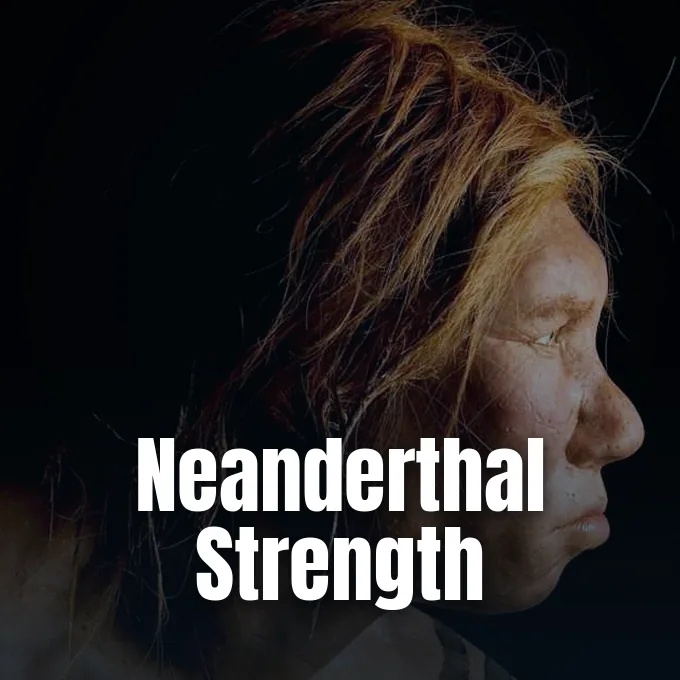
Fossil hunters in the nineteenth century framed Neanderthals as clumsy brutes who lost out to smarter human arrivals. How did their bodies cope with cold climates and dangerous prey? Neanderthal strength gave them distinct bone leverage over early humans, but their daily survival relied on close social cooperation and mutual care during periods of hardship [1]. Excavations in Eurasia reveal that they nursed sick companions, shared hunted meat, and buried their dead with clear purpose [6].
Skeletal Evidence of Neanderthal Strength
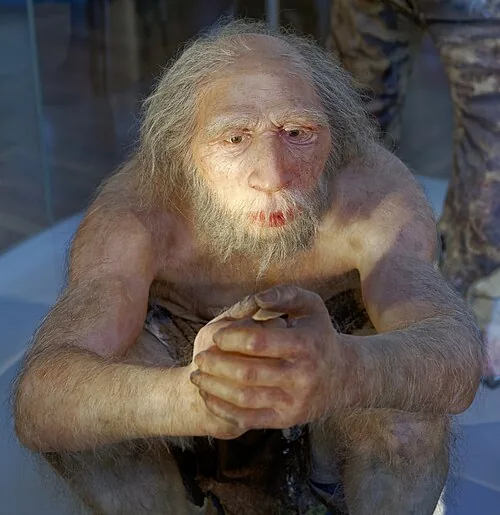
Duke University researcher Steven E. Churchill, who published the authoritative book Thin on the Ground, points out that Neanderthal skeletons were shaped for heavy manual labor. “They had both larger muscles and greater leverage for those muscles,” Churchill said. Their limb bones were noticeably thicker than those of early humans, with wide muscle attachment sites running along the shafts. Libby W. Cowgill, an anthropologist at the University of Missouri, studied their muscular builds and compared them to weightlifters. “They’re just incredibly jacked. They’re very, very muscular relative to their size,” Cowgill said, adding that an ordinary person today would lose easily against a Neanderthal in a wrestling match. Churchill said their thick arm bones provided huge mechanical leverage during daily chores [1].
Upper-body asymmetry was particularly marked. A Neanderthal’s right arm was often up to 50 percent bigger than the left arm. Cowgill said the only living people with similar asymmetry are professional tennis players. Biomechanical tests showed hide scraping caused this arm build [1]. Neanderthal strength enabled these repetitive tasks. Daily chores shaped their arms.
Neanderthals stood between 4 feet 9 inches and 5 feet 6 inches tall, weighing between 140 and 180 pounds [4]. Their stocky bodies and short limbs helped them retain body heat during glacial cold snaps in Ice Age Europe. Paleoanthropologist Bence Viola at the University of Toronto said early humans were also robust. “We are sedentary today, most of us anyway, and so we are much less strong,” Viola said [1].
Physical Demands of Ice Age Hunting
Neanderthals hunted the largest animals of the Pleistocene epoch. At Neumark-Nord in Germany, researchers excavated the butchered skeletal remains of massive straight-tusked elephants dating back 125,000 years, revealing organized group processing of giant Pleistocene herbivores. These adult bull elephants weighed up to 13 metric tons, making them roughly three times heavier than living African elephants and demanding coordinated butchery efforts. Processing an elephant carcass demanded coordinated group tactics, large stone tools, and days of heavy muscular labor. Evidence from Gröbern and Taubach shows that elephant hunting was a regular habit on the North European plain [9].
Hunters tackled dangerous animals at close quarters. Horse bones found in Germany display impact fractures caused by close-range thrusting spears. Standing near wounded game carried high risks of bone fracture [8]. Excavations at Abric Pizarro in Spain by Sofia Samper Carro of the Australian National University showed that Neanderthals also captured fast-moving small prey like rabbits, freshwater trout, and tortoises [6].
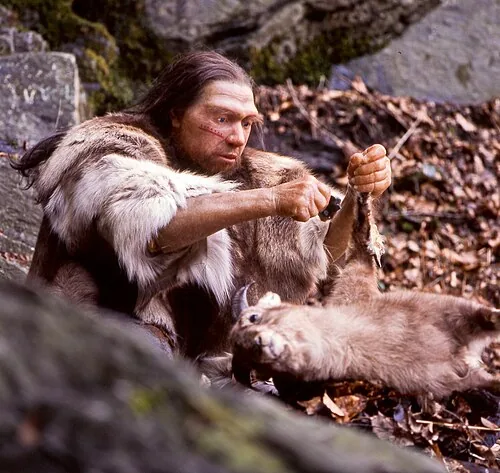
Constant butchery, hide scraping, and woodworking left unmistakable skeletal and dental signatures across dozens of excavated Neanderthal fossils discovered throughout Europe and western Asia. Scratch marks show that hunters used their front teeth like a vice to hold animal skins while working them with flint scrapers. This laborious work turned animal skins into warm clothes and shelter coverings [4]. Neanderthal strength was grounded in these repetitive survival tasks rather than senseless violence. Archaeological evidence shows that groups returned to seasonal butchering camps near stream banks to harvest game [5].

Cranial Volume and Brain Organization
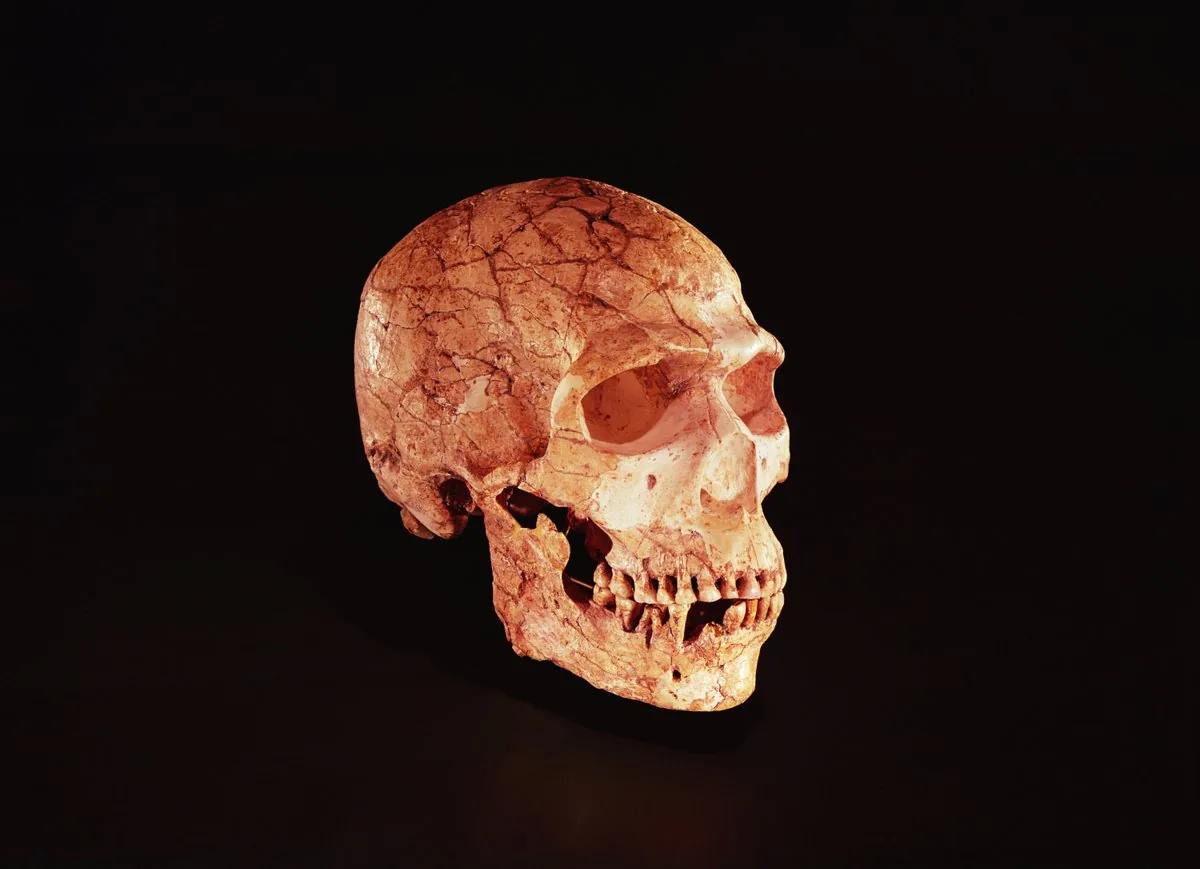
Neanderthal craniums were long and low, featuring heavy brow ridges, midface projection, and an occipital bun at the rear. Their endocranial volume averaged roughly 1,410 cubic centimeters, slightly exceeding the early human average of 1,350 cubic centimeters found at Jebel Irhoud in Morocco. Cranial volume alone does not determine intellectual ability. Their heavier bodies required larger brains simply to regulate muscle mass and somatic functions. A large portion of their brain volume was committed to the visual cortex, helping them process critical visual details in the low light of northern Eurasian latitudes [7].
A 2026 study led by Tom Schoenemann at Indiana University Bloomington evaluated whether cranial shape differences indicated meaningful cognitive gaps. Using digital deformation mapping, Schoenemann’s team estimated brain region volumes in Neanderthals and compared them with Han Chinese and European population samples to test anatomical variation [2]. For nine of the thirteen examined regions, differences between the two human groups were actually larger than those between Neanderthals and living people [3]. “I don’t think we would detect a difference if they were around today,” Schoenemann said [2]. “I think they would fit comfortably within the range of cognitive functioning that we see among modern humans.”
Biomechanical specialist Naomichi Ogihara from the University of Tokyo argued that even minor average differences in cerebellar volume could carry evolutionary meaning across dozens of generations [2]. However, their speech anatomy was fully developed. Neanderthals possessed a hyoid bone identical to ours and carried the speech-related FOXP2 gene. Could they communicate effectively? Their vocal structures certainly enabled speech [8].


Care for Injured and Vulnerable Members
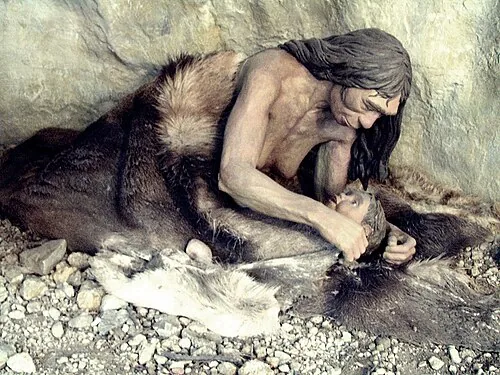
Fossil discoveries show that Neanderthal communities provided sustained care to injured companions. While Neanderthal strength supported heavy hunting, groups also protected disabled peers. At Shanidar Cave in Iraq, researchers uncovered Shanidar 1, an adult male who had survived debilitating trauma. He had lost sight in his crushed left eye socket, while his right lower arm had withered away following a traumatic fracture and subsequent amputation. Joint degeneration also made walking difficult. He survived for years because his companions shared food and supported his daily needs [8].
At La Chapelle-aux-Saints in France, excavators found an older Neanderthal skeleton dating to roughly 50,000 years ago. The individual suffered from severe spinal arthritis and had lost most of his molars, preventing him from chewing tough meat or nuts without group assistance [8]. French researcher Marcellin Boule used this deformed skeleton in 1908 to popularize the stereotype of a hunched caveman [6]. Modern analyses show his group actually dug a grave to bury him with care [8]. Eboni Westbury of the Australian National University noted that early stereotypes ignored their intelligence. The discovery of a Neanderthal child with Down syndrome confirms that community members provided sustained care to vulnerable youths who needed extra daily support to survive [6].
Chemical analyses of dental plaque from El Sidrón in Spain revealed traces of poplar bark and yarrow. These medicinal plants contain natural anti-inflammatory compounds, suggesting intentional and targeted self-medication by an Ice Age hunter suffering from a painful dental abscess and intestinal parasites [8]. At Le Rozel in Normandy, France, 257 footprints show children traveling safely with adults within close family groups [10].
Symbolic Culture in Archaeological Sites
Symbolic expression was once thought to belong only to our direct ancestors. That boundary disappeared when uranium-thorium dating tested red mineral pigments preserved on subterranean cave walls at the Spanish sites of La Pasiega, Maltravieso, and Ardales. The geometric patterns and hand stencils dated to at least 65,000 years ago. Early humans did not enter Western Europe until 45,000 years ago, proving Neanderthals made this art. Their artists selected mineral ochre to create images deep inside dark underground caverns [8].
Personal ornamentation appeared at several settlements in Southern Europe. In Krapina, Croatia, excavators recovered eight white-tailed eagle talons bearing deliberate cut marks and polish dating to 130,000 years ago. Researchers believe hunters wore these claws as symbolic pendants [8]. Neanderthals in Cueva del Sidrón in Spain also collected marine shells, drilling holes and coating them with bright pigments [5]. In addition, they cooked birch bark to produce sticky pitch for hafting stone points to spears. Archaeologist Rebecca Wragg Sykes at the University of Liverpool, author of Kindred, highlighted this birch tar production as clear evidence of pyrotechnic skill and chemical planning [4].
Deliberate burials at Shanidar and La Chapelle-aux-Saints prove that Neanderthals marked the loss of community members. Researchers investigating the fall of the Neanderthal note that their social groups gathered tools within 5 kilometers of home caves. Early modern Europeans traded materials across hundreds of kilometers [5]. Wider archaeological debates on Neanderthal extinction suggest that these small and isolated group sizes left local populations vulnerable to severe ecological shocks and sudden environmental swings.
How Neanderthal Strength Survives in Modern Genomes
Early humans and Neanderthals overlapped in Eurasia for thousands of years, interbreeding in multiple regions. Geneticist Svante Pääbo at the Max Planck Institute for Evolutionary Anthropology won the 2022 Nobel Prize in Physiology or Medicine after sequencing the Neanderthal genome, showing that living non-African populations carry between 1 and 2 percent Neanderthal DNA [4]. Interbreeding occurred most frequently between male Neanderthals and female Homo sapiens [5]. Circadian studies show that Neanderthals were early risers, passing down adaptations for northern daylight rhythms.
That ancient genetic inheritance continues to influence human muscle development. An August 2026 study published in Current Biology pinpointed a Neanderthal-derived growth hormone receptor variant. Present today in roughly 20 percent of South Asians and 15 percent of East Asians, this ancient gene variant provides 0.6 pounds more muscle mass on average. Cells carrying this variant grew faster in laboratory tests. Geneticist Hugo Zeberg of the Karolinska Institute in Sweden noted that Neanderthal biology remains active in our bodies. “They live on in us,” Zeberg said [1]. “In a way, they never disappeared.”
Genetic samples recovered from Chagyrskaya Cave and Okladnikov Cave in Siberia revealed that tiny and isolated community sizes led to severe inbreeding depression over successive generations. Bence Viola at the University of Toronto noted that this restricted gene pool harmed Neanderthal health over time. Early humans arrived in larger numbers and absorbed smaller groups. As Zeberg said, “We were more numerous; they were a bit stronger” [1]. Neanderthal strength was gradually integrated into the wider human lineage.
- ONLINE NEWS Greenspan, J. (2026). Why Neanderthals Were Shorter, Stockier and Stronger Than Us. HISTORY. [Article Link]
- ONLINE NEWS Cottier, C. (2026). Neanderthals may have been just as smart as modern human peers. Scientific American. [Article Link]
- ACADEMIC JOURNAL Schoenemann, P. T., Holloway, R. L., Gao, J., & Yang, G. (2026). Neanderthal brain and cognition reconsidered. Proceedings of the National Academy of Sciences, 123(19). [Article Link]
- ONLINE NEWS Piore, A. (2023). Neanderthals were smart, sophisticated, creative—and misunderstood. Newsweek. [Article Link]
- WEBSITE Wikimedia Foundation, Inc. (2010). Neanderthal behaviour. Wikipedia. [Article Link]
- ONLINE NEWS Shavit, J. (2025). Neanderthals were smarter, stronger, and more human than previously known. The Brighter Side of News. [Article Link]
- WEBSITE Bennett. (2026). Homo sapiens vs Neanderthals: How Are We Different? Hominin History. [Article Link]
- WEBSITE NeuroLaunch editorial team. (2024). Neanderthal Behavior: Unraveling the Lives of Our Ancient Cousins. NeuroLaunch. [Article Link]
- ACADEMIC JOURNAL Gaudzinski-Windheuser, S., Kindler, L., & Roebroeks, W. (2023). Widespread evidence for elephant exploitation by Last Interglacial Neanderthals on the North European plain. Proceedings of the National Academy of Sciences, 120(50). [Article Link]
- ACADEMIC JOURNAL Duveau, J., Berillon, G., Verna, C., Laisné, G., & Cliquet, D. (2019). The composition of a Neandertal social group revealed by the hominin footprints at Le Rozel (Normandy, France). Proceedings of the National Academy of Sciences, 116(39), 19409-19414. [Article Link]
APA 7: PerEXP Teamworks. (2026, November 1). Neanderthal Strength Supported Heavy Labor and Communal Care. PerEXP Teamworks. https://perexpteamworks.com/en/neanderthal-strength-social-care/


