





Richard Borcherds, a mathematics professor at UC Berkeley who won the Fields Medal in 1998, has stopped grading student homework for correctness after finding that AI homework cheating made it nearly impossible to tell whether answers came from undergraduates or automated systems [3]. He now gives full completion credit to any student who submits assignments on time, moving course evaluation to in-person exams held without electronic devices. Unmonitored assignments no longer show what students have learned because chatbot tools produce fluent answers to standard course questions [1].
Richard Borcherds and AI Homework Cheating
Borcherds, who won the Fields Medal in 1998 for his work on Kac-Moody algebras and has taught at UC Berkeley since 2000, said that the shift began when automated tools grew capable of solving undergraduate problem sets. The mathematician told Newsweek in an email: “AI can now solve many undergraduate mathematics problems, often better than the students themselves. This makes it increasingly difficult to tell whether a homework solution represents the student’s own understanding or was generated by AI.” While students could always seek outside help in past terms, digital chatbots have made instant answers far simpler to obtain [3].
The problem became acute after OpenAI launched ChatGPT with its GPT-3.5 model in November 2022. Early models made obvious blunders that professors could spot, but newer language models generate clean proofs and multi-step solutions with few obvious tells. In an interview with the New York Post, Borcherds said: “Online exams are now a waste of time as several students just use AI to answer the questions. I cannot tell which students are using AI, but I notice the average score increases a lot in online exams” [1].
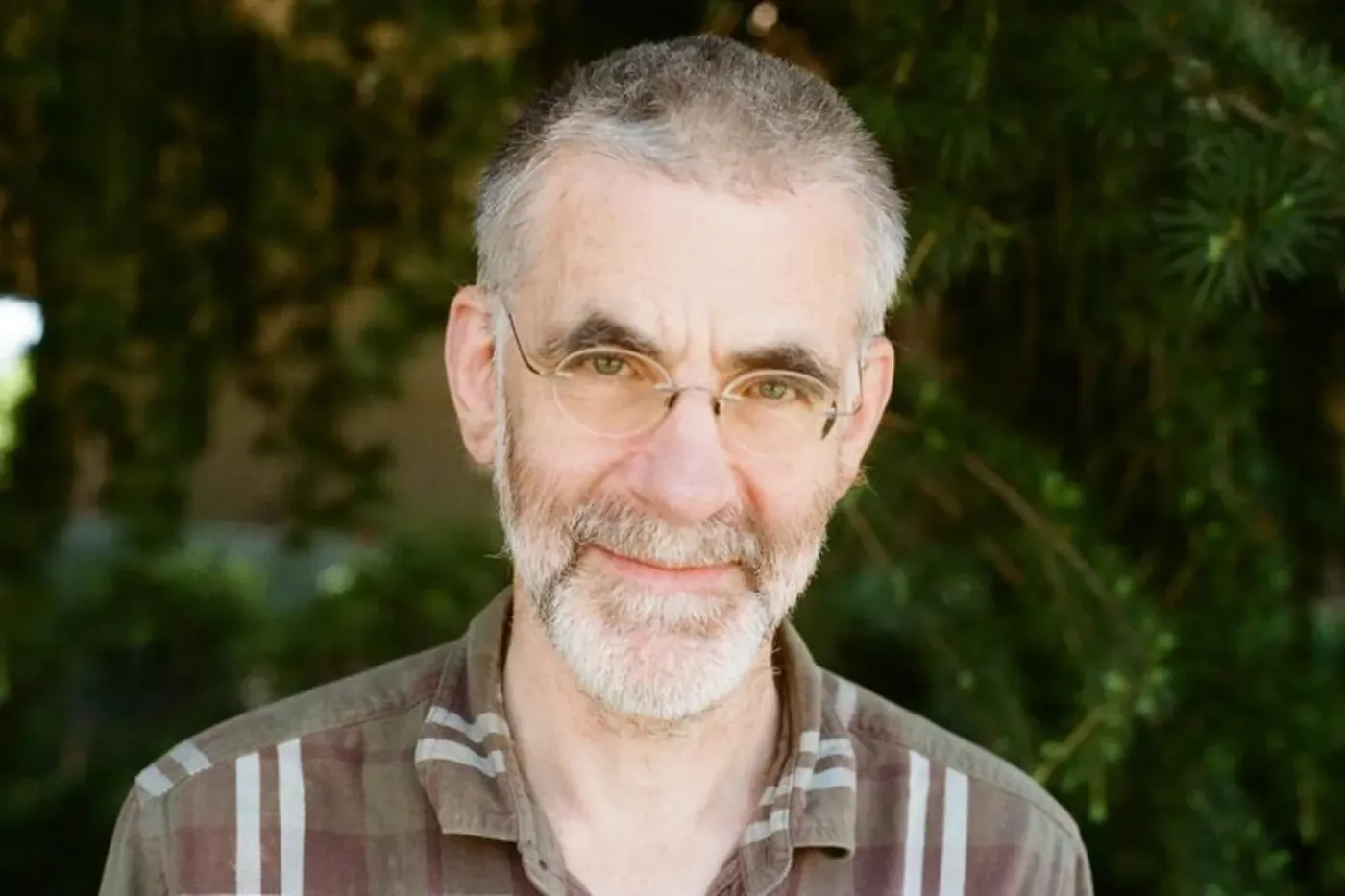
Grading homework for accuracy under these conditions creates perverse incentives in the classroom. Borcherds said that scoring assignments for correctness penalizes honest students while rewarding classmates who paste questions into chat interfaces. “Grading for correctness just adds a huge incentive for them to use AI for homework instead of doing it themselves and penalizes students for honesty,” he said to the California Post, adding that paying teaching assistants to evaluate machine text wastes university funds [5].
Score Spikes in Unsupervised Tests
The divergence between take-home grades and supervised performance has shown up at multiple institutions beyond Northern California. At Brown University, a professor reported that students on his take-home midterm scored an average of 96 percent, far above the historical course average of 65 to 80 percent [1]. When that instructor moved the final exam into a proctored room without laptops, only two students finished within ten points of their midterm marks, with just one performing better [2].
Such wide score gaps don’t prove which individual student turned to software, but researchers agree that unmonitored online assessments no longer reflect what a class has actually learned. At Arizona State University, a former instructor estimated that at least 90 percent of online students used tools like ChatGPT to complete all or part of their coursework [4]. Because learners can pull step-by-step mathematical reasoning from web prompts without grasping underlying principles, inflated homework averages hide significant deficiencies in basic mechanics. Course instructors who previously trusted digital portals now find that unmonitored submissions tell them very little about real comprehension. When those same undergraduates face proctored tests without digital aids, their struggle to reconstruct proofs shows up on paper [5].

In response, faculty in other California departments have also returned to analog testing. At UCLA, statistics lecturer Thomas Maierhofer now administers every exam in person on paper, barring phones and laptops while grading homework and laboratory exercises solely on completion [4]. Maierhofer’s setup mirrors Borcherds’ policy at Berkeley, showing how quantitative disciplines have begun stripping credit from unproctored problem sets [1].

Why Detection Software Proved Unreliable
Automated detection tools offered universities an early hope of policing submissions, but UC Berkeley abandoned that route after evaluation. Campus administrators found that detection programs regularly produced false alarms by labeling genuine human writing as machine output, while missing chatbot responses that had been lightly revised by hand [2]. Because false accusations damage student trust and true violations slip past filters, campus leaders decided against mandating any automated screening system for undergraduate coursework [1].
Instead of enforcing a campus-wide restriction, UC Berkeley gives professors free rein to design their own rules, provided the policies appear in course syllabi [1]. This decentralization leaves instructors to weigh the labor costs of homework evaluation on their own. Borcherds said that hiring teaching assistants to review assignments generated in seconds wastes departmental funds, particularly when staff must spend extra hours checking faulty machine derivations against source materials [2].
The divergence in institutional strategy shows up when comparing campus investments. While Berkeley avoids centralized monitoring tools, USC spends roughly $3.1 million annually for a ChatGPT Edu subscription covering 80,000 users, but still leaves specific classroom restrictions to individual instructors [4]. Coding assistants have shown occasional resistance—such as when Cursor told a user to learn programming instead of asking it to write code—but isolated guardrails can’t stem the flow of chatbots into higher education [1].
Campus Responses to AI Homework Cheating
Data from large-scale academic surveys confirms that AI homework cheating has spread across nationwide campuses. A study conducted by Cornell University in May surveyed more than 95,000 students across 20 U.S. public research universities, discovering that 37 percent used generative software at least once a month, while 9 percent admitted using it to cheat. Study co-author Rene Kizilcec, an associate professor at Cornell, said that assessment reform has become pressing because improper use undermines the validity of grades and the credibility of university credentials [3].
At MIT, the Ad Hoc Committee on AI Use in Teaching, Learning, and Research Training called for rethinking fundamental classroom structures. Eric Klopfer, an MIT professor who co-chaired the committee, said that homework traditionally served two goals: supporting learning and evaluating progress. Klopfer said that take-home tasks no longer provide a valid evaluation of understanding for many students, though he warned that merely reducing homework value might cause students to put less effort into their studies [3].
Klopfer also warned faculty against relying solely on high-stakes in-person testing, saying that standard blue book exams test recall instead of genuine reasoning. “Blue book exams might test memory, but not thought. In subjects where thinking is the goal, they don’t validly assess what matters,” he said, urging institutions to build a new social contract where students take personal responsibility for their education [3].
Other educators have turned to oral interviews to verify mastery. At the University of Pennsylvania, Associate Professor Emily Hammer paired oral evaluations with written essays, arguing that uncritical chatbot reliance causes undergraduates to lose cognitive skills and creativity. In the same university, mathematics professor Phil Gressman replaced final written exams with one-on-one oral conversations in 2020, finding that direct dialogue allowed him to test whether students truly comprehended complex theorems [3].
Future Outlook for Mathematics Students
The dilemma over student homework touches a deeper uncertainty about the future of mathematics itself. Five years ago, Borcherds considered mathematics one of the disciplines safest from computational disruption, but recent software capabilities have altered his outlook. The professor told The Inc.: “If AI continues to improve at the present rate, then, in a few years, there’ll be nothing human mathematicians can do that AI can’t do better” [3].
Speaking to Berkeley’s student newspaper, the Daily Californian, Borcherds drew past parallels to show how automation has reshaped earlier labor markets. “There have been plenty of technical breakthroughs in the past — hand weaving was put out of business by looms, and horses were put out of business by motor cars, and so on,” he said, adding: “This is the first time anything like this has happened in mathematics, though” [5]. As younger scholars watch mathematicians confront AI in mathematics, academic departments must decide how to prepare graduates for careers where automated systems solve formulas faster than people. MIT President Sally Kornbluth described this shift as a watershed moment for higher education that demands hands-on instruction and redesigned curricula [3].

For now, dropping graded problem sets offers a practical path forward while university departments debate long-term solutions. Removing grades for correctness eliminates the incentive for AI homework cheating, encouraging undergraduates to practice problem sets for their own comprehension instead of chasing points [3]. Borcherds framed the classroom compromise with perspective, telling colleagues that if making homework grading obsolete is the worst outcome artificial intelligence brings to education, he will be “very relieved” [1].
- ONLINE NEWS Morales, J. (2026, October 27). Fields Medal-winning UC Berkeley professor ends graded homework due to AI cheating — says in-person exams are the only solution left to widespread AI use. Tom’s Hardware. [Article Link]
- ONLINE NEWS Varga, E. (2026, October 27). Fields Medal-winning UC Berkeley professor drops graded homework over AI cheating. LavX News. [Article Link]
- ONLINE NEWS Greenwood, A., & Silverman, H. (2026, October 26). Berkeley professor stops grading homework over AI—how teachers are adapting. Newsweek. [Article Link]
- ONLINE NEWS Navi. (2026, October 26). AI in Education Forces Professors to End Homework Grading. TheOutpost.ai. [Article Link]
- ONLINE NEWS Hyde, B. (2026, October 27). ‘No Point’ UC Berkeley Math Professor Quits Grading Homework Over Student AI Use. American Greatness. [Article Link]


