





Federal court filings unsealed in New York revealed sharp internal friction as Microsoft director of applied science Brent Hecht warned that commercial AI scraping could be seen worldwide as the largest theft of labor in human history. The disclosure comes from a redacted brief filed by The New York Times in its copyright lawsuit against OpenAI and Microsoft. While executives publicly defend automated web harvesting under fair use doctrines, internal memos show senior staff questioning that foundation. Presiding judges are weighing whether those corporate admissions invalidate summary judgment arguments. [1–4]
Unsealed Memos Reveal Internal AI Scraping Warnings
The newly unsealed brief quotes an internal memo written in January 2023 by Dr. Brent Hecht, who serves as Microsoft director of applied science. In that document, Hecht warned colleagues that millions of people around the world would soon consider large language models hoovering up creative labor to be an astonishing theft of unprecedented proportions. He noted that creators never intended their online writing to train corporate systems without payment. Public controversies surrounding aggressive AI scraping began intensifying as that memo circulated inside the company. [2, 3]
Hecht described the operational strategy behind large language models as an economic arrangement where an end product actively undermines its essential content suppliers. Another internal Microsoft memo highlighted by plaintiffs noted that almost no one intended for content they created to be used in this fashion, nor are they compensated for its use. The applied science director explicitly characterized this mechanism as a self-reinforcing doom loop that would degrade the performance of future artificial intelligence models while simultaneously devastating the wider open web. Can automated technology platforms thrive if their data collection erodes the publication ecosystem that feeds them? In his internal assessment, Hecht cautioned that prevailing on copyright defenses would force corporate defendants to make a complete mockery of the idea of fair use. [1, 2]
The documents remain sealed at the request of both corporate defendants, according to reporting by investigative outlet 404 Media. Only select excerpts entered the public docket. Those fragments suggest that technical leadership understood the financial disruption facing digital publishers long before courtroom hearings began. [2, 4]

Internal Data Details Click Drop for News Outlets
Internal metrics cited in the court filings reveal direct financial impacts on news websites following the release of conversational artificial intelligence assistants. As ChatGPT gained global adoption across 2023, Microsoft observed that its Copilot interface (an internal automated tool designed to summarize and synthesize web sources) reduced click-through traffic to The New York Times by as much as 93% compared to standard Bing search queries. Readers consumed automated summaries directly on search pages instead of opening source links. [1, 2]
An OpenAI software engineer confirmed that pattern during sworn testimony. Users simply do not click links. The engineer testified that prominent interface links failed to attract reader visits. [2, 3]
Executive admissions went further in characterizing the direct competition between conversational chatbots and original reporting. Nick Turley, serving as OpenAI Head of ChatGPT, described the generative system in private workplace discussions as an existential threat to publishers because conversational answers are largely substitutive for original news reporting. Turley acknowledged that AI assistants will become increasingly substitutive as model reasoning and factual accuracy improve over successive training generations. News gathering depends on advertising revenue and digital subscriber signups, both of which erode when synthesized answers satisfy reader inquiries without driving referral traffic. TechSpot technology reporter Daniel Sims noted that Google and rival search operators now deploy automated answer overviews that keep searchers inside proprietary ecosystems, compounding the revenue strain on commercial newsrooms. [1, 2, 3]


Unredacted Briefs Allege Deliberate Paywall Bypasses
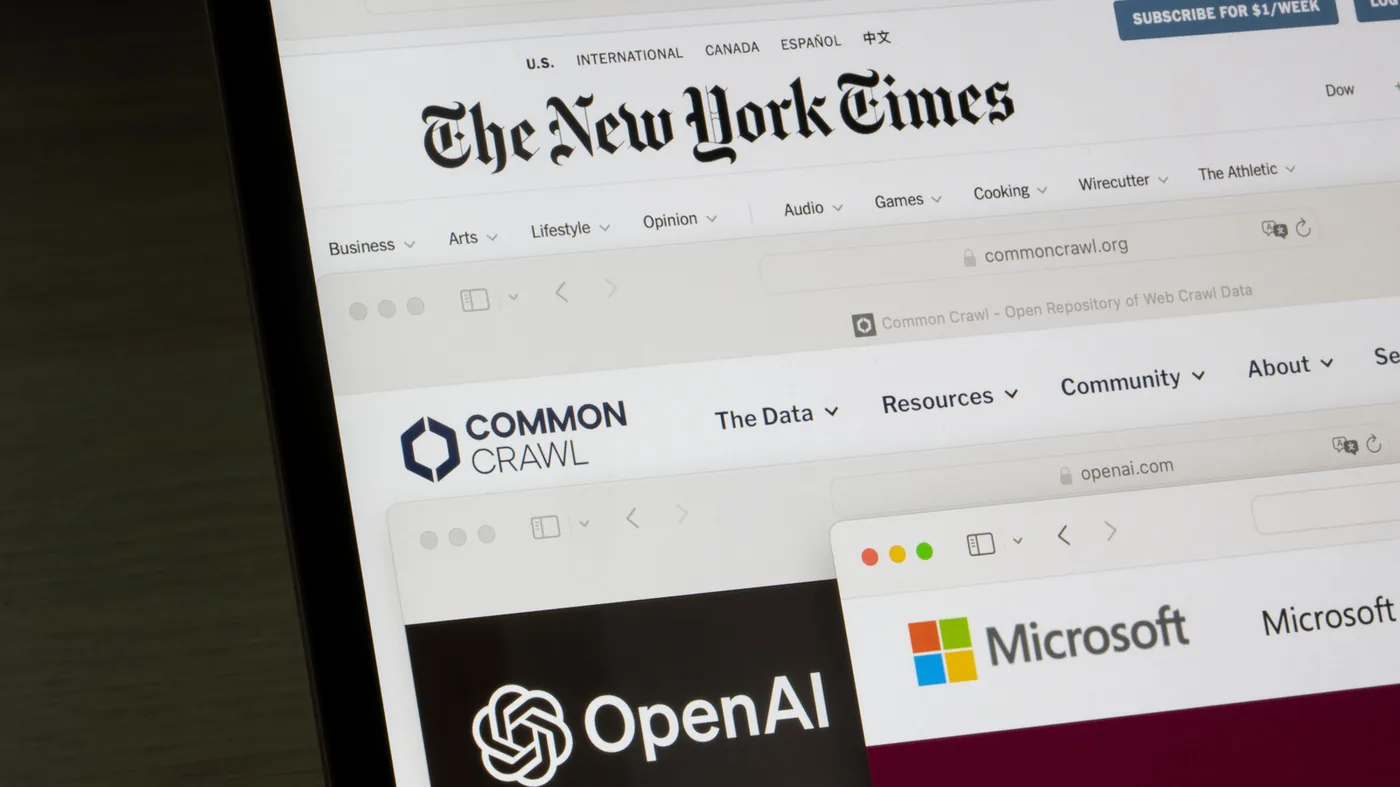
The unredacted court brief filed on behalf of The New York Times (a collaborative legal brief submitted alongside five individual authors) details specific methods used to assemble proprietary training datasets. According to the filing, OpenAI researchers discussed techniques to circumvent paywalls on premium journalism websites. In one highlighted exchange, OpenAI researcher Nick Ryder informed company president Greg Brockman about a functional hack designed to bypass paywalls on news publications. Brockman replied simply, “ah nice.” [2, 3, 4]
Plaintiffs allege that OpenAI systematically stripped digital copyright management notices from scraped internet text before feeding articles into training pipelines. The legal brief argues that engineers ingested millions of articles in their entirety without authorization to build substitutive commercial AI products capable of mimicking publisher output. In earlier court disclosures, Brockman conceded that ChatGPT can predict and complete entire sentences from copyrighted news stories when prompted with excerpted passages. Memorization shows direct reproduction. Court exhibits argue that such verbatim completion demonstrates models retain and reproduce protected expression rather than merely analyzing statistical patterns like a human student. [1, 2, 4]
The appetite for training text extends beyond digital news archives. Daniel Sims reported for TechSpot that commercial developers have quietly bought, scanned, and physically destroyed millions of print books to amass text data for generative models. In addition to books, companies scraped discussion forums and streaming transcripts. The scale of ingestion underscores how dependent commercial artificial intelligence remains on copyrighted human labor. [1]
Fair Use Defense Clashes With Executive Admissions
In federal court, Microsoft and OpenAI base their primary legal protection on fair use (the legal doctrine permitting limited unlicensed use of copyrighted material for transformative purposes). Defense attorneys compare computational scraping to a human student reading library volumes to acquire general knowledge. United States copyright law evaluates fair use across four statutory factors: the purpose and character of the commercial exploitation, the nature of the underlying work, the substantiality of the portion used, and the market effect on the original material. [1, 2]
Can commercial developers claim transformative use when their internal research leaders warned that AI scraping destroys supplier revenue? Media advocate Jason Kint pointed out that internal admissions directly undermine the fourth fair use factor concerning market harm. Attorneys representing The New York Times argue that Hecht’s candid memos eviscerate the defense because corporate leadership clearly foresaw that generative chatbots would act as direct commercial substitutes. Internal ethics debates mirror broader industry unease; PerEXP Teamworks previously reported on Jacob Coxon leaving Anthropic over superintelligence concerns as researchers questioned corporate priorities across frontier research labs. [2, 4]
Industry leaders have acknowledged that building frontier models without protected content is technically unfeasible. The models require massive text. OpenAI previously told regulators that training competitive models without copyrighted works remains impossible under current architectures. Former Meta executive Nick Clegg echoed that reality last year, observing that generative artificial intelligence would die almost immediately if copyright restrictions were strictly enforced against training datasets. [1, 2]
Corporate Disavowals and the Long Road to Trial
Faced with damaging internal emails on the court docket, Microsoft moved swiftly to disavow its employees’ private commentary. Microsoft spokesperson Alex Haurek emphasized in a public statement that the company’s formal position is articulated in its official court pleadings, asserting that generative artificial intelligence uses are transformative and consistent with copyright statutes. Haurek insisted that Copilot does not operate as a market replacement for original investigative journalism. The court filings remain central. [3]
Executive leadership has also sought to distance corporate operations from illicit harvesting methods. During a deposition conducted earlier this year, Microsoft CEO Satya Nadella testified that any material situated behind a digital paywall should be licensed by anyone seeking to use it for grounding or training. Nadella testified on licensing standards, asserting that had he known OpenAI was scraping paywalled data, Microsoft would have required the startup to retrain its models from scratch. Unresolved disputes over unauthorized AI scraping continue to complicate relations between the two corporate partners. [2]
Controversies surrounding uncompensated data ingestion extend well beyond the federal courthouse in New York. Meta drew sharp backlash for training models on internal employee communications, Microsoft GitHub Copilot processes developer code repositories unless subscribers explicitly opt out, and Twitch only permitted video streamers to opt out after utilizing their broadcasts for years. While the legal team for The New York Times has requested summary judgment (a legal filing requesting an immediate decision without a full trial), the presiding federal judge is not expected to decide whether the lawsuit proceeds to trial until sometime in 2027. [1, 2, 4]
- ONLINE NEWS Sims, D. (2026, September 18). Microsoft exec says AI training might be the “largest labor theft in human history”. TechSpot. [Article Link]
- ONLINE NEWS Morales, J. (2026, September 18). Microsoft director called AI scraping ‘the largest theft of labor in human history,’ while OpenAI head brands ChatGPT an ‘existential threat’ to publishers — revelations come from legal briefs filed in NYT lawsuit. Tom’s Hardware. [Article Link]
- ONLINE NEWS Dent, S. (2026, September 18). Microsoft executive called OpenAI’s web scraping the ‘largest theft of labor in human history’. Engadget. [Article Link]
- ONLINE NEWS Wilkins, J. (2026, September 17). Microsoft Director Privately Admitted AI Was the “Largest Theft of Labor in Human History,” Unsealed Court Documents Show. Futurism. [Article Link]
- ONLINE NEWS Ars Technica. (2026, September 18). Microsoft exec called AI scraping the “largest theft of labor in human history”. Ars Technica. [Article Link]


1 comment