





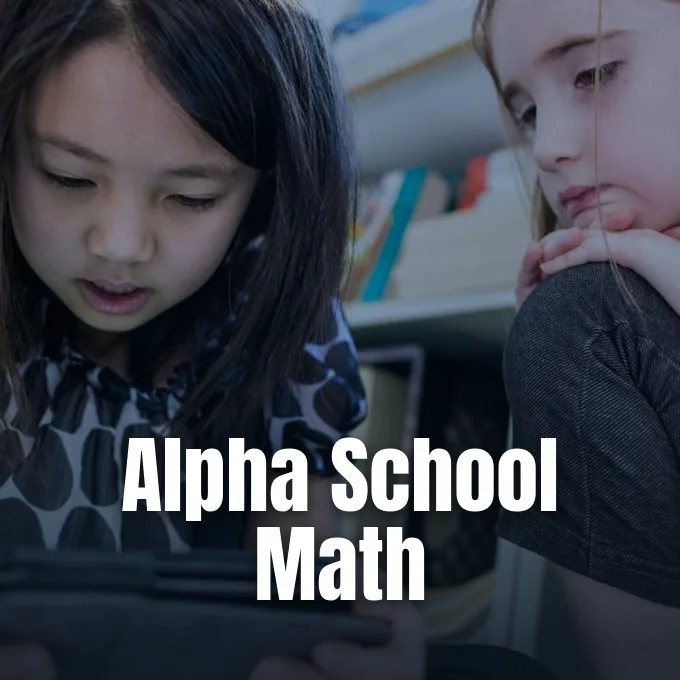
Internal records from Alpha School, an AI-driven private school network charging parents up to $75,000 a year, show that roughly half of its K-8 students missed their math targets. Co-founded by MacKenzie Price, Alpha School promises that children will learn twice as fast as their peers in two hours of daily academics using its TimeBack app. But internal data first reported by The New York Times showed that only 42% of pupils met that twin benchmark across both math and reading [1]. The shortfall comes as the company expands into public school systems in Texas and South Carolina, where leaders want to test whether AI tutoring can speed up instruction without leaving struggling children behind [2].
Guides and the Two-Hour Routine
Alpha School replaces certified classroom teachers with adult guides who don’t plan lessons, deliver lectures, or grade homework. Price built the daily schedule around TimeBack to compress academic learning into two morning hours so that afternoons can focus on workshops in public speaking, life skills, and relationship building [1]. Enrollment grew from over 1,200 pupils in September to roughly 1,500 students in 50 campuses following expansion plans announced in August [2].
Tech investors and politicians quickly backed the setup [1]. Sarah Cone, a venture capitalist based in Silicon Valley, sent her eight-year-old daughter to Alpha’s New York site. “I definitely think using AI well is a skill in the future, if not the skill, so it’s kind of a disservice not to have that in school,” Cone told Fortune [3]. LinkedIn cofounder Reid Hoffman and hedge fund manager Bill Ackman posted public support on X. In September 2025, U.S. Education Secretary Linda McMahon toured the Austin campus, calling the format “the most exciting thing I’ve seen in education in a long time”. Even the social media account of Theranos founder Elizabeth Holmes praised Price [1].
San Francisco venture capitalist Shaun Johnson also picked the program for his young son. Johnson told the Wall Street Journal that conventional schooling feels broken and that he wants children who can “think on their feet and navigate the world” [5]. Annual tuition reaches $75,000. That matches elite private academies that provide science labs and certified teachers [4]. The network also attracts conservative families because it rejects diversity initiatives and avoids hot-button social debates [5]. But teachers note that two hours of screen time can’t give children enough math repetition [4].
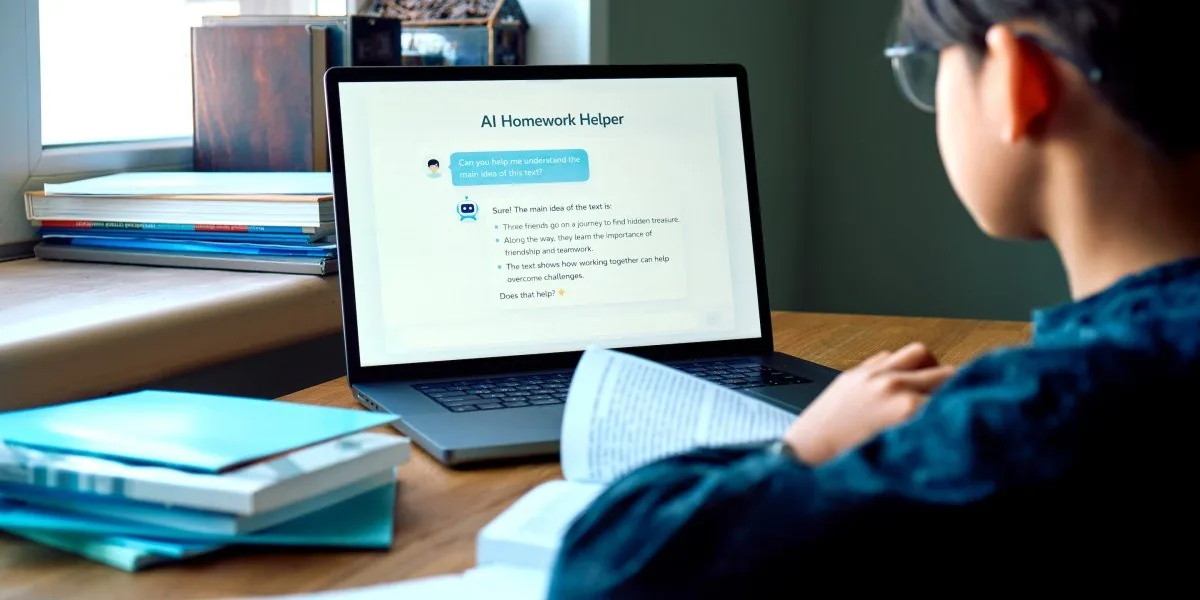
Internal Test Results Across Alpha School Campuses
Internal records revealed that math created the widest gap between marketing promises and actual classroom progress. About half of K-8 students failed to learn math twice as fast, while roughly one in five missed reading targets [1]. Even though reading progress stayed comparatively steady, the combined shortfall meant only 42% of pupils achieved the twin acceleration benchmark across both subjects [2]. Families paying high tuition expected clear academic gains. The published miss rate serves as a warning signal [4].
The deficit grew worse among children who entered behind grade level. Roughly 20% of Alpha School private school students entered the autumn testing at or below the 50th percentile nationally in arithmetic, and by winter merely 37% of that group attained the target acceleration rate. TimeBack struggled most with learners who needed foundational math help [1].
Because Alpha School operates as a private network, it doesn’t have to report student test scores to state education regulators [5]. It relies instead on digital dashboards that track completed lessons. But educators caution that internal digital mastery metrics often fail to match performance on independent state examinations. Without published sample sizes, comparative test data, or attrition rates, families can’t easily tell whether shortfalls stem from flawed software or unrealistic benchmarks [4].



Evening Workloads and Curriculum Quality Concerns
The two-hour academic day drew immediate skepticism [2]. Guides and parents told Wired that children routinely worked late into the night at home to satisfy demanding goals. A parent whose 13-year-old child reads at an 11th-grade level stated that keeping up with assigned app goals caused noticeable anxiety and stress [1]. Former staff reported that students regularly spent extra hours at home just to avoid falling behind in daily coursework [5].
System defects compounded those evening pressures. Former staff told 404 Media that the proprietary tools generated flawed lesson materials that internal logs described as doing “more harm than good” [1]. The app produced confusing exercises and illogical multiple-choice questions [5]. Workers also said the company scraped online courses without permission from copyright owners [1].
Investigations by 404 Media also found that staff collected student records and classroom video recordings, storing them in accessible Google Drive folders. Former employees said that students served as guinea pigs in an unproven educational experiment [5]. On-site guides struggled to supervise upset children because they lacked teaching credentials to correct bad math content on the fly [2].

Public Classroom Pilots in Southern Districts
Despite mixed results at private sites, the company brought its platform into public school systems, placing lessons before more than 2,600 public school students in Texas and South Carolina. District leaders adopted TimeBack hoping to fit more learning into less time and help pupils recover from falling test scores [1]. But public schools face a very different administrative environment. Public districts can’t dismiss struggling children when metrics dip, and they don’t hand out the cash prizes that Alpha School uses to motivate private pupils [1, 2]. District pilots must instead integrate the tool with standard state curriculum requirements within general education classrooms [2].
In Texas, the Houston Independent School District introduced the tool at two pilot campuses. Superintendent Mike Miles said that students spent more time on the apps than planned, which cut directly into other school activities. Even so, Miles defended the rollout as an important tool for preparing students to be “successful in a different world and workplace” [1].
Budget limits create another practical barrier for public adoption. University of Southern California education policy professor Huriya Jabbar told Fortune that public schools serving low-income families often struggle to sustain digital programs due to high teacher turnover. “AI—just like any other tool, technology, curriculum—is going to play out in an already unequal landscape,” Jabbar said [3]. Montana education observers watching these southern pilots also noted that rural, resource-constrained schools could face amplified challenges if AI software demands heavy screen time without certified staff support [6].
Academic Research on Alpha School Software Effects
Independent research reveals persistent drawbacks when students rely heavily on automated tools [2]. A study tracking 26,811 secondary students in central China found that while homework scores rose 18% after adopting generative AI, closed-book exam scores for those same pupils fell 20% [1, 3]. International PISA data showed that pupils who used AI daily scored lower in science than nonusers, whereas moderate users performed steadily [1, 2]. Algorithmic shortcuts often produce higher homework marks without building actual retention [1].
Foundational literacy metrics show similar strains. PISA test evaluations across 38 developed economies revealed record-low marks for 15-year-old students, with United States reading averages falling 14 points to 490 [3]. University of Notre Dame theology professor Timothy O’Malley told Fortune that when students face heavy reading assignments, “they often don’t know what to do” without AI summaries. Pepperdine University humanities professor Jessica Hooten Wilson added that the problem isn’t critical thinking, but rather “an inability to read sentences” [1].
Cognitive scientists argue that true learning requires active mental effort rather than automated shortcuts. Neuroscientist Jared Cooney Horvath testified to Congress that screen-based learning distracts from core comprehension, arguing that “our kids are less cognitively capable than we were at their age”. Kirsten Peterson of the Education Development Center warned that educators must protect the thinking process itself. “We have to be really careful not to use AI to remove the very thinking students need to practice in order to become literate,” Peterson said [3]. For Alpha School and the public districts testing its tools, closing the gap between promotional claims and math reality will require addressing those cognitive trade-offs [1].
- ONLINE NEWS Arshad, M. (2026, November 14). Wealthy parents pay $75,000 for Alpha’s two-hour AI school day. Half of its K-8 students missed the math target. Fortune. [Article Link]
- ONLINE NEWS Chowdary, D. (2026, November 15). Parents pay $75k for Alpha’s AI school. Half of its students missed math. Tech Bytes. [Article Link]
- ONLINE NEWS Osmonbekov, M. (2026, September 10). Wealthy parents are buying their kids $75,000 AI schooling with guardrails as schools grapple with a literacy crisis. Fortune. [Article Link]
- ONLINE NEWS Varga, E. (2026, November 15). Alpha School charges $75,000 for two-hour AI day, and half of students miss math target. LavX News. [Article Link]
- ONLINE NEWS Navi. (2026, July 6). Alpha School charges $75K for AI education. TheOutpost.ai. [Article Link]
- ONLINE NEWS Montana Associated Technology Roundtable. (2026, November 14). Alpha School’s AI tuition fails most students’ traditional learning goals. But what about non traditional skills? MATR. [Article Link]
- ONLINE NEWS Dufresne, A. (2026, November 15). Fortune: Half of Alpha School’s $75K/year AI-taught K-8 students missed math learning target. AI Weekly. [Article Link]


