



Can a sudden operating system update eliminate the persistent crashes troubling everyday smartphone users? Google addressed that exact concern on September 15, 2026, by deploying the Android 17 QPR2 Beta across 23 enrolled Pixel models. The maintenance update targets disruptive system glitches that triggered unprompted reboots during continuous media scrolling, prevented volume adjustments while casting, and froze digitizers at payment checkouts. Build releases landed in two separate packages to stabilize hardware ahead of the December public launch. [1][5]
Android 17 QPR2 Beta Arrives for Pixels
Google pushed the Android 17 QPR2 Beta nearly three weeks after its previous test build, accelerating development ahead of the stable quarterly milestone. The release distributes two specific firmware packages: build CP41.260828.005.A6 for legacy silicon and build CP41.260828.004.A8 for modern flagship models. Tim at Droid Life noted that the release arrived on schedule Tuesday afternoon. The new software carries the August 5, 2026 security patch level and updates Google Play services to version 26.28.33. [1][6]
When observers assess why Google doubles down on its preview pipeline, the momentum reflects a clear commitment to comprehensive bug-scrubbing across two dozen active models rather than pausing between major software releases. Device coverage now spans 23 distinct products enrolled in the preview program. Notably, the newly launched Pixel 11 series (comprising the Pixel 11, Pixel 11 Pro, Pixel 11 Pro XL, and Pixel 11 Pro Fold) officially joined the test pool with this build. Older generations remain supported through the Pixel 6a, Pixel 7 lineup, Pixel 8 series, Pixel 9 family, Pixel 10 roster, Pixel Fold, and Pixel Tablet. However, the original Pixel 6 and Pixel 6 Pro remain excluded after reaching the end of their guaranteed support window. [4][5]
Enrolled smartphones receive the update over the air through the Android Beta Program. Sarang at Android Sage reported that devices require at least 50 percent battery capacity on an unmetered Wi-Fi connection before installation can proceed. Participants can report encountered bugs through the pre-installed Android Beta Feedback app or submit technical details directly to Google’s public issue tracker. [2][4]
Crash Patches Stabilize Scrolling and Camera
The most urgent system stability fix resolves sudden crashes tracked as Issue #544291113. Users running earlier preview releases reported unexpected device reboots when scrolling continuously through media-heavy applications, including social networking feeds, personal photo albums, and video catalogs. Google overhauled the underlying rendering buffers. This architectural correction eliminates the memory faults that forced kernel panics, restoring fluid vertical navigation across the entire framework. [1][4]
A power-button shortcut previously broke device input. Summoning Google Wallet froze the digitizer under Issue #549758084, requiring a forced restart. [1][4]
Mobile photography also receives a critical repair. Testers attempting panoramic captures suffered immediate application shutdowns logged under Issue #551069625. During the complex image-stitching and exposure-balancing pipeline, the camera software encountered an unhandled exception that discarded raw photographic data entirely before saving. Beta 5 repairs the multi-frame composition routine so panoramic captures process reliably in the Android 17 QPR2 Beta. [1][7]
Privacy management and launcher search received companion fixes under Issue #548285596. Testers discovered that Private Space frequently failed to open because internal navigation routing blocked user authentication prompts. The same patch clears an awkward text-rendering glitch that painted unwanted background highlight boxes behind queries typed into global search fields. System search works cleanly again. [1][2]

Anti-Scam Guard Hardens Call Forwarding
Security engineering takes center stage with the introduction of Call Forwarding Hardening, an operating system barrier engineered to shut down fraudulent redirection schemes. Deceptive applications have long abused automated telephony interfaces to hijack verification calls and bypass two-factor authentication. Google countered this vector by placing strict programmatic limits on USSD (Unstructured Supplementary Service Data) routing codes, such as *21#, dispatched through the TelephonyManager.sendUssdRequest() API. Telephony defenses now block silent background rerouting. [1][5]
Standard applications holding only general CALL_PHONE permissions can no longer trigger call-forwarding commands invisibly. Instead, any background attempt to run forwarding sequences gets rejected with a USSD_ERROR_NOT_ALLOWED failure callback. Developers whose software genuinely manages call routing must now transition to the ACTION_DIAL intent (a framework mechanism that pre-fills numbers into the system dialer), requiring users to review and approve the action manually. Furthermore, manual code entry in the dialer now triggers an explicit system-level confirmation dialog to thwart social engineering tricks. Routine operations like mobile money transfers and account balance checks remain completely unaffected. [1][5]
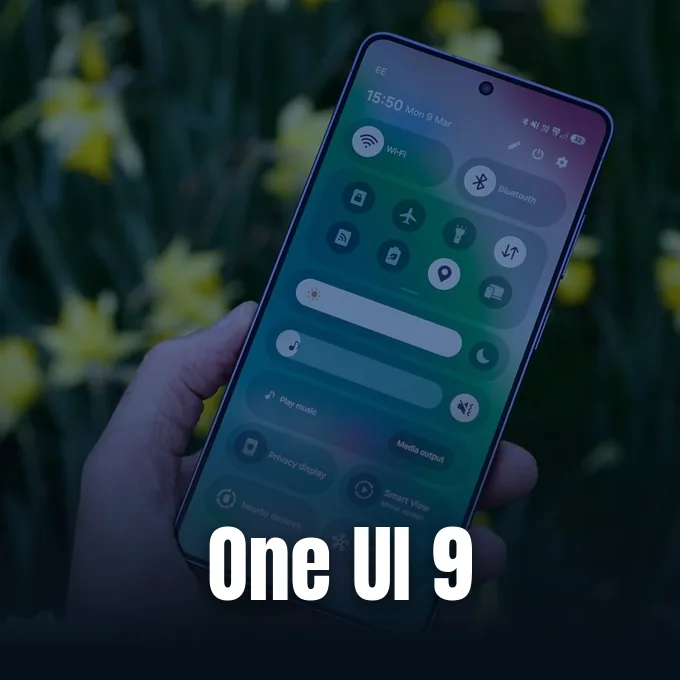
These defensive restrictions reflect broader platform trends across modern mobile operating systems. Similar security boundaries around dialer intents and background permissions appear across partner interfaces, including Samsung One UI 9 for Galaxy devices. By closing programmatic dialer access in the Android 17 QPR2 Beta, Google ensures malicious actors cannot silently intercept phone calls behind active workflows. [1][3]
Twin Builds Separate Tensor Generations
Google separated the Android 17 QPR2 Beta into two discrete compilations to address distinct hardware architectures across successive Tensor processor families. Build CP41.260828.005.A6 provides targeted compilation for the Tensor G1 and G2 architectures (silicon found inside the Pixel 6a, Pixel 7, Pixel 7 Pro, Pixel 7a, Pixel Fold, and Pixel Tablet). Meanwhile, build CP41.260828.004.A8 provides unified firmware for newer platforms, covering the Pixel 8 generation, the Pixel 9 series, the Pixel 10 roster, and the latest Pixel 11 flagships. Hardware differences required distinct binary distributions. [1][4]
Audio peripheral management across both build variants received essential stability enhancements. Users frequently encountered severe post-call audio distortion tracked under Issue #541684282, which introduced loud static and crackling noises into connected Bluetooth headphones after ending or answering a voice conversation. Google patched the underlying audio hardware abstraction layer to handle hands-free telephony handshakes cleanly without corrupting media playback codecs. Additionally, a cosmetic synchronization defect logged as Issue #516071134 was corrected so changing an accessory type in settings immediately updates its displayed icon. [1][4]

Display output and peripheral casting saw meaningful corrections as well. Under Issue #548145018, adjusting the physical hardware volume rocker while casting media to smart displays failed to present the on-screen volume slider. Although decibels shifted in the background, users received no visual feedback until Beta 5 restored the heads-up display overlay. A stubborn display configuration bug cataloged as Issue #547457910 was also eliminated: Enhanced HDR mode had remained permanently active on compatible OLED panels even after users switched it off, forcing unwanted battery drain and blinding brightness spikes. Toggling the setting now immediately clamps luminescence to standard parameters. [1][4]
Interface Polish Prepares December Launch
Visual and functional refinements throughout system menus indicate that Google is finalizing user experience details ahead of the stable December release. On the Pixel 10 and Pixel 11 series, Abner Li at 9To5Google spotted a second Proactive Assistance entry inside Settings. The original menu sits near the bottom with a blue icon and explicit Gemini branding, while the new secondary entry appears higher with a yellow light bulb icon. Toggling the blue switch disables both, but the yellow menu introduces an exclusive subpage where users can specify which applications share screen content and incoming notifications for suggestions. [3]
Quick Settings tiles underwent reorganization across active test devices. Google introduced a dedicated Audio streams tile while shifting the Voice broadcast tile out of system apps into the Connectivity category. However, layout customization options that surfaced in earlier preview iterations were completely removed, leaving it unclear whether Google will reinstate tile arrangement tools before final public deployment. A unified Battery and charging menu, originally premiered on the Pixel 11, now provides standardized power telemetry across earlier hardware generations. [3]
How should enrolled participants handle the transition as the official update nears? Nayan at NPowerUser confirmed that the Android 17 QPR2 Beta path remains firmly on schedule for its December public debut. Google provides a clear choice for testers wishing to return to stable software without data loss: they must remain enrolled in the preview channel until the public release arrives in a few months. Opting out after installing Beta 5 prompts a downgrade package that wipes all personal storage. Waiting for the finished December rollout guarantees an uninterrupted upgrade. [4][7]
- WEBSITE Android Developers. (2026, September 15). Release notes: Android 17 QPR2 Beta 5. Google. [Article Link]
- ONLINE NEWS Li, A. (2026, September 16). Google rolling out Android 17 QPR2 Beta 5 for Pixel. 9To5Google. [Article Link]
- ONLINE NEWS Li, A. (2026, September 16). Here’s everything new in Android 17 QPR2 Beta 5. 9To5Google. [Article Link]
- ONLINE NEWS Sarang. (2026, September 17). Android 17 QPR2 Beta 5 released: Changelog & build info. Android Sage. [Article Link]
- ONLINE NEWS Jetstream. (2026, September 17). Google Pixel: Android 17 QPR2 Beta 5 released. Jetstream. [Article Link]
- ONLINE NEWS Tim. (2026, September 16). Android 17 QPR2 Beta 5 released for Pixel phones. Droid Life. [Article Link]
- ONLINE NEWS Nayan. (2026, September 17). Google rolls out Android 17 QPR2 Beta 5: Major fixes for Pixel phones! NPowerUser. [Article Link]


