





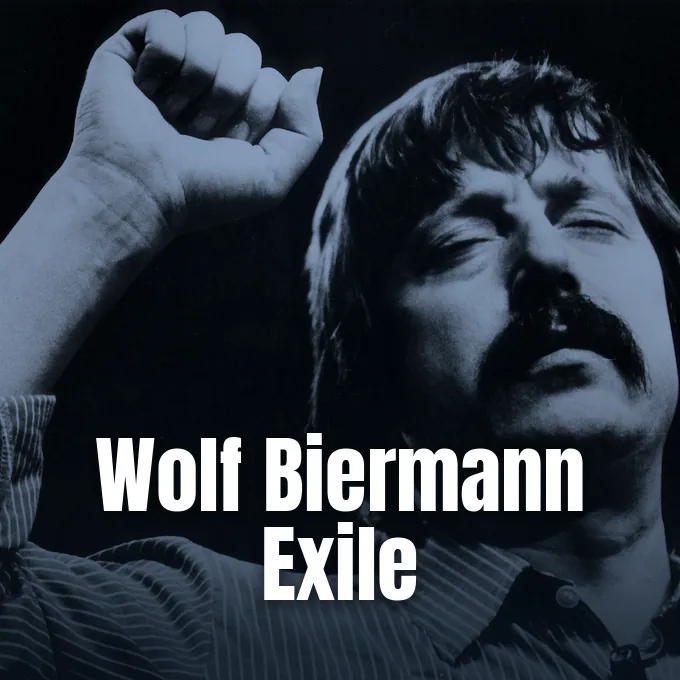
Fifty years ago, on 16 November 1976, East German authorities revoked the citizenship of dissident songwriter Wolf Biermann after he performed a satirical concert in Cologne. The decision by the ruling Socialist Unity Party aimed to quiet an uncompromising critic who had spent over a decade under state performance bans and police surveillance in East Berlin. Instead, the move provoked public petitions from prominent cultural figures, triggered an exodus of writers and actors, and gave Biermann an international audience. The confrontation turned music into a focal point of opposition that echoed through the final years of the German Democratic Republic [1].
Youth in Hamburg and Schwerin
Karl Wolf Biermann was born in Hamburg on 15 November 1936. His mother Emma Dietrich and his father Dagobert Biermann, a Jewish shipyard laborer who sabotaged Nazi vessels until the Gestapo arrested him in Bremen, raised him in a dedicated communist home [3, 6]. Biermann visited his father in prison only once before the Nazi regime deported Dagobert to Auschwitz, where he was murdered on 22 February 1943 [3]. Emma hid morning sweets. She told her young son that his father sent them through moonbeams to sustain his memory. Biermann survived the firebombing of Hamburg at age six, an ordeal that fueled Emma’s vow that he should build communism to avenge his father [5].
He attended the Heinrich-Hertz-Gymnasium in Hamburg and joined the Free German Youth (FDJ), representing West Germany at its 1950 national gathering. In 1953, at age 16, Biermann moved to East Germany. He attended a boarding school near Schwerin, eager to help build an anti-fascist state where his father’s ideals could flourish [3, 5].
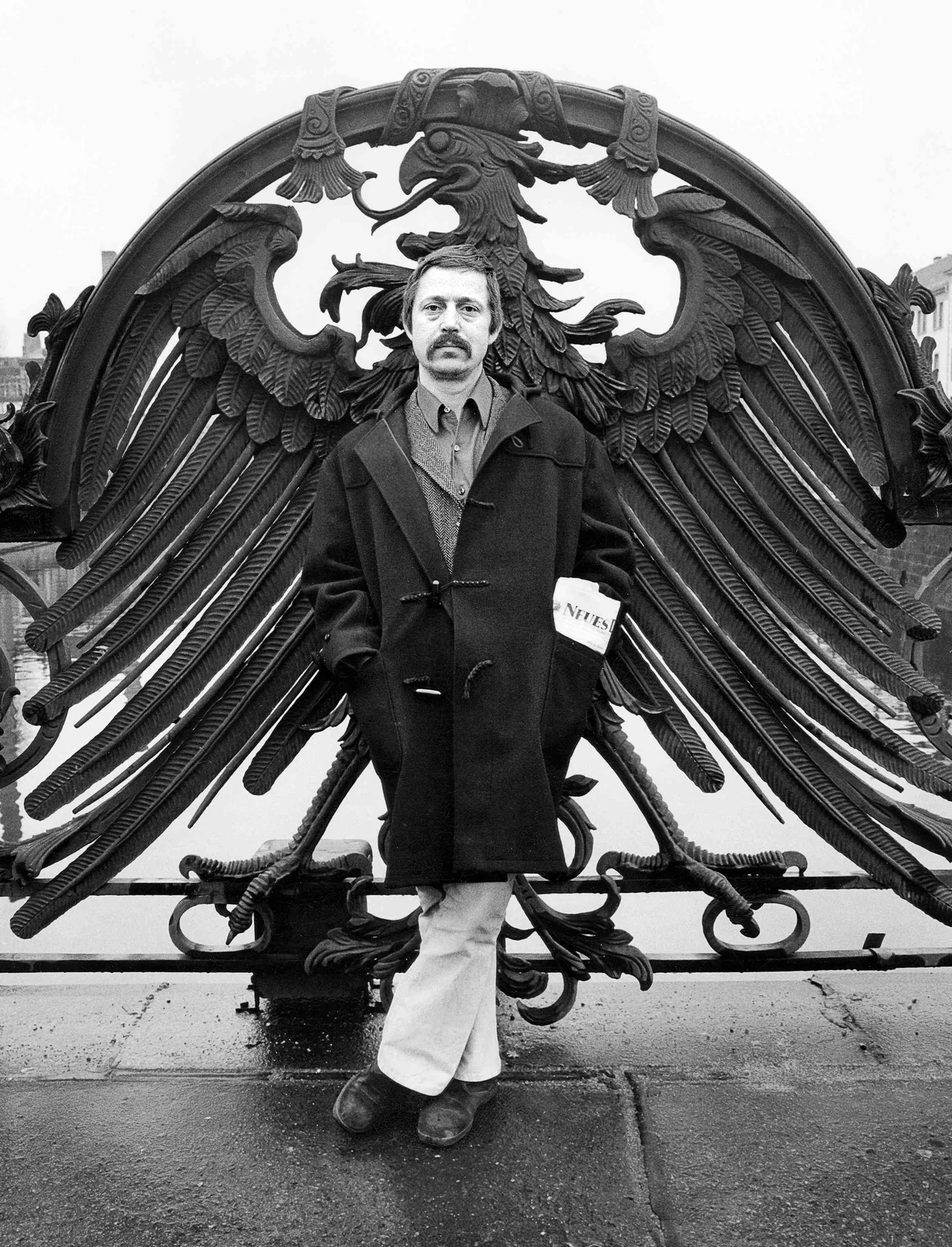
Wolf Biermann at the Berliner Ensemble
Between 1957 and 1959, Wolf Biermann served as an assistant director at the Berliner Ensemble under Bertolt Brecht’s lasting influence [3]. Brecht’s sharp street language and political irony shaped the young poet’s verse as he learned stagecraft in East Berlin [5]. Composer Hanns Eisler took the young poet as a protégé in 1960, shielding him from suspicious party officials until Eisler’s death in 1962 left Biermann without an institutional protector [3]. Eisler praised the young songwriter’s biting ballads and encouraged him to perform his own melodies publicly [5]. Biermann formed the Berliner Arbeiter-Theater in 1961. In 1963, censors banned his production of Berliner Brautgang, a play documenting the Berlin Wall, and closed the theater company before opening night [3].
Party leaders rejected his SED membership bid in 1963. Secret police reviewers claimed he took stimulants, inventing a convenient pretext to block the young artist. Although Biermann completed his thesis under philosopher Wolfgang Heise at Humboldt University that same year, hostile officials withheld his formal university diploma for forty-five years until 2008. In 1965, he performed with Wolfgang Neuss in Frankfurt am Main while publisher Klaus Wagenbach issued his poetry collection Die Drahtharfe in West Berlin [3]. His songs attacked party censorship and bureaucratic inertia [4].
Stasi Blacklists and Apartment Recordings
The SED Central Committee denounced Biermann as a class traitor in December 1965, placing him on a total performance blacklist. The Stasi prepared a 20-point plan to isolate and discredit the songwriter [3]. Agents bugged his flat at Chausseestraße 131 in Mitte, tapped his telephone, read his correspondence, and enlisted more than 200 informants to track every visitor entering the building [1]. Why did a solitary balladeer alarm party leaders? They feared that his songs encouraged citizens to speak their minds freely [5]. His living room became a busy salon for dissidents like chemist Robert Havemann, drawing foreign counter-cultural figures like Joan Baez and Allen Ginsberg during the 1973 World Festival of Youth and Students [2, 3].
Biermann recorded his 1968 album Chausseestraße 131 in his flat with equipment smuggled from West Germany. Street noise from Mitte echoed behind his guitar on the finished vinyl [3]. His 1968 ballad Ermutigung spread on bootleg tapes, urging listeners not to harden in frightening times and becoming a clandestine anthem [5].
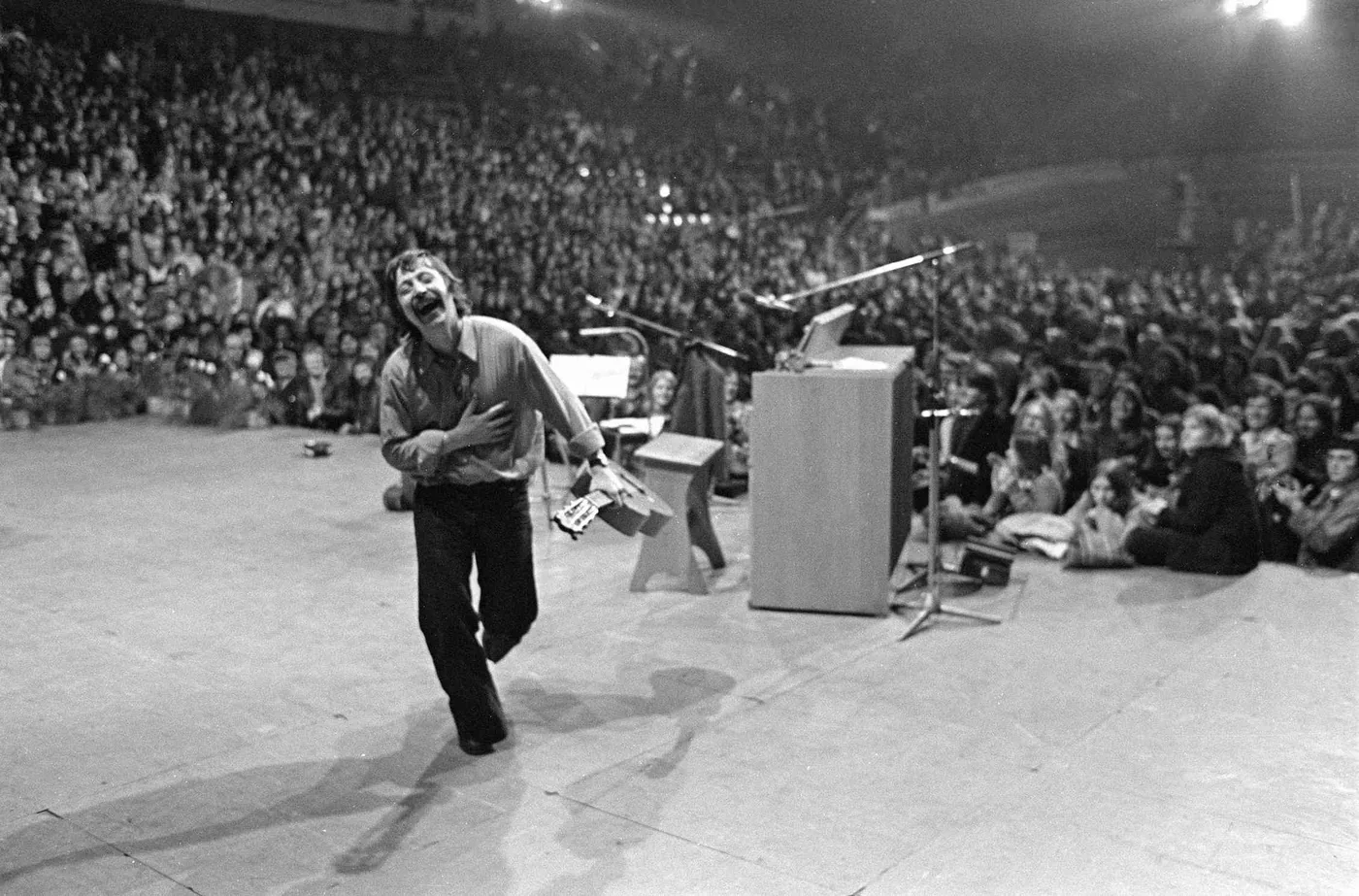


The 1976 Cologne Concert
State officials surprised Wolf Biermann in November 1976 by granting him permission to tour West Germany, breaking 11 years of enforced public silence with an official travel visa. On 13 November 1976, he played to 7,000 listeners at the Cologne Sporthalle, perched on a high stool in rolled shirtsleeves, mocking party bureaucrats while accompanying himself on an acoustic guitar. For over four hours, he sang of democratic renewal and satirized East German authoritarianism before the cheering crowd. Long before Biermann stepped onto the Cologne stage, the SED Politburo had already resolved to strip his citizenship, waiting only for an excuse to bar his return [5]. On 16 November, the SED Politburo revoked his citizenship for defamation of the German Democratic Republic (GDR) [4]. The border was shut [5].
Biermann heard the news on the radio while touring. “I felt cast away,” he wrote in his memoir Warte nicht auf bessre Zeiten!, stunned by the sudden exile [5]. Author Günter Wallraff sheltered him in Cologne as tabloid reporters gathered outside [7]. Bootleg cassette recordings of the Cologne performance spread quickly among listeners beyond the border [2].
Wolf Biermann and the Artist Petitions
The expulsion provoked public outrage among East German artists. Within three days of the announcement, over 100 writers, actors, and musicians signed an open petition pleading with the SED leadership to reconsider the exile of Wolf Biermann [1]. The protest gathered signatures from prominent cultural figures including Christa Wolf, Stefan Heym, Stephan Hermlin, Günter Kunert, Heiner Müller, Jurek Becker, Manfred Krug, and Armin Mueller-Stahl [4, 5]. Security officials had anticipated criticism from Western newspapers, but an open petition from respected socialist figures caught the regime off guard. The state retaliated with interrogations, bans, and arrests, stripping signatories of their livelihoods [5].
Actors Manfred Krug and Armin Mueller-Stahl faced work bans and emigrated to the West [5, 7]. Gabriele Stötzer spent a year in prison for gathering petition signatures [7]. The Stasi had already banned the rock band Renft in September 1975, telling musicians they no longer existed. Renft founder Klaus Jentzsch responded by organizing a multimedia protest campaign with Biermann’s support [1].
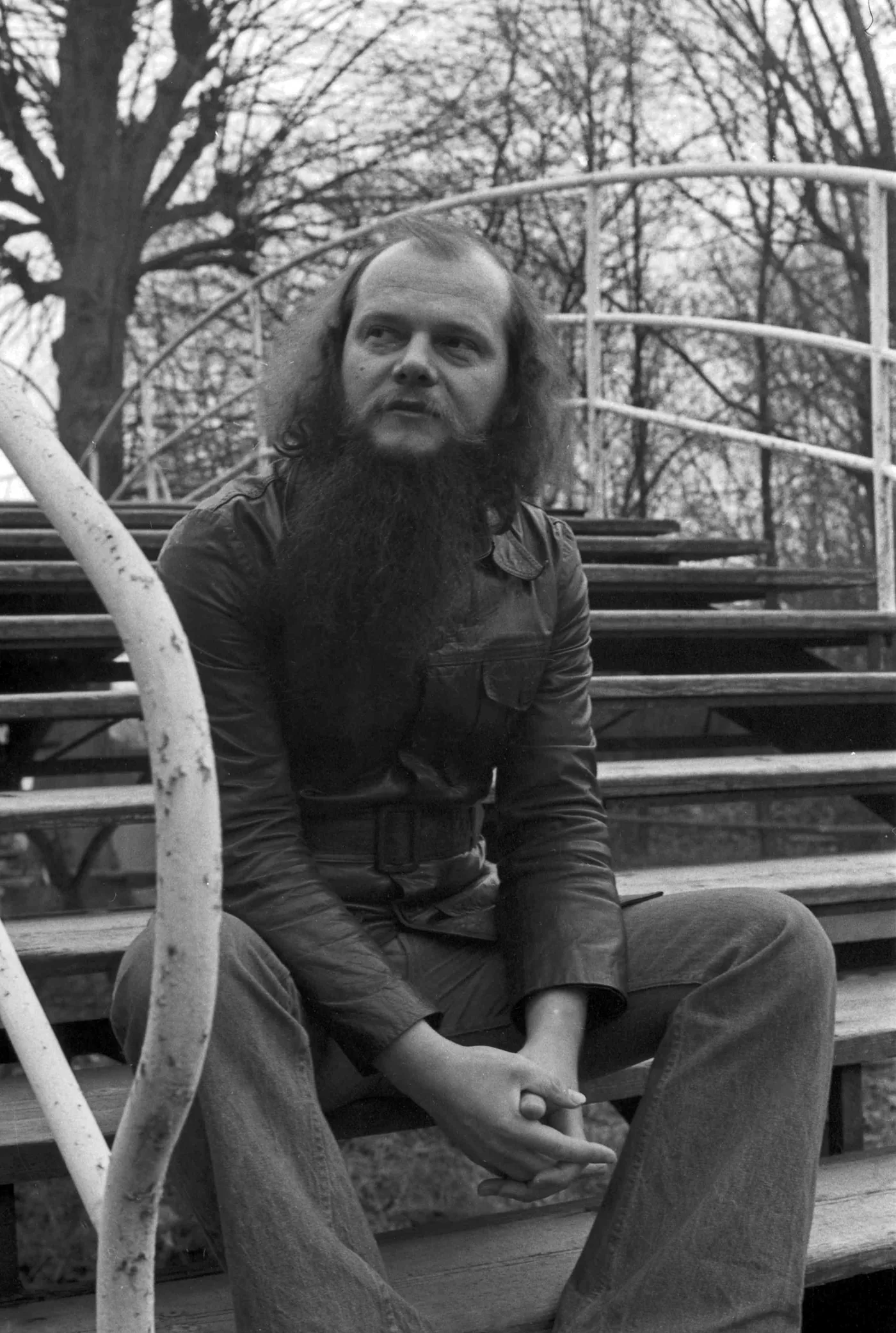
Security forces arrested Biermann’s close allies, including songwriter Gerulf Pannach and keyboardist Christian Kunert [1, 7]. In a scholarly study on Stasi repression, researcher C. A. Costabile-Heming documented how writer Jürgen Fuchs was held in Hohenschönhausen prison, enduring quiet terror tactics and late-night harassment directed at his family. Fuchs later insisted that overcoming Stalinism required complete memory and open truth [8]. Fuchs, Kunert, and Pannach were deported to West Germany in August 1977. Actress Eva-Maria Hagen and her daughter Nina Hagen followed that same year after work bans ruined their careers [7]. Exiling one singer cost the regime its most respected creative voices [1].
Artistic Resistance After Expatriation
Settling in Hamburg, Biermann continued writing songs and essays [3]. In 1983, at age 46, he broke completely with communist doctrine, calling it a path through hell to force paradise on earth [5, 6]. He performed in East Berlin on 1 and 2 December 1989 as the regime fell [3]. In 1990, he joined citizens occupying the Stasi headquarters in Berlin. Over his career, he won the Georg Büchner Prize in 1991, the Heinrich Heine Prize in 1993, and honorary Berlin citizenship in 2007 [6].
Biermann also championed dissident causes abroad. In 2010 and 2011, he toured Germany with exiled Chinese author Liao Yiwu, who had spent years in prison. During a 2014 Bundestag ceremony marking the fall of the Berlin Wall, Biermann sang Ermutigung and sharply rebuked parliamentarians from the Left party [7]. In October 2021, he gave his Ovid Prize to imprisoned Belarusian activist Maria Kolesnikova, who resisted Alexander Lukashenko’s rule [5]. On 15 November 2026, Biermann marked his 90th birthday in Hamburg, drawing congratulations from Berlin Mayor Kai Wegner and receiving the Order of Merit from North Rhine-Westphalia. Asked by interviewer Tobias Kühn about the birthday wish to live to 120, Biermann replied, “Don’t threaten me!” [6].
- ONLINE NEWS Lewis, A., & Parkhurst, P. (2026). East Germany exiled singer Wolf Biermann. They only made his message louder. The Conversation. [Article Link]
- ONLINE NEWS Hanford, P., & Delaney, R. (2025). Wolf Biermann – the German Bob Dylan exiled by the GDR. BBC Radio 3. [Article Link]
- WEBSITE Wikimedia Foundation. (2026). Wolf Biermann. Wikipedia. [Article Link]
- WEBSITE Sandmann, P. (2026). Wolf Biermann – Singer-Songwriter and Victim of Political Persecution in East Germany. PolitischeVerfolgung.de. [Article Link]
- ONLINE NEWS Döing, L. (2016). Germany’s eternal dissident: Singer Wolf Biermann. Deutsche Welle. [Article Link]
- ONLINE NEWS The Berlin Spectator staff. (2026). Wolf Biermann: A Troubadour Who Never Learned to Keep Quiet. The Berlin Spectator. [Article Link]
- ONLINE NEWS Deutsche Welle. (2019). Wolf Biermann, outspoken political dissident and singer-songwriter. DW.COM. [Article Link]
- ACADEMIC JOURNAL Costabile-Heming, C. A. (2003). Jürgen Fuchs: Documenting Life, Death and the Stasi. German Writers and the Politics of Culture, 213-226. [Article Link]
APA 7: PerEXP Teamworks. (2026, November 16). Wolf Biermann Mobilized Artists When East Germany Cast Him Out. PerEXP Teamworks. https://perexpteamworks.com/en/wolf-biermann-exile-east-germany/


