






Musicians MEGATERA・ZERO and VK Blanka released new Beerus theme songs on November 9, 2026. The tracks provide fresh opening and ending music for the animated retelling Dragon Ball Super: Beerus. The musical launch arrives as Episode 5 expands the duel between Goku and Lord Beerus on streaming platforms including Netflix, Hulu, and Crunchyroll in the United States [1].
New Beerus Theme Songs in Episode 5
The opening track “ONOGAMI” by MEGATERA・ZERO and the ending song “Kan Peki No Peki” by VK Blanka give the project a new voice. Toei Animation chose modern arrangements that match the speed of the duel scenes. The show arrived globally on Netflix and Crunchyroll [1].
This musical debut coincides with key shifts in the story. In Episode 5, Goku battles Beerus in his newly unlocked Super Saiyan God form to defend Earth from ruin. While older versions treated this first encounter as a long warmup, the remake pushes the action right away. Goku struggles against divine attacks that shake the sky [2].
Viewers will spot a clear difference in visual presentation compared to earlier manga chapters. Animators relied on swift camera angles and heavier impact frames during the fight. Goku’s crimson aura carries a solid presence against the purple energy of the Destroyer. The accompanying songs reinforce that weight. MEGATERA・ZERO wanted his opening track to mirror the nonstop momentum of the battle, drawing cues from fight sequences in Dragon Ball Super: Broly so the tempo would never drop. Both tracks provide a fresh pulse as the series moves into serious divine warfare. The result gives the clash a distinct rhythm that separates this retelling from older broadcasts [1].
How the Tracks Came Together
MEGATERA・ZERO brought plenty of experience to the project, having sung theme songs for Mononogatari season 2 and the TV Tokyo drama Black Postman. When his label asked if he wanted to pitch a song, he sent an original demo recorded in his studio. That submission earned him the job [1].
The title “ONOGAMI” carries layered wordplay that fits the spirit of the anime. MEGATERA・ZERO explained that the word translates to “one’s own self,” but he deliberately wrote it in katakana instead of kanji so fans could discover other meanings including a god with a tail. Listeners can hear the word for god (kami) in the lyrics. He composed the track thinking of warriors like Goku who step into combat with bodies trained to their peak, hoping the lyrics would speak to allies and villains alike. The word itself had no personal meaning for the artist prior to writing the song. He built every bar purely around Dragon Ball lore [1].
VK Blanka took a more outspoken approach to secure the ending theme. Known for his work on Black Clover, the musician campaigned openly for the chance: “It’s no exaggeration to say Dragon Ball made me who I am. I’ve been a fan all along, and I learned so much from Dragon Ball. What I love most about it is that it doesn’t just portray strength—it portrays sorrow, too.” That outlook shaped the closing song Kan Peki No Peki [1].


How Beerus Theme Songs Shift Combat Tempo
Both musicians worked with very different sonic targets. Could modern rhythms match the frantic pacing of this universe? MEGATERA・ZERO answered by building an arrangement full of driving percussion and quick guitar riffs, drawing direct cues from fight sequences in the film Dragon Ball Super: Broly [1].
VK Blanka focused on simple, lasting language rather than speed. He spent weeks searching for short phrases that carry emotional weight in a single beat, citing the timeless appeal of “CHA-LA HEAD-CHA-LA” as his standard. He explained that Dragon Ball taught him to look inward, sensing divine forces mortals can never defeat, and he poured that feeling of quiet struggle into his vocal lines. Both artists recognized that Beerus theme songs required an unmistakable blend of fighting spirit and emotional depth. The music stays grounded in human feeling even while gods trade blows [1].
Longtime fandom helped both artists connect with the story. During his career, MEGATERA・ZERO joined veteran voice performer Masako Nozawa for a studio radio broadcast, later citing Goku and Vegeta’s teamwork in the Majin Buu Saga as his favorite anime storyline. VK Blanka favors Android 18 and hopes to watch the assassin Hit fight at full power [1].
Ultra Ego in the Alternate Continuity
While the new soundtrack gives the anime an updated tone, Episode 5 also confirms major changes to the story’s timeline. Unlike the original anime series or the ongoing manga run overseen by Toyotarou, this remake takes place in an alternate continuity where battle scaling remains under closer control. Goku can barely comprehend his rapid growth after unlocking Super Saiyan God, yet the fight shows clear limits to his newfound power. He uses his martial arts training against Beerus, but the Destroyer counters blow after blow without breaking a sweat. The duel shows that the remake wants to keep god battles grounded in tactical combat instead of runaway power jumps [2].
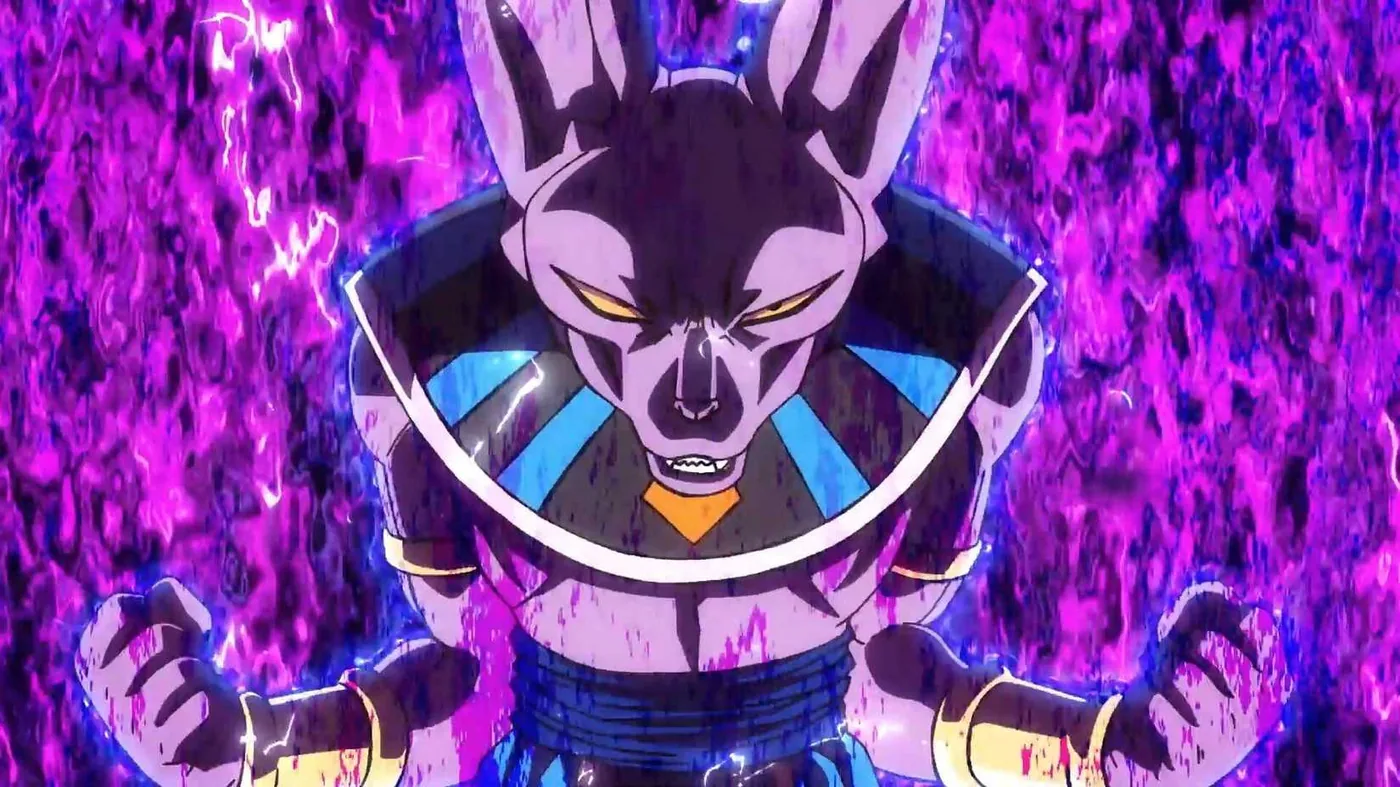
The biggest surprise in Episode 5 involves Beerus himself. The animators redesigned his aura and Hakai visual effects with subtle elements of Ultra Ego. This addition previews Vegeta’s future technique years ahead of schedule. During the clash, Beerus laments that Goku isn’t the rival he dreamed of. His dialogue confirms that the warrior from his visions was actually the ancient Saiyan Yamoshi [2]. While discussions about non-canonical lore often link to the strongest non-canon Dragon Ball characters, this series anchors its reveals in official canon.
Goku manages to absorb the divine energy into his regular Super Saiyan form as the fight ends, displaying early signs of Ultra Instinct. Watching quietly from the sidelines, the angel Whis notices Goku’s potential and prepares to train him in the next arc [2].

Why Earlier Mentors Step Aside
As divine power levels climb in the remake, older mentor characters step out of the spotlight for good. In Dragon Ball Z, King Kai served as Goku’s chief teacher, guiding him through the afterlife and teaching him core martial arts techniques. But King Kai’s power level sits below Nappa’s from the Saiyan Saga, leaving him unable to help in clashes involving gods. Episode 5 and the upcoming Episode 6 mark what might be his final appearances in the franchise, as Goku turns to Whis for higher guidance. The shift signals the end of an era for the deity who once watched over Earth’s defenders [2].
Old Kai faces a similar fate. While he was vital in the Buu Saga for unlocking Gohan’s Ultimate form, neither Goku nor Vegeta want their abilities unlocked through magic rituals. Kibito Kai will also defuse off-screen into Supreme Kai and Kibito between arcs, clearing out older deities as new gods arrive [2].
Even Gohan looks diminished in this retelling. In Episode 5, Gohan stands with Videl and questions whether his father really became a god simply because he cannot sense divine ki, revealing a lapse in confidence that contrasts with his earlier heroism [2]. As Beerus theme songs evolve to reflect cosmic battles, the anime shows that mortal fighters must look within themselves to grow. The music and story move forward in unison and leave past mentors behind as Goku steps into a wider universe [1].
- ONLINE NEWS Bolts. (2026, November 9). MEGATERA・ZERO and VK Blanka bring fresh beats to Dragon Ball Super: Beerus anime. Anime News Network. [Article Link]
- ONLINE NEWS Fontes, R. (2026, November 9). Dragon Ball Super: Beerus – 7 strongest characters, ranked (Episode 5). Game Rant. [Article Link]


