



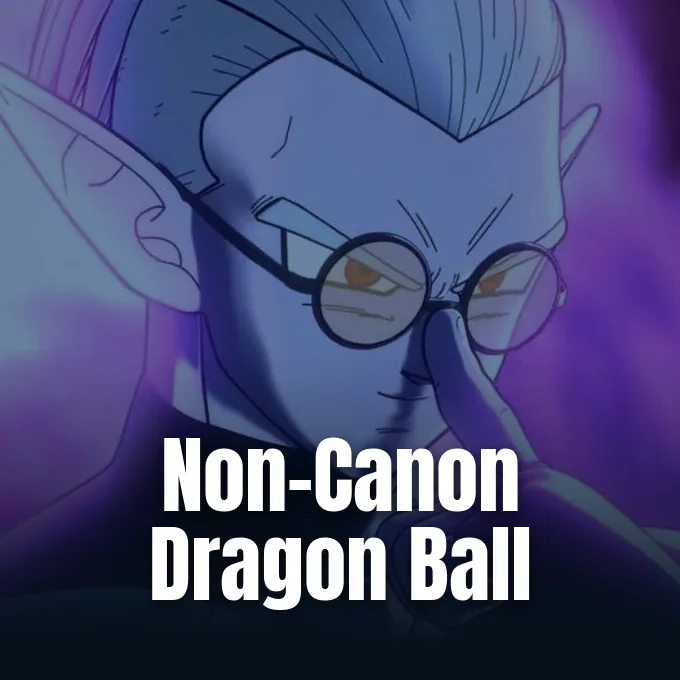
Akira Toriyama created Dragon Ball in 1986, yet spin-off films and video games expanded the mythos far beyond the original manga. Across decades of battles, non-canon Dragon Ball narratives introduced fighters whose absurd abilities dwarf standard enemies. Daniel Kurland of Comic Book Resources said these stories helped “keep the franchise alive during the manga and anime’s dark years” [1]. These alternate fighters don’t follow normal limits.
Dark Kings Reshaping Non-Canon Dragon Ball
At the apex of alternate power stands Fu, a Bio-Android Demon born from the DNA of Mira and Towa who first appeared in Dragon Ball Xenoverse 2 before becoming the central threat of Super Dragon Ball Heroes. Equipped with his space-slicing Time Cutter sword, Fu can easily tear portals between separate alternate realities while commanding dark energy against the multiverse’s greatest martial artists. His base form already surpasses Demigra and Golden Great Ape Cumber, but his true terror unlocks after he absorbs the dark bird Dogidogi. In this Dark King form, Kurland said analysts predict his strength matches Zeno the Omni-King [1]. It’s a level of power that mortal fighters can’t comprehend.
Before Fu claimed the throne, Mechikabura reigned as the franchise’s most destructive Dark King. This ancient demon is over 80 million years old, and he used wicked sorcery to regain his youth along with an immortal healing factor [1]. When Mechikabura entered his Time Power Unleashed state, he literally absorbed all time and history until the entire multiverse temporarily ceased to exist before heroes intervened. Only the sacred Key Sword wielded by Xeno Trunks restored reality before Super Saiyan 4 Xeno Vegito struck the demon down. Mechikabura didn’t rely on brute punches alone.
A similar cosmic ambition drove Demigra, a Demon God who spent over 75 million years trapped inside the Crack of Time pocket dimension after trying to overthrow Chronoa. Demigra returned in Super Dragon Ball Heroes as Dark King Demigra, wielding dark magic potent enough to overpower Aeos. Taking down Time Power Unleashed Demigra required a simultaneous triple Kamehameha from Super Saiyan 2 Future Warrior in Black, Perfected Ultra Instinct Goku, and Super Saiyan 4 Xeno Bardock [1]. As Renan Fontes of Game Rant said, that Future Warrior in Black was actually an alternate Future Gohan rescued by Aeos and supercharged by Dark Shenron [2].
Shadow Dragons and Corrupted Cybernetic Androids
Long before video games introduced Demon Gods, Dragon Ball GT explored the destructive fallout of mortal wishes through the final Shadow Dragon Saga. Omega Shenron originated after Syn Shenron swallowed all seven corrupted Dragon Balls, granting him the collective elemental powers and regenerative healing of every preceding Shadow Dragon. His dark energy culminated in the massive Negative Karma Ball (an attack that threatened to obliterate the entire galaxy) before warriors could regroup [1]. Goku and Vegeta fused into Super Saiyan 4 Gogeta to counter the monster, but Goku ultimately destroyed Omega Shenron using the Super Ultra Spirit Bomb. The tragic dragon remains a fan favorite, inspiring merchandise like Lego sets celebrating Shenron and Goku.
Another mechanical terror from Dragon Ball GT is Super 17, the wicked cybernetic synthesis of Dr. Gero’s Android 17 and Dr. Myuu’s Hell Fighter 17. This cybernetic fighter effortlessly overpowered Vegeta, Majuub, Goten, Trunks, and Gohan while casting his explosive Shocking Death Ball. His energy sensors let him drain incoming energy attacks to grow stronger, but absorption keeps him completely immobile [1]. Goku exploited that brief physical flaw. While Super 17 absorbed a relentless barrage of blasts from Android 18, Goku pierced his cybernetic chest with the devastating Dragon Fist technique during combat.
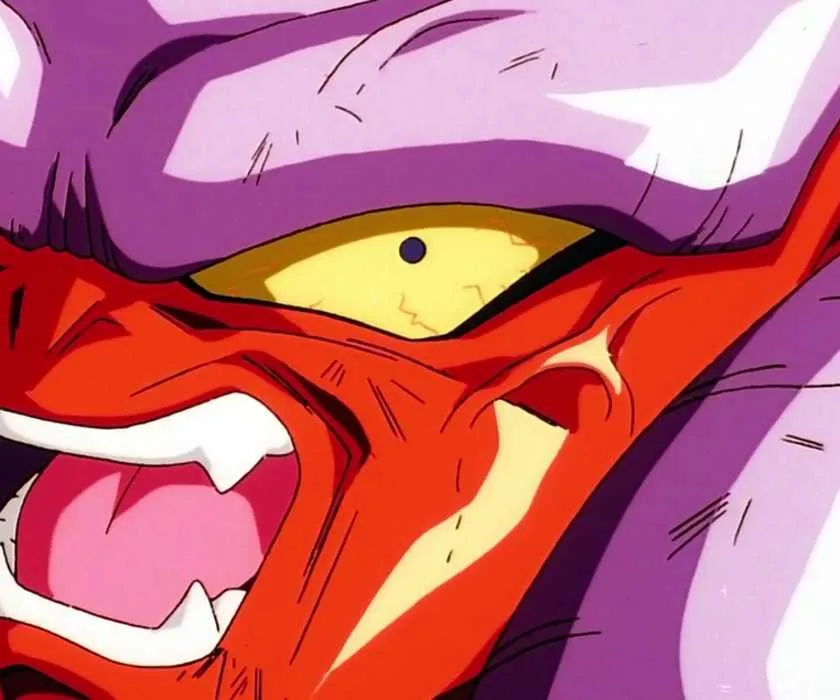
The GT timeline proved particularly harsh for Gohan, whose power plummeted once he abandoned martial arts for ordinary family life. Fontes said GT Gohan permanently lost his Ultimate form and functioned mainly as Baby fodder before Omega Shenron battered him into unconsciousness [2]. This tragic decline contrasts with earlier movies like Dragon Ball Z: Fusion Reborn, where heroes faced Janemba. That demonic entity rewrote reality and wielded the deadly Dimension Sword before Gogeta purified him with the Stardust Breaker [1]. Movie villains often demanded fused powerhouses.


Primordial Saiyans Challenging Godly Fused Warriors
Ancient Saiyan bloodlines bring pure savagery to alternate timelines, best exemplified by Cumber during the Prison Planet Saga of Super Dragon Ball Heroes. Fu initially locked this massive Evil Saiyan inside a power-restricting jacket because Cumber’s base strength matched Vegito Blue and Jiren during intense multiversal clashes. His corrupting dark ki triggers dangerous transformations into Golden Great Ape and Full Power Super Saiyan 3 [1]. Even capped at Super Saiyan 3, Cumber traded devastating blows against Super Saiyan 4 Vegito, Ultra Instinct Goku, and Limit Breaker Super Saiyan 4 Broly. Cumber’s raw ferocity stunned every opponent.
A different ancient warrior stars in Dragon Ball Legends, where Shallot awakens with amnesia to fight across the time-displaced Tournament of Time. Toriyama designed Shallot and his twin brother Giblet specifically for the mobile title, crafting a redemptive journey that elevates Shallot from base form to Super Saiyan Blue [1]. Kurland said Shallot’s recent roster debut in Dragon Ball: Sparking! ZERO gives fans hope that the ancient warrior will earn wider narrative roles. The fighting game also explores alternate branches like Gohan Black, a What If tale where Zamasu steals Gohan’s body instead of Goku’s [2].
Mortals rebelled against divine hierarchy in the Universal Conflict Saga, where Hearts led a violent campaign to assassinate Zeno the Omni-King. Known as the Godslayer, Hearts possessed natural gravity control and telepathic mind-reading that let him predict incoming strikes from Hit and Jiren. After absorbing the divine Universe Seed, he transformed into Perfect Hearts, a cosmic entity who believed he could dismantle godly reign forever across twelve universes [1]. It took Gogeta Blue firing a Limit Ultra Kamehameha to end Hearts’ rebellion. Alternate villains consistently forced fusion techniques.
Why Is GT Non-Canon in Dragon Ball?
Fans constantly ask why certain sagas sit outside official continuity, especially when evaluating beloved stories like Dragon Ball GT. The original manga created by Akira Toriyama concluded its run before Toei Animation produced GT as an anime-exclusive sequel. Because Toriyama didn’t write the script or draw a companion manga, official continuity bypassed GT when Dragon Ball Super and Dragon Ball DAIMA arrived. That creative separation explains why non-canon Dragon Ball characters possess wild abilities that don’t match the manga’s strict progression and linear power scaling rules. Spin-offs simply invented whatever spectacle pleased the audience.
This creative freedom gave birth to Aeos, a former Supreme Kai of Time who decided to prune redundant timelines to forge one definitive history. Aeos once held rank above Chronoa, Mechikabura, and Demigra, wielding absolute temporal authority during the Super Space-Time Tournament [1]. In her Time Power Unleashed state, she can stop time, reverse moments, or delete entire timelines without breaking a sweat. Kurland noted her unleashed form stands equal to Ultra Instinct Sign Goku. Her godlike pruning made entire universes vanish in seconds.
Aeos achieved her apocalyptic ambitions by enlisting the Warriors in Black, including an alternate Future Gohan (the masked warrior serving Aeos) plucked from the Xeno timeline before androids could kill him. Dark Shenron granted this masked soldier massive energy, elevating his power from Cell Saga levels to rivaling Super Saiyan God Xeno Trunks [1]. Fontes explained that standard Future Gohan died tragically because he mistakenly believed Super Saiyan Goku on Namek was peak Saiyan power, capping his Power Level at 150,000,000 [2]. Non-canon variants rewrite those tragic limits.

Divine Power Scaling Beyond Canonical Limits
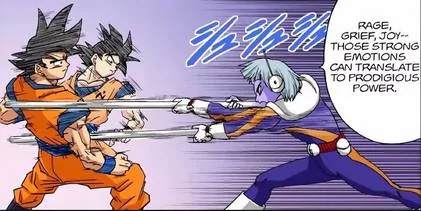
Comparing non-canon villains to canonical benchmarks highlights how extreme power scaling became in spin-off media. In the canonical Dragon Ball Super manga, Goku learned Perfected Ultra Instinct from Merus, an Angel in training hiding within the Galactic Patrol [3]. Merus helped Goku sharpen his senses before sacrificing his divine status to weaken Moro during the climax of the intense Galactic Patrol Prisoner Saga. When Moro absorbed Seven-Three and Merus’ Angelic Ki, he fused directly with Earth as Planet Moro before Goku, Vegeta, Uub, and Grand Supreme Kai stopped him. Canonical battles pushed mortals into divine territory.
Yet even Angelic techniques struggle to match the reality-shattering scale displayed by non-canon bosses like Fu or Mechikabura. In canon, Beerus stands as the ultimate mortal ceiling, possessing enough Ultra Instinct talent to dodge blows from every fellow God of Destruction during tournament showcases [3]. Whis confirmed that Goku can’t defeat Beerus without cooperating closely with Vegeta. In spin-offs, however, Dark King Fu absorbed Dogidogi and approached Omni-King Zeno’s level, bypassing Beerus entirely [1]. Non-canon writers simply don’t obey canonical power ceilings.
That rule-breaking ethos also transformed Gohan across alternate universes. While canon Gohan reached Gohan Beast (the form granting an autonomous defense avatar) to stagger Perfected Ultra Instinct Goku in the manga, alternate timelines pushed the hybrid hero along wildly divergent paths [2]. Xeno Gohan attained Super Saiyan 4 to battle Demon Gods, while the Future Warrior in Black wielded dark dragon magic for Aeos. Kurland said these non-canon Dragon Ball expansions reward longtime fans with creative match-ups that official storylines cannot accommodate [1]. Alternate timelines keep expanding Dragon Ball’s universe.
- ONLINE NEWS Kurland, D. (2026, October 3). 10 Strongest Non-Canon Dragon Ball Characters, Ranked. Comic Book Resources. [Article Link]
- ONLINE NEWS Fontes, R. (2026, October 3). Dragon Ball: 8 Strongest Versions of Gohan in the Multiverse, Ranked. Game Rant. [Article Link]
- ONLINE NEWS Fontes, R. (2026, October 3). Dragon Ball Super 2: 4 Strongest Ultra Instinct Masters, Ranked. Game Rant. [Article Link]


