



Google Home owners noticed an unexpected surge in network traffic this week after smart home hardware began consuming massive amounts of bandwidth without user interaction. Multiple reports indicate that Google Home speakers have been quietly pulling hundreds of gigabytes of background data while sitting completely idle on household desks [2]. Owners discovered the spike after inspecting router logs to see why data caps vanished so quickly [3]. Google acknowledged the issue and confirmed that an official software update is now rolling out to resolve the glitch [1].
Spikes in Google Home Speakers Network Traffic
The issue first surfaced on Reddit when several owners began sharing screenshots of unusual activity captured by their home network equipment. One early post from about a week ago revealed that a single device downloaded more than 200GB of data in twenty-four hours. Another customer posted router logs showing 35GB consumed in a single day, while subsequent community discussions documented similar excessive bandwidth spikes across different households within the same week [2]. Reports tracked by Android Authority showed that some users woke up to find their units had downloaded nearly 140GB overnight without any voice prompt or streaming request. In one of the most severe instances documented by community members, a setup with three new smart speakers consumed approximately 280GB of data collectively, while other shared logs showed monthly totals exceeding 3TB during continuous testing. That unprecedented consumption appeared completely detached from normal device routines [3].
Audio streaming uses modest bandwidth. Aside from streaming compressed music or retrieving brief weather updates, idle voice hardware usually sends only tiny keep-alive signals to remote servers across the entire day. When unprompted traffic balloons into dozens of gigabytes each night, households on capped broadband packages risk unexpected overage fees from their service providers [2].

Measured Data Logs on Test Units
Independent testing conducted by prominent technology publications confirmed that excessive bandwidth consumption was not confined to isolated forum discussions. Writing for 9to5Google, editor Abner Li monitored a test speaker that had not received any voice inputs or media playback streams for an entire day. That single dormant device consumed 17 GB of network data in twenty-four hours. A detailed review of the hourly logs showed that at 3 a.m. PT, the hardware pulled 9.99 GB in one concentrated surge, which suggested an automated background task had stalled during overnight maintenance routines without completing its verification. Earlier in the month, on October 13, that identical unit downloaded 41 GB across the connection, pushing thirty-day consumption to 132 GB despite receiving no user requests. Continuous automated cycles kept repeating without pauses [1].
Not all units were affected. A second Google speaker located in a different household used only 2 GB throughout the entire month under light daily operation. Furthermore, other connected smart displays operating on the identical local network—including multiple Nest Hub units—showed completely normal traffic patterns without any abnormal spikes in bandwidth usage. Reader John Doe questioned how a small speaker could pull so much data given its modest onboard storage [1].
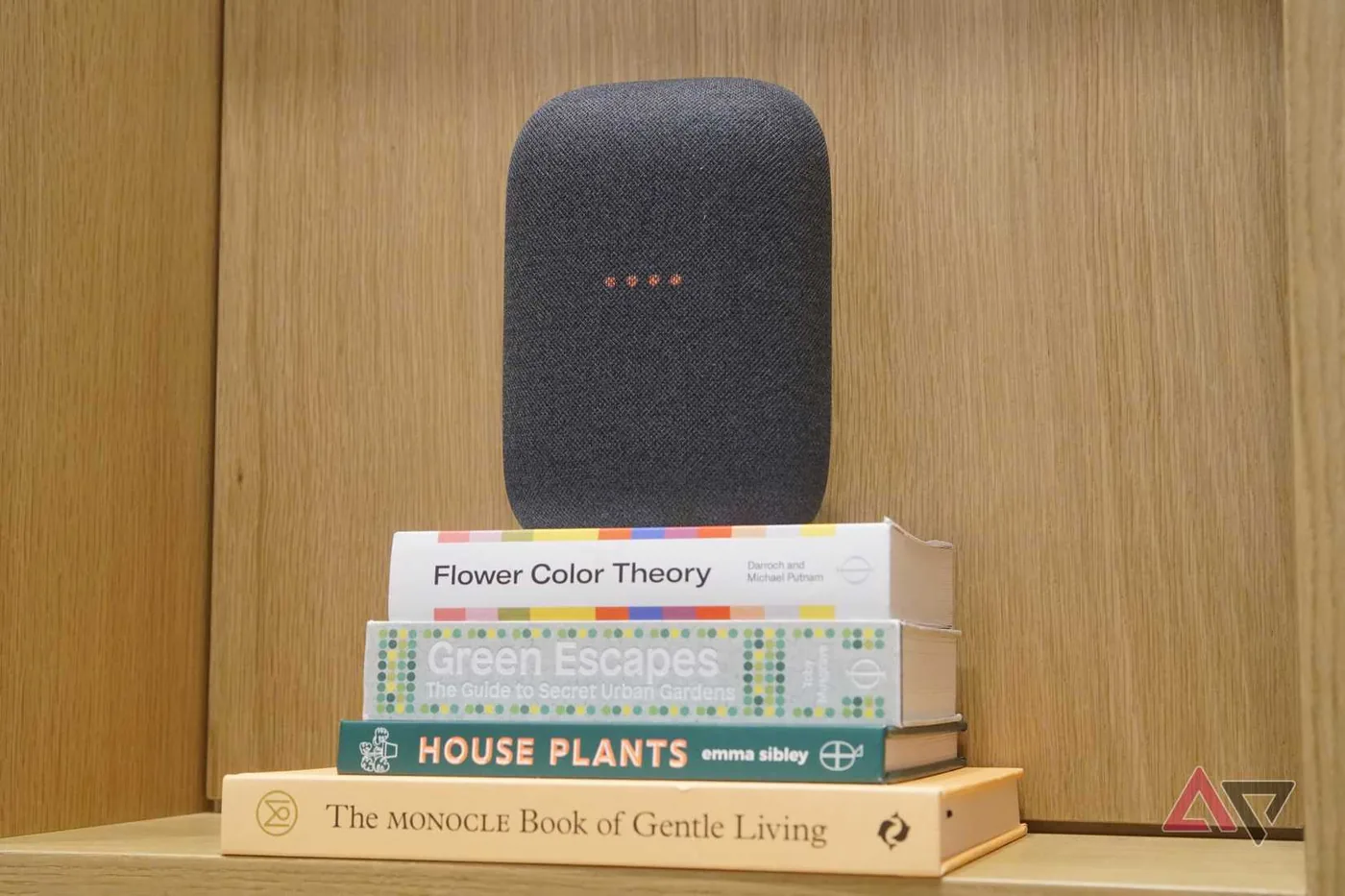


Suspected Causes Behind the Download Loop
Smart home speakers lack physical displays, so manufacturers design them to handle routine maintenance tasks silently in the background without requiring manual confirmation from their owners. When firmware packages arrive, the hardware downloads the payload and applies the files during quiet overnight hours. If an installation stumbles on a verification error or network interruption, the operating system routinely triggers an automatic download retry. Android Police writer Mark Jansen said that a stuck update loop seems to be repeatedly downloading files throughout the day. When that automated retry loop runs continuously around the clock, dozens of gigabytes stream through local routers without displaying any physical warning on the hardware itself. The hardware remains silent while exhausting monthly network allotments [2].
Device age may also determine which units encounter the problem. Newer models appear to receive firmware rollouts more frequently than older hardware, making them prime candidates for software installation glitches. Jansen said his own older Google Home hardware remained completely unaffected during testing, matching feedback from other long-time owners whose older units stayed quiet. Hardware age plays a role [2].

Monitoring Google Home Speakers on Home Networks
The glitch operates without making any sound. Because there is no audible warning, identifying affected units requires checking local network logs rather than waiting for an alert on the speaker. Owners using Nest Wifi can track bandwidth consumption directly through the companion mobile interface. Navigating to the Wifi tab inside the Google Home app, selecting Devices, and tapping the specific speaker displays one-day, seven-day, and thirty-day graphs to reveal abnormal activity across hourly intervals on the local network. Checking these usage graphs helps owners confirm whether their Google Home speakers are operating within normal limits or silently consuming hundreds of gigabytes over a billing cycle without user knowledge [1]. Subscribers using third-party routers can review similar numbers by logging into their web administrative console to examine bandwidth allocation across connected hardware. Network statistics provide the only reliable indicator of runaway background downloads [2].
Unplugging hardware provides instant relief. Jansen advised affected owners to disconnect their smart speaker from wall power for several days until the patch finishes deploying. Leaving a malfunctioning unit connected to Wi-Fi risks triggering penalty fees on internet packages with monthly data allowances. Pulling the power cord stops the runaway download loop immediately, which preserves household bandwidth without erasing any stored Wi-Fi credentials or smart home device configurations [2].

Google Confirmation and Patch Rollout
Google responded to the growing wave of community reports by officially acknowledging the background download issue and confirming that a permanent software resolution is already moving out to customers across global distribution channels over the air. In an official statement provided to 9to5Google, the company said: “a fix is already rolling out that should address this for users.” [1]. The announcement brought relief to customers who feared persistent background drains would breach monthly ISP caps. Silent synchronization remains central to modern consumer platforms, where Google Chrome tab sharing saves scroll state across devices through automated background connections. However, smart home hardware needs careful safeguards so that background retries don’t flood residential networks. The prompt deployment helps limit potential financial exposure for affected households [2].
Because the corrective patch installs automatically over the air, affected hardware will receive the update without requiring owners to navigate manual firmware menus once reconnected to local networks [1]. Smart devices that hog traffic can degrade local Wi-Fi speeds and complicate daily internet tasks for entire households [2]. As the fix reaches active Google Home speakers worldwide, bandwidth usage should return to normal baseline levels of a few megabytes per day [1]. Reconnecting power over the coming days allows the final patch to install cleanly [2].
- ONLINE NEWS Li, A. (2026, October 19). Some Google Home speakers downloading massive amounts of data in the background. 9to5Google. [Article Link]
- ONLINE NEWS Jansen, M. (2026, October 20). Google Home speakers are quietly downloading hundreds of GBs of data. Android Police. [Article Link]
- ONLINE NEWS Android Authority. (2026, October 20). Some Google Home speakers are downloading hundreds of gigs of data for no reason. Android Authority. [Article Link]


