



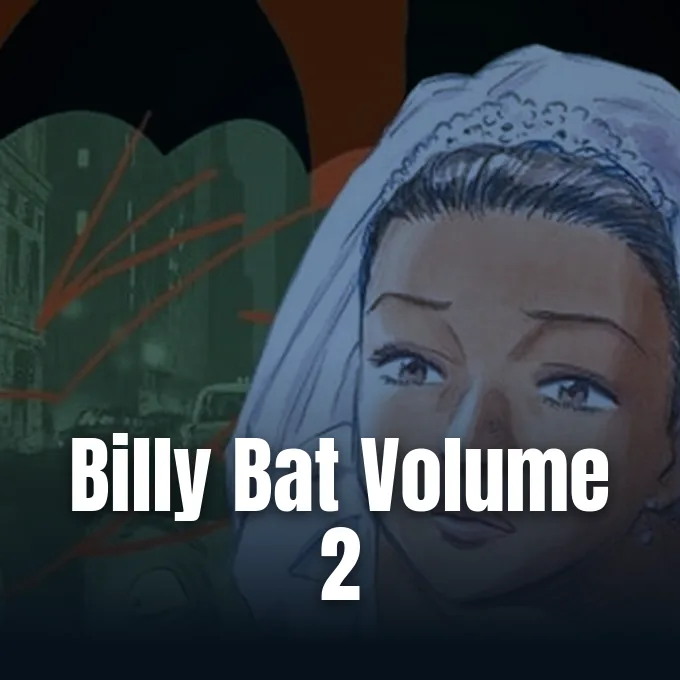
A mysterious bat glyph resurfaces across divergent human eras, guiding cartoonists, cab drivers, and biblical figures through historical upheavals. Naoki Urasawa and Takashi Nagasaki expand this puzzle as Billy Bat Volume 2 reaches English readers through translation by Giuseppe di Martino with lettering by Aiden Clarke and Brendon Hull. Anime News Network reviewer Rebecca Silverman awarded the sophomore release an overall A- grade as the story leaves post-war Japan for civil rights-era New York and Roman-occupied Judea [1].
Billy Bat Volume 2 Broadens the Mystery Across Decades
Where the initial chapters established the post-war Japanese setting, Billy Bat Volume 2 deliberately challenges reader expectations by transforming the titular bat from a simple comic motif into a universal symbol that predates modern nations. Urasawa’s signature visual precision allows the bat to function on multiple psychological levels, oscillating between an innocent cartoon mascot and an ominous historical omen. The narrative immediately questions whether cultural symbols evolve organically or shape civilizations from their earliest foundations. Silverman emphasizes that readers and characters alike must grasp the bat’s influence almost instinctually, allowing its strange directives to dictate major historical turning points [1].
Takashi Nagasaki co-wrote the chapters. The sophomore volume fractures linear chronology to test how a single artistic image endures across centuries [1].
This narrative fragmentation stands in sharp opposition to recent school releases evaluated by Yatta-Tachi reviewer Tony Yao, who noted that Seven Seas Entertainment’s debut of Kuwahali and Tetsuo Ideuchi’s Girl Meets Rock! Volume 1 succeeds precisely through slow-paced, grounded realism [2]. While Yao observed that freshman club stories thrive on everyday drama without excessive melodrama, Urasawa and Nagasaki intentionally construct a high-stakes metaphysical thriller where murders, corporate power, and ancient prophecies intersect across continents [1].

Post-War Tokyo Entangles Kevin Yamagata in Murder
The core narrative opens within a 1949 post-war setting in Tokyo with Japanese-American cartoonist Kevin Yamagata, a former army translator who traveled to occupied Japan pursuing the mysterious origins of the comic character he believed he had created. Yamagata’s creative journey swiftly entangles him in a dangerous post-war environment where real-world killings and comic panels overlap, forcing him to abandon his drawing desk and take shelter with a sex worker. During this feverish period, Yamagata dreams of Billy Bat and confronts an older manga creator resembling Osamu Tezuka, who drew the bat before Kevin and commands him to write the next chapter [1].
This spectral directive carries dual obligations: Yamagata must physically continue the comic series, but he also shoulders the burden of keeping the entity visible before a broader public audience. Editorial transitions of this nature frequently dictate serialized manga longevity, mirroring changes seen when the DanMachi manga adaptation of Astrea Record launched new chapters to expand its established universe. Yamagata realizes that artistic autonomy vanishes once the symbol claims dominion over the creator’s pen [1].
Such complex struggles illustrate how creative labor mirrors external trauma, contrasting with the lighthearted club auditions where Kuwahali’s awkward protagonist Chihiro Hatono (an introverted high school freshman) picks up an electric guitar to join the Light Music Club [2]. In post-war Tokyo, artistic creation provides no comfortable sanctuary from military occupation and underworld violence [1].
Billy Bat Volumes Shift Perspective to 1959 New York
Ten years after Yamagata’s Tokyo ordeal, Billy Bat Volumes jump across the globe to civil rights-era New York City in 1959, where the bat has evolved into a ubiquitous commercial franchise. Chuck Culkin commercialized the drawing completely. This corporate transformation presents a cynical alternate reality where art becomes commodified propaganda while retaining its supernatural undercurrents [1].
The emotional center of this American sequence belongs to Randy, a Japanese-American cab driver who navigates violent racial clashes during a volatile evening while keeping a Billy mascot dangling from his rearview mirror. Billy speaks directly to Randy, functioning as a surreal navigator when an interracial couple whose wedding was violently attacked by the groom’s racist family seeks safe passage across city streets. Rather than offering an absolute moral compass, the entity acts as an affirming presence, encouraging Randy to steer his vehicle directly between opposing groups of hostile protesters to deliver the vulnerable newlyweds to safety. Silverman observes that while the bat actively assists this interracial couple against segregationist violence, the mysterious entity remains notably silent on eliminating war [1].

Randy navigates volatile 1959 streets. His determination to protect the embattled couple mirrors the interpersonal tensions praised by Yao in contemporary manga reviews, where bassist Rin Koyama (a musician with manipulative tendencies) steers bandmates through interpersonal crises [2]. In both narratives, social friction forces individuals to choose between passive conformity and decisive action [1].
Ancient Judea Adds Theological Gravity to the Narrative
Urasawa and Nagasaki push the supernatural timeline back two millennia to Roman-occupied Judea, staging an audacious theological sequence where Judas Iscariot encounters the bat glyph. Guided by the entity’s subtle whisper, Judas carries out the betrayal of Jesus under the premise that betrayal represents a mandatory catalyst for messianic recognition. Roman authorities executed dissidents through crucifixion. The chapters capture the grinding brutality of imperial Roman rule, highlighting frequent public executions along with deep social turmoil [1].
Whether Billy represents an external puppeteer or a psychomachic manifestation (an internal conflict between opposing moral impulses) remains Urasawa’s most provocative artistic question. Can a single illustrated glyph truly dictate the rise and fall of human empires? The Billy Bat Volume 2 narrative repeatedly suggests that human history moves according to ancient designs etched far beyond human comprehension [1].
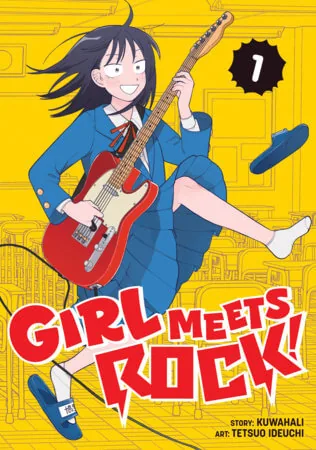
This intense theological weight contrasts with character-driven club stories that deliberately avoid cosmic stakes, as Yao noted when comparing Chihiro Hatono’s earnest clumsiness to Mitsumi Iwakura from Skip and Loafer [2]. While school stories celebrate awkward teenage sincerity, Urasawa uses ancient Judea to interrogate whether free will can survive when historical destiny is manipulated by an unyielding symbol [1].
Critical Consensus Weighs Narrative Ambition and Realism
Silverman awarded Billy Bat Volume 2 an A for art and an A- for story, celebrating its philosophical ambition while acknowledging that juggling disjointed historical eras occasionally induces reader frustration. The English release includes necessary content advisories regarding explicit violence against women and historical racial slurs, reflecting the unvarnished brutality of its chosen eras [1].
Manga localization requires meticulous craftsmanship to preserve complex cultural nuances across lengthy production cycles. Similar dedication appears across modern publishing, where Catherine Delange and Sarah Moon translated Girl Meets Rock! with lettering by Elena Pizarr, copy editing by Biddy MacAdam, and proofreading by Krista Grandy [2]. Structural transitions often define extended serialization milestones, as seen when Kadokawa concludes the TsureKano light novel series with Volume 14 to wrap up long-running character arcs.
Critical evaluation reveals a compelling dichotomy in contemporary manga publishing. Readers seeking grounded adolescent growth find comfort in Hatono’s high school band journey, whereas those drawn to sprawling historical conspiracies find an irresistible puzzle in Billy Bat Volume 2. Kevin Yamagata questions the creature’s origins. The bat’s true intentions remain cloaked in secrecy, leaving audiences eager to discover whether Yamagata should ever have granted the creature an artistic voice [1].
- ONLINE NEWS Silverman, R. (2026, September 24). Billy Bat Volume 2 Manga Review. Anime News Network. [Article Link]
- ONLINE NEWS Yao, T. (2026, September 23). Girl Meets Rock! Volume 1 Manga Review (Minor Spoilers). Yatta-Tachi. [Article Link]


