




Emergency planners and meteorologists warn that autumn flood risk has escalated significantly across Britain following shifts in Atlantic weather patterns. While Natural Resources Wales and the Environment Agency urge millions of households to review defense plans, long-range models point to heightened storm activity driven by record sea temperatures in the Pacific Ocean. Wales alone faces danger across 274,500 vulnerable properties as forecasters project a season up to twice as wet as normal [1].
Why Is Autumn Flood Risk Rising Across Britain?
Autumn flood risk is climbing this year because an unusually powerful El Niño in the equatorial Pacific Ocean is altering global air circulation and nudging Atlantic storm tracks directly toward northern Europe. Forecasters at the Met Office have observed daily sea surface temperatures in the central eastern Pacific reaching 3.05C above average on 19 September, eclipsing the previous record of 3.02C set during the 2015 event. While tropical ocean warming never dictates localized rainfall on its own, it reshapes the statistical baseline for the British autumn. Seasonal models show the probability of an unusually wet period between October and December has doubled compared to normal expectations, while the chance of windier weather is 1.3 times higher [4].
Dr Will Lang, chief forecaster at the Met Office, explained that these shifts show a subtle change in the odds rather than a guarantee of continuous downpours. Forecasters must weigh multiple atmospheric drivers that interact over the North Atlantic, meaning calm intervals remain possible before late winter brings colder and drier conditions. Yet even small changes in ocean temperatures can drive deep low-pressure systems across the country with little advance warning. Chief meteorologist Ian Lisk said that while the Pacific event may rank among the strongest on record, local terrain and drainage ultimately dictate whether saturated catchments turn into destructive torrents [5].
How a Summer Drought Complicates Ground Saturation
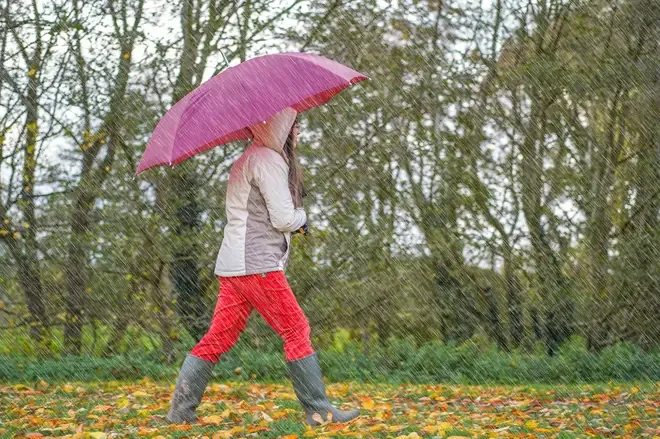
The arrival of heavy rainfall creates unusual ground hazards because months of dry weather have left soils baked hard and unable to absorb downpours. Britain saw only 77% of its average summer rainfall this year, leaving rivers low and soil moisture deficits acute across southern and eastern regions. At Wisley in Surrey, weather stations recorded a run of 62 consecutive days without rain, while south-east England received only 54% of its typical rainfall in August. When rain finally strikes such compacted earth, water tends to run off the surface rather than filtering into underground aquifers, converting street networks into fast-moving channels [3].
This moisture deficit means that water companies and river authorities must manage two opposite problems at the same time. The Environment Agency confirmed that nearly three-quarters of England remains in official drought status despite recent autumn showers. Anglian Water representative Grant Tufts told a Norfolk County Council meeting that hosepipe bans for seven million customers could last until winter, while Thames Water reported similar demand pressures in London. The National Drought Group heard that farmers are already tapping winter animal feed reserves because parched fields stalled grass growth. As Richard Thompson of the Environment Agency pointed out, above-average rain is needed to recharge deep reservoirs, but heavy downpours will trigger autumn flood risk long before groundwater recovers [5].
What Areas Face the Greatest UK Flood Risk?
The steepest danger zones for UK flood risk lie along steep Welsh valleys, low-lying coastal stretches, and urban centers with overwhelmed culverts. In Wales, more than 274,500 homes and businesses are officially classed as vulnerable, representing one in seven properties across the nation. Natural Resources Wales reports that fast-responding rivers in valleys fill within hours when heavy runoff cascades down steep hillsides. Communities built along narrow floodplains have very little time to react when river flows coincide with high tides driven by south-westerly winds. Similar dynamics threaten coastal settlements, where past experiences with coastal storm inundation show how onshore gales push water into residential streets [1].
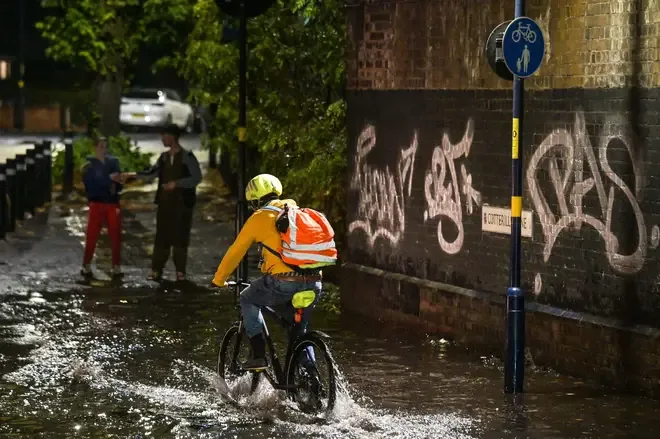
Surface water flooding (runoff that overwhelms local drains during heavy downpours) poses a growing hazard for low-lying urban neighborhoods. When stormwater pipes reach capacity, excess water pools on roadways and floods ground-floor shops before riverbanks overflow [1].
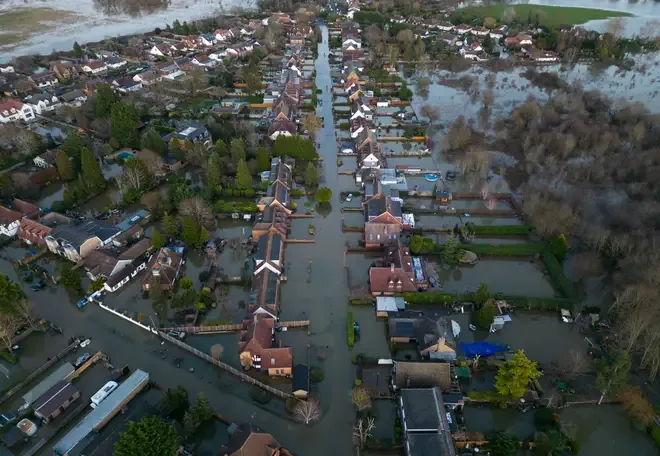
In England, the scale of exposure is wider, with the Environment Agency reporting that over six million properties face river, sea, or surface water hazards. Climate projections show that sea level rise and shifting storm tracks could push that English figure to eight million by 2050. Caroline Douglass, executive director of flood and coastal risk management at the agency, warned that urban drainage networks struggle to swallow heavy cloudbursts. When drainage networks choke, water ponds around doorways and low access ramps far from traditional riverbanks [3].


How Communities in Monmouth and Cardigan Respond
Residents in towns that suffered recent inundations have begun mounting defenses after living through repeated river surges. In Monmouth, where three rivers converge near the town center, locals recalled the devastation caused when deep water swept through the high street in November 2025. Lifelong resident Malcolm Butcher, 82, lost his car to a torrent that struck at 2:30 in the morning and flooded dozens of surrounding houses. Local resident Imogen Elliot, 82, recalled seeing the local Waitrose store inundated under four feet of water. Following past storms like Storm Dennis in 2020, Bert and Darragh in 2024, and Claudia in 2025, neighbors have organized alert chains to move furniture upstairs and stack sandbags before water crests [1].
Further west in Cardigan, café and fishmonger owner Jane Roche has helped coordinate a community flood plan along the River Teifi so neighbors coordinate their preparations. She said: “Developing a community flood plan has brought local people together, helped us understand what actions we need to taken when warnings are issued and given us confidence to support one another when severe weather is forecast.” Cardigan mayor Olwen Davies installed a purpose-built flood door and flood gate on her home to block surges driven by high tides and south-westerly winds. These local networks allow volunteers to assist older residents and deploy defenses before emergency services arrive on the scene [1].
How Households Can Reduce Autumn Flood Risk
Property owners can reduce their autumn flood risk by taking early preventative steps before heavy rain arrives. Jeremy Parr of Natural Resources Wales admitted that only 27% of eligible households (just 48,844 of 181,158 eligible properties) are signed up for free warning alerts, largely because of false myths that registering raises home insurance premiums. Parr said: “We do invest in flood defences… but you can’t stop all of the flooding all of the time.” He urged families to think the unthinkable and map out where they would go if waters entered their streets. Motorists must also avoid dangerous routes, since driving through standing flood water remains a leading cause of vehicle loss and driver casualties during flash floods [1].
Deploying physical defenses before water begins rising is another practical step for homes and commercial sites facing autumn flood risk. Property owners can install modular barriers such as FloodClip, a freestanding temporary system made of lightweight interlocking sections that deploy on tarmac or concrete without ground fixings. These barriers protect vulnerable doorways, loading bays, and low driveway gates up to 75cm high, diverting flash flood runoff away from foundations. When coupled with sandbags, air brick covers, and non-return drainage valves, temporary barriers provide a reliable buffer while river levels crest [6].
What Emergency Supplies Belong in a Home Defense Kit?
An emergency flood defense kit should contain bottled drinking water, prescribed medicines, waterproof clothing, a dry change of clothes, a battery-powered torch, and care supplies for infants or young children. Government guidance published for Flood Action Week advises households in vulnerable postal codes to pack these essentials into durable waterproof containers that can be carried at short notice. Important documents such as passports, driving licences, home deeds, and insurance policies should be sealed in watertight bags with sentimental keepsakes like family photographs and jewelry. The Environment Agency estimates that 3.4 million people living in flood zones currently do not know their homes are exposed to autumn flood risk [4].
On a national level, authorities are expanding physical equipment and digital alerts to handle heavy downpours during the coming months. The Environment Agency has readied more than 270 national pumps, six mobile incident command vehicles, 25km of temporary barriers, and 270,000 sandbags at depots across England. Government funding of £4.2 billion over three years is supporting hard defenses and natural management schemes, with £1.4 billion allocated this year across 600 active projects to protect 70,000 properties by March 2027. Caroline Douglass said that connecting official forecasts directly to public alert networks lets residents receive timely warnings on mobile devices before local streams burst their banks [3].
- ONLINE NEWS Messenger, S. (2026, October 11). ‘Prepare for the unthinkable’ warning over autumn flooding forecast. BBC News. [Article Link]
- ONLINE NEWS Messenger, S. (2026, October 11). Autumn flood response and community resilience in Wales. BBC News. [Article Link]
- ONLINE NEWS Luck, F. (2026, September 30). ‘Heightened potential’ for wet, windy, stormy weather and flooding this autumn, Met Office warns. LBC. [Article Link]
- ONLINE NEWS Merrick, J. (2026, September 30). Six key items millions will be told to prepare for El Niño flood risk. The i Paper. [Article Link]
- ONLINE NEWS Internewscast. (2026, September 11). Met Office issues autumn flood warning as record El Niño looms. Internewscast Journal. [Article Link]
- WEBSITE FloodClip. (2026, September 25). Wetter autumn 2026: What could it mean for UK flood risk and how to prepare? FloodClip. [Article Link]
APA 7: TWs Editor. (2026, October 12). Met Office Warns Record El Niño Raises Autumn Flood Risk. PerEXP Teamworks.


