





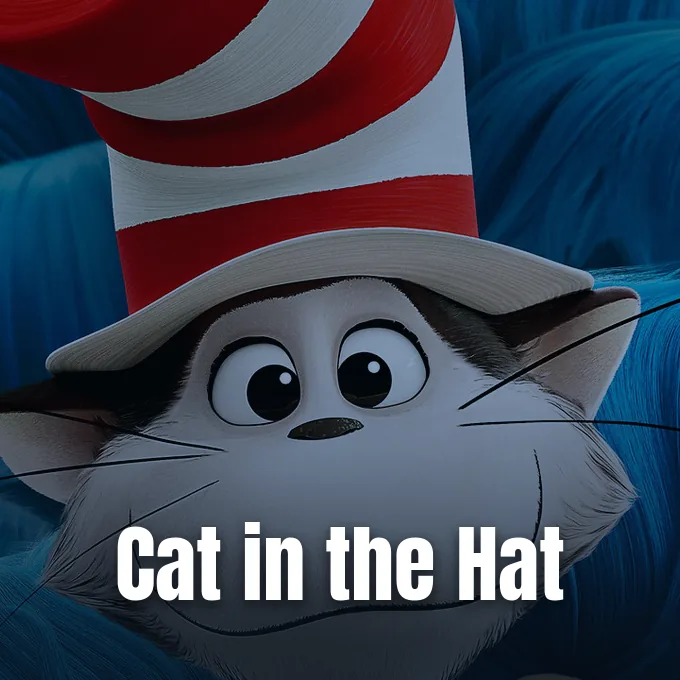
Warner Bros. Pictures Animation released The Cat in the Hat in North American theaters on November 6, 2026, bringing Dr. Seuss’ iconic character to the big screen once again. Directed by Erica Rivinoja and Alessandro Carloni, the comedy is the first feature from the reconfigured studio under division head Bill Damaschke. The narrative follows the mischievous feline visitor after he leaves the children’s house on that boring rainy afternoon, tracing his steps back to an office where bringing chaos to young people is an everyday professional assignment [1].
The Office Premise for the Cat in the Hat
In Dr. Seuss’ original 1957 picture book, which ran for just 1,600 words, the story finishes as soon as the mother walks home. Rivinoja and Carloni wanted to explore where the mysterious visitor goes after that rainy afternoon. “The Cat in the Hat is actually a very small book. Not much happens,” Rivinoja said of their starting point. In this animated adaptation, he works for the Institute for the Institution of Imagination and Inspiration, LLC, an organization where field agents visit bored children [1]. The agency tracks each mission using an emotiscope to measure a child’s happiness and a mess-o-meter to count the collateral damage [2]. Because Hader’s character causes off-the-charts mess on every visit, his impatient supervisor gives him one final assignment to keep his magical hat [1].
That final assignment sends the feline to cheer up Gabby and Sebastian, two young siblings who moved into a new city apartment with their mother and feel completely out of place in their new surroundings. Giancarlo Esposito voices his boss Mr. Hoogeboom, while Bowen Yang plays Gary the intern [1]. Ryan Gaffney voices Pig in a Wig [4]. Susan Brandt, head of Dr. Seuss Enterprises, said this film is their first collaboration with the studio after earlier projects based on The Grinch and The Lorax [1].
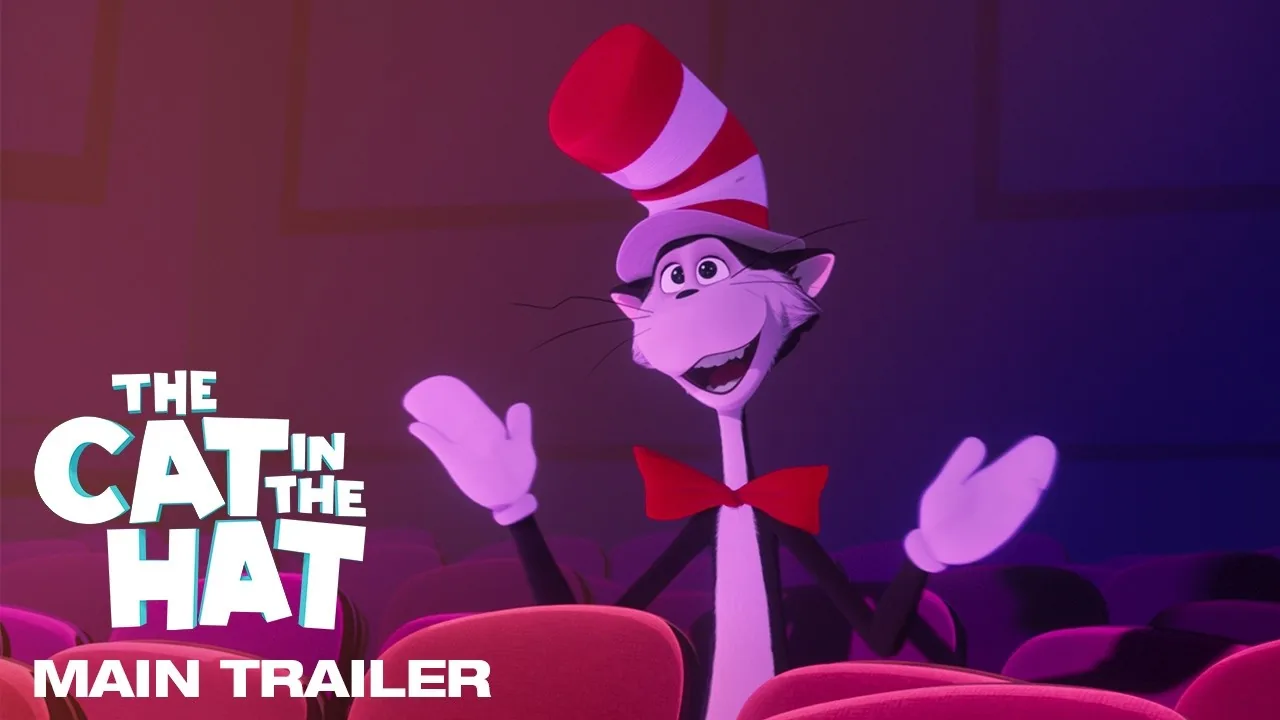
Voice Cast and Characters
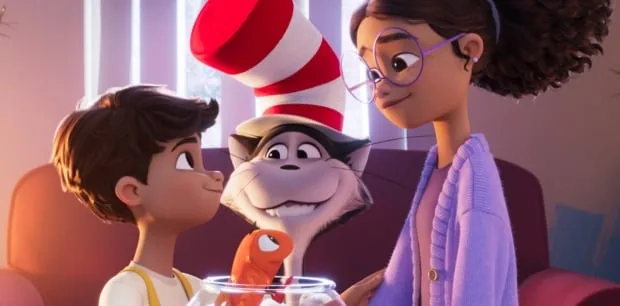
Bill Hader took the lead role after previously performing as the character in a parody sketch on Saturday Night Live. Rivinoja and Carloni gave him freedom to improvise jokes in the recording booth, letting his spontaneous delivery flow right back into the script drafts. “His job is not to make a mess out of things, but he just constantly makes a mess out of things,” Hader said [1]. America Ferrera voices Carmen, the caring mother who works long shifts as a hospital nurse while trying to help her two displaced children settle into their new routines [4]. Xochitl Gomez plays Gabby, who resents leaving her friends behind, while Tiago Martinez voices Sebastian, who wants his older sister to play with him. Quinta Brunson voices Sherrie from HR [1].
The apartment also houses Waffles, a pet goldfish voiced by British comic actor Matt Berry, who can secretly talk and serves as a dry voice of calm reason during their strange journey. Paula Pell voices Patty, the stern building landlady who bans all animals and forces the kids to keep Waffles hidden in a bowl [4]. Tituss Burgess plays the Psychic Narwhal. Carloni said Berry recorded his dialogue from London, prompting laughter from the crew on every take [1].

Crafting Visual Worlds
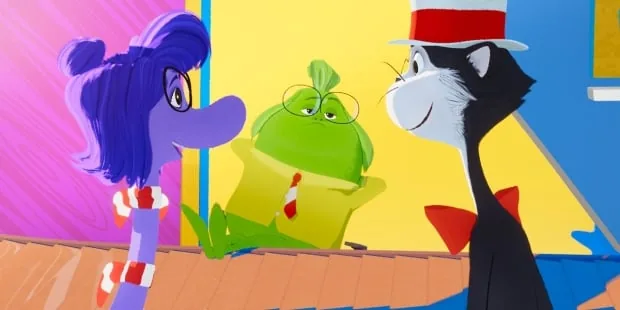
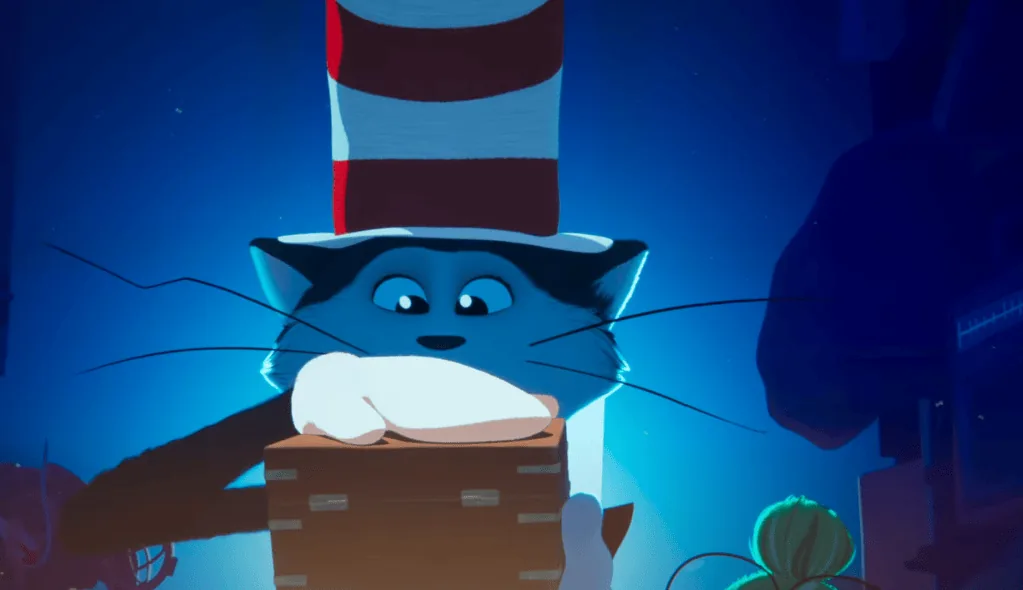
Production designer Aidan Sugano and art director Amos Sussigan created three separate visual looks instead of sticking to a single house style. The Seuss World, where the Cat works, features a flat graphic design with wide areas of negative space inspired by the 1957 book. The Real World where Gabby and Sebastian live uses an updated version of classic three-dimensional animation. When the characters climb into moving cardboard boxes, they unlock imaginative worlds that merge two-dimensional flat line art with three-dimensional depth shaped by their personal childhood memories. Sussigan treated color like a character in the story, beginning with a simple four-color scheme before using red to signal emotional connection. VFX supervisor Matt Waters adapted the off-center compositions and hand-drawn line art of the original book into digital frames [1].
Visual effects studio DNEG served as the creative partner to produce the animation assets for the film. Character development was guided by Leo Sanchez Studio, while Olivier Staphylas supervised animation and Ryan Gaffney led a story crew that reached 12 artists. The artists built Sebastian’s box into an innocent play space where a simple roll of toilet paper becomes a menacing shark, while Gabby’s box brings the instruments from her old neighborhood band to life [1].
Rhythm and the Cat in the Hat Score
Music shapes the overall tempo of the story, with composer Lorne Balfe writing an energetic score that combines orchestral themes with big band jazz. Balfe recorded the sweeping orchestral score at Abbey Road Studios with an ensemble of 124 musicians, which he described as the largest orchestra ever gathered in that famous London facility. He added a marching band horn line and a solo trumpet theme specifically for Gabby’s character [1]. Hilary Duff recorded the track CATastrophe [4]. The production crew gave special attention to auditory details, making sure musical cues matched the lively visual gags happening on screen. Balfe wanted the brass instruments to give the film an old-fashioned Hollywood feeling without losing playful energy [1].
Instead of giving spoken lines to the Things, the creators turned the helpers into rhythm performers. Choreographer Christopher Scott worked with Stomp veterans Ahmed Best and Raquel “Rocky” Horsford to craft an entire movement language made of body slaps, finger snaps, and jumps. Dancers who know Latin steps and American Sign Language contributed movements for specific phrases. “We built a dictionary,” Scott said. His team spent weeks refining the percussive steps [1].
Early Critical Reactions
Reviews for the animated adaptation revealed differing opinions as the 103-minute PG film opened in North American cinemas. Writing for Deadline, film critic Pete Hammond praised Hader’s vocal delivery and called the movie a welcome adaptation that honors Dr. Seuss’ original voice. Hammond said that this animated version easily avoided the missteps of Bo Welch’s 2003 live-action feature starring Mike Myers, which received harsh reviews from critics and earned 10 Razzie nominations [4]. Nirali Kanabar of Times Now gave the film 3 out of 5 stars, writing that the storytelling stayed fun even though noisy characters occasionally weakened the plot [3]. Hammond praised the creative script. Families will find plenty to enjoy during the holiday season [4].
In The Guardian, critic Jesse Hassenger gave a harsher review, calling the feature an overblown film that turned whimsical ideas into business office jokes. He pointed out that a new Daffy Duck cartoon from Looney Tunes debuted ahead of the feature in movie theaters. Hassenger argued that the production borrowed ideas from older animated hits while stretching a short book beyond its limits. Following its American debut on November 6, the movie will open in the United Kingdom on December 4, 2026, and in Australia on December 30 [2].
- ONLINE NEWS Sarto, D. (2026, November 6). ‘The Cat in the Hat’ Follows Bill Hader’s Agent of Chaos Back to His Office. Animation World Network. [Article Link]
- ONLINE NEWS Hassenger, J. (2026, November 6). The Cat in the Hat review – Bill Hader brings plenty but this animated rework is a mess. The Guardian. [Article Link]
- ONLINE NEWS Kanabar, N. (2026, November 6). The Cat In the Hat Movie Review: Bill Hader’s Animated Fantasy Comedy Entertains Only In Parts. Times Now. [Article Link]
- ONLINE NEWS Hammond, P. (2026, November 3). ‘The Cat In The Hat’ Review: Bill Hader Takes Dr. Seuss’ Chaotic Cat Into New Dimensions In Delightful & Long-Overdue Animated Feature Debut. Deadline. [Article Link]


