




LoRaWAN is a low-power, wide-area network (LPWAN) protocol that wirelessly links battery-run devices to the Internet over long distances [13]. Developed originally by the French firm Cycleo and acquired by Semtech in 2012, the system separates radio hardware from high-level network control [14]. Understanding how LoRaWAN works needs looking at both layers: the proprietary chirp radio scheme that gives the link its range, and the open standard run by the LoRa Alliance that organizes how millions of sensors talk to central servers without draining small batteries. Today, public and private setups in over one hundred countries rely on this design to collect data from utility meters and farm monitors [8, 13].
- Core Radio Principles: Chirp Spread Spectrum
- How LoRaWAN Works Through Network Layers
- Gateway Coordination in Star Topology
- Spreading Factors and Adaptive Data Rates
- Managing Energy: How LoRaWAN Works for Sensors
- Data Security: How LoRaWAN Works to Protect Payloads
- Firmware Updates in Field Hardware
- Physical Limits in Shared Spectrum
Core Radio Principles: Chirp Spread Spectrum
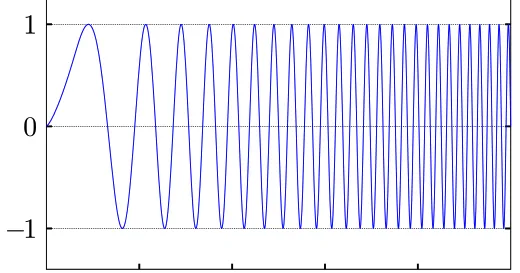
At the base of the stack sits LoRa, a physical radio scheme derived from radar chirp spread spectrum (CSS) ideas [14]. Instead of holding carrier waves at fixed bands, a LoRa transmitter sweeps signals across an entire channel width over time [8]. These sweeps are chirps. An up-chirp rises smoothly across the band, while a down-chirp falls in tone [11]. Seeing how LoRaWAN works at the physical layer starts with these continuous sweeps [8, 14].
Math work by M. Chiani and A. Elzanaty in the IEEE Internet of Things Journal revealed that LoRa acts as a continuous phase scheme holding both continuous and discrete spectral parts. By shifting the start point of an up-chirp within the channel, the transmitter encodes digital symbols into cyclic tone offsets [3, 14]. Vangelista showed that an optimum receiver demodulates these symbols using a fast Fourier transform [5]. When the receiver multiplies incoming signals by a reference down-chirp, energy distributed over the channel width collapses into a single discrete tone peak. This processing gain lets receiver chips decode frames at signal-to-noise ratios reaching minus twenty decibels [14].
Signal strength relies on an encoding chain that prepares raw data before sending. Security researcher Matt Knight analyzed captured radio waves in 2016, showing that the physical chain applies data whitening, Hamming forward error correction, interleaving, and Gray mapping [10, 14]. The forward error correction code adds between one and four parity bits to every four-bit data nibble, creating coding rates from 4/5 to 4/8 [14]. This coding lets receivers rebuild damaged frames without costly packet retries [10].

How LoRaWAN Works Through Network Layers
A clear line separates LoRa from LoRaWAN [13]. LoRa is the physical radio layer made by Semtech, governing chirps and chip registers on sub-GHz frequencies [8, 14]. LoRaWAN serves as the open media access control protocol and network layout managed by the non-profit LoRa Alliance. While the physical layer sets how bits fly through the air, LoRaWAN dictates how remote nodes join networks, how packets cross gateways, and how servers decrypt payload bytes. At the media access level, LoRaWAN works by standardizing packet exchanges across diverse hardware vendors to support millions of nodes in utilities, logistics, and farming [8, 13].
Transmission begins with a structured frame designed to help receiver lock under noisy radio conditions. The packet opens with a preamble of unmodulated up-chirps, followed by two modulated chirps encoding a network sync word. A start frame delimiter of 2.25 down-chirps marks the boundary where symbol timing locks in place before user bytes arrive. This division shows how LoRaWAN works to connect diverse sensor hardware [8, 14].
Frames travel in either explicit or implicit header mode depending on device firmware settings. In explicit header mode, an eight-symbol header announces payload length, coding rate, and an optional cyclic redundancy check [10, 14]. In implicit mode, nodes fix these values beforehand to cut airtime [14]. Unlike optical systems explored in LiFi technology, which transmit high-speed data inside illuminated rooms, sub-GHz LoRa signals penetrate solid masonry over miles. A. Augustin and colleagues found that keeping frame sizes compact maximizes network throughput while keeping radio current draw minimal [6].
Gateway Coordination in Star Topology
LoRaWAN avoids complex mesh routing in favor of a simpler star-of-stars layout [13]. In a mesh setup, battery nodes stay awake to repeat packets for nearby sensors, which drains power [4, 6]. LoRaWAN nodes instead broadcast uplinks directly to all listening base stations in range. Nodes never lock onto one tower. Because LoRaWAN works with an open star topology, nodes avoid mesh routing penalties [6, 13].
Gateways operate as transparent bridges between wireless sensors and central server hardware [8, 13]. A single gateway with Semtech SX1301 silicon listens on eight channels at once, while outdoor base stations combine multiple chips to monitor up to 64 channels in the US915 band [13, 14]. When a gateway captures an uplink packet, it packages the payload with reception metadata, including timestamp and signal strength, and forwards the packet over IP links using cellular, Ethernet, or Wi-Fi backhaul [8, 13].

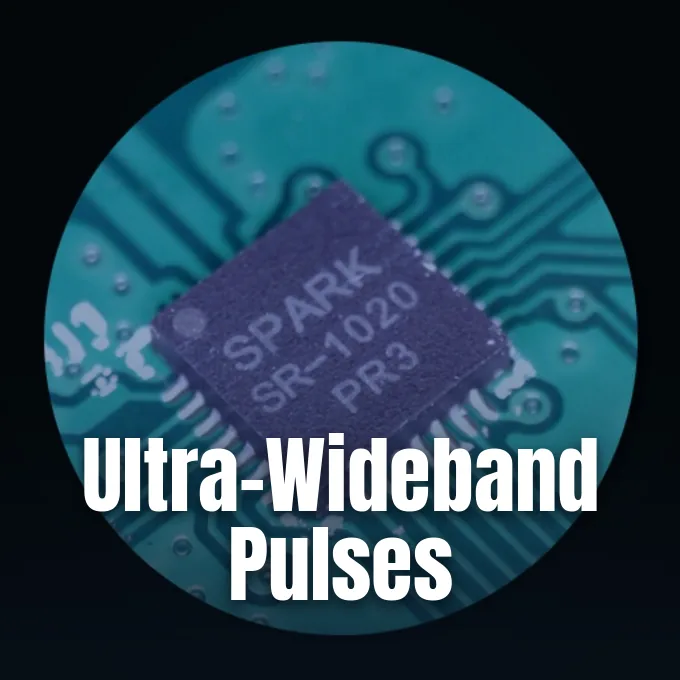
The central Network Server coordinates the entire LPWAN system from the cloud. In field deployments, LoRaWAN works by forwarding raw frames to central servers, where duplicate packets sent by nearby gateways get cleaned before reaching customer tools [8, 13]. While short-range radio such as ultra-wideband radio provides centimeter-level positioning through nanosecond pulses, LoRaWAN prioritizes broad geographic reach with lightweight sensor payloads. To resolve channel crowding as node counts rise, the LoRa Alliance introduced technical recommendation TR013, which specifies channel activity detection to verify whether a band is clear before sending [13].
Spreading Factors and Adaptive Data Rates
The trade-off between radio range and battery drain is controlled by the spreading factor (SF) [9, 14]. In standard LoRa setups, spreading factors run from SF7 to SF12, setting the duration of each chirp. A lower spreading factor sends more chirps per second, yielding faster data rates but needing cleaner signals at the gateway [9, 14]. Stepping up to a higher spreading factor doubles the time-on-air needed to send a payload, which gives the gateway more chances to sample the incoming wave. Each upward step adds about 2.5 dB of link budget, helping reception over miles of suburbs or through deep concrete [9, 14].
Long airtime carries a steep cost in battery life. Bench checks done by Qoitech tested a Bintel waste box monitor equipped with Semtech SX1276 silicon. Sending a 19-byte payload at 125 kHz width needed 25 times longer airtime at SF12 than at SF7. Counting receiver listening windows, total energy per cycle rose from 2.78 micro-watt-hours at SF7 to 55.1 micro-watt-hours at SF12. Transmitting at SF12 drew twenty times more energy than SF7 for the exact same data bytes [9].
To cut total energy drain across the fleet, LoRaWAN includes Adaptive Data Rate tools [9, 13]. When a fixed node talks often, the Network Server tracks recent signal quality. Examining how LoRaWAN works with Adaptive Data Rate shows how servers tune power: if signal margin is high, the server orders the node to drop transmit power and shift to faster spreading factors, saving battery life while freeing channel time [9, 13].
Managing Energy: How LoRaWAN Works for Sensors
LoRaWAN groups nodes into three operating device classes to match varied power sources and latency needs. All certified hardware must implement Class A, the most power-thrifty mode [12, 13]. Class A nodes stay in deep sleep until an internal sensor reading triggers an uplink burst [6, 13]. Once an uplink ends, the node opens two short receive windows, called RX1 and RX2, to listen for downlinks from the server [9, 13]. Because the receiver listens only for those brief moments, standby current stays tiny [10, 13]. The reason LoRaWAN works for ten years on small batteries is this Class A sleep cycle [9, 13].
This sleep schedule lets field sensors run for a decade on small cells [13, 14]. Semtech reported that automated meter projects found and repaired 1200 water leaks, saving one million cubic meters of water yearly. A pilot with Costco scaled across 500 sites to cut water waste [8]. In an academic survey in ICT Express, R. S. Sinha, Y. Wei, and S. Hwang reported that unlicensed LoRa networks maintain notable battery life and hardware cost perks over licensed cellular NB-IoT systems [4].
When apps need quick downlink replies, nodes switch to Class B or Class C modes. Class B nodes open scheduled receive slots locked to periodic gateway beacons, letting servers send commands without waiting for sensor uplinks. Class C devices keep their radio receivers listening continuously, shutting down reception only while transmitting uplinks. Because continuous listening draws steady current, Class C is reserved for grid-powered units like electric utility meters and city streetlights [12, 13].
Data Security: How LoRaWAN Works to Protect Payloads
Security was built as a core pillar in LoRaWAN rather than added as an afterthought. The protocol applies two separate cryptographic layers based on the AES cipher standard. A network session key authenticates radio bursts and checks message integrity between the node and the Network Server, guarding against packet spoofing. A distinct app session key encrypts payload bytes end-to-end between the sensor and the app server [8, 12, 13]. When assessing how LoRaWAN works to safeguard telemetry, dual keys isolate data: gateway owners and network routing brokers cannot read the secret sensor readings inside customer payloads [8, 13].
End devices link to networks using Over-the-Air Activation (OTAA) or Activation by Personalization (ABP) [7, 12]. OTAA is the preferred method. During an OTAA join, the node sends a join request with a unique device identifier, an app identifier, and an app key. The network server answers with a join accept message, creating fresh session keys on the fly. Dynamic keys stop replay attacks and make device lifecycle handling simple [7, 12].
Activation by Personalization hardcodes network addresses and cipher keys directly into node memory during production [7, 12]. While ABP skips network join handshakes, it lacks key update mechanisms [7]. Network traffic also needs care. F. Adelantado and colleagues noted in a 2016 preprint, which did not undergo formal peer review before its release, that heavy use of confirmed downlinks can jam gateway duty cycles and limit overall network scale [2, 1].
Firmware Updates in Field Hardware
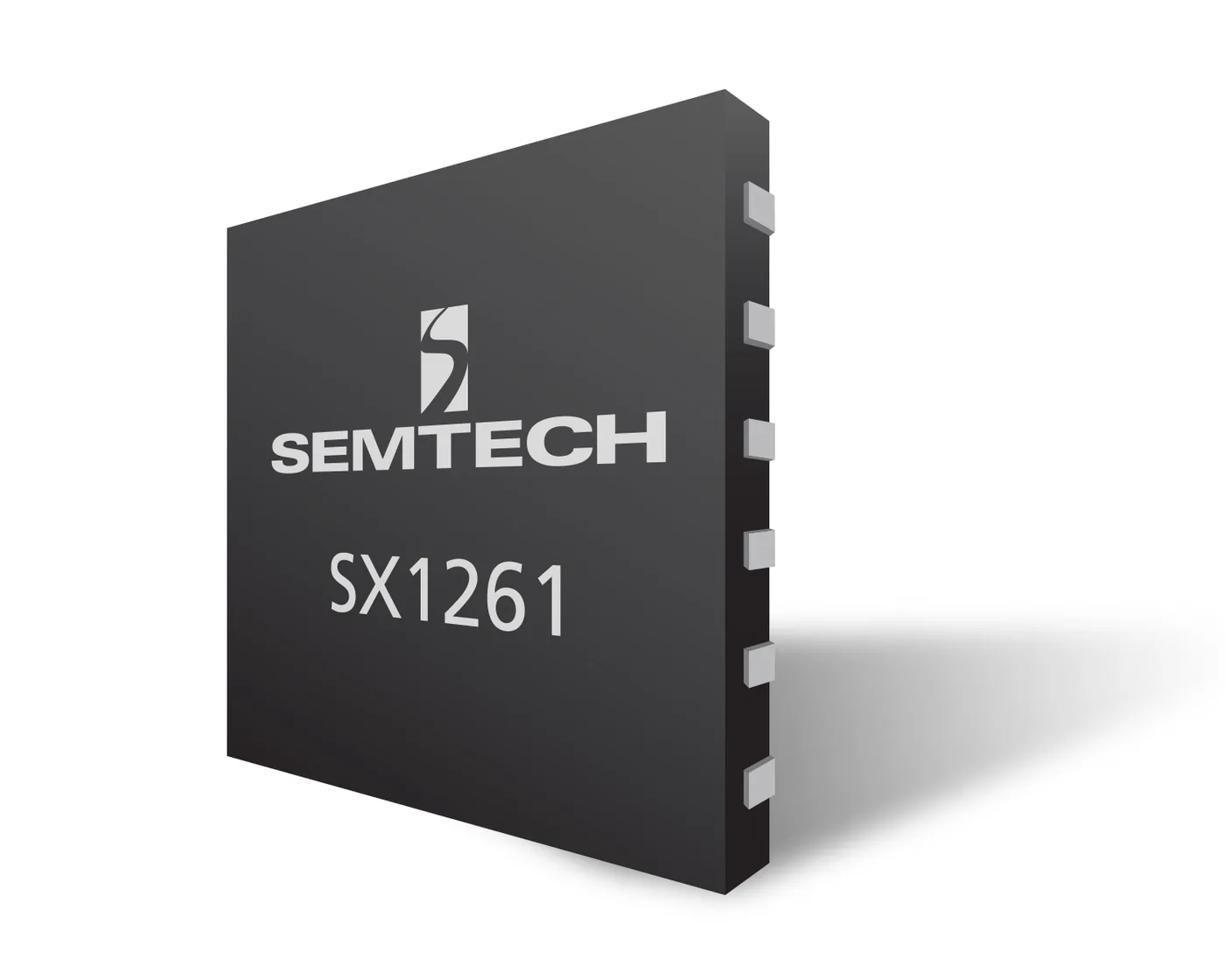
Radio silicon executing LoRa modulation has advanced across multiple hardware families. Early SX1272 and SX1276 chips offered 168 dB link budgets with 61 Hz synthesizer resolution and 256-byte packet engines, but needed external host MCUs for stack execution [10, 14]. Second-generation SX1261 and SX1262 transceivers dropped receive current to 4.2 mA while integrating power amplifiers delivering up to +22 dBm output [10]. Over 280 million connected end nodes worldwide now run on Semtech LoRa silicon [8].
Third-generation silicon, such as the Semtech LR1110 and LR1121, brings multi-use radio front-ends designed for low-power geolocation. Besides sub-GHz LoRa radios, these chips integrate passive Wi-Fi MAC scanning and satellite signal capture for GPS and BeiDou constellations [10, 14]. Instead of computing fixes on the battery-run sensor, the radio sniffs satellite signals in milliseconds and forwards raw data to cloud services for position calculation [8, 10]. Field firmware upgrades can be performed over local board pins using reference tools like Semtech SWTL001 on STM32 NUCLEO-L476RG boards, which validates binary integrity before flashing chip memory [7, 11].
To simplify software builds, Semtech created Modem-E firmware, which runs a certified LoRaWAN 1.0.4 stack directly inside the radio chip. In modern silicon, LoRaWAN works inside the radio chip via Modem-E firmware, freeing the host MCU from radio timing chores. Remote updates use Firmware Updates Over-The-Air (FUOTA) rules from the LoRa Alliance. Specifications TS003 through TS007 set multicast distribution, clock sync, and packet fragmentation, letting teams patch deployed sensor fleets over narrow radio bands without visiting remote sites [7, 11].
Physical Limits in Shared Spectrum
Because LoRaWAN operates in unlicensed industrial, scientific, and medical radio bands, deployments must comply with regional spectrum rules [13, 14]. In Europe, transmissions occupy the EU868 and EU433 bands under one percent duty cycle limits that restrict airtime per node [14, 7]. In North America, the US915 band spans 902 to 928 MHz across 64 uplink channels, using pseudo-random frequency hopping rather than rigid duty cycles to share unlicensed bands among competing users [13, 14].
These spectrum boundaries determine practical data throughput and link range. Over common channel plans, LoRa data rates vary from 0.3 kbit/s up to 27 kbit/s, making the protocol ideal for periodic sensor metrics rather than audio or video streaming. In rural sites with line-of-sight propagation, wireless link budgets ranging from 155 dB to 170 dB deliver transmission distances exceeding ten miles (16 km). In dense cities, LoRaWAN works by penetrating concrete to reach utility meters over three miles (4.8 km) away [14]. F. Adelantado, X. Vilajosana, and colleagues documented in IEEE Communications Magazine that network capacity scales best when apps limit packet lengths and avoid unnecessary confirmed messages [1].
Recognizing these physical boundaries allows engineers to deploy LoRaWAN effectively [1, 6]. Open-source tools like Pieter Robyns’ multi-channel gr-lora decoder and modular network server software created by Q. Zhou and colleagues continue to expand testing capabilities [7, 14]. By balancing spread factors and intervals, LoRaWAN works to scale across thousands of nodes, achieving decade-long autonomous operation in massive Internet of Things installations [8, 13].
- ACADEMIC JOURNAL Adelantado, F., Vilajosana, X., Tuset‐Peiró, P., Martinez, B., Melià‐Seguí, J., & Watteyne, T. (2017). Understanding the Limits of LoRaWAN. IEEE Communications Magazine, 55(9). [Article Link]
- PREPRINT Adelantado, F., Vilajosana, X., Tuset-Peiro, P., Martinez, B., Melia, J., & Watteyne, T. (2016). Understanding the limits of LoRaWAN. arXiv preprint. [Article Link]
- ACADEMIC JOURNAL Chiani, M., & Elzanaty, A. (2019). On the LoRa Modulation for IoT: Waveform Properties and Spectral Analysis. IEEE Internet of Things Journal, 6(5). [Article Link]
- ACADEMIC JOURNAL Sinha, R. S., Wei, Y., & Hwang, S. (2017). A survey on LPWA technology: LoRa and NB-IoT. ICT Express, 3(1), 14-21. [Article Link]
- ACADEMIC JOURNAL Vangelista, L. (2017). Frequency Shift Chirp Modulation: The LoRa Modulation. IEEE Signal Processing Letters, 24(12), 1818-1821. [Article Link]
- ACADEMIC JOURNAL Augustin, A., Yi, J., Clausen, T., & Townsley, M. (2016). A Study of LoRa: Long Range & Low Power Networks for the Internet of Things. Sensors, 16(9), 1466. [Article Link]
- ACADEMIC JOURNAL Zhou, Q., Zheng, K., Hou, L., Xing, J., & Xu, R. (2019). Design and Implementation of Open LoRa for IoT. IEEE Access, 7, 100649-100657. [Article Link]
- WEBSITE Semtech Corporation. (2021). What Is LoRa? Semtech Product Documentation. [Article Link]
- WEBSITE Qoitech. (2019). How Spreading Factor affects LoRaWAN device battery life. The Things Network. [Article Link]
- WEBSITE The Things Network. (n.d.). LoRaWAN Transceivers. The Things Network Documentation. [Article Link]
- WEBSITE NiceRF Team. (2026). LoRa Basics Modem-E Technical Guide: LR1110/LR1121 Firmware. G-NiceRF. [Article Link]
- REPORT LoRa Alliance. (2020). TS001-1.0.4: LoRaWAN L2 1.0.4 Specification. LoRa Alliance Technical Documentation. [Article Link]
- WEBSITE Wikipedia. (n.d.). LoRaWAN. Wikipedia, The Free Encyclopedia. [Article Link]
- WEBSITE Wikipedia. (n.d.). LoRa. Wikipedia, The Free Encyclopedia. [Article Link]


