






Comic Book Resources reported on October 23, 2026, that Pluto anime stands as one of the most compelling sci-fi releases on Netflix, adapting a storied manga narrative into a compact eight-episode mystery. The series reinterprets Osamu Tezuka’s classic Astro Boy story arc, titled The Greatest Robot on Earth, turning a vintage adventure into a mature psychological thriller. The production does not stretch over dozens of broadcast weeks, but arrives as a self-contained season that viewers can easily finish over two days. At its core, the narrative follows Europol robot detective Gesicht as he investigates a string of targeted murders against the world’s most sophisticated automatons and the prominent human advocates who defend their legal equality under international robot legislation [1].
Origins of the Pluto Anime
Screen Rant noted on October 23, 2026, that short animated adaptations often deliver tighter storytelling than open-ended television shows, explaining how compact runs let creators present complete thematic statements in a single weekend. The publication cited Madhouse’s 1999 adaptation Pet Shop of Horrors, where Count D manages an enigmatic Chinatown shop over four episodes, showing how focused narratives thrive without unnecessary filler [2].
That narrative discipline shapes Pluto anime, which adapts Naoki Urasawa’s reimagining of Osamu Tezuka’s world into eight hour-long installments. The story begins when Mont Blanc, a beloved forestry robot who cared for the wilderness, is found destroyed with branches placed around his severed head to mimic horns. Soon after, a human is killed in Germany, and an academic researcher is slain in Japan. These killings confirm that a methodical assassin is hunting the seven greatest robots ever created, as well as prominent civilian advocates of robot equality [1].
The early murders establish a chilling premise because International Robot Laws theoretically prevent any machine from harming a human being. Because evidence points toward a mechanical culprit, the investigation challenges the foundational assumptions of this futuristic society. Mandi Odoerfer of Comic Book Resources wrote that the mystery hooks viewers right away because the threat feels genuinely unpredictable [1].

Detective Gesicht Investigates Robot Murders
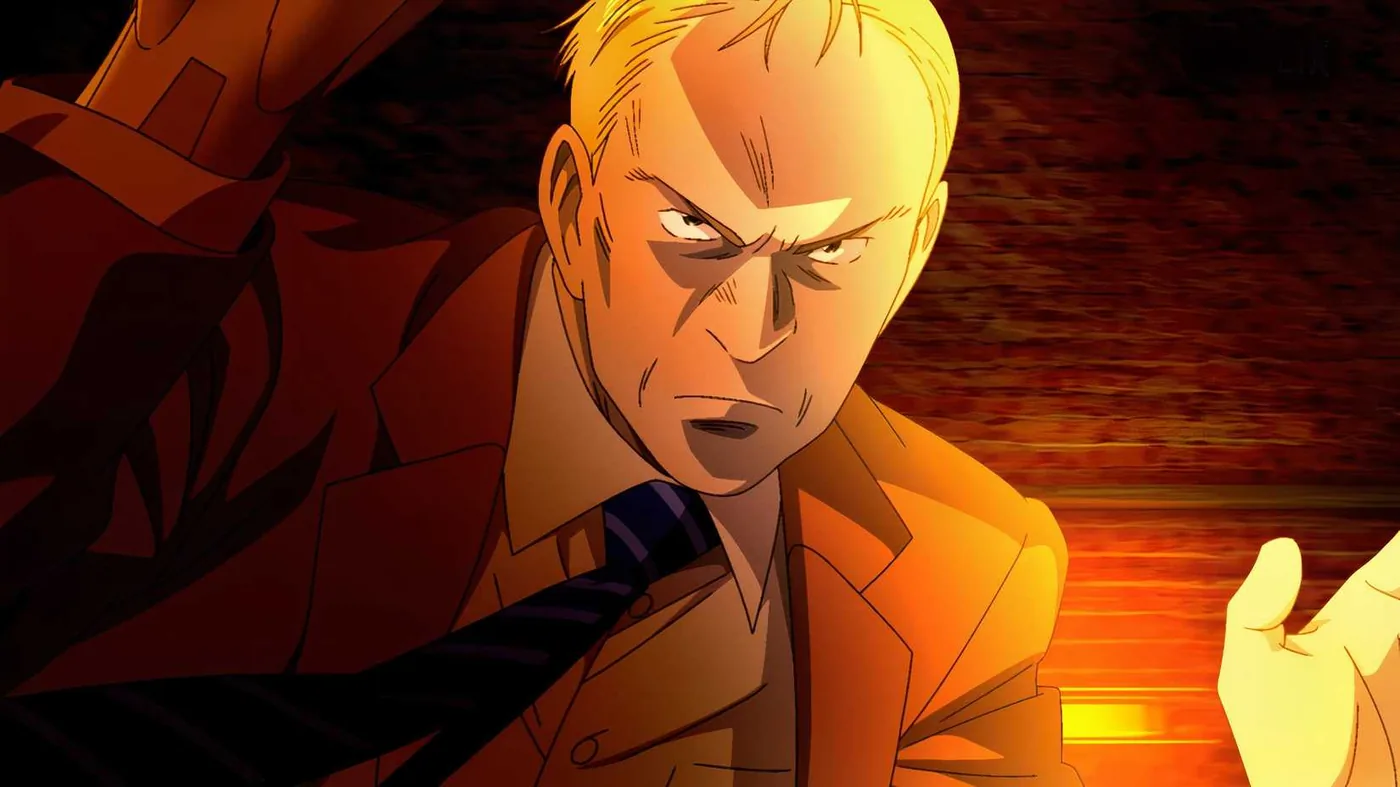
Detective Gesicht serves as the lead investigator assigned by the European police agency Europol (operating under Europol jurisdiction) to untangle the killings. Gesicht is a humanoid robot built with advanced cognitive systems, but he is also one of the seven high-profile targets marked for elimination. His pursuit of the perpetrator carries personal danger, forcing him to reconstruct crime scenes while knowing that every clue brings him closer to an ambush [1].
Despite his mechanical origin, Detective Gesicht displays an emotional life that rivals classic fictional sleuths. Mandi Odoerfer wrote that Gesicht draws direct inspiration from iconic literary and television investigators, deliberately echoing the analytical precision of Sherlock Holmes, the disarming persistence of Columbo, and the psychological insight of Agatha Christie’s famous sleuth Hercule Poirot. He has gradually adopted human customs over years of fieldwork, sharing a quiet home with his robot wife, Helena. Living with Helena contrasts with the grim reality of the serial murders, raising questions about machine consciousness. Can an artificial mind genuinely feel grief or develop an authentic desire to protect loved ones? His internal conflicts shape every interrogation, giving the procedural investigation an intimate moral weight [1].
Satoshi Kon took a similar path in 2004. In that 13-episode Madhouse series, titled Paranoia Agent, Tokyo detectives pursue Lil’ Slugger, an elusive assailant wielding a curved golden baseball bat. Both productions use a police procedural framework to examine how collective trauma and personal anxiety spread through an entire population [2].
North No. 2 and Wartime Tragedy
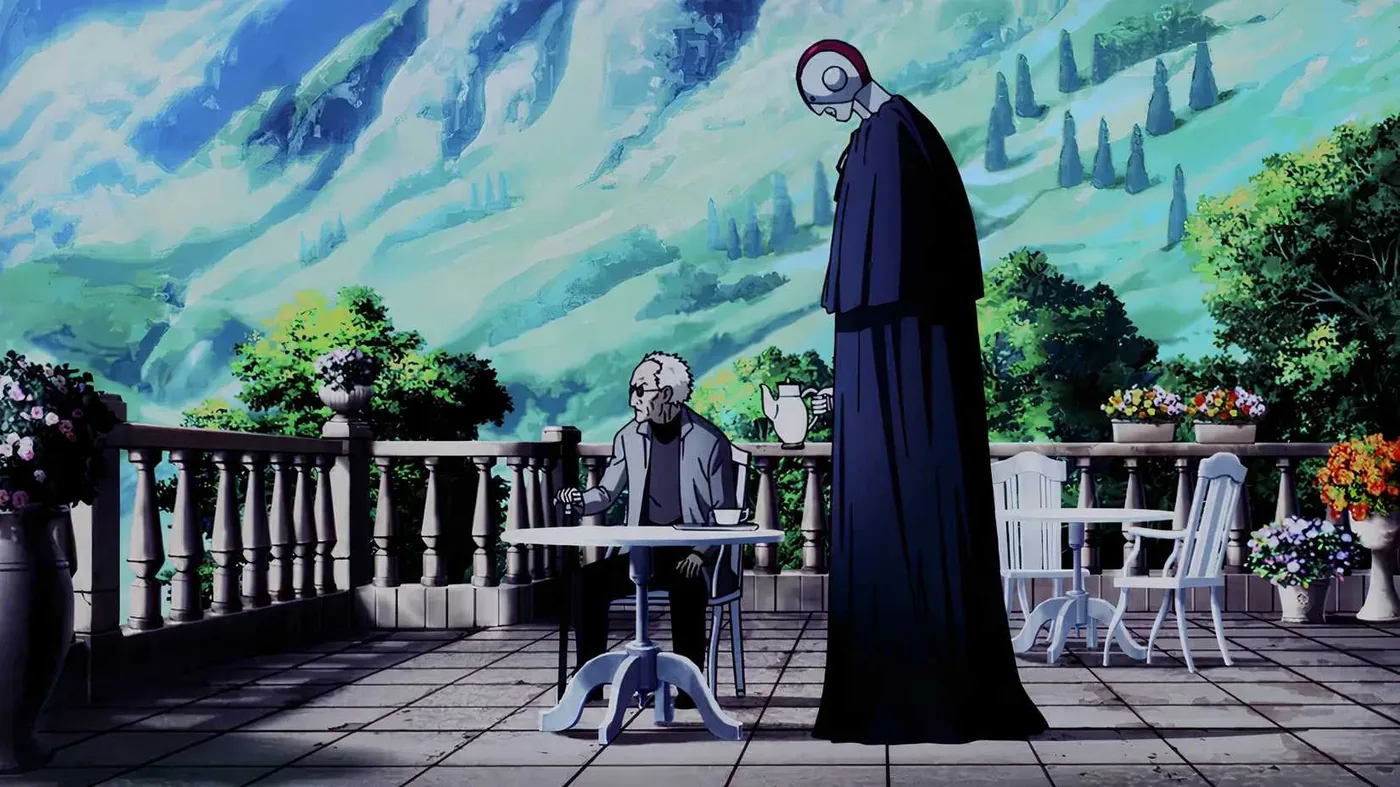
Pluto anime introduces several veteran machines whose personal histories illustrate the human cost of armed combat. Among the targeted figures, North No. 2 stands out as one of the most tragic characters in modern animation. Built as a devastating military weapon, he served in the 39th Central Asian War, an experience that left him determined to abandon combat permanently. He seeks redemption by working as an assistant to an elderly, blind pianist in a secluded estate [1].
The relationship between the robot and the musician provides the emotional core of the series’ early chapters. The pianist initially rejects North No. 2, finding it offensive that a former weapon of war wants to learn piano compositions. North No. 2 persists in serving tea and asking for guidance, proving that mechanical beings can harbor genuine creative longing [1].
Questions about non-human empathy also drive Hitoshi Iwaaki’s manga adaptation Parasyte -the maxim-. In that 24-episode series from 2014, high school student Shinichi Izumi wakes to discover that an alien organism named Migi has taken over his right hand. Migi approaches existence through cold, calculating logic, forcing Shinichi to defend human society while questioning what truly separates mankind from predatory organisms. Like North No. 2, Migi begins as a lethal entity before developing an unexpected bond with a human companion, showing how mutual survival reshapes basic instincts [2].
Naoki Urasawa Beyond Pluto Anime
Naoki Urasawa’s reputation for crafting suspenseful psychological narratives extends well beyond his work on Pluto. Netflix also streams Monster, his 74-episode thriller (streaming on Netflix). The narrative follows Dr. Kenzo Tenma, an elite brain surgeon in Germany who risks his career to save a critically injured boy. Years later, Tenma discovers that the young patient grew into Johan Liebert, a ruthless killer, prompting the doctor to embark on an international pursuit to correct his past choice [1].
While Monster requires several weeks to watch in its entirety, Pluto condenses Urasawa’s suspenseful plotting into eight focused hours. Viewers experience the same layered tension, complex character motivations, and moral ambiguity without committing to a months-long broadcast schedule. Mandi Odoerfer noted that both series possess broad appeal for longtime anime enthusiasts and newcomers alike [1].
Dark pacing defines other streaming anime as well. Screen Rant examined Masaaki Yuasa’s 2018 Netflix series Devilman Crybaby, which adapted Go Nagai’s manga over ten graphic episodes. The series tracks Akira Fudo after his friend Ryo Asuka merges him with the demon Amon, forcing Akira to battle monstrous forces while preserving his human empathy. In a similar vein, the 2019 first season of The Promised Neverland trapped Emma, Norman, and Ray in Grace Field House under caretaker Isabella over 12 suspenseful episodes [2].

Weekend Horror and Sci-Fi Marathons
Modern streaming audiences increasingly seek out short, high-impact anime series that deliver complete stories over a few sittings. Streaming libraries regularly rotate catalog titles to satisfy this appetite for compact programming. Platform licensing trends reflect steady interest in franchise releases, following reports that Netflix streams Dragon Ball Super Beerus starting October for anime subscribers. Whether viewers want classic action franchises or psychological thrillers, these limited runs offer satisfying entertainment without the burden of unresolved multi-year story arcs.
Screen Rant noted that older anime formats laid the groundwork for this weekend binge culture decades ago. The 1988 original video animation Vampire Princess Miyu ran for just four episodes, chronicling how Miyu and Larva defended humanity against supernatural Shinma with spirit hunter Himiko Se (1999). In addition, the 12-episode 2000 series Boogiepop Phantom and the 2012 horror mystery Another, set during 1998 in Yomiyama North Middle School with transfer student Kōichi Sakakibara and Mei Misaki, showed that eerie, tightly paced mysteries leave lasting impressions on weekend viewers [2].
Pluto anime exemplifies this trend. Because the entire mystery wraps up conclusively by the eighth episode, viewers receive answers to every central conspiracy without waiting for future announcements. The production provides rich character development, philosophical depth, and steady detective intrigue that can be experienced in a single weekend marathon [1].
- ONLINE NEWS Odoerfer, M. (2026, October 23). Netflix’s Near-Perfect 8-Episode Sci-Fi Saga Is a Perfect Weekend Binge. Comic Book Resources. [Article Link]
- ONLINE NEWS Diffey, H. (2026, October 23). 9 Perfect Scary Anime Fans Can Binge In One Weekend. Screen Rant. [Article Link]


