





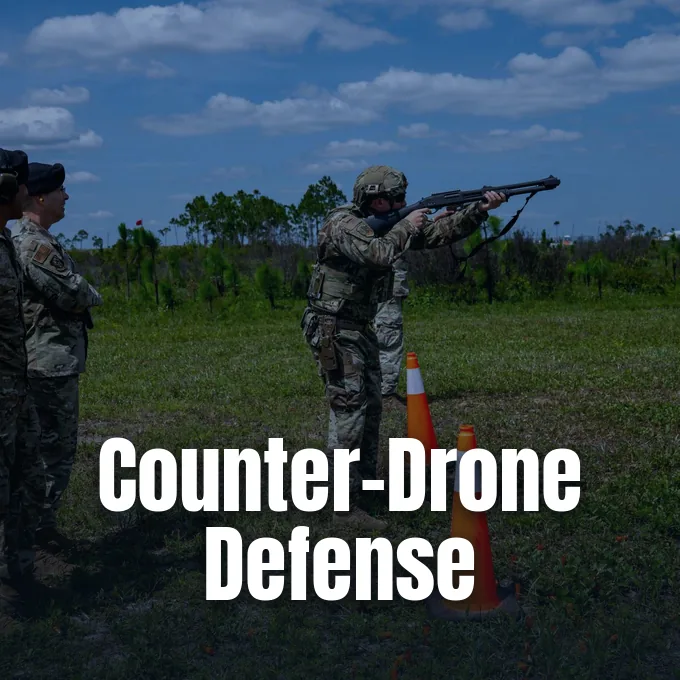
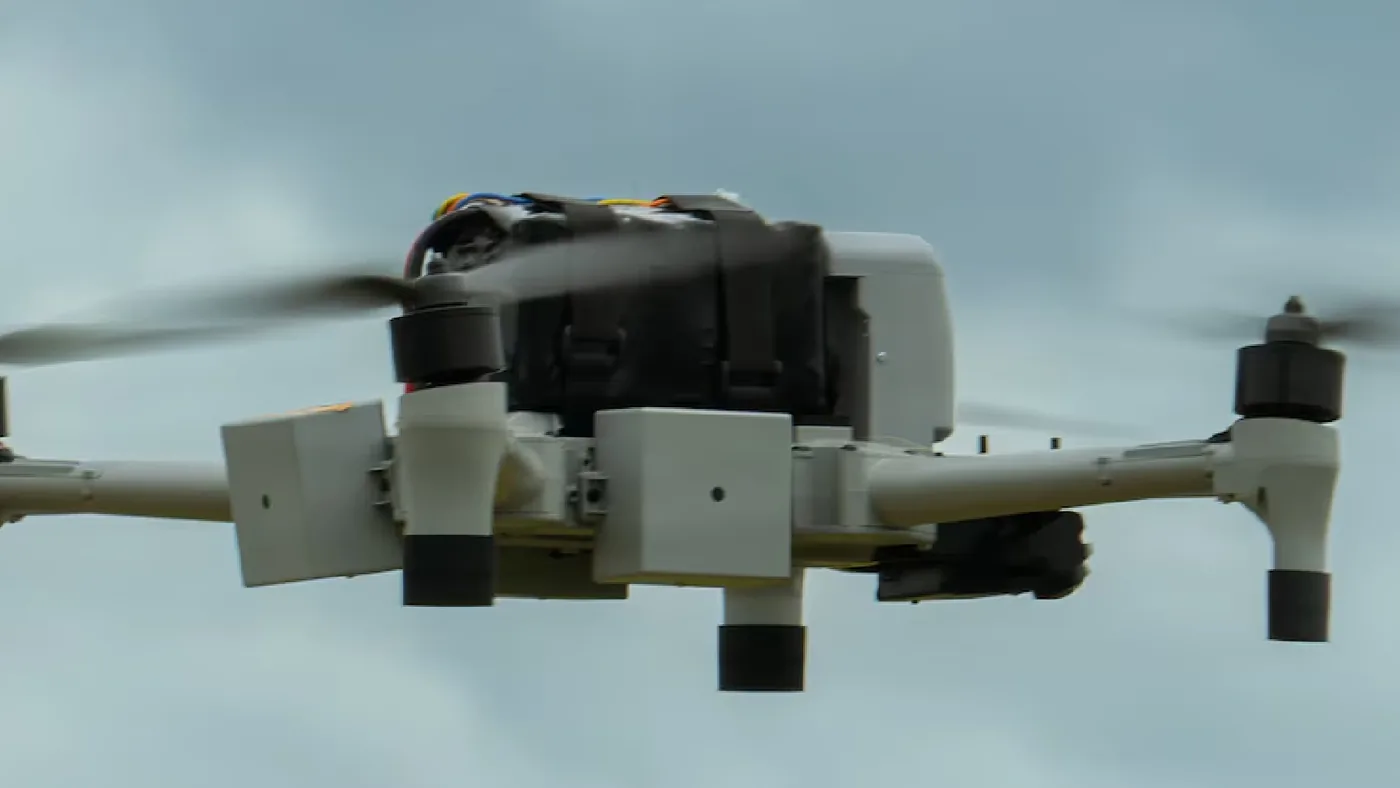
The US Air Force and the Secret Service have started joint field training to build tactical counter-drone defense against small unmanned aircraft flying near military bases and federal sites [1]. Cheap civilian quadcopters now pose persistent security hazards because intruders can use them for surveillance or direct strikes against parked aircraft along active flight lines. Security units are coordinating joint drills to identify unauthorized flights and deploy kinetic interceptors before small drones reach restricted perimeters. This shared work connects military police with presidential protective teams.
Joint Training at MacDill
On November 5, 2026, the Department of War announced that Air Force security defenders and Secret Service agents had completed joint counter-unmanned aircraft training at MacDill Air Force Base in Florida [1]. Security airmen from the 6th Security Forces Squadron joined federal protective agents who guard high-ranking officials to practice joint installation security. Organized under Joint Interagency Task Force 401 (JIATF 401), the training focused on safeguarding sensitive military airfields and surrounding government facilities from remote-controlled aircraft, especially because commercial quadcopters flying near flight paths create instant confusion. Sentry teams practiced identifying suspicious drones, determining flight profiles, and deciding when an unexpected incident calls for swift defensive interception.
Distinguishing friendly flights from hostile intrusions presents a constant test for perimeter sentries because consumer quadcopters costing only hundreds of dollars can easily carry surveillance cameras into secure military flight corridors [1]. Sentries at MacDill reviewed response rules to separate harmless civilian operators from hostile incursions.
The Florida drills tested how military watch centers and federal agents share flight data during sudden incursions [1]. Personnel practiced coordinating between base control rooms and mobile patrol vehicles patrolling outer fence lines. Defenders gained practical experience identifying unauthorized drones above coastal installations.
Integrating Counter-Drone Defense for Joint Agencies
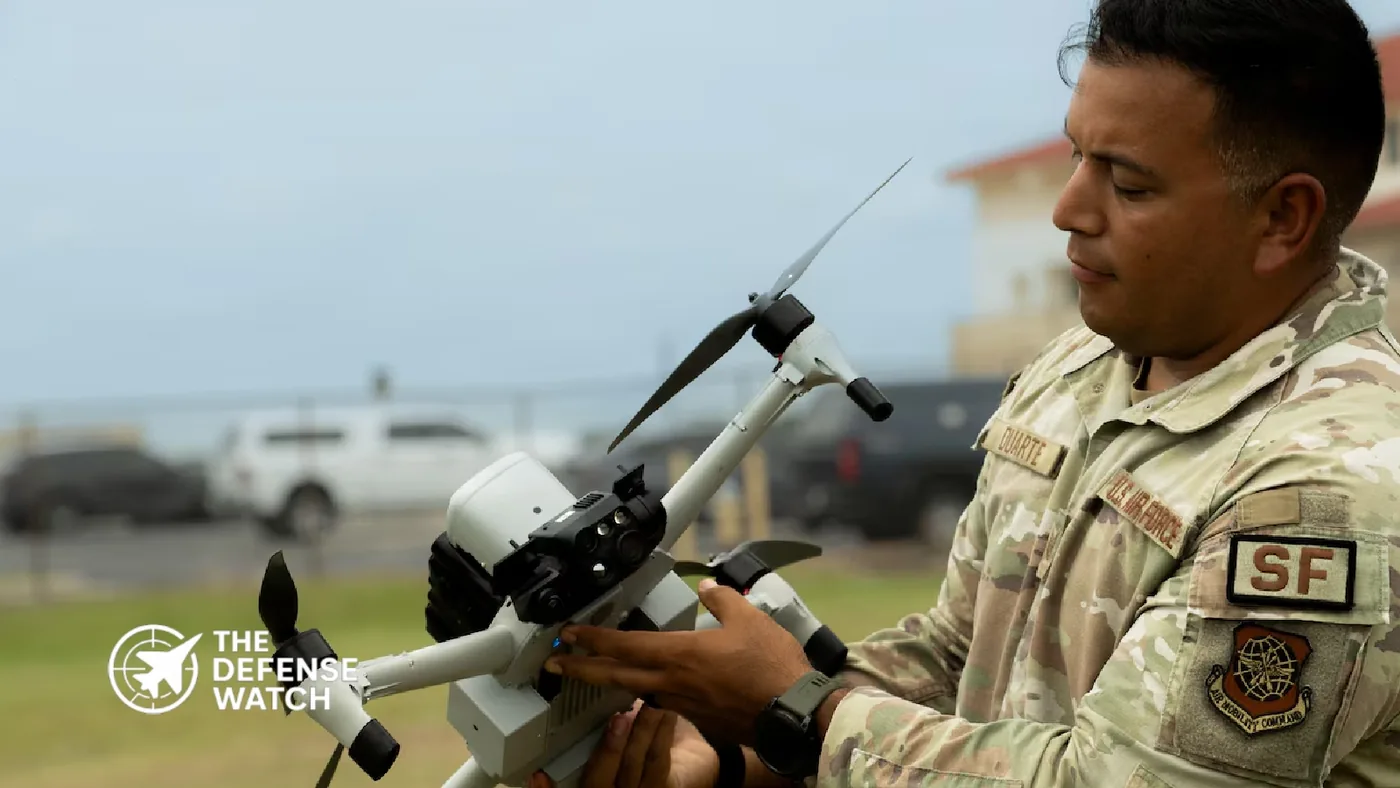
Joint Interagency Task Force 401 coordinates drone defense efforts between the armed services, federal law enforcement agencies, and civilian partners [1]. During a media briefing on August 21, 2026, JIATF 401 Director Brigadier General Matt Ross said that his organization serves as an integration coordinator rather than a combat military command. The task force helps federal agencies evaluate new detection gear, refine counter-drone defense procedures, and share incident information. Ross listed five core pillars for base protection: detecting unmanned aircraft, applying electronic warfare tools, training defenders before incidents occur, sharing flight data between agencies, and carrying out forensic analysis on recovered hardware.
The Air Force is building a layered defense architecture to guard its air bases [1]. An October 2026 report in Air & Space Forces Magazine revealed that Air Combat Command is surveying outside contractors for integrated counter-drone services to defend sensitive airfields. The proposed contracts cover detection hardware, maintenance personnel, operator instruction, and regular software updates. Facilities are also adding Small Unmanned Air Defense Systems (SUADS) to give defenders modular sensors and local command links.
Cost exchange ratios present a difficult economic barrier for military defenders facing swarms, because firing expensive interceptor missiles against consumer drones that cost only hundreds of dollars quickly exhausts national defense supply stockpiles [1]. To find sustainable answers, JIATF 401 organized a year-long trial evaluating directed-energy systems, including high-energy lasers and high-power microwave emitters. Directed energy offers low shot costs against incoming swarms.
Tactical Weapons at Tyndall
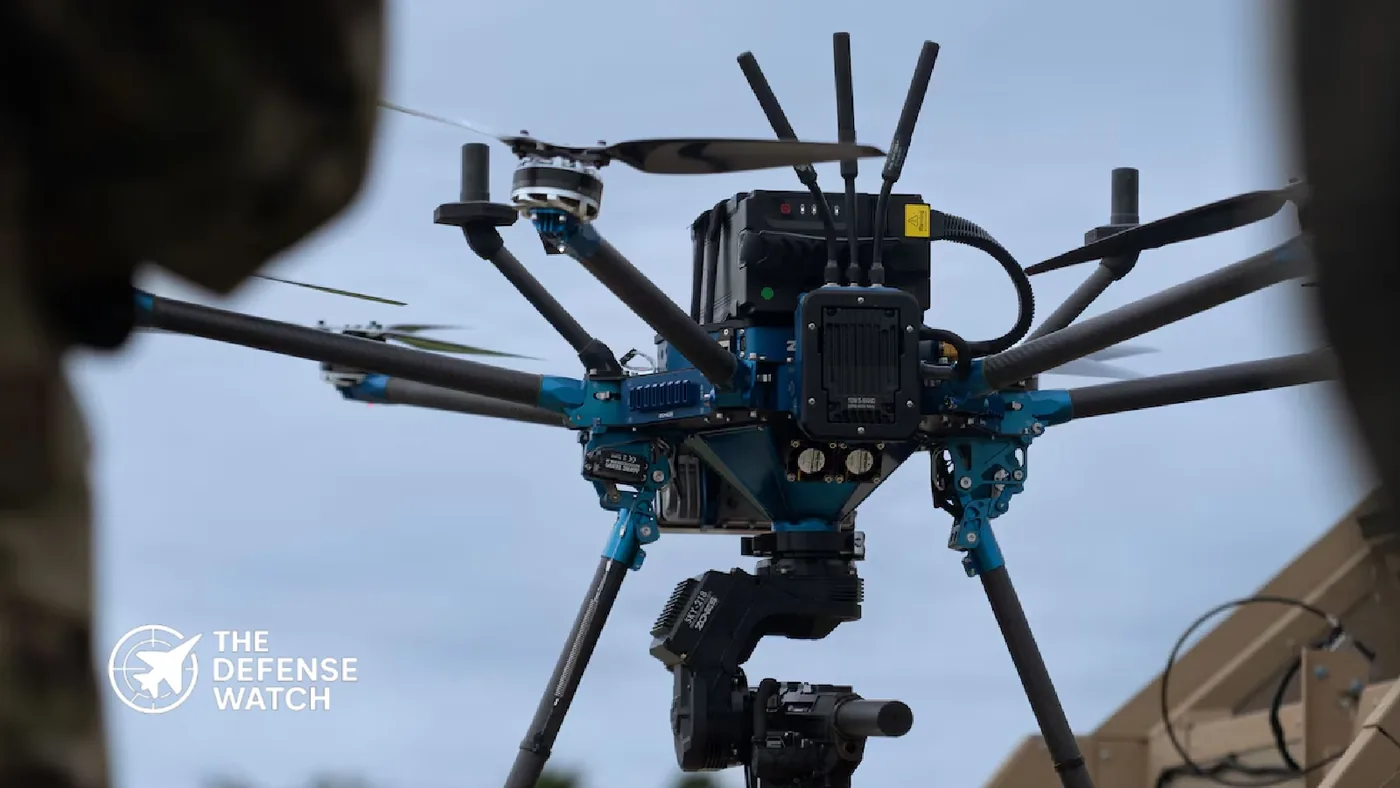
On June 3, 2026, the 325th Security Forces Squadron showed new kinetic anti-drone capabilities at Tyndall Air Force Base in Florida [2]. The unit displayed purpose-built weapons to Major General Thomas Sherman, commander of the Air Force Installation and Mission Support Center (AFIMSC), and Senior Master Sergeant Reginald Walters. Leaders reviewed practical methods to defeat low-altitude quadcopters before they could endanger parked aircraft or fuel storage tanks. Recent battlefield data shows that drone attacks unfold in seconds, leaving base sentries little time to request outside air defense support from distant regional command centers.
Technical Sergeant Nicholas Rhoades fired two primary systems during the demonstration: a Remington M870 shotgun and an M4A1 carbine equipped with the computerized SMASH 2000 fire-control sight [2]. Developed by Israeli firm Smart Shooter, the SMASH 2000 uses optical sensors and target-tracking algorithms to lock onto maneuvering drones. When an airman aims at an aerial target and depresses the trigger, the sight computes ballistic lead and fires automatically when hit probability reaches its peak. This computerized optic turns standard carbines into precision anti-drone weapons.
The 325th Security Forces Squadron plans to qualify approximately 210 Airmen in counter-sUAS tactics under Title 10 U.S. Code Section 130i [2]. Senior Master Sergeant Reginald Walters said that the program aims to certify all defenders so that every routine patrol acts as an active air defense post across base boundaries. Instead of waiting for heavy missile crews, regular patrol airmen can engage small hostile drones on sight.


Why Small Drones Threaten Protected Sites
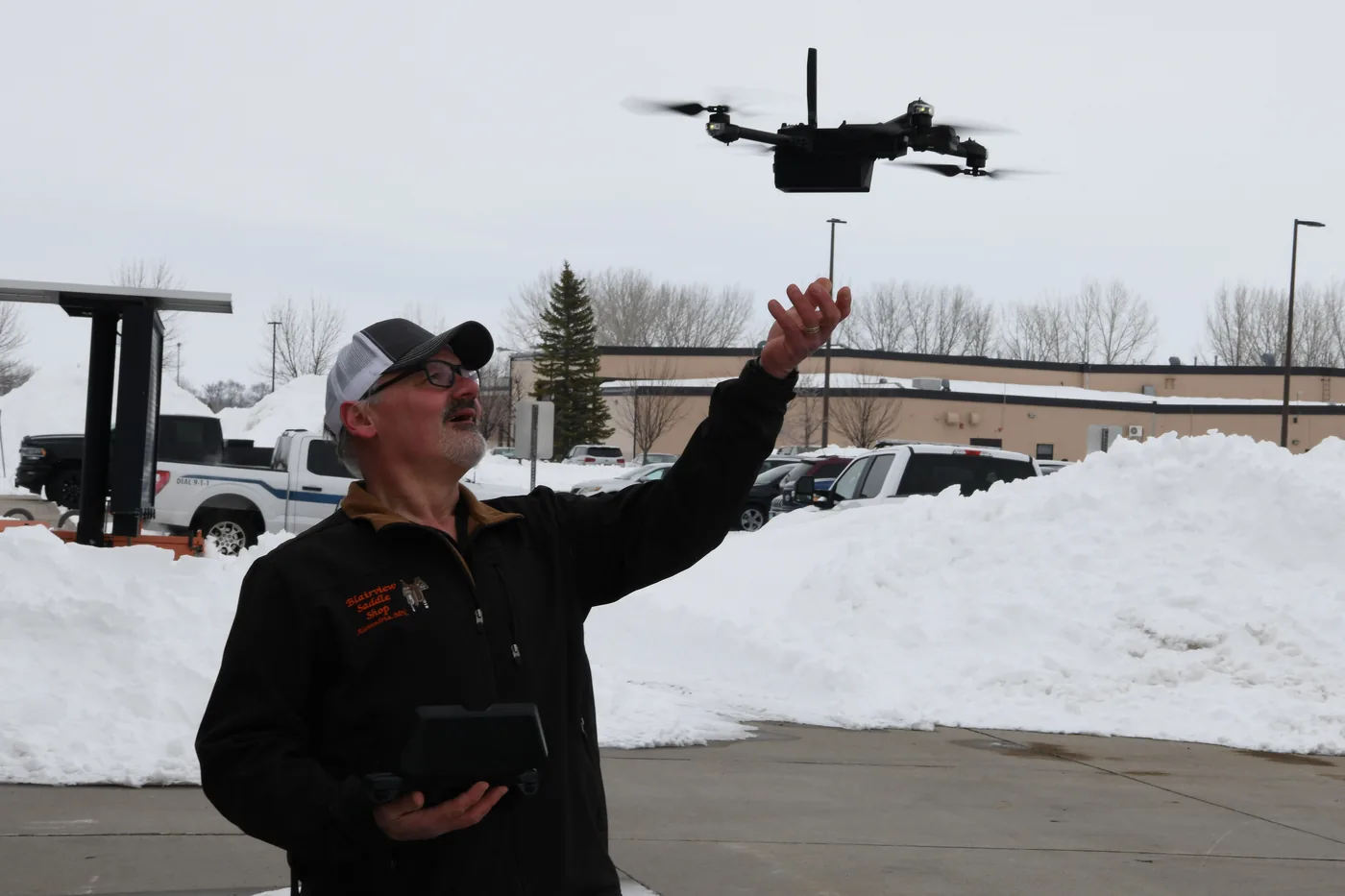
Modern air bases concentrate high-value military assets in compact open areas that remain vulnerable to inexpensive aerial observation and attack [2]. At flight facilities housing advanced stealth aircraft such as the F-35A Lightning II, exposed hangars, maintenance bays, and aviation fuel depots present soft targets for small explosive-laden drones. In foreign conflicts, opposing forces deploy thousands of cheap civilian quadcopters each month to spot troop movements and guide artillery strikes. Hostile groups in the Middle East have used one-way attack drones against overseas bases, proving that low-altitude intruders can bypass standard perimeter fences [7]. Even a minor drone collision with a jet intake can cause millions of dollars in structural damage.
Older air defense systems were built to engage high-speed combat jets, cruise missiles, and ballistic warheads [7]. Firing large interceptors like the PAC-3 MSE against small quadcopters that cost only hundreds of dollars is economically unsustainable during protracted skirmishes against inexpensive civilian drones. Kinetic shotguns, 30mm airburst cannons, and vehicle-mounted gatling guns provide practical short-range protection without exhausting national missile reserves.
Civilian drone innovation also complicates protective duties for federal security services [5]. Companies like Drone Nerds have partnered with AirSight to distribute AirGuard software, which tracks low-altitude airspace around public campuses and industrial infrastructure. Meanwhile, state programs like the Midwest UAS Test Site in Terre Haute, backed by Indiana Governor Mike Braun, accelerate research on both autonomous flight and counter-drone systems. Security agencies must regularly adapt their detection procedures as civilian software becomes more autonomous.

Point Defense Battle Lab at Grand Forks
Air Combat Command formed the Point Defense Task Force to develop and validate tactical procedures for base defense [4]. In October, the service selected the 319th Reconnaissance Wing at Grand Forks Air Base in North Dakota to spearhead the new Point Defense Battle Lab. Colonel Alfred Rosales, commander of the wing, said that the installation is not testing unproven prototype hardware. “We’re not going to become a new test base for the Air Force testing things that have never been turned on,” Rosales told reporters. Instead, the battle lab designs realistic field exercises where airmen use existing civilian and military equipment to counter simulated drone attacks.
The Grand Forks lab relies on technical cooperation with the Kansas Air National Guard’s 184th Wing [4]. Colonel Joe Deeds, commander of the 184th Wing, said his unit supplies vital experience in cyber defense, air battle management, intelligence analysis, and artificial intelligence tools, confirming that his air battle managers and cyber operators are ready to work with Grand Forks to strengthen base defense. The combined team also plans to run live tracking exercises across the Smoky Hill Air National Guard Range in Kansas.
Grand Forks provides unique flight testing areas through a formal lease with GrandSKY, an aviation park located next to the base that allows military airmen and industry contractors to fly test drones under realistic conditions [4]. Rosales stated that the unit takes a whole-wing approach to base readiness, passing exercise data straight to Air Combat Command to help update tactics throughout the service.
Federal Funding for Counter-Drone Defense Programs
Civilian protection agencies are also adopting kinetic defense systems to protect national leaders from rogue unmanned aircraft [3]. Secret Service Director Sean Curran told the House Appropriations Subcommittee on Homeland Security that his agency is embracing kinetic takedown options, emphasizing that protecting leadership requires direct interception methods. “We’re also leading the way to detect, deter and defeat drone threats by exploring and deploying new technologies, such as kinetic solutions,” Curran said during his testimony. Ahead lies the FIFA World Cup, America’s 250th birthday celebration, and the G20 Summit.
Director Curran testified that 2028 “will be our busiest year on the calendar” due to the Olympic and Paralympic Games during the next presidential election campaign [3]. Hearing member Representative John Rutherford of Florida expressed deep concern about unmanned aircraft threats. Curran confirmed that the Secret Service has invested just over $100 million in protective technology over the past eighteen months. The proposed fiscal year 2027 federal budget seeks an additional $100 million specifically for protective countermeasures, including counter-drone defense equipment and tactical training suites.
To inspect new defense equipment firsthand following his congressional appearance, Curran traveled to South Florida, where the Secret Service deployed detection and countermeasure gear to protect facilities in the region, including Mar-a-Lago in Palm Beach [3]. Technicians evaluated satellite-jamming units and direct-fire systems reviewed by the Department of Homeland Security Science and Technology Directorate to protect senior leaders against low-altitude aerial threats.
- ONLINE NEWS Drake, S. (2026, November 6). Air Force, Secret Service Train Together to Strengthen Counter-Drone Defenses. TheDefenseWatch.com. [Article Link]
- ONLINE NEWS Servaes, A. (2026, November 7). U.S. Air Force Reveals Advanced Counter-Drone Weapons to Defend Bases from Growing Drone Threats. Army Recognition. [Article Link]
- ONLINE NEWS Graham, E. (2026, April 16). Secret Service is embracing new solutions to combat malicious drones, director says. Nextgov. [Article Link]
- ONLINE NEWS Easley, M. (2026, January 28). Air Force creates task force to improve counter-drone tactics at bases. DefenseScoop. [Article Link]
- ONLINE NEWS UAS Magazine. (2026, August 3). Air Force expands base drone defenses as experts call for faster action. UAS Magazine. [Article Link]
- ONLINE NEWS Kishore, K. (2026, November 7). US Air Force and Secret Service Enhance Strategies Against Rising Drone Threats. RobotToday. [Article Link]
- ONLINE NEWS Interesting Engineering. (2026, November 7). Military Archives. Interesting Engineering. [Article Link]
APA 7: PerEXP Teamworks. (2026, November 8). Air Force and Secret Service Test Counter-Drone Defense. PerEXP Teamworks. https://perexpteamworks.com/en/counter-drone-defense-air-force/


