




Gavin Gardner entered Michigan State University with an early interest in uncrewed aviation, but receiving grant support through a NASA drone challenge pushed his team toward high-volume defense hardware assembly. Gardner worked with fellow students in campus labs, learning to build flying prototypes while managing budgets and pitching complex engineering to outsiders. Those campus grants formed the bedrock for AG3 Labs. Today, AG3 Labs produces thousands of small aircraft each month to support U.S. Army personnel testing air defense sensors and electronic tracking systems at military bases [1].
The NASA Drone Challenge Grant
Gardner developed an interest in flight during a middle school trip to Space Camp. Back in Michigan, he spent weekends in the garage with his brother, Gryson Gardner, assembling radio kits and fixing small quadcopters. When Gardner enrolled at Michigan State University, he joined a student aviation group to test uncrewed airframe designs. Hands-on workshop practice taught him how to build and repair autonomous flight systems [1].
In 2021, a classmate told Gardner that their student group had won funding from NASA under the University Student Research Challenge, an agency program that provides grants to college teams. The project was called Aerial Intra-city Delivery Electric Drones, or AIDED. Instead of draining batteries on long city flights, the Michigan State team designed a cargo drone to latch onto city buses, recharge during the ride, and fly off for the last mile. “We had this idea that instead of flying through the whole city, why can’t a drone just hitchhike a ride on a city bus like everyone else does?” Gardner said [1].
The Michigan State crew built a full-scale drone and flew it to verify the bus-docking gear in test flights. Those tests confirmed that mechanical docking on moving road vehicles worked for small aircraft. But city package delivery faced heavy legal red tape. Strict safety codes and liability risks convinced Gardner and his peers that urban drone delivery would take years of regulatory review [1].
Transit Docking and Laser Power
The Michigan State engineers kept working together and secured a second NASA award in 2023 for a project called the Laser Energized Aerial Drone System, or LEADS. This new design used ground-based lasers to beam power straight to aircraft in flight. Directed light aimed to bypass battery limits. Gardner and his team assembled a flying prototype and proved beam-tracking accuracy in tethered tests. That flight work drew attention from NASA engineers at Glenn Research Center in Cleveland, who invited Gardner to apply for an internship while he completed graduate school [1].
Gardner spent his graduate internship at Glenn Research Center working with NASA flight researchers. The agency connects students with space technology through multiple initiatives, including the NASA ORBIT Challenge opening space patents to students for private venture proposals. At Glenn Research Center, Gardner built ties with agency staff and saw how federal flight research could translate into working business hardware [1].
Why the Team Left City Airspace
Civilian delivery aircraft face dense urban populations, federal flight rules, and town laws that limit uncrewed flight over streets. Gardner saw that these rules created huge barriers for young founders. “The commercial drone market kind of scared us a little bit with the large number of regulations that go into operating such a novel idea like this with flying over people in a dense city,” Gardner said [1]. But defense units needed cheap target drones to test anti-aircraft tracking gear. The U.S. Army offered a direct customer base with clear testing ranges and faster contract paths [2].
BedrockNews observed that defense contracting gave the Michigan State founders a faster route to market because military ranges carry fewer flight bans than civilian cities. The market favored speed. By turning their drone airframes toward Army target practice, Gardner and his team avoided years of waiting for civilian flight permits [2].

Founding AG3 Labs
In late 2024, as Gardner prepared to finish his master’s degree at Michigan State in spring 2025, he joined his brother Gryson Gardner, alongside fellow university teammates Matt Atkinson and Ryan Atkinson, to launch AG3 Labs [1] [3]. A colleague told them that defense forces needed cheap drones to test counter-drone radar and signal jamming. The founders built small uncrewed aircraft that could fly like enemy targets in live army drills. AG3 Labs soon landed its first supply agreement from the U.S. Army, which led to larger defense orders [1]. BedrockNews noted that roughly four years separated their first student grant from full-scale military supply contracts [2].
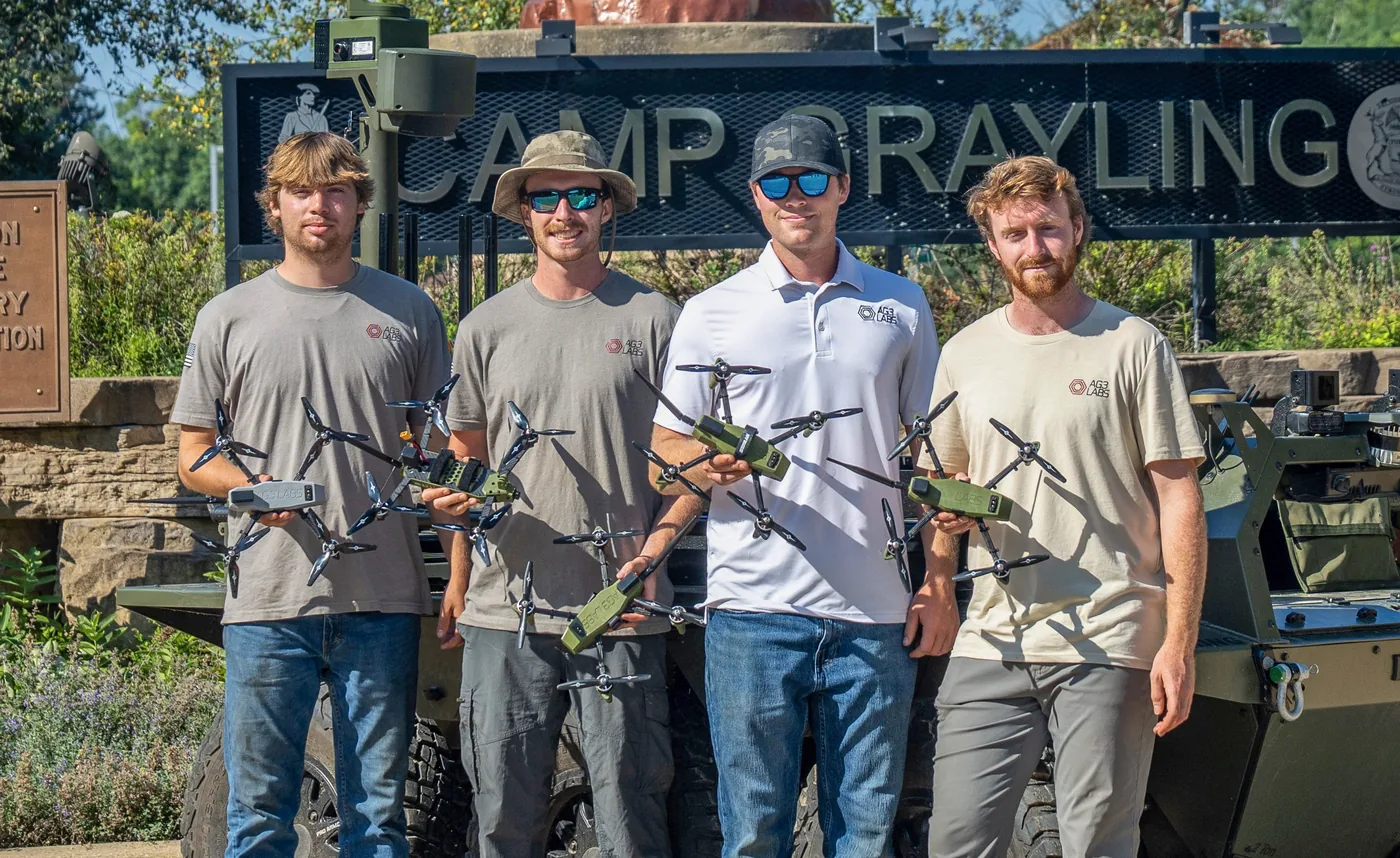
AG3 Labs proved its aircraft during an official U.S. Army live-fire exercise held at Camp Grayling in northern Michigan. Army personnel tested counter-drone tracking sensors and radio jammers against the autonomous drones in open field trials. The tests succeeded. Flights at Camp Grayling proved that low-cost student designs could meet military training standards without the huge price tag of legacy defense contractors [2].
What the NASA Drone Challenge Taught
The NASA drone challenge required student teams to master budget management in addition to aircraft design. Mirage News reported that student engineers were completely new to handling large cash sums, pitching technical plans, and running public crowdfunding drives [3]. Those business rules pushed young engineers out of the lab to explain their ideas to non-technical buyers [1].
Gardner said that learning to talk clearly about complex flight systems was just as important as building the hardware itself. “Half the battle is building your product,” Gardner said when describing what the challenge taught his team. “The other half is selling the product in a way that everyone else can understand what you’re doing and not talking in nerdy, engineering ways”. NASA USRC manager Steven Holz said the program aims to train future leaders who understand both flight science and business sales. “We are proud to see the success of USRC alumni,” Holz said. “We hope that every team that participates in the program sees, like Gavin, how they can grow technically, entrepreneurially, and use the opportunity as a launchpad for their own innovative careers” [1].
Early sales practice helped Gardner negotiate supply deals and pitch defense clients when AG3 Labs began scaling. Agency efforts to engage college cohorts connect with broader outreach in NASA opportunities for students in classroom programs. Gardner said the NASA USRC grant acted as a booster that sped up their business growth at a young age [1]. Worldnewsdotcom reported that early public grants gave the Michigan State founders the exact tools needed to build a viable aviation business [4].
Production Scale at Camp Grayling
By 2026, AG3 Labs built an assembly line capable of turning out thousands of drones each month to supply U.S. Army training units across the country. Military demand for low-cost target aircraft surged as armed forces worked to prepare soldiers against autonomous drone swarms. Orders poured in. To meet high-volume defense schedules, AG3 Labs expanded workshop facilities across Michigan, relying on modular airframe parts, rapid assembly workflows, and custom flight software developed during their university grant work [1] [2]. Reliable production rates enabled AG3 Labs to deliver batches on schedule for upcoming military maneuvers [1].
BedrockNews concluded that the four-year path from a student NASA grant to high-rate military production shows how public research funds can launch working aviation firms. NASA backed student research to solve civilian flight questions, but strict city regulations pushed the resulting airframe designs into the defense sector [2]. Public funding gave Gardner and the Michigan State team the seed capital and flight experience they needed to build a profitable uncrewed aircraft business [1] [2].
- PRESS RELEASE Banke, J. (2026, October 28). NASA University Challenge Ignites Trajectory of Drone Entrepreneur. NASA. [Article Link]
- ONLINE NEWS BedrockNews. (2026, October 28). NASA’s Student Drone Grant Program Produces a Military Contractor — The Pipeline Working as Designed. [Article Link]
- ONLINE NEWS Mirage News. (2026, October 28). NASA University Challenge Launches Drone Entrepreneur’s Career. [Article Link]
- ONLINE NEWS Worldnewsdotcom. (2026, October 28). NASA University Challenge Ignites Trajectory of Drone Entrepreneur. [Article Link]
APA 7: PerEXP Teamworks. (2026, October 29). Michigan Engineers Turn NASA Drone Challenge into Defense Work. PerEXP Teamworks. https://perexpteamworks.com/en/nasa-drone-challenge-ag3-labs/


