




Can intense athletic conditioning truly shield high-performance competitors from severe psychological vulnerability? While modern sports culture historically celebrated the archetype of the indestructible competitor, clinical evidence demonstrates that psychiatric distress affects elite competitors as frequently as the general public. To confront this reality, the International Olympic Committee convened a global network of clinical researchers to establish proactive athlete assessment frameworks across international sport. Central to this initiative is routine mental health screening, an evidence-based approach designed to identify psychological difficulties early so practitioners can deliver timely support before clinical symptoms worsen. The updated expert consensus statement, published in the British Journal of Sports Medicine (2026) with key contributions from sports psychiatrist Gouttebarge and researcher Soligard, establishes structured guidelines to normalize psychological care across Olympic Committee federations [1].
- Why Mental Health Screening Belongs in High-Performance Sport
- Four Critical Timepoints for Athlete Psychological Evaluation
- Responsible Protocols and the Threat of Selection Bias
- Navigating Ethical Safeguards and Clinical Confidentiality
- Community Sport Demands Literacy Rather than Screening
- Building Preventative Sports Environments for the Future
Why Mental Health Screening Belongs in High-Performance Sport
High-performance competitors confront distinct occupational hazards that compound ordinary life stressors throughout competitive careers. Intense public scrutiny, abusive digital commentary, and fear of de-selection frequently precipitate profound emotional exhaustion among elite athletes regulated by the International Olympic Committee. When combined with intense physical conditioning, these escalating pressures foster severe psychological distress that standard coaching environments fail to detect. Cultural stigma compounds this vulnerability, leaving competitors reluctant to seek professional guidance until an acute crisis forces clinical intervention as reported by Medical Xpress in Sports Medicine [7]. Stigma remains a substantial barrier.
Physical breakdown introduces further psychological instability throughout competitive seasons. Catastrophic physical trauma threatens athletic identity, while overtraining syndrome disrupts hormonal equilibrium and restorative sleep architecture during grueling preparation phases overseen by the Olympic Committee (such as acute clinical depression or severe eating disorders). Routine clinical evaluation transforms that dynamic. Integrating mental health screening into standard athlete medical checks together with routine orthopedic evaluations legitimizes psychological health within professional sports organizations supported by the International Olympic Committee. Objective screening tools enable specialist practitioners in Sports Medicine to differentiate routine pre-competition apprehension from debilitating clinical disorders, including major depression, eating disorders, and substance misuse. Early detection saves careers.
How do competitive pressures interact with individual coping mechanisms before decisive tournaments? In an extensive empirical investigation published in Scientific Reports (2025), lead researcher Li and fellow investigators demonstrated that pre-competition anxiety intensifies when environmental pressure exceeds psychological resilience [6]. Clinical findings in Scientific Reports indicate that systematic coping strategies significantly buffer competitive stress, yet unmonitored anxiety frequently degenerates into chronic impairment when competitors lack structured support from sports federations. Objective evaluation tools capture subtle behavioral indicators that casual observers overlook. Routine monitoring prevents athletic burnout.
Four Critical Timepoints for Athlete Psychological Evaluation
The International Olympic Committee consensus statement identifies four pivotal intervals across athletic careers where psychological vulnerability accelerates. The first checkpoint occurs during pre-season preparation, establishing an objective psychological baseline before demanding competition schedules begin across circuits supported by the Olympic Committee (administered during initial medical physicals before active training commences) [1]. Baseline data enables clinicians in Sports Medicine to identify subtle deviations in mood, sleep quality, and concentration as seasonal pressures accumulate. Baseline tracking clarifies emerging symptoms.
The second critical window opens immediately following major international tournaments or world championships. In an exploratory study in the Scandinavian Journal of Sport and Exercise Psychology (2023), sports scientists Diment and colleagues investigated the disorienting phenomenon of post-event blues among Danish Olympic athletes [5]. After years of preparation for a single event, the abrupt cessation of competition creates an emotional vacuum marked by depressive symptoms and loss of daily purpose. Structured mental health screening administered several weeks after pinnacle events identifies athletes struggling to process emotional decompression, ensuring they receive structured psychological care rather than navigating post-tournament distress in isolation.
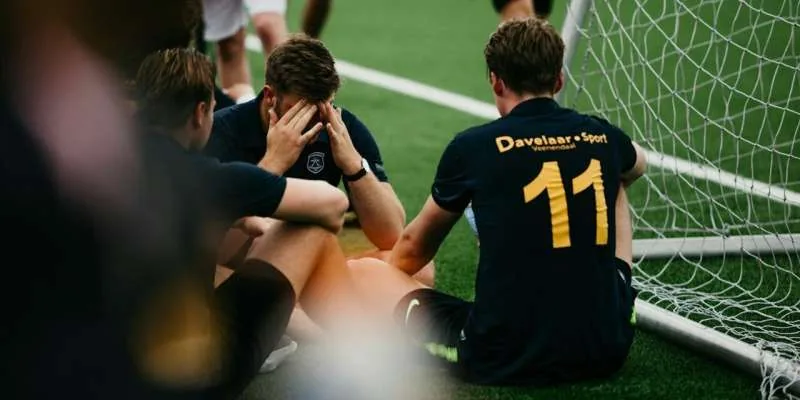
The remaining two evaluation phases target traumatic physical injury and permanent career termination. Physical trauma, especially severe concussion, introduces significant neurological disruption that strongly correlates with clinical depression, emotional volatility, and persistent cognitive impairment. Similarly, involuntary delisting or mandatory retirement constitutes a profound personal transition where the sudden loss of athletic community triggers acute emotional turmoil analyzed in The Conversation [7]. Scheduled mental health screening during these vulnerable moments provides a vital clinical safety net for transitioning Danish Olympic competitors supported by the Olympic Committee. Career transitions destabilize personal identity.
Responsible Protocols and the Threat of Selection Bias
Screening questionnaires must operate as supportive gateways rather than punitive gatekeepers (deciding that an athlete is unsuitable to compete based on a brief evaluation tool). In Psychology of Sport and Exercise (2026), sports psychologist Kegelaers and co-authors examined critical reflections on athlete assessment, warning that uncalibrated screening protocols risk generating selection bias and administrative harm within high-performance sport [4]. Competitors naturally fear that disclosing psychological distress could jeopardize team selection, contract renewals, or Olympic Committee roster positions overseen by the International Olympic Committee. Unintended consequences include reputational apprehension.
When athletes fear professional repercussions, screening tools quickly degenerate into dishonest compliance exercises. Fit-for-purpose screening instruments evaluated in Exercise Psychology by clinical researcher Rice and international colleagues must be implemented solely to identify individuals who warrant comprehensive evaluation, never to disqualify competitors from rosters [3]. Clinicians collaborating with the International Olympic Committee must guarantee absolute confidentiality, ensuring that questionnaire results remain strictly between the athlete and qualified healthcare personnel in Sports Medicine rather than coaching staff. Confidentiality protects athlete trust.
Physical fatigue and somatic strain frequently mask underlying psychiatric complications. When athletes endure severe gastrointestinal distress under sustained competitive pressure, understanding how somatic and digestive stress impacts mental well-being provides clinicians with vital context regarding physiological dysregulation. Holistic mental health screening recognizes that bodily symptoms often reflect profound emotional distress requiring medical intervention from qualified practitioners in Sports Medicine and Exercise Psychology. Somatic complaints demand careful differentiation.


Navigating Ethical Safeguards and Clinical Confidentiality
Administering psychological questionnaires without qualified clinical infrastructure introduces substantial ethical hazards across elite sporting organizations. Poorly managed evaluations risk causing embarrassment, social stigma, and reputational damage among competitors who require psychiatric care. Specialist practitioners working within established Olympic Committee frameworks must oversee assessment pipelines, ensuring that medical data handling meets stringent clinical standards rather than administrative convenience as reported by Medical Xpress in Sports Medicine [7]. Trust requires uncompromising professional boundaries. Without independent oversight, screening programs collapse.
Ethical screening requires transparent communication regarding instrument limitations. In an analytical commentary circulated as a preprint prior to formal peer review, clinical researcher Rosemary Purcell (2026) emphasized that brief screening questionnaires cannot deliver definitive psychiatric diagnoses [2]. Writing in Medical Xpress and The Conversation under Creative Commons agreements, Rosemary Purcell noted that screening tools serve exclusively as preliminary triage mechanisms indicating whether comprehensive psychological assessment by an accredited sports psychologist is clinically warranted before decisive international competitions. Questionnaires highlight potential warning signals.
Managing psychological distress under intense strain mirrors other isolated, high-stakes environments. Similar operational considerations emerge when monitoring prolonged stress and acute operational crises where personnel report distress only when leadership explicitly guarantees medical confidentiality. Without protected care pathways endorsed by the International Olympic Committee, competitors conceal psychological distress, allowing manageable strain to evolve into debilitating impairment. Transparent protocols encourage timely reporting.
Community Sport Demands Literacy Rather than Screening
Grassroots sporting organizations encounter severe resource limitations that make standardized mental health screening inappropriate for local programs. Community clubs generally lack access to accredited clinical psychologists or specialized psychiatric personnel in Sports Medicine capable of conducting nuanced follow-up diagnostics. Deploying brief screening questionnaires in amateur settings risks misinterpreting transient developmental distress while generating unnecessary panic among young competitors as discussed in The Conversation and Medical Xpress [7]. Community settings require distinct methodologies.
Rather than administering complex screening questionnaires, Australian Olympic and community sports frameworks prioritize foundational mental health literacy. Educational initiatives teach coaches, parents, and sports administrators within the Olympic Committee to recognize subtle warning signs of psychological distress, such as social withdrawal, chronic apathy, or sudden behavioral changes (an approach that builds compassionate and supportive club environments). Promoting open dialogue dismantles stubborn cultural stigma. Informed coaches protect vulnerable youth.

Local sporting clubs must also establish actionable critical incident response plans to address psychiatric emergencies safely. Formulating clear referral protocols for crisis events, such as acute self-harm or suicide risks, ensures immediate coordination with local healthcare providers across regional Australian Olympic communities supported by the International Olympic Committee. Dependable referral pathways save lives. Community sporting environments protect participants most effectively by cultivating proactive literacy and dependable emergency referral pathways.
Building Preventative Sports Environments for the Future
High-performance sports organizations have achieved commendable progress over recent decades by elevating psychological health in addition to physical conditioning. Implementing systematic mental health screening across professional federations represents a milestone in institutional accountability championed by the International Olympic Committee and the Olympic Committee. Structured evaluations ensure that competitors experiencing severe emotional strain receive timely clinical support rather than suffering in silence in modern Sports Medicine [1]. Institutional accountability fosters sustainable excellence.
Screening alone cannot resolve toxic culture across modern competitive athletics. Sports governing bodies within the International Olympic Committee must examine environmental factors that generate athlete distress, including unreasonable competition calendars, punitive coaching styles, and commercial pressures that normalize overtraining. Building healthy sports environments requires administrators in Sports Medicine to mitigate institutional stressors directly rather than placing the entire psychological burden upon competitors. Preventative policies transform sporting institutions.
Systematic clinical early intervention protects athletic careers, ensuring that psychological distress is resolved before it compromises personal well-being.
- ACADEMIC JOURNAL Reardon, C. L., Gouttebarge, V., Kroshus-Havril, E., Aron, C. M., Bahr, R., Blauwet, C., Castaldelli-Maia, J. M., Cheng, C., Currie, A., Derevensky, J. L., Edwards, C., Fussek, S., Gorczynski, P., Grandner, M., Han, D. H., Hitchcock, M. E., Lu, F., Massey, A., McDuff, D., … Soligard, T. (2026). Mental health in elite athletes: International Olympic Committee consensus statement (2026). British Journal of Sports Medicine, 60(15), 1083-1130. [Article Link]
- PREPRINT Purcell, R. (2026). The International Olympic Committee wants mental health screening in elite sports. Here’s why. [Preprint]. [Article Link]
- ACADEMIC JOURNAL Ojio, Y., Rice, S. M., Lima, Y., & Purcell, R. (2026). Responsible mental health screening in high-performance sport: fit-for-purpose tools and care pathways. Psychology of Sport and Exercise, 87, 103244. [Article Link]
- ACADEMIC JOURNAL Kegelaers, J., Wylleman, P., Brevers, D., Pankow, K., & Kenttä, G. (2026). To screen or not to screen? Critical reflections on the use of mental health screening in high-performance sport. Psychology of Sport and Exercise, 85, 103146. [Article Link]
- ACADEMIC JOURNAL Diment, G. M., Due Stagis, N., & Küttel, A. (2023). What is this thing called “Post-Olympic Blues”? An Exploratory Study Among Danish Olympic Athletes. Scandinavian Journal of Sport and Exercise Psychology, 5, 21-30. [Article Link]
- ACADEMIC JOURNAL Li, Y., Ren, Y., Du, Z., Li, M., & Jiang, J. (2025). Competitive pressure, psychological resilience, and coping strategies in athletes’ pre-competition anxiety. Scientific Reports, 15(1). [Article Link]
- ONLINE NEWS Purcell, R. (2026, September 18). Why the International Olympic Committee wants mental health screening in elite sports. Medical Xpress. [Article Link]
APA 7: PerEXP Teamworks. (2026, September 18). Why Mental Health Screening Is Backed by the IOC for Athletes. PerEXP Teamworks. https://perexpteamworks.com/en/mental-health-screening-elite-athletes/


