





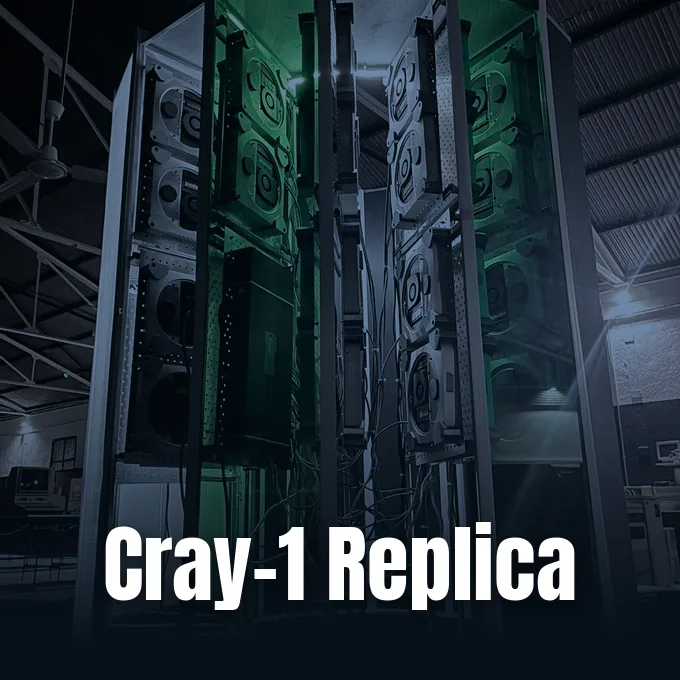
The Spanish Computer History Museum announced on Saturday that it recreated the legendary Cray-1 supercomputer to a 1:1 scale using 30 obsolete Apple Mac Mini desktops [1, 3]. The museum built the working system to show that retired consumer hardware can still handle parallel workloads without being thrown away as e-waste. While old desktop units often sit forgotten in closets or storage bins, this retro cluster links dozens of older Intel chips to deliver up to 1.5 TFLOPS of compute output on public display in Spain [1, 3].
Building a Cray-1 Supercomputer From E-Waste
The museum team gathered 30 retired Mac Mini desktops from the 2012 and 2014 production years to build a working tribute to the 1976 supercomputer. Engineers refused to scrap the aging machines. Instead, they wired them together into a coordinated cluster that echoes the shape of the vintage machine, turning surplus hardware into a functioning educational platform [3, 4]. The project lands at a moment when tech vendors and buyers wrestle with mounting piles of e-waste, especially since working PCs frequently lose software support and end up tossed into closets simply because they no longer fit commercial upgrade cycles [4].
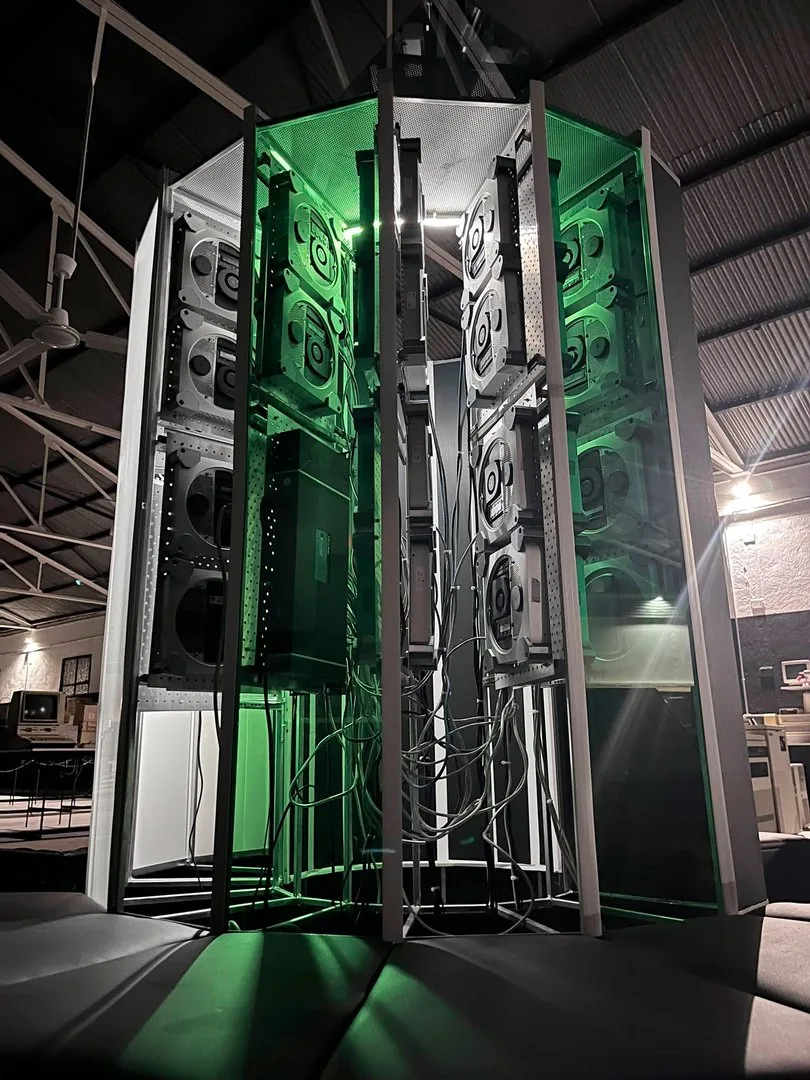
The original 1976 machine wasn’t just fast for its era; it became a cultural icon with its distinctive C-shaped frame and cushioned seating around the base. Node Drift explained that the replica translates that famous shape into a real-world build made from cheap desktop hardware. The builder isn’t pretending that old Apple mini PCs are secretly a 1970s supercomputer under the hood. It’s a creative remix. Rather than chasing authentic vector parts, the build uses the familiar silhouette to make cluster concepts visible and approachable for visitors [4].
Most computing power today hides inside anonymous server racks and remote data centers, shielded behind cloud apps and abstract network interfaces that keep hardware out of sight. Visitors see nodes cooperate directly. By arranging dozens of small desktops inside a recognizable supercomputer frame, the museum turns hidden infrastructure into an object people can stand beside, effectively bridging the historical gap between rare room-scale machines and modern networked setups [4].
How the Mac Mini Cluster Operates
The cluster divides its workload across an uneven group of chips. Five Mac Mini desktops pack quad-core Intel Core i7 processors, whereas twenty-five other boxes use dual-core Core i5 silicon, combining for 70 available threads across the full installation. Software assigns 64 cores to run parallel calculations together, keeping six processor cores in reserve so the underlying system handles routine background chores without interruptions [3].
All 30 nodes run on macOS Mojave. Engineers chose the operating system because it reliably handles task distribution through the Message Passing Interface standard, giving the cluster enough coordination power to run parallel jobs without requiring expensive licenses or modern enterprise components. While modern setups like the tested Mac Mini M6 desktop focus on high efficiency within a single small enclosure, linking decades-old hardware shows how distributed communication works across independent machines [3, 4].
Cluster computing brings real networking trade-offs. Because data travels between separate logic boards, jobs demand careful scheduling across cores, and network latency quickly turns into a serious bottleneck if local traffic slows down under load. Node Drift pointed out that these constraints make the build an ideal teaching tool, proving that parallel setups aren’t just about stacking raw cores together without considering how they talk to one another. Understanding what coordination costs across local network links teaches engineers how distributed clusters and cloud platforms actually operate in practice [4].


Passive Cooling Inside the Steel Chassis
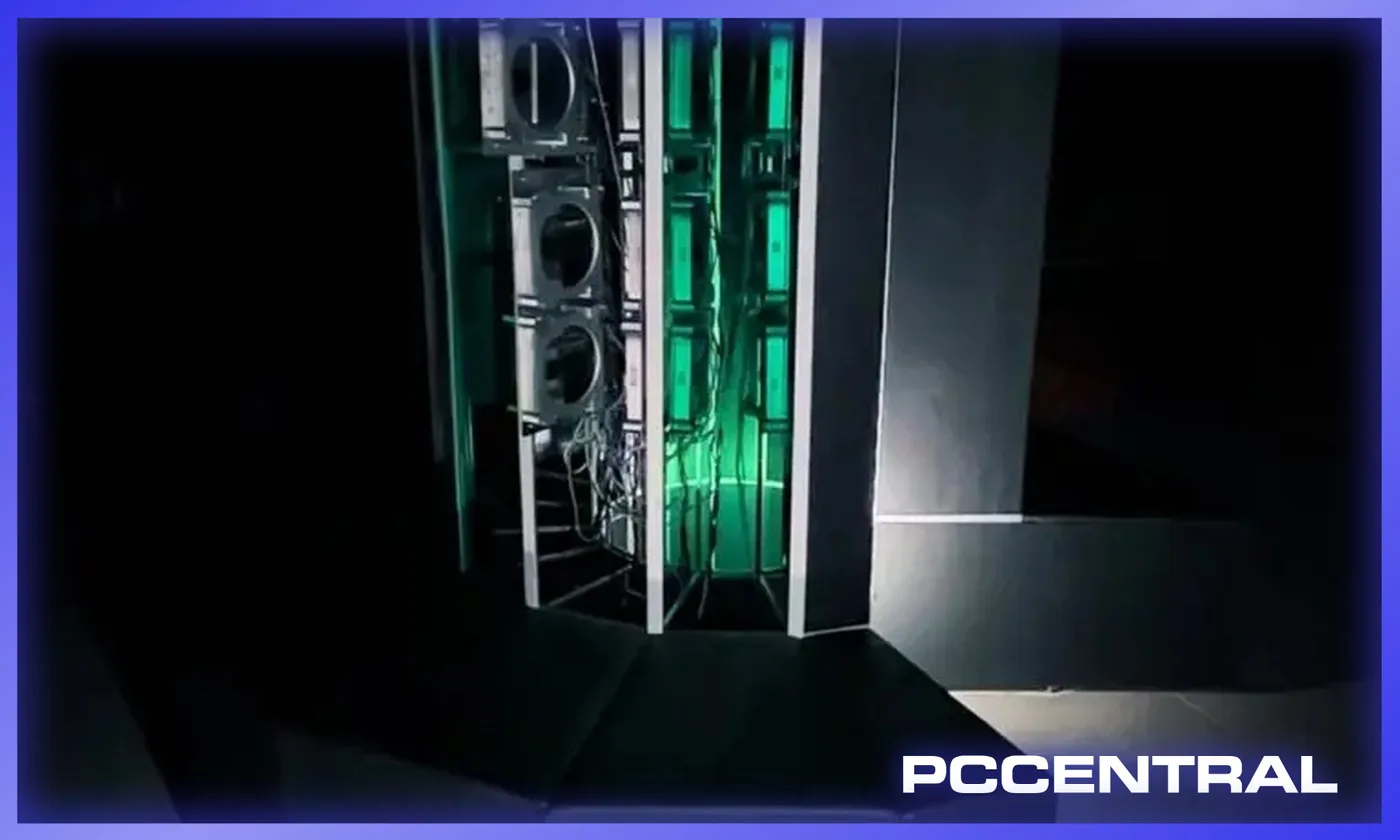
Cooling relies on a natural chimney effect. Engineers mounted the 30 Mac Mini units vertically on aluminum trays inside a custom steel chassis so that rising warm air draws cooler air through the base as components heat up during heavy calculation runs. The passive setup runs steadily without loud fans [3].
The chimney layout completely eliminates mechanical computer noise. Visitors hear only the faint hum of two Ethernet switches tying the network together. Bartosz Mazur reported for PC Central that this thermal geometry keeps the entire assembly quiet enough for a public gallery space, showing that sensible chassis planning can handle the collective heat of dozens of small units running side by side in a tight space [3, 4].
Thermal management and power distribution remain two of the biggest hurdles when assembling multi-node clusters from consumer hardware. Packing 30 power supplies and logic boards into a compact space creates a meaningful electrical load that needs proper venting. Heat builds quickly without fresh air. By using vertical trays to channel warm air naturally out the top, the Spanish team avoided complex ducting or noisy blowers, proving that simple airflow geometry can solve cooling challenges in crowded maker builds [3, 4].
Performance Gains Over the Original 1976 Machine
Peak output reaches 1.5 TFLOPS. Practical benchmark runs sustain 1.3 TFLOPS, an output that vastly exceeds the 160 megaflops theoretical ceiling of the original 1976 machine. In forty years, the processing power that once required a room-scale supercomputer has shrunk into surplus desktop hardware that organizations can assemble from retired units at modest cost [3, 4].
Technical differences between the systems highlight decades of architectural evolution. While the 1976 Cray-1 relied on vector processing to run identical math operations across dense arrays of data, this modern replica uses no custom vector circuits, operating instead as a networked collection of general-purpose Intel chips communicating through standard Ethernet cables [3, 4]. How did supercomputing shift from rare custom mainframes to cheap clusters of commodity microchips? [4]
Historians appreciate that architectural gap. Rather than attempting to clone vector registers or exotic cooling loops from the 1970s, the project reflects the rise of commodity clusters that now drives global data centers and scientific computing grids. Today’s cloud platforms owe far more to linked general-purpose machines than to the monolithic aura of classic supercomputers [4].
Lessons in Hardware Reuse and Cluster Computing
The build makes a direct case for hardware longevity. When vendors stop software updates, organizations routinely scrap working hardware as surplus, even though decommissioned desktops can easily run media servers, automated build agents, or classroom clusters teaching tools like MPI, Docker, and Kubernetes. Reusing functional units keeps electronics out of landfills [4].
For educators and makers inspired by the Spanish museum build, cluster projects provide an accessible way to study systems engineering without buying expensive enterprise gear. Building a reliable multi-node setup starts with taking an inventory of CPU models, RAM sizes, and compatible operating system images. Standardizing the software across nodes prevents configuration headaches. Choosing a solid switch keeps packets moving between nodes without unexpected delays. Simple tasks like logging in over SSH or running scripts from a shared directory teach the operational habits required for larger systems [4].
The Spanish Computer History Museum has put the 1:1 scale replica on public display in Spain, where visitors can study both 1970s computing heritage and hands-on upcycling [1, 3]. Rather than treating historical tech as a sealed museum exhibit, this build remixes vintage industrial design with discarded consumer electronics. It proves that with clever chassis design and distributed software, hardware that seemed ready for the scrap heap can still compute with authority [3, 4].
- ONLINE NEWS AppleInsider. (2026, October 10). 30 old Intel Mac minis are hugely faster than the Cray-1 chassis they live in. [Article Link]
- ONLINE NEWS Ars Technica. (2026, October 10). A Cray-1 supercomputer replica from 30 “obsolete” Mac Minis. [Article Link]
- ONLINE NEWS Mazur, B. (2026, October 10). Cray-1 replica cluster hits 1.5 TFLOPS using 30 retired Mac Minis. PC Central. [Article Link]
- WEBSITE Node Drift. (2026, October 10). Cray-1 replica revives old Mac Minis. [Article Link]


