




The Apple Mac mini M6 is the first Mac built on a 2nm chip, and the first reviews agree it is a genuinely fast little computer [1]. They also agree on the catch. Two years ago the Mac mini started at $599; the M6 model starts at $899, and reviewers at 9to5Mac, Tom’s Hardware and WIRED spent the past week working out whether the extra speed covers a $300 jump in the entry price [2].
Apple Mac Mini M6 Chassis and Port Connectivity
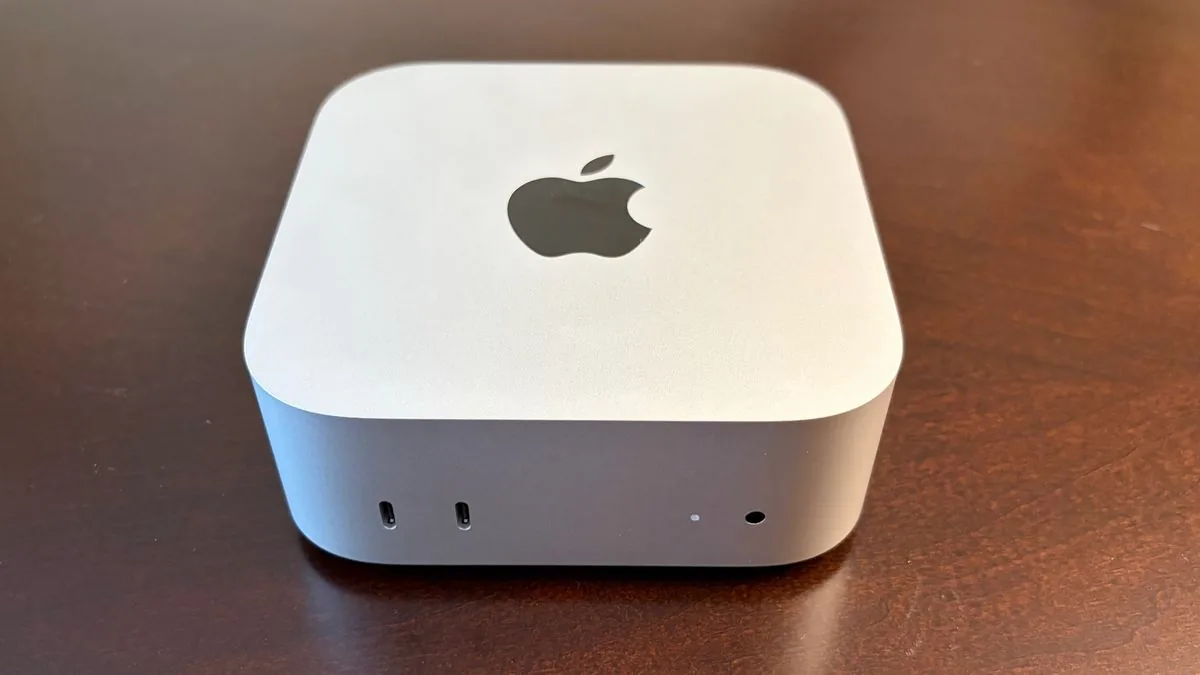
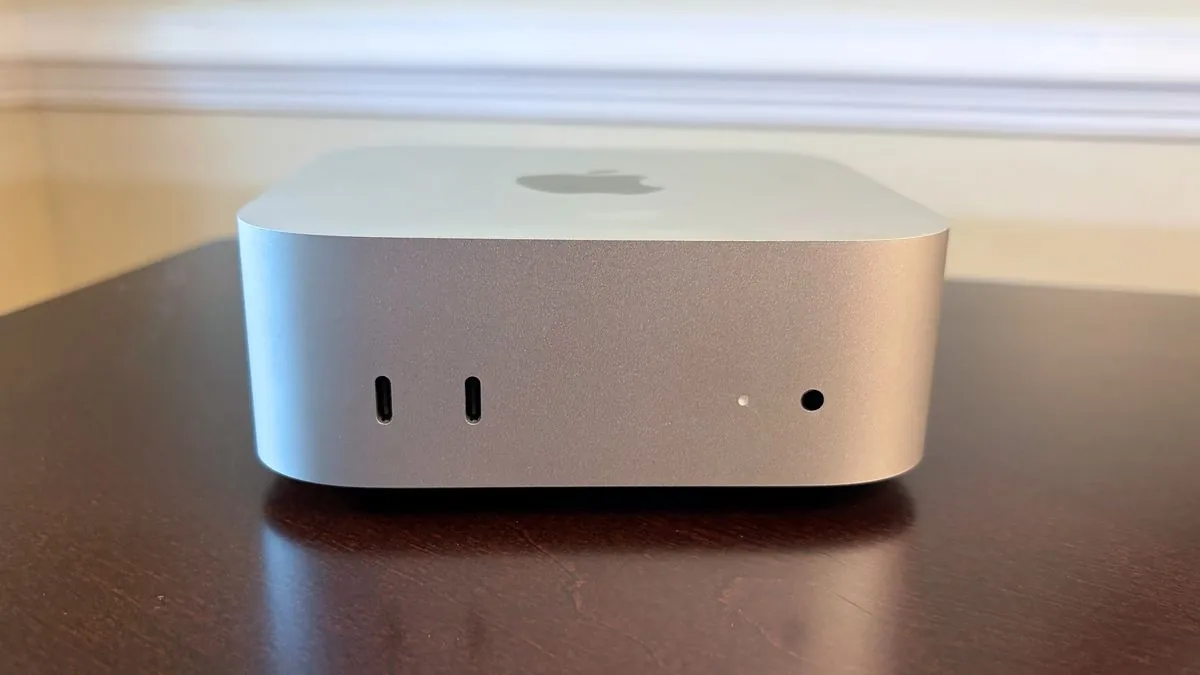
The exterior physical housing of the Apple Mac Mini retains the familiar 5-inch by 5-inch aluminum frame standing 2 inches tall with an internal 155W power supply [2]. On the front panel, Apple provides two USB-C ports rated for 10Gbps data transfers and a 3.5mm headphone jack. The rear panel houses three Thunderbolt 4 ports on standard M6 units, an HDMI connection, and an upgraded 2.5Gb Ethernet jack [1]. Users who need faster networking can add a 10Gb Ethernet port for $100 at checkout. The machine still omits legacy USB-A jacks and front-facing SD card readers, requiring external docking adapters for older peripheral cables [2].
Wireless communication benefits from the custom Apple N1 wireless chip, introducing tri-band Wi-Fi 7 and Bluetooth 6 support [2]. Display compatibility allows driving one screen at 8K at 60Hz or three separate 4K panels simultaneously, accommodating setups like the Studio Display XDR or BenQ 5K MA270S [1]. One old complaint survives the refresh: the circular power button still sits on the underside of the chassis. Users must tilt the computer upward to toggle system power or complete Touch ID authentication with an Apple Magic Keyboard [2]. Luke Larsen highlighted for WIRED that while this placement frustrates setup, it remains less disruptive than the bottom-charging port on the Apple Magic Mouse [3].
Benchmarking CPU and Storage Gains
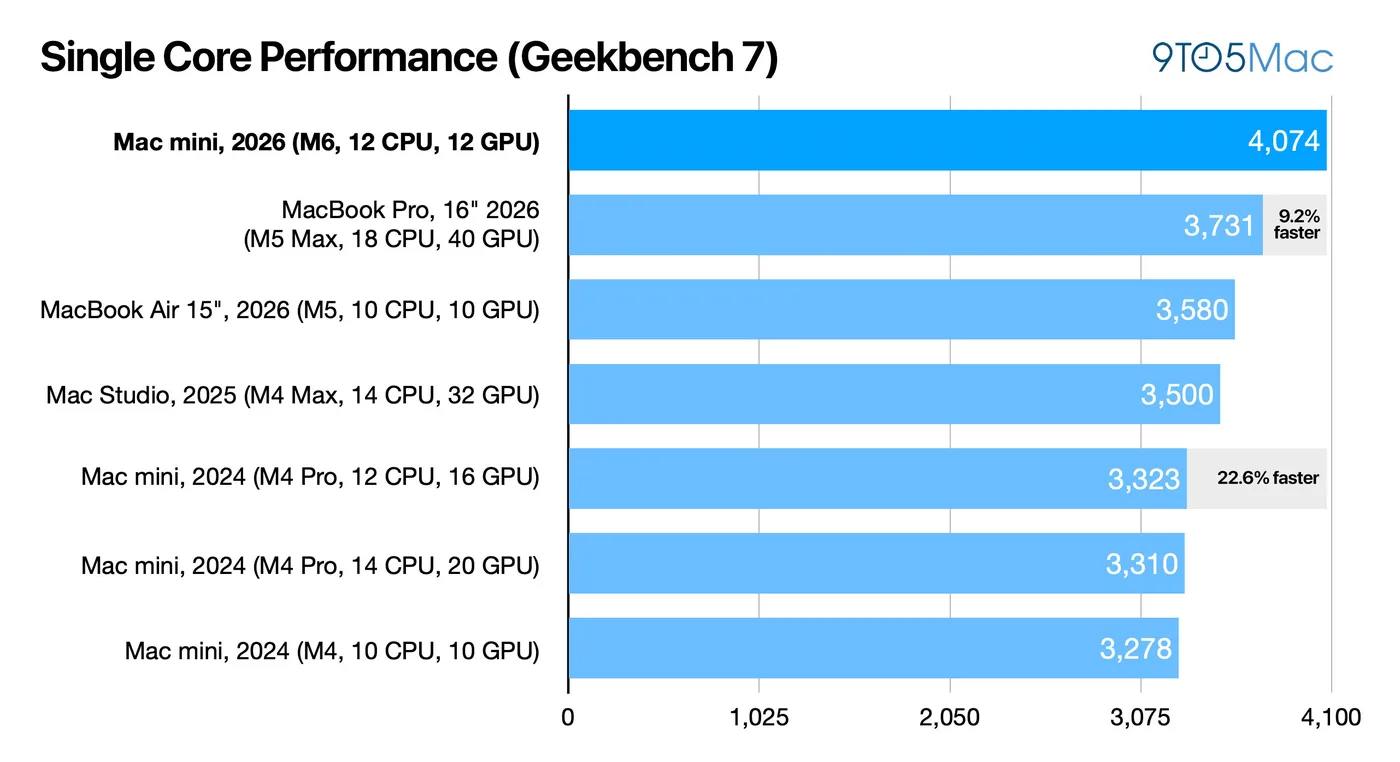
The benchmark numbers vary a little from outlet to outlet, but they point the same way. In 9to5Mac’s Geekbench 7 run, the Apple Mac mini M6 scored 4,074 in single-core, 22,632 in multi-core and 92,542 in the Metal GPU test, which puts it 24% ahead of the M4 model on one core, 48% ahead on all cores and 71% ahead on graphics [1]. Tom’s Hardware measured a slightly lower 21,045 multi-core score, just behind the 16-core M4 Pro Mac mini (22,661), a result Brandon Hill found unsurprising for a 12-core chip; on a single core, though, the M6 was 21 percent faster than the M4 Pro [2]. WIRED adds a note of caution: against the M5 in the current MacBook Air, the single-thread gain shrinks to around 10 percent [3].
Real work showed the same gap. In Tom’s Hardware’s HandBrake test, the M6 converted a 4K clip to 1080p in 2 minutes and 46 seconds, nearly two minutes faster than the M4 Mac mini [2].
Storage improved even more. The 512GB storage module in the late 2026 desktop registered continuous sequential read speeds between 6,000 and 6,300 megabytes per second, accompanied by sequential write speeds reaching 6,400 megabytes per second in Blackmagic Disk Speed Test evaluations conducted by Chance Miller. That roughly doubles the 3,000 to 3,400 megabytes per second that 9to5Mac measured on the previous 512GB base model [1].


Graphics Performance and Thermal Consistency
Gaming is not what the Mac mini is for, and Hill says so, but it can do some light lifting. When he benchmarked Cyberpunk 2077 at 1440p using the dedicated Mac preset, the 12-core GPU managed 37.33 frames per second, which climbed to 62.61 frames per second once frame generation was enabled. Lowering visual output to 1080p produced 58.11 native frames per second, escalating to 96.24 frames per second with frame smoothing active. Turning on ray tracing heavily loaded the GPU, pushing frame rates down into the 20 fps realm even with frame generation running [2].
The machine also holds its speed under load. During ten consecutive runs of Cinebench 2026, initial scores began at 5403, climbed to 5557 on the second pass, and sustained steady outputs between 5530 and 5554. At idle the fan spun at around 1,000 revolutions per minute (RPM) with an average system temperature of 44 degrees Celsius; under Cinebench the temperature rose to 64 degrees and the fan settled at about 2,615 RPM [2].
That fan is the trade-off. WIRED’s Luke Larsen says anyone coming from a fanless MacBook Air will definitely hear it once a heavy job starts (“It’s not terrible,” he adds), but the active cooling is what lets the Apple Mac mini M6 keep its clocks up through long exports instead of throttling [3].
Apple Silicon Architecture and Operating System
Much of that comes from the chip itself. The M6 carries 46 billion transistors, around a 35 percent increase in transistor density according to WIRED, and it is Apple’s first processor on a 2-nm process node [3]. It is also the first Apple chip to use all three of the company’s CPU core types: 2 super cores for single-threaded work, 4 performance cores for multithreaded jobs and 6 efficiency cores for background tasks, two more cores in total than the M4 [1]. Unified Memory bandwidth expands to 170GB/s on 24GB units (and 153GB/s on 16GB models), which matters most for people running local AI models [1].
Each graphics core incorporates an integrated Neural Accelerator designed to speed up matrix mathematics during on-device artificial intelligence routines. Reviewer Chance Miller reported up to four times faster artificial intelligence processing compared to previous base hardware during laboratory evaluations for 9to5Mac. Apple also claims double the ray-tracing speed in apps like Blender. Miller is candid that he does not run local AI models himself, so those figures come from Apple’s own testing [1].
The desktop ships with macOS 27 Golden Gate, introducing contextual Siri AI search alongside natural language workflows in the Shortcuts App. Users can also adjust how transparent the Liquid Glass interface looks [2]. The software matters here because of who buys this machine now: 9to5Mac notes that the Mac mini has become a go-to recommendation for people who want a dedicated box for running AI agents and automations, a use Miller expects the M6 to suit well [1].

Pricing Shifts and Value Assessment
When Apple released the M4 desktop revision in 2024, its $599 starting price made it one of the best-value computers Apple had ever sold. Then memory prices climbed; former Apple CEO Tim Cook has called it a “100-year flood,” with no sign of it ending soon. Chance Miller documented that Apple subsequently eliminated the entry 256GB tier in May to make $799 the default floor, before ultimately restoring base storage at that elevated pricing tier [1].
The Apple Mac mini M6 formalizes that pricing increase with an $899 starting MSRP for 16GB of unified memory and 256GB of storage. Upgrading internal storage to 512GB requires an additional $200 surcharge, driving the purchase price to $1,099. Retail discounts have started, with the base model listed at $879.99 [1], and Apple accessories are slipping too, as the early AirPods Pro 3 deals show.
The headlines tell the story on their own. TechSpot called it “more performance at a higher price” [4], Ars Technica said the M6 “impresses, but the price hike is rough” [5], and Tom’s Hardware concluded that the Mac mini is “losing its grip on value” [2]. The Apple Mac mini M6 remains a capable desktop workstation, but buyers must evaluate whether generational efficiency justifies paying a substantial price premium over previous generations [5].
For developers, video editors and anyone setting up an always-on machine for AI tools, the M6 is an easy recommendation, and 9to5Mac still calls it Apple’s most versatile Mac [1]. For someone who just wants the cheapest way into macOS, the $599 Mac mini no longer exists, and none of these benchmarks change that [2].
- ONLINE NEWS Miller, C. (2026, September 21). M6 Mac mini review: Apple’s most versatile Mac continues to shine. 9to5Mac. [Article Link]
- ONLINE NEWS Hill, B. (2026, September 21). Apple Mac mini (Late 2026) review: Strong performance, but losing its grip on value. Tom’s Hardware. [Article Link]
- ONLINE NEWS Larsen, L. (2026, September 21). Apple’s M6 Mac mini is perfect for the AI curious. WIRED. [Article Link]
- ONLINE NEWS TechSpot. (2026, September 21). Apple Mac mini M6 debuts: More performance at a higher price. TechSpot. [Article Link]
- ONLINE NEWS Ars Technica. (2026, September 21). Apple Mac mini review: The new M6 impresses, but the price hike is rough. Ars Technica. [Article Link]


1 comment