





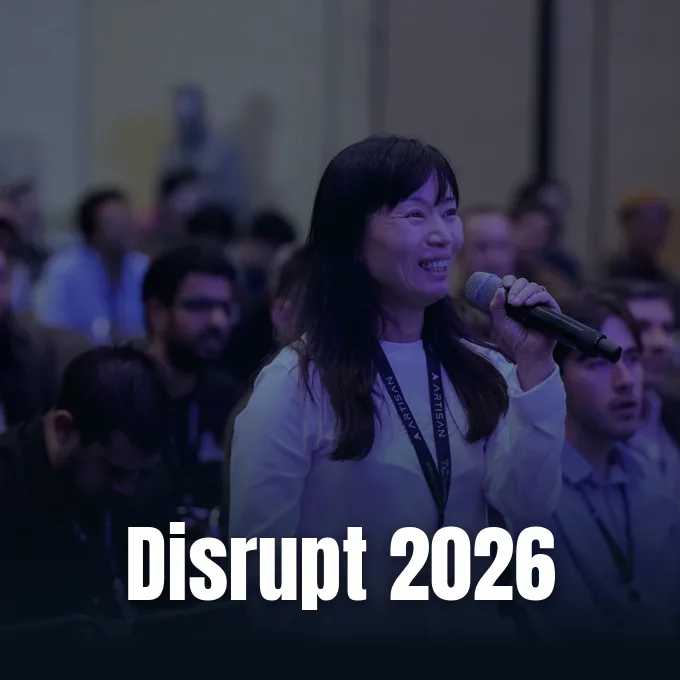
TechCrunch Disrupt 2026 opens its doors on October 13 at Moscone West in San Francisco, bringing together more than 10,000 founders, investors, and corporate leaders for three days of live programming. Event host TechCrunch lined up more than 250 speakers and 200 sessions, pairing tactical advice with early startup discovery [1]. While online pass savings of up to $100 remain open ahead of the main stage keynotes, that’s not the only financial incentive, as Disrupt 2026 centers its agenda on lessons for building enduring firms in the AI era [6]. In-person check-in begins at 8 AM PT on October 13 [7].
What Is TechCrunch Disrupt 2026?
TechCrunch Disrupt serves as an annual gathering for the global startup ecosystem, drawing early innovators, venture capitalists, and tech leaders to evaluate emerging business tools [3]. The three-day event at Moscone West features more than 300 exhibiting startups in the Expo Hall, giving guests an early look at tools before they hit store shelves [1]. It isn’t just a showroom for finished hardware. Instead, founders use the hall to test product ideas and negotiate funding terms with active investment managers [6].
This year’s agenda addresses how software teams build durable businesses when artificial intelligence reshapes development speed, software distribution economics, and customer acquisition across the broader technology industry. Organizers shaped sessions to answer what founders can take back to their desks on Monday morning, focusing on real deployment data rather than vague hype [6]. That focus guides presentations on software systems, robotics hardware, climate tools, and fintech [1]. Founders who haven’t proved their unit economics yet can test their plans against real operational results. They compare notes with peers who already run revenue-generating operations [6].
Attendance tracks split guests by startup stage to save time on the floor. Pre-seed founders spend their hours testing product ideas, meeting angel backers, and checking competitor booths inside the Expo Hall. Companies that are actively raising seed funding rely on matchmaking tools and the Deal Flow Café, an exclusive meeting room that comes with the Founder Pass. Scale-up teams use the event to scout engineers and sign distribution pacts [6].

Six Industry Stages and Tactical Founder Playbooks
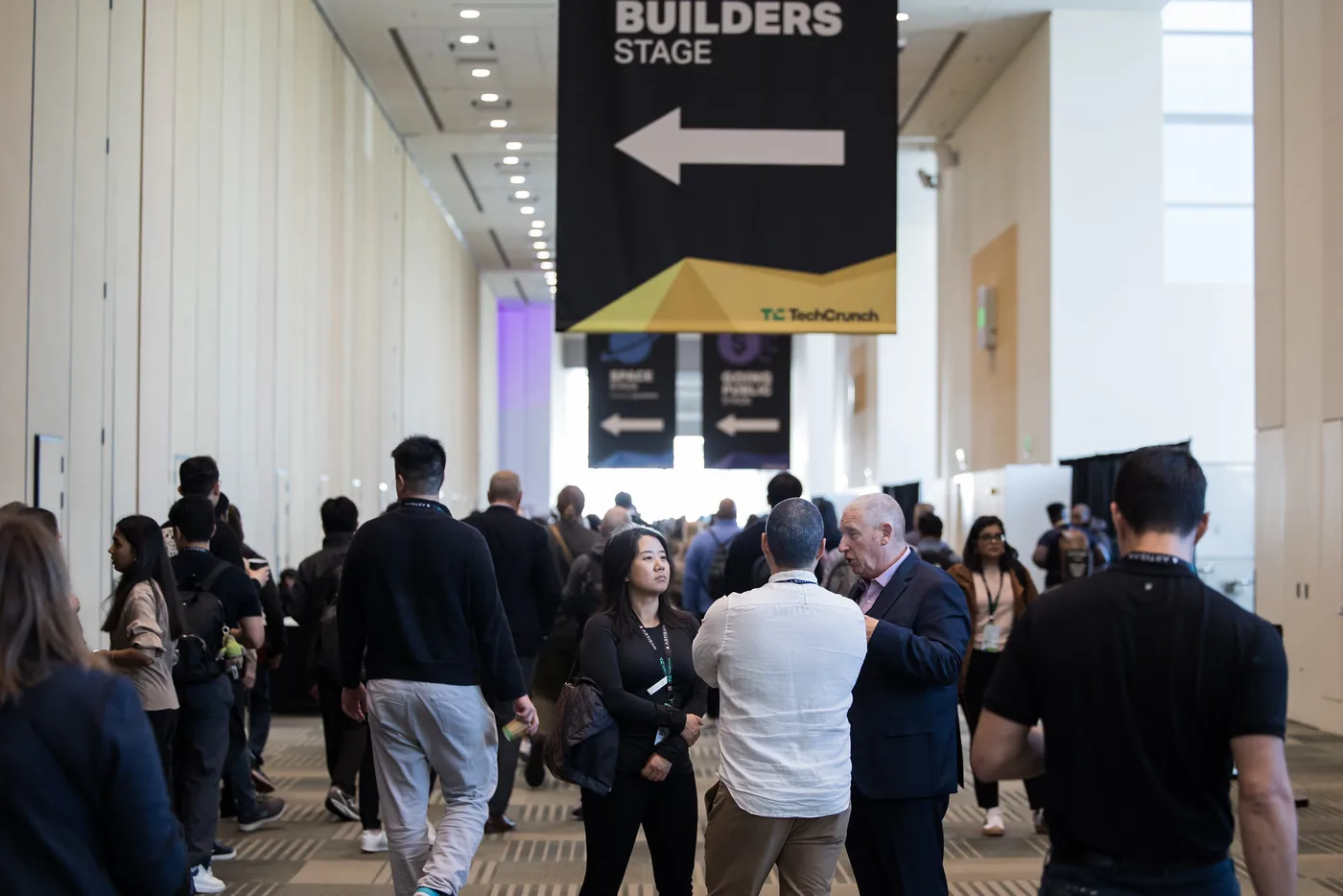
Events at Disrupt unfold on six curated stages built for specific technical jobs, pairing tactical operational advice with high-level industry forecasting [6]. The Disrupt Stage hosts headlining talks with prominent founders, chief executives, and venture partners who guide technology policy and product direction [5]. On the Builders Stage, speakers deliver step-by-step advice on hiring, fundraising, and engineering leadership to help early teams construct sustainable businesses from the ground up [6]. Organizers know early founders can’t afford to waste time on generic speeches. They focus on real lessons from builders who navigated early crises and closed tough funding rounds [4].
Three focused tracks track the systems supporting modern machine learning deployments. The AI Stage looks at model tuning, autonomous agents, and commercial sales, while the Real World AI Stage covers robotics, autonomous transit, factory tools, and defense gear. Meanwhile, the Smart Money Stage follows stablecoins, payment tools, and banking rules, and the Smart Systems Stage explores chips, power grids, and data center cooling [6]. Network load has become a major issue for distributed software, echoing trends noted in the Cloudflare founders letter warning that AI bots surpass human traffic on public web networks.
Beyond talks, networking tools let registered guests plan private meetings before arriving in San Francisco. The event app pairs founders with venture backers based on their market and stage. Teams with a Founder Pass get access to the Deal Flow Café, a quiet room set aside for private partnership and term-sheet talks. Community Side Events run every evening. These gatherings pop up in downtown spots, giving founders relaxed places to meet angel investors and future hires [6].


Disrupt 2026 Stage Lineup and AI Compute Debates
The main stage speaker list brings together leaders who build complex hardware and computing systems [5]. Rivian founder and chief executive RJ Scaringe, who started the electric vehicle maker in 2009 to build high-performance electric trucks, discusses physical manufacturing and hardware scaling in his keynote titled Building the Impossible. Scaringe oversees commercial manufacturing for corporate clients. Amazon ordered 100,000 electric delivery vans. Uber deployed 50,000 autonomous robotaxis. In 2025, he set up Mind Robotics to build industrial foundation world models capable of automating complex assembly tasks across manufacturing plants [3].
Compute bottlenecks form the center of high-performance architecture debates on the Disrupt Stage, where Cerebras Systems co-founder and chief executive Andrew Feldman addresses whether model scaling can keep going without overwhelming electrical grids and venture capital budgets [5]. Feldman brings deep semiconductor experience to the stage, having previously led SeaMicro until AMD bought it in 2012, and Force10 Networks before Dell bought it [3]. He joins Ricursive Intelligence co-founders Anna Goldie and Azalia Mirhoseini, who examine what happens when machine learning software begins designing its own silicon chips [5]. Goldie, an MIT Technology Review 35 Innovators Under 35 winner who co-led the AlphaChip project at Google DeepMind, shows how automated algorithms can design their own underlying silicon to bypass conventional manufacturing delays [3].
Device ecosystems and software evaluations get equal room in the speaker schedule. Amazon senior vice president Panos Panay, who joined the tech company in October 2023 after leading Windows and devices at Microsoft, discusses ambient computing and asks what comes after the smartphone, bringing new hardware to the room [5]. Hugging Face policy head Irene Solaiman explains model evaluations, showing why firms need tough tests before letting autonomous agents touch real customer work. Flock Safety launched in 2017. Flock Safety founder Garrett Langley addresses neighborhood security trade-offs [3]. Furthermore, all five Benchmark general partners—Jack Altman, Peter Fenton, Chetan Puttagunta, Everett Randle, and Eric Vishria—appear together on stage to lay out their early-stage investing playbook [5].
Startup Battlefield 200 and the Race for the Cup
The focal point of the gathering remains Startup Battlefield 200, a pitch competition for early startups selected by TechCrunch editors. Organizers selected 200 startups on August 20, grouping contenders into competitive pitch tracks that span physical robotics, clean energy production, medical biology, and cloud software security before live industry audiences and venture capital judges [5]. Founders get pitch coaching before presenting directly to top venture judges and live crowds [6]. The stakes are high. Finalists face off on the Disrupt Stage during the closing afternoon, where one winning startup takes home the Disrupt cup and $100,000 in equity-free prize money [5].
Past tournament records track the financial reach of the showcase. Alumni from past Battlefield cohorts have gone on to raise billions in venture capital while forging over 20,000 connections during previous sessions [3]. Several past winners return to the Disrupt Stage this week to share lessons from their own runs. Cellino co-founder and chief executive Nabiha Saklayen, who won Battlefield in 2021, returns to show off her cell therapy platform and ask: “Can you bank your biology?” alongside Molecule.one founder Piotr Byrski, Nephrogen founder Demetri Maxim, and Glīd founder Kevin Damoa [5].

The financial benefit extends far beyond the single winner. Organizers saw past founders field almost 30 back-to-back investor meetings right after stepping off the stage. Another founder had inbound funding requests triple after landing a spot on the roster. Even teams that don’t win the cup can use their Expo Hall booth to meet corporate partners, sign test customers, and start funding chats [6].
Registration Details and Startup Networking Programs
Registration for the three-day San Francisco event enters its final hours before in-person check-in begins at Moscone West, where attendees who secure passes online save up to $100 before standard box-office rates take effect on October 13 at 8 AM PT. Passes are still available. It’s a promotional structure that lets buyers get a second pass of the same type at 50% off for a co-founder or peer. Groups of four or more people can unlock extra team discounts to lower travel and ticket costs. Group discounts require four people [1].
To assist tech workers hit by recent industry cutbacks, the event provides discounted tickets through its Layoff to Liftoff Ticket Program, allowing eligible applicants to grab an Expo+ Pass for $75 to access exhibition booths and hiring stages [1]. The program helps engineers, product leads, and operators meet growing teams hiring across robotics, AI, and software. That ticket gives workers a direct bridge into startup hiring pipelines [6].
Planning ahead helps founders get measurable business results from their trip. Teams should check the stage schedules, sign up for local Side Events, and book investor chats through the conference app before arriving. Polishing a quick elevator pitch and picking target venture funds lets founders make the most of chance meetings on the floor [6]. With thousands of builders gathering in San Francisco, TechCrunch Disrupt 2026 presents three days of practical deals that kick off on October 13 [1].
- ONLINE NEWS Barrera, J. (2026, October 11). Less than 48 hours until Disrupt 2026 starts. TechCrunch. [Article Link]
- ONLINE NEWS TechCrunch Events. (2015, October 13). 2026. TechCrunch. [Article Link]
- ONLINE NEWS Bradley, J. (2025, October 26). TechCrunch Disrupt 2026 – Overview. TechCrunch. [Article Link]
- ONLINE NEWS TechCrunch Events. (2026, October 12). TechCrunch | Startup and technology news. TechCrunch. [Article Link]
- ONLINE NEWS Barrera, J. (2026, October 5). The full Disrupt Stage lineup. TechCrunch. [Article Link]
- ONLINE NEWS Little, M. (2026, October 11). The founder’s guide to TechCrunch Disrupt 2026: Everything you need to know. TechCrunch. [Article Link]
- ONLINE NEWS Barrera, J. (2026, October 9). Disrupt 2026 starts in 4 days and prices increase. TechCrunch. [Article Link]


