




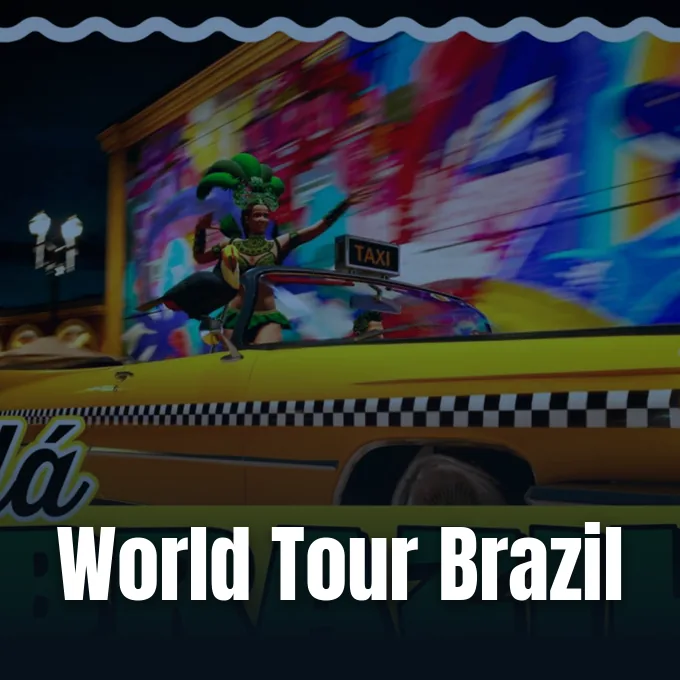
Sega released a new gameplay trailer for Crazy Taxi: World Tour, revealing the title’s Brazil map and confirming a planned launch for 2027. The presentation shows the globetrotting arcade revival in action as player cabs weave through coastal streets, climb steep urban hills, and drift past recognizable storefronts [3]. While earlier updates introduced other campaign stops, this reveal details how real retail chains and chaotic passenger runs fit into the city layout. The game arrives on Xbox Series X|S, Xbox on PC, Steam, PlayStation 5, and Nintendo Switch 2 [1].
Crazy Taxi World Tour Arrives in Brazil
The newly unveiled Brazil map represents the fourth of five major urban locations planned for the main story campaign. Players take their cabs through crowded avenues, steep residential slopes, and open beachside boulevards designed to encourage fast driving and huge jumps across the city. Earlier coverage by PerEXP Teamworks examined Sega’s showcase of the Japan map, and this Brazilian setting offers a noticeable change in street pacing and coastal scenery. Producer Kenji Kanno explained that the environment draws directly from local urban life: “The striking contrast between Brazil’s dense, eclectic streetscapes and modern city life heavily inspired our team. Alongside the bright, vibrant beaches and dramatic natural scenery, we hope players can immerse themselves in the beauty and excitement of Brazil” [1].
Real-world commercial partnerships return as a staple of the series, placing recognizable brand storefronts directly into the course design. Brazil adds three real brand locations. The trailer confirms appearances from popular Brazilian fast-food chain Habib’s, steakhouse chain Fogo de Chão, and consumer electronics retailer Fast Shop [1]. Dropping passengers off at these real business destinations was a defining quirk of original arcade entries, and the development team preserved that identity here. It isn’t just about driving past branded signs; players pick up fares whose explicit destinations are these bustling storefronts, giving each route an authentic neighborhood feel.
Navigating these streets requires drivers to read traffic flows quickly while searching for narrow alleyways. Roads combine wide highways with crowded hillside lanes where oncoming traffic creates constant hazards for speeding cabs. The countdown clock never stops. Memorizing shortcuts lets players shave precious seconds off their delivery times, turning every trip into a frantic dash through heavy traffic [1].
Axel Chases Car Thieves Across Five Cities
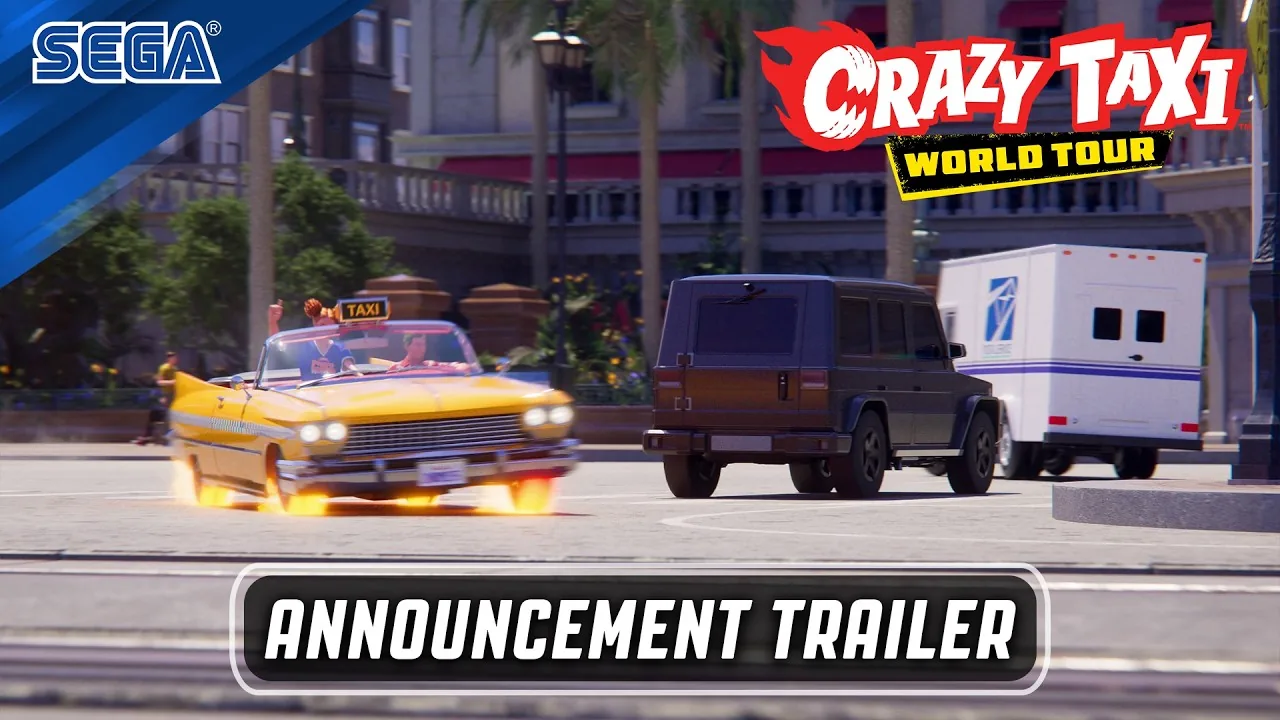
The narrative framework of the single-player campaign centers on veteran driver Axel, whose signature cab is stolen by a ring of masked international car thieves. The pursuit spans five distinct cities. Each metropolitan area includes its own set of missions, side activities, colorful passengers, and varied road conditions that test driver precision while racing against the clock. Axel can’t simply cruise around at a leisurely pace; he has to earn steady cash and track down clues to catch the thieves before they vanish completely, forcing him to adapt to every new city’s streets [1].
Vehicle management goes beyond Axel’s starting ride, as players can acquire and customize different cars throughout their journey [1]. Upgrading handling, acceleration, and visual aesthetics helps drivers tackle distinct road terrains, whether speeding down flat coastal freeways or sliding sideways through tight inland corridors packed with demanding fares. Speed brings higher fares.
For players who prefer pure score-chasing without story cutscenes, the game includes a dedicated Arcade Mode modeled after the original coin-op format that established the franchise in arcades decades ago [1]. The timer does not stop. Every successful delivery adds bonus seconds to the clock, while sluggish driving brings a quick game over. It’s a direct recreation of the classic arcade loop, designed for quick sessions and high-score runs.


Multiplayer Modes Feature Cops and Robbers Rules
Multiplayer stands as one of the biggest additions to the revived franchise, made possible by modern network infrastructure that didn’t exist during the Dreamcast era. Producer Kenji Kanno pointed out that the development team couldn’t implement multiplayer in original games due to technical hurdles like network latency. To build an engaging online experience, Sega brought in Director Yo Momotani, who brought valuable multiplayer design experience from his work on the Border Break series [2]. The resulting online suite supports full cross-platform play between consoles and PC, allowing friends to compete regardless of their preferred hardware platform when the title arrives [1].
Drivers compete under two distinct rules [2]. In the first mode, all participating drivers compete directly against one another, racing through traffic to snatch up the highest-paying passengers and deliver them to their destinations before rivals can steal the fare.
The second format introduces an asymmetrical setup inspired by a game of cops and robbers, dividing six participants into two distinct teams. Six players join each asymmetrical match. Four players take the wheel as cab drivers, while two players act as police officers tasked with shutting down the illegal fares. Police cruisers can actively interfere with cabbies who are trying to pick up passengers, arresting them on impact. However, teammate cabs can ram an arrested taxi to rescue their partner and return them to the chase, ensuring matches remain unpredictable and collaborative [2].

Crazy Taxi World Tour Preserves Iconic Rock Soundtracks
Music has always been an indispensable part of the series’ identity, and the team recognized that early during production. The original announcement trailer featured “All I Want” by punk rock band The Offspring, drawing praise from long-time fans who associate the franchise with energetic skate punk. The Offspring headlines the trailer music. Kanno said that when discussing the project with external partners, people routinely asked whether iconic songs from The Offspring and Bad Religion would return. He confirmed that Sega is actively negotiating music licenses, acknowledging that omitting classic tracks would disappoint loyal players who expect blistering punk rock rhythms during high-speed taxi runs [2].
The upcoming installment marks the first mainline entry in roughly 25 years, arriving after a long hiatus following early 2000s releases. Realistic driving was not fun. Momotani explained that early development prototypes tested slower taxi speeds, but the team quickly discarded that design because sluggish vehicle handling drained all excitement from the game [2].
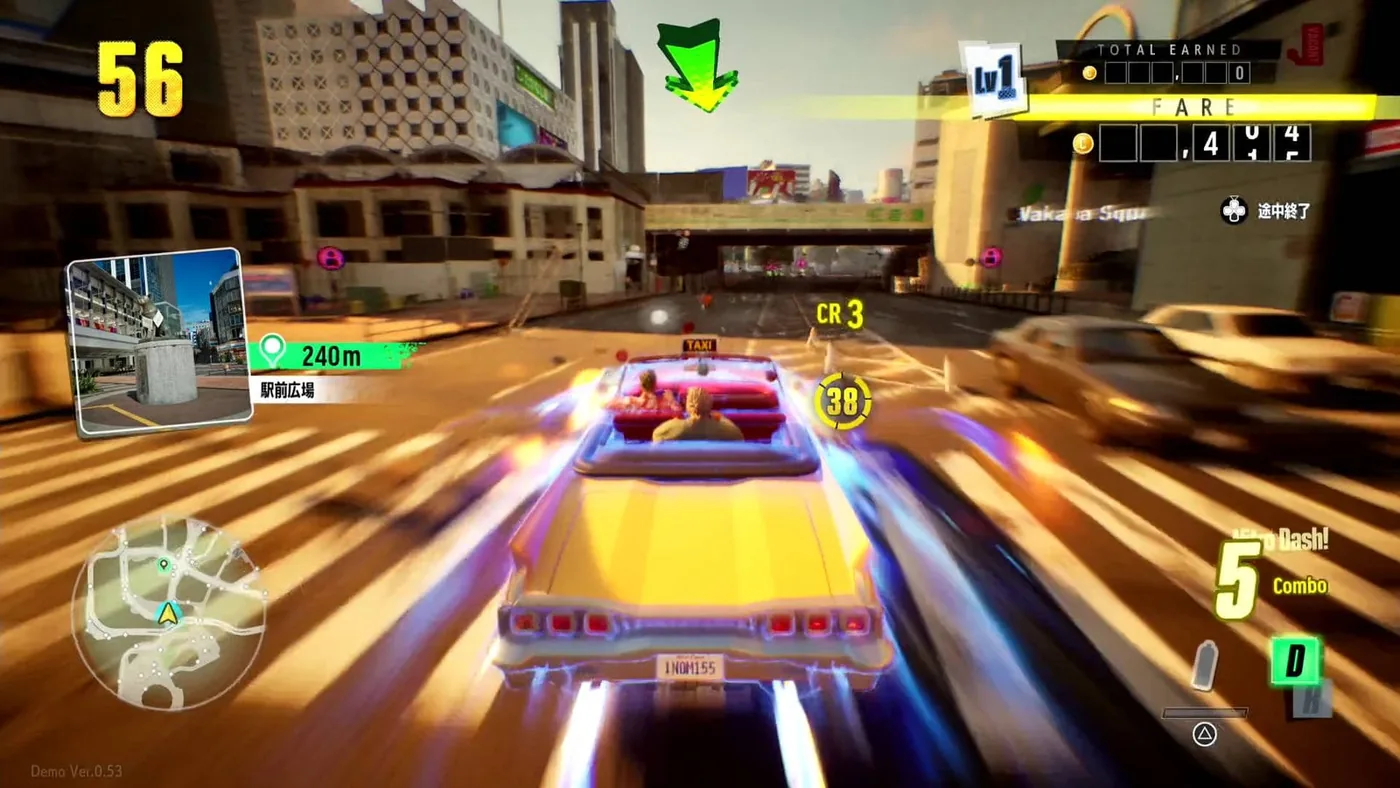
Momotani also described the title as closer to an action game than a traditional driving simulator. Players navigate busy roads using specific input commands like Crazy Dash and Crazy Drift to maintain top momentum around sharp turns. The World Tour campaign also incorporates wild mini-game objectives that lean into arcade absurdity. In one featured mission, drivers can launch passengers across immense distances, sending them flying several hundred meters through the air toward distant targets without taking vehicle damage [2].
Rewarding Wild Playstyles Over Driving Penalties
A core principle guiding map design in the new game is what Kanno calls “restrictions that make you feel free”. The developers wanted to grant players immense navigation freedom, but recognized that total lack of structure leaves players feeling overwhelmed and lost. Kanno used a practical beverage analogy to explain the concept to his staff, noting that choosing among five kinds of juice is far easier and more satisfying than sorting through a confusing menu of one hundred options. Intentional street boundaries give players clear choices while still encouraging exploration across city districts [2].
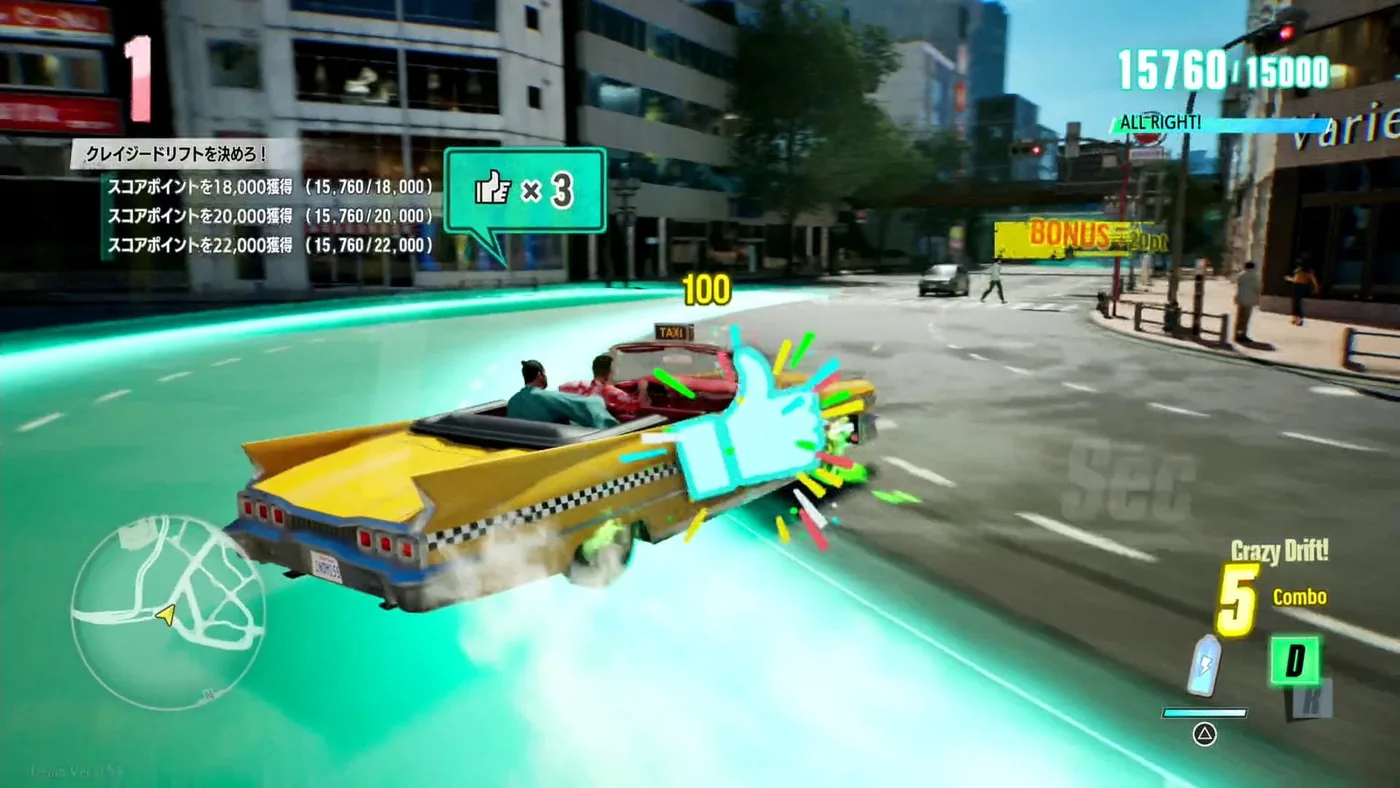
That design philosophy extends to how the game evaluates player performance on the road. Rather than punishing mistakes, Kanno instructed the team to build a reward-based scoring model that praises creative driving. The system doesn’t enforce a single optimal line through each neighborhood. Sophisticated drivers can rely on precision drifting and tidy cornering, while aggressive players can smash through traffic and street barriers to deliver their fare on time. Both playstyles earn positive rewards [2].
Ultimately, the team wants players to enjoy the sheer absurdity of tearing through busy metropolitan streets [2]. Kanno stated that being able to drive through a city while laughing remains the defining appeal of the entire series. Sega targets a launch in 2027 [1]. That upbeat spirit will guide the franchise forward when it arrives across modern consoles and PC.
- ONLINE NEWS Joshua, O. (2026, October 9). Crazy Taxi: World Tour trailer reveals Brazil map and real-world retailers. Noisy Pixel. [Article Link]
- ONLINE NEWS AUTOMATON WEST. (2026, October 8). What are the “indispensable” elements Crazy Taxi: World Tour inherits? Developers talk about the importance of music, balancing freedom and restrictions, map design, and more. AUTOMATON WEST. [Article Link]
- ONLINE NEWS Gematsu. (2026, October 10). Crazy Taxi: World Tour ‘Welcome to Brazil’ trailer. Gematsu. [Article Link]
- ONLINE NEWS Push Square. (2026, October 10). Crazy Taxi: World Tour takes you to Brazil as another location is revealed. Push Square. [Article Link]


