



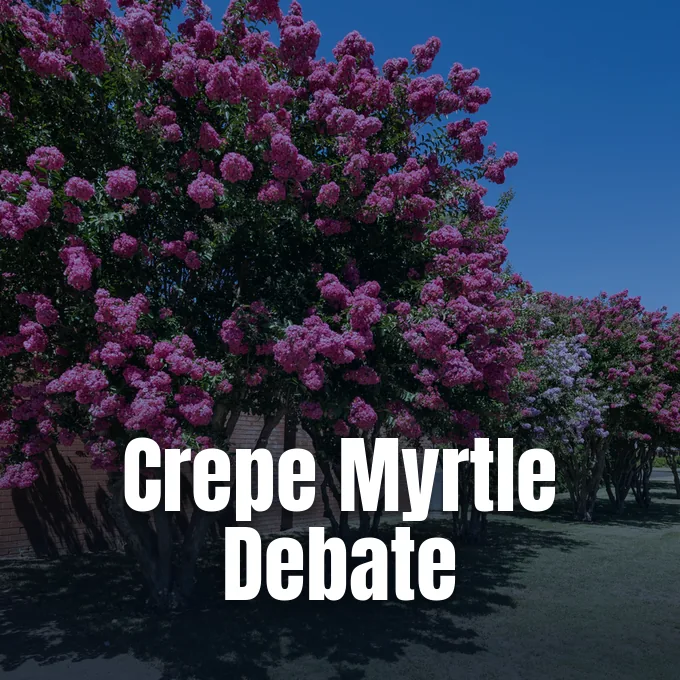
Summer streets in Australia and cities in the United States fill with clusters of white, pink, purple, and red blossoms whenever crepe myrtle trees reach full midsummer bloom [2]. Municipal councils planted millions of them in newly developed residential subdivisions [1]. Yet botanists and arborists now ask whether this single group of woody ornamentals has been overplanted at the expense of canopy shade, cooling, and wildlife support [2]. Australian botanist Gregory Moore analyzed this love-hate relationship in an unpeer-reviewed pre-print published through The Conversation and Mirage News [1], [2], [3]. Moore said that fast ornamental appeal often overrides the functional needs of urban streetscapes [1], [2].
The Rise of Crepe Myrtle Trees in Suburbs
The genus Lagerstroemia contains about 50 species native to Asia and northern Australia, but suburban streets feature the common crepe myrtle, classified as Lagerstroemia indica [2], [7]. Suburban developments built in recent decades feature smaller yards and narrower roads. Because common crepe myrtle trees reach maturity within five to ten years and rarely exceed five meters, city planners selected them for compact nature strips along residential blocks [2].
Healthy specimens can live for 100 years in open ground [2]. Lauren Krystaf reported in House Digest that this species originated in China, Japan, and the Philippines, adapting over centuries to varied soils, heat, and city air pollution. Growers cultivate these trees in USDA plant hardiness zones 6 through 9 in the United States [7]. City road crews appreciate that their smooth, coppery bark creates clean winter silhouettes after autumn leaf drop, leading nurseries in Georgia and Texas to stock them heavily for municipal planting contracts [2], [4], [8]. Avenues across Georgia, Texas, and Australian suburbs soon received uniform plantings spaced just a few meters apart along entire neighborhoods [2], [4], [8]. The small trees fit property boundaries neatly, but visual repetition over several decades gradually produced growing weariness among residents who wanted greater variety along their identical streetscapes [2].
Botanical Diversity and Hybrid Resistance
The botanical story of crepe myrtles involves far more diversity than a single street species. In Australia, the native Queensland crepe myrtle, Lagerstroemia archeriana, grows naturally in the drier forests of Queensland and Western Australia [2]. Gregory Moore said that this native tree produces pink or purple blooms and tolerates arid conditions, but nurseries rarely sell it outside northern Australia because commercial distribution centers favor imported varieties with established market reputations [1], [2].
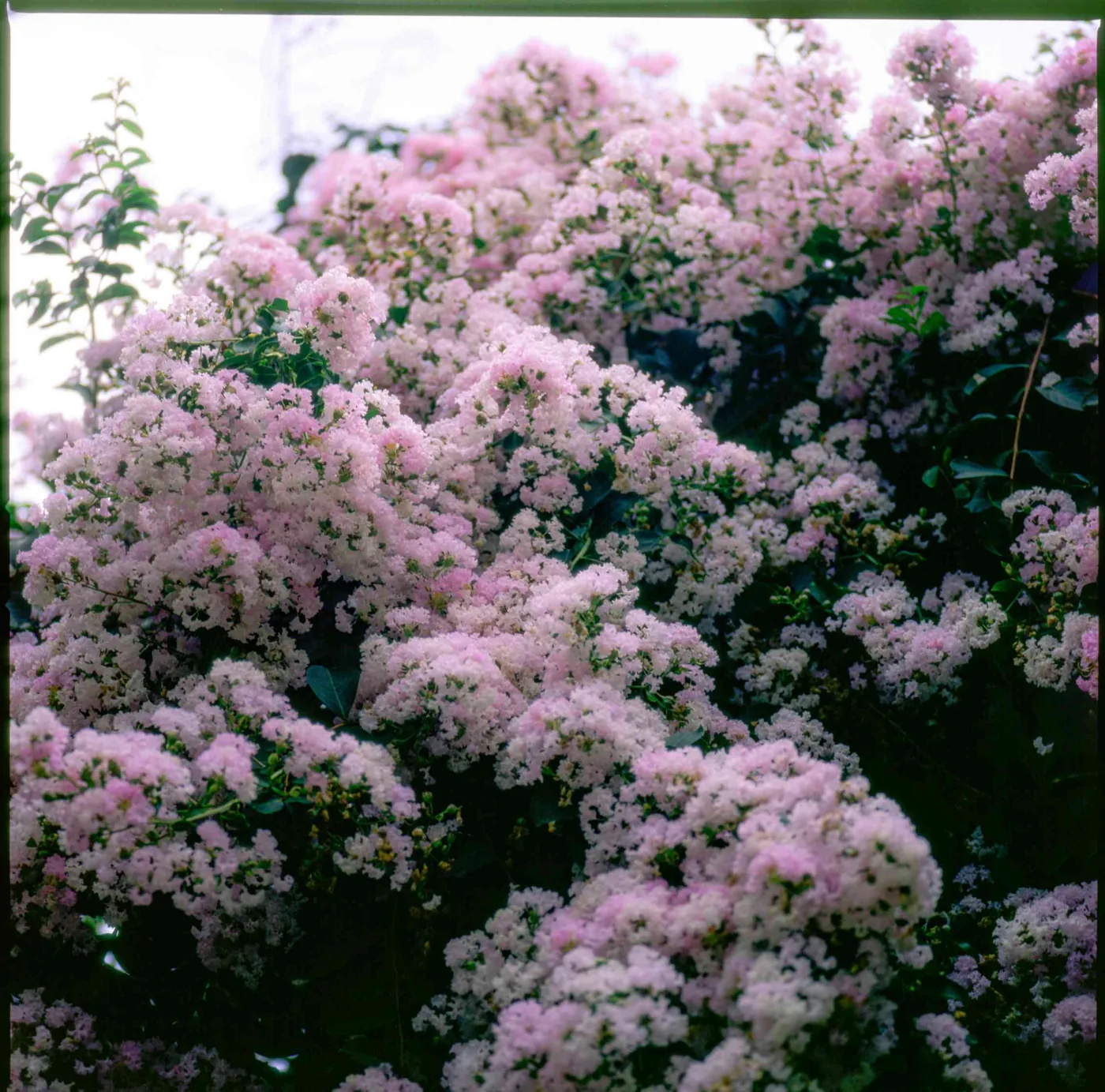
Powdery mildew poses an ongoing threat to ordinary foliage. Plant breeders in the United States and Japan resolved this vulnerability by crossing L. indica with Lagerstroemia fauriei, a sturdy Japanese species that produces white flowers and mottled bark. These hybrids combined Japanese disease resistance with the rich floral colors of the Chinese parent [2]. Horticulturists named many of these hybrid cultivars after Native American tribes, including ‘Natchez’, ‘Muskogee’, ‘Tonto’, ‘Acoma’, and ‘Sioux’, distributing them through agricultural stations to provide dependable summer color for gardens across several states [5]. In autumn, their foliage shifts into vivid shades of purple, yellow, orange, or deep red [4]. Botanists studying these lineages draw comparisons to taxonomic research on botanical identification of Amorphophallus species where minute floral structures distinguish closely related varieties, while peeling summer bark allows trunks to expand naturally as specimens mature [2], [8].
Why Do Cities Plant Crepe Myrtle Trees?
City tree selectors face difficult engineering constraints along streets where compact roots remain necessary. Urban crepe myrtle trees meet these demands because their fibrous root systems rarely crack asphalt pavement or penetrate water pipes buried beneath sidewalks and utility corridors [2]. Backyard Wildlife Connection reported that gardeners in Georgia prize them as dependable bloomers that withstand summer heat and humidity without needing supplemental watering [4].
Lauren Krystaf said in House Digest that deer avoid their foliage [7]. Yet this popularity has provoked sharp criticism from landscape architects who dismiss them with the derogatory nickname “crap myrtle”, arguing that councils use them as cheap substitutes for grander trees. Petal drop causes major frustration for nearby property owners. When summer rainstorms soak dropped blossoms on driveways, footpaths, and patios, the petals decompose into a slimy sludge that stains stone surfaces and clogs residential swimming pool filtration systems [2], [7]. A single mature specimen drops thousands of delicate flowers over several weeks during the peak of summer [2], [7]. Gregory Moore said that municipal horticulture has always followed stylistic fads, much like architecture or interior design, so crepe myrtles simply became the default suburban choice when developers looked for small, fast-blooming trees that would not disrupt pavement [1], [2].


The Ecological Limits of Compact Canopies
Ecologists argue that these small trees deliver modest returns for local wildlife. Backyard Wildlife Connection documented that although songbirds occasionally construct nests within the branches, the Asian plants provide little food or shelter for North American and Australian insects or native animals. Because native caterpillars do not feed on their leaves, the trees fail to support breeding songbirds that rely on insect larvae to feed their young in suburban gardens [4].
Their flowers produce pollen but little accessible nectar for bees. Dry seed capsules hold minimal nutrition for foraging birds, leaving city parks with colorful displays that fail to feed wildlife through colder months [4]. Urban heat reduction presents another major shortcoming for developing cities. While canopy trees like oaks, elms, and Australian eucalypts cool neighborhoods through heavy shade, crepe myrtles shade only a few square meters beneath their stems [2]. Gregory Moore said that similar disaffection occurred when councils planted callery pears, Pyrus calleryana, and Manchurian pears, Pyrus ussuriensis, before branch breakage turned sentiment sour [1], [2]. This deficit connects to wider debates regarding nature-based climate solutions in residential planning, where arborists seek measurable cooling rather than decorative foliage.

Why Crepe Murder Damages Tree Health
The fiercest debate surrounding these trees centers on a ritual called crepe murder [6], [8]. Every winter, homeowners and commercial landscape crews shear large branches down to thick stubs, mistakenly believing that severe cutting stimulates heavier summer blooms along new growth [6],. In 1997, Southern Living Magazine coined the phrase “crepe myrtle murder” to condemn this aggressive practice, yet certified Texas Master Gardener John Green said gardeners in Orange County, Texas, still repeat it every winter [8].
Clemson Extension data proved that severe topping hurts flowering. Their trials showed that lightly pruned trees produce larger blossom clusters and flower longer than heavily topped specimens that waste energy recovering from traumatic injury. UF/IFAS Extension warns that cutting limbs to stubs forces out dense tufts of thin, weak shoots. These weakly attached branches cannot support heavy flower clusters during sudden summer windstorms, breaking under load and leaving gaping wounds where rot and wood-boring insects enter vulnerable heartwood [6]. LSU AgCenter horticulturists confirm that topping provides zero horticultural benefit for tree structure [5]. Severed limbs form knobby calluses that hold rainwater, while piling trimmings high creates mulch volcanoes that invite collar rot around trunks, turning graceful, vase-shaped trees into stunted poles that resemble wooden parking meters [2], [5], [6], [8].
Smarter Care and Soil Selection
Proper care begins with site selection and disciplined maintenance rather than heavy sawing [5], [7]. Horticulturists Dan Gill, Kyle Huffstickler, and Allen Owings at the LSU AgCenter in Baton Rouge emphasize that these trees need full sun, requiring at least eight hours of direct sunlight daily. In shady locations bloom production plummets, while foliage becomes vulnerable to fungal blights unless gardeners test soil for a preferred pH 6.0 to 6.5 [5].
Dan Gill and Allen Owings recommend applying balanced fertilizers like 8-8-8 or 13-13-13 into drilled holes eight inches deep beneath the branch drip line in early spring. Homeowners can visit LaHouse near Burbank Drive and Nicholson Drive along Louisiana Highway 30 in Baton Rouge to see sustainable landscaping and proper mulching practices in person. Spreading pine straw or wood chips two to three inches deep protects root moisture effectively. When aphids excrete sticky honeydew that fosters black sooty mold on foliage, insect management prevents discoloration, reflecting principles seen in chemical communication in tomato plants under insect pressure. Pruning should remove only dead wood, crossed branches, and suckers [5], [6], [8]. Lauren Krystaf said in House Digest that choosing dwarf cultivars like two-foot ‘Houston’ or varieties like ‘Muskogee’ avoids height conflicts, keeping crepe myrtle trees healthy and beautiful without yearly hacking [6], [7].
- PREPRINT Moore, G. (2026). A botanist weighs in on our love-hate relationship with crepe myrtles. [Article Link]
- ONLINE NEWS Moore, G. (2026). A botanist weighs in on our love-hate relationship with crepe myrtles. The Conversation. [Article Link]
- ONLINE NEWS Mirage News. (2026). Botanist Weighs In on Crepe Myrtle Love-Hate Relationship. [Article Link]
- WEBSITE Backyard Wildlife Connection. (2016). Crepe Myrtle – Beautiful but Not a Wildlife Plant. [Article Link]
- REPORT Gill, D., Huffstickler, K., & Owings, A. (2011). Take care of your crape myrtle trees. LSU AgCenter. [Article Link]
- WEBSITE Smart Garden Guru. (2026). What is the controversy with crape myrtles? [Article Link]
- WEBSITE Krystaf, L. (2025). Mistakes Everyone Makes When Growing Crepe Myrtles. House Digest. [Article Link]
- ONLINE NEWS Green, J. (2022). Master Gardeners – Crepe Myrtles: Stop murdering and start pruning. Orange Leader. [Article Link]
APA 7: PerEXP Teamworks. (2026). Crepe Myrtle Trees Spark Debate in Urban Street Planting.


