



How does a twenty-two-year-old space observatory execute precision science while hurtling toward Earth’s dense atmosphere? NASA’s premier multi-wavelength sentinel, the NASA Swift telescope (officially designated as the Neil Gehrels Swift Observatory), has resumed automated science operations after flight controllers restored its primary gamma-ray sensor following months of aerodynamic drag mitigation in Low Earth Orbit. Engineers at Penn State re-enabled automated pointing routines on September 21, allowing the satellite to track cosmic detonations as atmospheric friction pulls it toward a critical altitude threshold in October [1].
- Why Did the NASA Swift Telescope Resume Slewing?
- How the Burst Alert Telescope Intercepts Outbursts
- Why Did the Swift Space Telescope Rescue Mission Fail?
- Atmospheric Drag and the Shrinking Orbital Lifespan
- Can the NASA Swift Observatory Survive Below 300 Kilometers?
- Two Decades of Multi-Wavelength Cosmic Discoveries
Why Did the NASA Swift Telescope Resume Slewing?
Flight controllers at Penn State reactivated automated pointing routines because the Burst Alert Telescope can once again localize fleeting gamma-ray bursts and immediately command onboard narrow-field instruments to pivot toward the exploding cosmic source. The NASA Swift telescope spent months locked in a rigid orientation in Low Earth Orbit designed solely to minimize aerodynamic friction against Earth’s outer atmosphere [1]. Swift re-enabled slewing on September 21. When the primary gamma-ray sensor detects a high-energy flare, the satellite autonomously interrupts its planned schedule to aim narrower optical and X-ray detectors directly at the exploding source [5].
The science operations team at Penn State in University Park typically transmits daily observation schedules to the spacecraft, but whenever an unexpected flash triggers the primary sensor, the Neil Gehrels Swift Observatory autonomously interrupts those preplanned sequences to target the transient phenomenon [3]. Autonomous pointing was originally deactivated in February 2026 when mission controllers at Penn State shifted the entire observing routine toward fixed pointing vectors that reduced orbital drag [1]. Re-enabling this autonomous targeting allows the observatory to capture rapid transient physics before energetic outbursts vanish completely [3].
Restoring full slewing capabilities brings substantial operational compromises during this terminal phase. Swift panels face atmospheric friction. According to NASA Science reporter Jeanette Kazmierczak, restoring full celestial slewing reorients the large solar panels into incoming atmospheric particles, significantly increasing aerodynamic friction and causing the spacecraft to resume its rapid descent toward Earth [1].

How the Burst Alert Telescope Intercepts Outbursts
On the NASA Swift telescope, the specialized Burst Alert Telescope serves as the platform’s wide-field sentinel, actively monitoring approximately 16% of the sky at any given moment for brief gamma-ray flashes that mark core-collapse supernovae or collisions between ancient neutron stars [1]. Operating across hard X-ray and gamma-ray energy bands, the detector identifies energetic outbursts within seconds of initial emission. BAT monitors 16% of the sky. Flight engineers deactivated the instrument in April 2026 to reduce electrical power consumption, allowing Swift’s solar arrays to align parallel with the velocity vector and minimize surface drag in Low Earth Orbit [2].
When high-energy flares strike the sensor, onboard flight software calculates precise celestial coordinates within seconds and slews the co-aligned X-ray Telescope and Ultraviolet/Optical Telescope directly toward the target to capture early multi-wavelength light curves. Swift rapidly disseminates electronic alert notices across worldwide astronomical networks, enabling ground observatories and space-based platforms to coordinate immediate follow-up investigations alongside cutting-edge architectures like autonomous deep space decision frameworks that process complex celestial events without manual intervention [4]. On September 18, 2026, mission controllers confirmed that the Burst Alert Telescope was successfully calibrated and actively detecting gamma rays once again. Flight teams at Goddard Space Flight Center and Penn State in University Park tested optics and detector electronics before restoring automated slews [1].
Both companion telescopes had previously returned to data collection on August 26 after engineers at Goddard Space Flight Center confirmed that the X-ray optics had captured high-resolution calibration images of the famous Tycho Supernova Remnant [1]. Calibration data confirmed that twenty-two years in the space radiation environment had not blinded the sensors.
Why Did the Swift Space Telescope Rescue Mission Fail?
The commercial rescue attempt failed because the rendezvous spacecraft suffered catastrophic attitude-control hardware malfunctions shortly after reaching Low Earth Orbit [4]. In September 2025, NASA awarded a contract to Arizona company Katalyst Space to design, build, test, and launch an autonomous robotic servicing vehicle named LINK within a tight twelve-month development schedule [2]. The ambitious objective called for LINK to approach Swift, physically capture the observatory, and boost it into a significantly higher operational orbit to escape atmospheric decay [3].
LINK launched on July 3, 2026. Northrop Grumman built the Pegasus Rocket that carried the Katalyst Space servicing vehicle into Low Earth Orbit. Severe flight anomalies developed in late July when LINK experienced uncontrolled tumbling that disrupted telemetry links and ground communications. Diagnostic telemetry confirmed that two of the vehicle’s three reaction wheels were completely inoperable. Simultaneously, its cold-gas thruster assembly suffered degraded performance that eliminated precise orbital maneuvering. Although engineers at Katalyst Space managed to dampen the spin and restore basic orientation, the compromised systems could not guarantee a safe docking sequence [4].
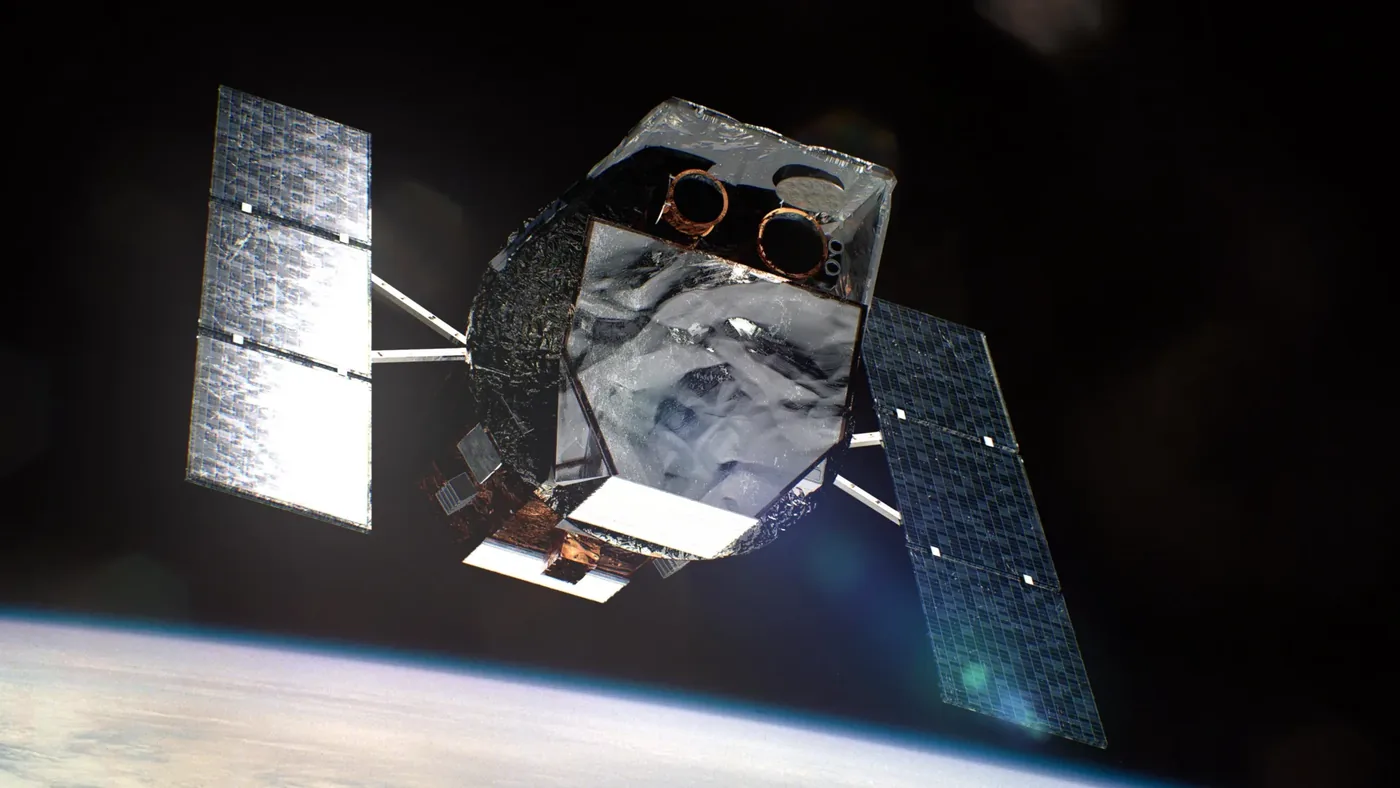
Reporting by space journalist Samantha Mathewson confirmed that LINK will abandon all docking attempts and instead conduct proximity maneuvers to validate orbital rendezvous techniques for future satellite servicing missions, leaving the NASA Swift telescope without propulsion assistance [4]. Docking was canceled on August 19. NASA and Katalyst Space officially announced the mission change to prevent accidental collisions with the multi-instrument Neil Gehrels Swift Observatory [2].


Atmospheric Drag and the Shrinking Orbital Lifespan
Operating without an onboard propulsion system in Low Earth Orbit means every frictional interaction with tenuous thermospheric gas bleeds orbital momentum and drags the unpropelled platform steadily closer to the planet below [3]. The spacecraft carries no thrusters. The NASA Swift telescope carries no onboard propulsion system, meaning every frictional encounter permanently reduces orbital altitude [4].
Heightened solar activity during the ongoing solar maximum heated Earth’s upper atmosphere, causing the outermost gas layers to expand outward into Swift’s orbital trajectory and creating substantially more aerodynamic drag than engineers had anticipated [3]. Operations teams at Penn State in University Park initially responded in December 2025 by replacing approximately 25% of scheduled astronomical targets with orientations designed to minimize aerodynamic resistance before switching entirely to low-drag pointing vectors in February 2026. That configuration shut down the narrow-field instruments and kept the solar panels aligned edge-on to the velocity vector [1].
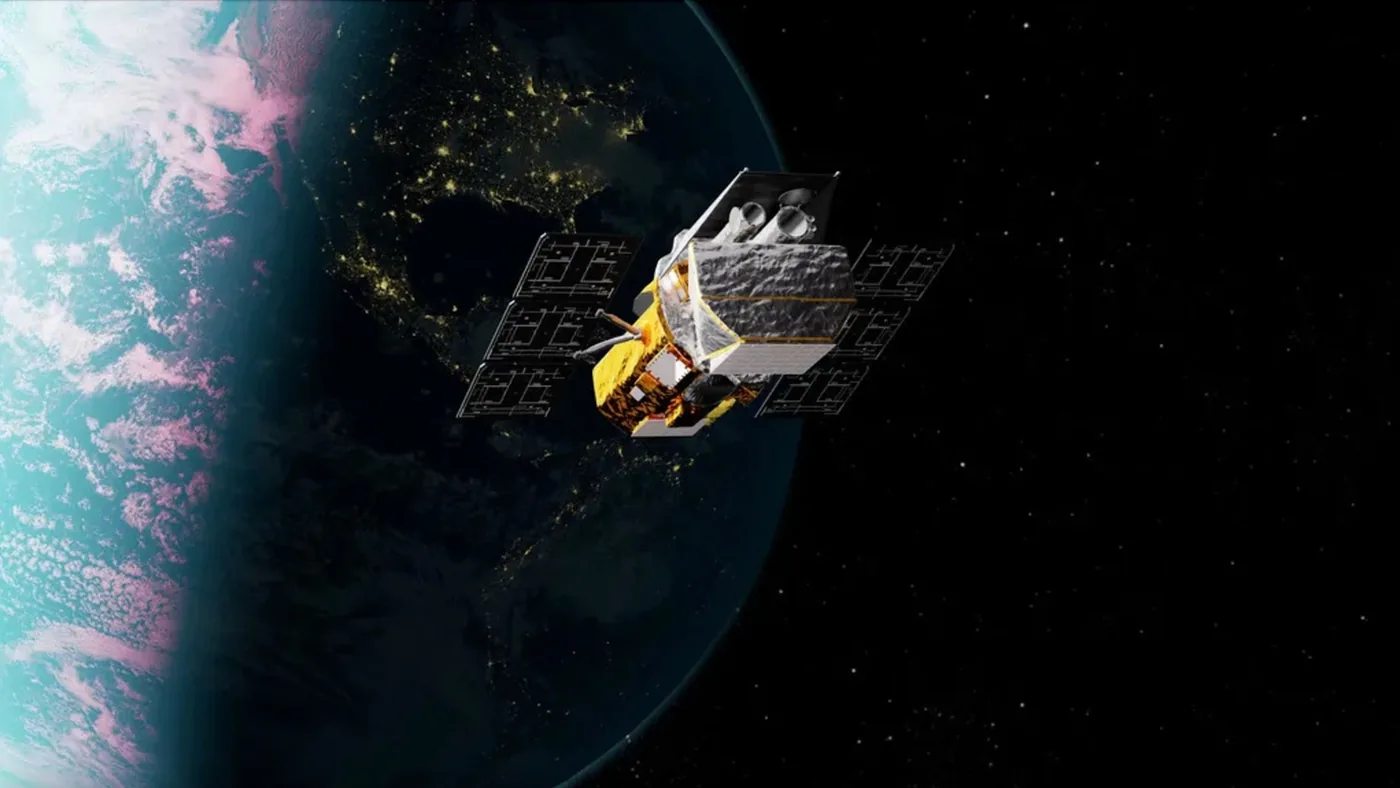
Those emergency drag-reduction procedures preserved orbital altitude long enough to accommodate the commercial rescue launch [3]. Solar arrays remained feathered against the oncoming rarefied gas. The configuration bought valuable weeks. Once rescue plans collapsed, controllers at Goddard Space Flight Center recognized that remaining in a passive survival mode served little astronomical purpose [4].
Can the NASA Swift Observatory Survive Below 300 Kilometers?
Scientific observations will almost certainly cease once the NASA Swift telescope descends below 185 miles (300 kilometers) because escalating aerodynamic density creates intense atmospheric torque that overwhelms the spacecraft’s reaction wheel stabilization system. Swift currently orbits at approximately 200 miles (325 kilometers) above Earth. The threshold sits at 185 miles. At these shrinking altitudes, atmospheric molecular density escalates rapidly, creating destabilizing buffeting against solar arrays and scientific baffles. Reaction wheels must spin at peak capacity simply to keep the platform pointed away from the blinding Sun and protect sensitive detectors [1].
Flight controllers at Goddard Space Flight Center and Penn State project that Swift will sink past the 185-mile critical threshold between early and mid-October 2026, after which atmospheric drag will cause the orbit to decay rapidly within one to two months. According to analysis summarized by Science Daily, the spacecraft’s remaining operating lifespan above the critical altitude is shrinking fast [3]. Without an external orbital boost to elevate the spacecraft above the expanding thermosphere, the observatory is projected to reenter Earth’s atmosphere later this year, with the vast majority of its titanium and aluminum structure disintegrating during descent [4].
Spacecraft operations grow exponentially complex during this descent phase. Atmospheric drag vectors require continuous calculation to prevent exterior overheating. Every extra orbit brings risk. Flight operations teams at Penn State in University Park calculate drag vectors continually, remaining fully committed to collecting astrophysical measurements until pointing control is irrecoverably lost [5].

Two Decades of Multi-Wavelength Cosmic Discoveries
The observatory launched in 2004. Originally commissioned for a baseline two-year primary mission focusing exclusively on gamma-ray bursts, the Neil Gehrels Swift Observatory transformed high-energy astrophysics across nearly twenty-two years of operations [4]. NASA leadership emphasized this longevity in an official statement: “Over the last 21 years, Swift has been NASA’s multitool for studying the cosmos” [2]. The versatile sentinel captured thousands of transient detonations, tracing massive stellar collapses and mapping early galactic evolution across cosmic time [4].
Automated alert broadcasts from Swift have long cued terrestrial observatories and orbital sentinels to gather simultaneous observations across gamma-ray, X-ray, ultraviolet, and optical wavelengths, advancing multi-messenger astrophysics and accelerating investigations of expanding supernova debris across deep space. By capturing simultaneous ultraviolet, visible, and X-ray emissions, astronomers construct comprehensive temporal light curves before radiation dims into background cosmic noise [4]. Swift has orbited for 21 years.
As flight controllers at Goddard Space Flight Center and international astronomers track the spacecraft’s final orbital weeks, the NASA Swift telescope continues fulfilling its scientific mission until atmospheric friction finally overpowers its gyroscopic pointing control [1].
Swift proved that autonomous multi-wavelength astronomy functions reliably in Low Earth Orbit. Its final operational weeks demonstrate scientific resilience under relentless atmospheric drag [1].
- PRESS RELEASE Kazmierczak, J. (2026, September 25). NASA’s Swift Powers On Third Instrument, Restarts Automated Slewing. NASA Science. [Article Link]
- PRESS RELEASE Kazmierczak, J. (2026, August 28). NASA’s Swift Restarts Science Observations. NASA Science. [Article Link]
- ONLINE NEWS ScienceDaily. (2026, September 1). NASA’s Swift telescope is back, but time is running out. ScienceDaily. [Article Link]
- ONLINE NEWS Mathewson, S. (2026, August 31). NASA’s doomed Swift space telescope restarts science work after rescue mission fails. Space.com. [Article Link]
- ONLINE NEWS PressClubAi. (2026, September 26). NASA’s Neil Gehrels Swift Observatory Resumes Full Instrument Operations and Automated Slewing. PressClubAi. [Article Link]
- ONLINE NEWS World News. (2026, September 25). NASA’s Swift Powers On Third Instrument, Restarts Automated Slewing. Worldnewsdotcom. [Article Link]
APA 7: PerEXP Teamworks. (2026, September 26). The NASA Swift Telescope Restarts Science as Orbit Decays. PerEXP Teamworks.


