



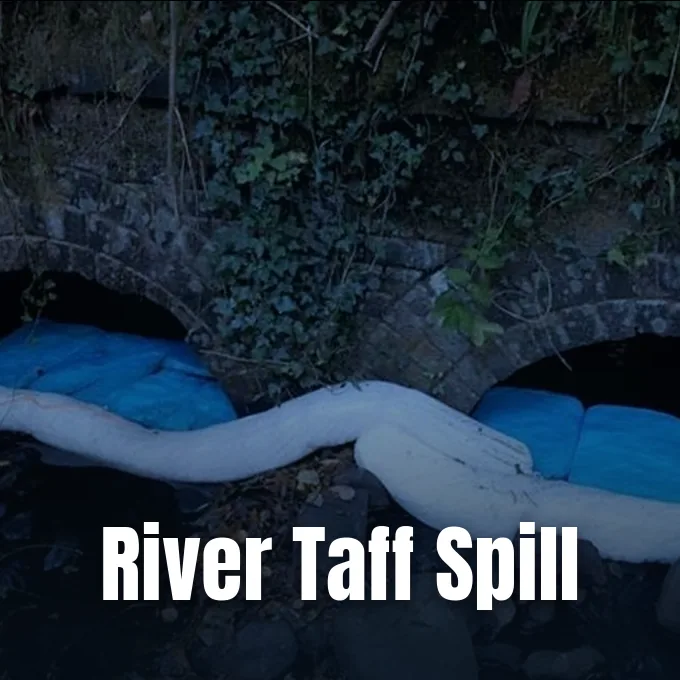
Natural Resources Wales confirmed that kerosene escaped from an industrial property in Nantgarw on Friday, spreading river Taff pollution down more than two miles of the valley [5]. Treforest and Taffs Well reported odours [1]. GE Aerospace acknowledged that fuel entered local drainage networks while repair crews worked on site, prompting urgent deployment of containment equipment by South Wales Fire and Rescue Service. Environmental officers from Natural Resources Wales tracked the discharge through underground pipes while South Wales Fire and Rescue Service crews protected downstream banks [3].
Tracking River Taff Pollution Downstream
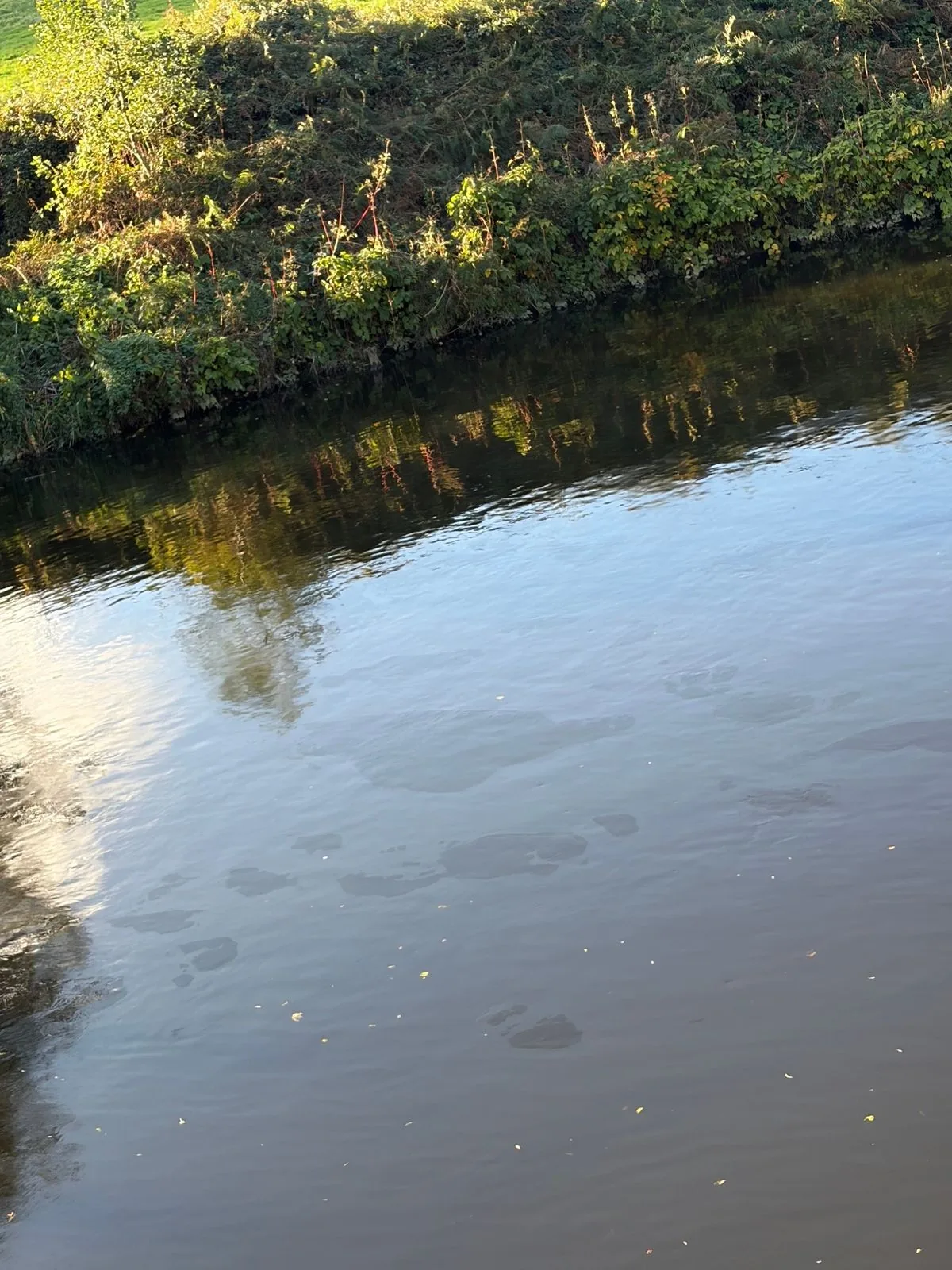
Public reports began arriving on Friday afternoon when residents detected fuel fumes near the water bank in Taffs Well. The initial alert described contamination along roughly one mile of the river corridor before the slick moved past several neighbouring communities, including Glan Y Llyn, Gwaelod-y-garth, and Tongwynlais, within Rhondda Cynon Taff [1]. The spill spanned 2.5 miles. Water officers from Natural Resources Wales tracked kerosene slicks reaching nearly 4 km of the channel as surface runoff entered the primary flow in South Wales [5]. Eurig Thomas, who lives in Nantgarw, said the stream flowing behind his house carried fuel from the industrial site into the channel. “The river had a shiny sheen on it,” Thomas said, adding that the smell hit him as soon as he stepped outside [1].
Sarah Llewelyn described how chemical fumes seeped indoors during Friday lunchtime, burning her eyes and making normal sleep impossible for three days in Nantgarw [1]. Llewelyn said environmental monitors from Natural Resources Wales estimated that an escape of 25,000 litres of kerosene washed into the waterway system during industrial maintenance work at the site [5]. She called the spill “a national disaster” after spending three sleepless nights in her home [1].
Source of the Drainage Leak
Natural Resources Wales located the source of the spill at 19:30 BST on Friday after inspecting boundaries around the industrial property in Nantgarw. The environmental agency discovered that kerosene was discharging from an underground surface water drainage pipe that emptied into a nearby tributary in Rhondda Cynon Taff. Tracing how fuel entered this drainage network proved difficult because pipe connections ran deep below ground through concealed conduits [1]. Specialist contractors brought vacuum tanker trucks to pump liquid out of the buried system for disposal at approved off-site processing facilities, preventing additional petroleum from reaching the River Taff. Contractors drained buried pipe runs. Response staff from Natural Resources Wales worked through Sunday evening to pull fuel from the drainage channels before further liquid reached the River Taff [3].
GE Aerospace confirmed that petroleum escaped into local channels as contractors carried out maintenance inside the Nantgarw manufacturing plant, leading managers to halt site operations immediately. The company activated an emergency response team and shut off fuel lines [3]. “The safety of our employees, neighbours, and environment is our top priority,” GE Aerospace said in a statement, noting that staff worked with emergency crews from South Wales Fire and Rescue Service to clean up the spill [1].
Containment Efforts at the Tributary
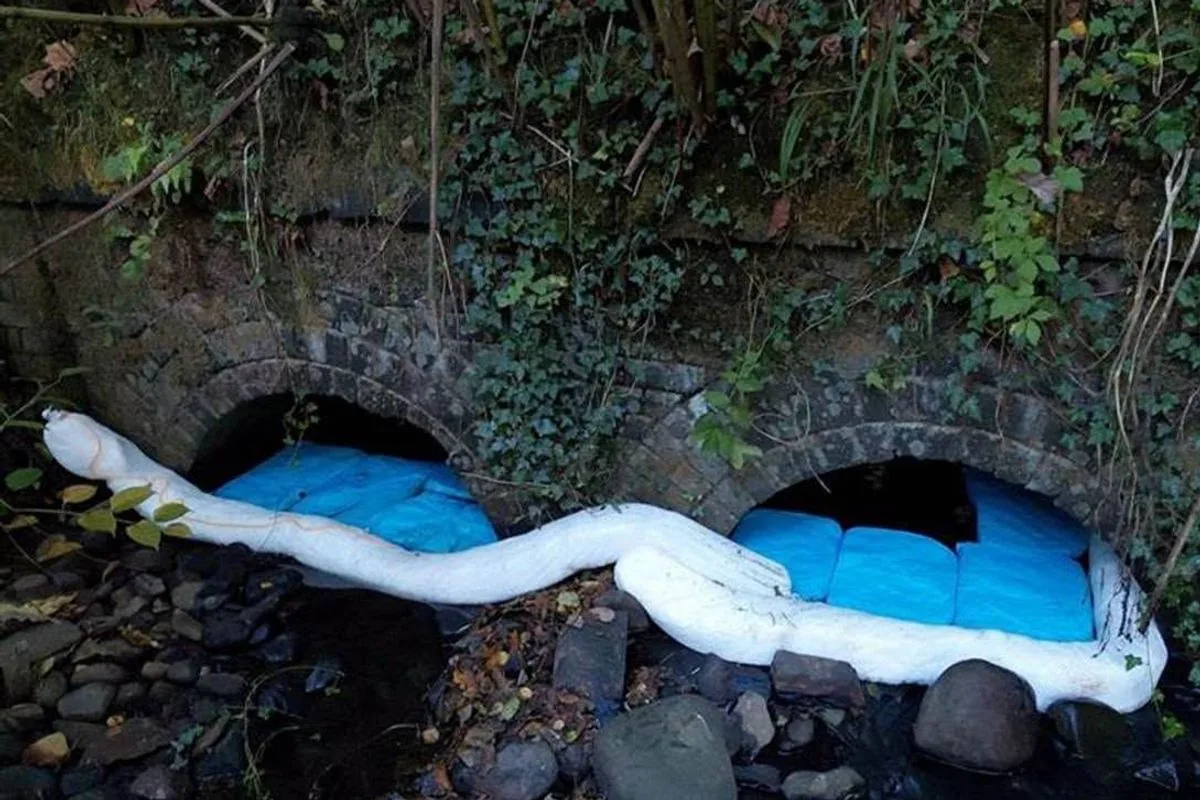
Emergency crews faced strong river currents that prevented the use of standard containment barriers across the main watercourse in South Wales. Natural Resources Wales explained that the River Taff was too wide and fast-flowing to anchor floating booms without risking barrier detachment. Such conditions present severe challenges for emergency teams, matching the hazards in fast-flowing water that hinder recovery work during river surges when swift runoff endangers personnel working near slippery banks. Booms failed in heavy currents. Instead of damming the primary river, crews concentrated equipment at the confluence where the impacted tributary meets the main River Taff channel [1]. Firefighters from South Wales Fire and Rescue Service used specialist equipment and laid large absorbent squares beneath bridges to trap fuel before it entered the main current [3].
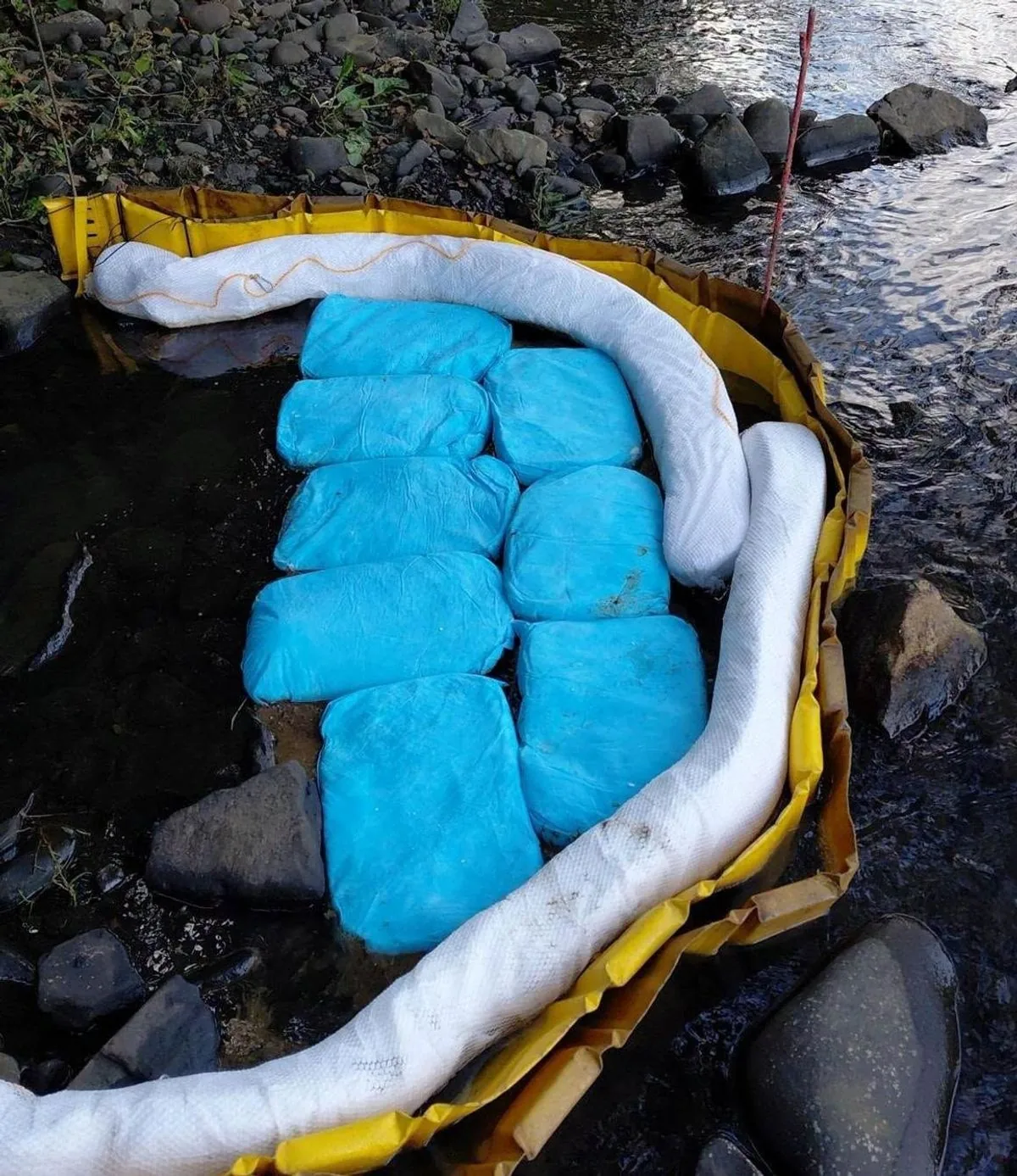
Containment efforts NRW organized alongside South Wales Fire and Rescue Service significantly cut the volume of fuel escaping into the water. Fumes dissipated around valley homes [5]. Response teams positioned absorbent materials at drainage outfalls to collect floating residues before liquid travelled further into South Wales toward Cardiff [3]. Officers from Natural Resources Wales collected routine water samples to assess the ecological toll and verify that fuel levels declined over the weekend [6].
Can emergency barriers capture every drop of fuel once it reaches moving water? Natural Resources Wales acknowledged that underground pollution presents ongoing containment obstacles when fluids seep through subterranean drainage systems [1]. Officers deployed drones over trees [3]. Field teams paired aerial drone surveillance with laboratory water testing to trace petroleum slicks as cleanup operations NRW managed continued hauling recovered kerosene away in tankers through Sunday night [6]. These sustained operations lowered fuel concentrations before pollution could travel further south toward Cardiff and coastal estuaries [1].


Protecting Wildlife from River Taff Pollution Risks
Ecological teams surveying the riverbanks recovered dead fish floating near the shoreline between Nantgarw and Taffs Well. Natural Resources Wales confirmed that officers collected several fish to be analysed in laboratories and kept as formal legal evidence [1]. Fish carcasses entered cold storage. Biologists must study these specimens to establish whether mortality resulted from acute chemical toxicity or from thin petroleum films preventing gills from absorbing dissolved oxygen from the water [3]. The river Taff pollution event threatens aquatic habitats that took decades of community work to clean up after historical industrial pollution, putting vulnerable salmon and brown trout at renewed risk. Anglers who fish for trout and salmon in the River Taff expressed deep worry about surviving fish populations [1].
Gareth Llewelyn, a former hazardous materials officer with South Wales Fire and Rescue Service, inspected the culvert across from the GE Aerospace site in Nantgarw. Kerosene flooded the concrete culvert. Llewelyn stated that unmixed kerosene filled the concrete drainage channel below the highway. “It doesn’t mix with water and will continue to pollute,” Llewelyn said, warning that natural restoration of the waterway would require years not months [1].
Llewelyn said the fuel spill had “torn the heart out of our community,” pointing out that Taff’s Well was named after the River Taff. Taff’s Well takes its name. Gareth Llewelyn warned that local wildlife had suffered badly, observing that birds and animals had cleared out from contaminated banks following the spill in Rhondda Cynon Taff [1]. Water sampling continues daily to track how kerosene residues settle into gravel beds where aquatic insects breed and feed [6].
Is the River Taff Safe to Swim in?
Public Health Wales answered clearly that people must avoid all contact with the river water and stay away from affected banks along the River Taff [4]. Health officials advised that kerosene vapours can cause mild respiratory irritation, especially when people experience prolonged exposure to lingering fumes. In an official health advisory, the organisation warned: “Kerosene vapours may be mildly irritating to the respiratory system. Our current assessment is that people who can smell kerosene may experience temporary irritation, particularly if they are exposed for prolonged periods”. Fumes irritate human lung tissues. Anyone living in Rhondda Cynon Taff who feels unwell after breathing fumes should phone NHS 111 Wales for direct clinical guidance [3].
Public health officers from Public Health Wales also warned dog walkers in Taffs Well and Tongwynlais to keep pets on leashes away from contaminated riverbanks. Animals entering the River Taff can swallow fuel or lick toxic kerosene residue off their wet coats [4]. Residents living downwind in Glan Y Llyn and Gwaelod-y-garth were urged to keep windows closed until local winds disperse vapours [6].
Chemical odours that drift through river valleys can cause headaches and throat irritation in neighbouring communities in Rhondda Cynon Taff. Environmental scientists study airborne vapor spread using models similar to tracking how chemical fumes drift during regional air quality alerts when industrial emissions disperse across settled residential valleys. Fumes follow low valley contours [1]. Public Health Wales advised neighbours to open doors and windows only after the kerosene smell has passed completely [3].
Long-Term River Recovery Outlook
Cleaning up an industrial fuel spill along a fast-flowing river requires long-term environmental observation by Natural Resources Wales. Natural Resources Wales confirmed that officers will continue monitoring water quality across Rhondda Cynon Taff and Cardiff as containment contractors complete drain pumping. Kerosene floats above fresh water. Because kerosene does not dissolve in water, light films float on the surface while heavier fuel components can cling to riverbed silt and submerged woody debris. Environmental scientists must track how natural bacteria break down hydrocarbon residues over coming seasonal river cycles [1]. Regulators plan to review maintenance protocols at the GE Aerospace site to prevent similar drainage leaks in the future [3].
Community leaders in Taffs Well want reassurance that the river ecosystem will recover from this contamination [1]. The waterway has sustained local communities for generations, making this environmental damage deeply felt across neighbouring villages in Rhondda Cynon Taff as cleanup operations continue [5]. Natural Resources Wales stated that officers will collect evidence until cleanup operations conclude and water quality stabilizes [3].
Angling associations and conservation groups plan to survey fish stocks once fuel residues clear from the River Taff. Anglers monitor trout spawning beds [1]. GE Aerospace said it will work with Natural Resources Wales and South Wales Fire and Rescue Service until environmental recovery is finished [3]. Natural Resources Wales confirmed that legal investigations into how fuel reached the drainage system will determine whether formal enforcement action follows against responsible parties in South Wales [1].
- ONLINE NEWS Harrison, H.-M. (2026). River Taff fuel pollution spreads 2.5 miles from Taffs Well. BBC News. [Article Link]
- ONLINE NEWS Harrison, H.-M. (2026). River Taff fuel pollution spreads 2.5 miles from Taffs Well. BBC News. [Article Link]
- ONLINE NEWS McCarthy, L. (2026). Fuel continues to leak into River Taff as experts hunt source. Wales Online. [Article Link]
- WEBSITE Practice English with News. (2026). Fuel Leak Spreads Along River Taff in Wales. [Article Link]
- WEBSITE Custommapposter. (2026). River Taff Fuel Pollution: 25,000 Litres of Kerosene Spills 2.5 Miles From GE Aerospace Site. [Article Link]
- WEBSITE Custommapposter. (2026). Fuel Spill Disaster: River Taff Pollution Spreads Over 2 Miles. [Article Link]
APA 7: PerEXP Teamworks. (2026). GE Aerospace Fuel Spill Leads to River Taff Pollution.


