





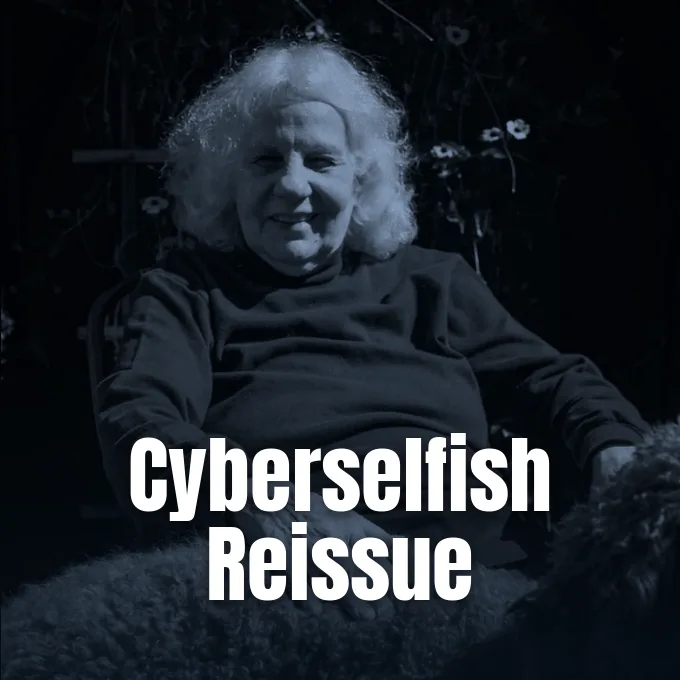
Tin House has published a new edition of Paulina Borsook’s 2000 book Cyberselfish, bringing her early critique of Silicon Valley’s anti-rule politics back into print after two decades. The reissue arrives as readers revisit the roots of tech power amid debates over AI and big tech [5]. Borsook spent years listening to founders and coders in Northern California who rejected public oversight as they built businesses on federal grants. The new Cyberselfish reissue preserves her original text in full, pairing her early chapters with a fresh introduction by Gil Durán [1].
Origins of the Cyberselfish Reissue
Demand for the book picked up quietly as used copies grew scarce online. Borsook noticed climbing second-hand prices, and European scholars sent messages praising her critique. She felt that “no one was interested in anything I might have to say about anything, tech or not tech, forever after”. Last year, Gil Durán, author of Nerd Reich, said that she saw tech politics clearly twenty-five years ago. The New York Times reported that fall on readers turning to her work [1]. The Daily Tech Feed framed the release as a timely book resurrection. Tin House partnered with Durán to return the volume to bookstores without changing a word [5].
Borsook explained in an interview that the project started by accident. After finishing her MFA at Columbia University, her literary agent explained that selling fiction was difficult and asked if she had a nonfiction project in mind, prompting her to document the peculiar subculture she had observed in Northern California [1]. She had spent time around tech groups in the San Francisco Bay Area since the middle 1980s [3]. She conceived the manuscript as “almost a travelogue” in the spirit of Black Lamb and Gray Falcon, capturing snapshots of an eccentric subculture [1].
Policy analysts said that her early work fills a void in tech history. BozokMedia addressed Frequently Asked Questions about the reissue, quoting analyst Dr. Ritesh Sharma, who said that “Silicon Valley’s regulatory challenges are clearer than ever, and Borsook’s book helps us see the root causes” [4]. Readers who bought into early internet idealism often overlooked how firmly anti-government creeds had taken hold among founders [3]. The Cyberselfish reissue arrived after online posts brought fresh attention to those warnings. Public money built the network, but founders claimed all the credit [1].

Critique of Techno-Libertarian Ideology
Borsook described the dominant culture in Silicon Valley as “a kind of basket of beliefs” that was “violently anti-regulation”. She called that outlook “a 12-year-old view of the world”, arguing that founders borrowed badly from biology by assuming that unfettered markets would always evolve toward healthy outcomes [1]. Tech leaders convinced themselves that they succeeded through private grit alone [5].
Her confusion with this ideology came from her youth in Pasadena, where she grew up in a STEM-adjacent home around families connected to the Caltech and Jet Propulsion Laboratory (JPL) space program who saw government funding as an essential public partner. Those aerospace scientists had a clear understanding of what public funds could achieve. They did not crown themselves with grand titles [1]. Borsook was puzzled. When she entered Northern California tech circles, she expected to find another science culture with similar civic respect [5]. Instead, she found software bosses who attacked the very state agencies that made their businesses possible. She pointed out that “no sector of society had benefited more and suffered less from the government than these guys” [1].
Talk Fuse reported that defenders of techno-libertarianism argue that skepticism of rules can protect experimentation and individual choice from bureaucratic delays that stifle new ideas [3]. Borsook countered that ignoring public research distorts political debates [1]. She argued that unchecked disruption harms communities even as private founders capture the financial gains of federally funded breakthroughs [5].


Ravers and Gilders in Valley Culture
In the text returning with the Cyberselfish reissue, Borsook divided Silicon Valley’s libertarian thinkers into two factions: Ravers and Gilders. She named the Gilders after George Gilder, whom she described as a backward-looking conservative thinker of the early 1990s who promoted social traditionalism and free-market dogma. The Ravers, named in tribute to John Perry Barlow, embraced personal liberty, psychedelic drugs, and trips to Burning Man. Gilders wanted deregulation to protect private wealth and hierarchy. In contrast, Ravers viewed computer networks as liberating tools to escape state bureaucracy and moral policing. Both groups distrusted public rules, creating a shared anti-statist consensus that defined tech leadership [1].
That ideological mix still shapes tech politics. Today, conservative leaders and religious nationalists share influence with effective altruists and crypto advocates who test drugs and AI systems. But Borsook observed that the San Francisco peninsula still votes blue and sends Representative Ro Khanna to Congress. The libertarian ethos belongs mainly to bosses rather than ordinary staff [1].

The divide between bosses and ordinary staff has widened over the decades. Borsook said that many rank-and-file coders do not share the right-wing views of their bosses, but job precarity forces workers to stay quiet under leaders like Elon Musk. Reporter John Markoff earlier observed that Silicon Valley has always been a multicultural place composed of parallel subcultures that coexist without direct conflict. Borsook agreed that countercultural dreamers and hard-right capitalists operated side by side for years [1]. But she argued that their shared hostility toward public rules left citizens unprotected against platform power [5].
Continuity from Dot-Com to AI
The Cyberselfish reissue tracks the Netscape IPO as the moment when finance bros invaded California tech culture. Speculative capital created what Borsook called a “culture of flip and flee”, replacing patient engineering with fast windfalls. Even after the dot-com crash wiped out hundreds of startups, anti-regulation beliefs continued to spread [1].
That persistence allowed early Silicon Valley attitudes to seep into every layer of tech culture. Borsook said that “even after the dot-com crash, that attitude was just there, percolating around, contaminating the aquifers. It was uncorrected, and it just spread out more and more”. She pointed to wealthy founders moving to the Nevada side of Lake Tahoe to escape California state taxes. When Sergey Brin claimed that California was turning into Soviet Russia, Borsook dismissed the comment as absurd. She pointed out that billionaires praise the clear waters of Lake Tahoe while ignoring decades of environmental regulation and government science that kept the lake clean, proving an inability to connect public stewardship with personal comfort [1].

The Daily Tech Feed reported that gig economy firms like Uber and Airbnb carried this same logic by resisting city labor rules and local housing protections [5]. Today, the surge in AI funding repeats that dynamic. Founders frame AI as a liberatory tool that must develop without regulatory checks, ignoring how much computing depends on public power grids and state-funded research [7].
Why the Cyberselfish Reissue Stays Unaltered
Tin House decided to reproduce Cyberselfish without updates, letting the original print edition stand unchanged as a historical record. The decision reveals the durability of Borsook’s reporting, proving that the civic tensions troubling Silicon Valley today are not brand-new disruptions. Newsgab reported that reproducing her unamended words allows readers to see how older arguments were repackaged for new technologies like cryptocurrency and AI, even as capital concentration and state surveillance have expanded far beyond 2000 levels. At the same time, readers examining the Cyberselfish reissue can trace how late nineties ideas paved the path for today’s platform monopolies [7].
Can reform come from inside tech? Newsgab reported that investment firms prioritize scalable returns, directing talent and money into narrow areas like AI and defense tech. That setup makes it hard for dissident projects to survive [7]. In Borsook reflections over modern tech dilemmas, she noted that simple answers do not exist. Young workers seeking ethical alternatives face underfunded groups and compromised institutions [5].
Instead of waiting for tech giants to reform themselves, Borsook expressed hope for small appropriate technology projects and independent scholarship that resist hypergrowth pressures. She suggested that reform will more likely come from outside core industry structures than from within boardrooms [5]. Dr. Sharma of BozokMedia said that her book helps policymakers as governments debate AI guardrails [4]. By returning to print after twenty-five years, the volume asks whether Silicon Valley will accept democratic accountability or continue treating civic rules as an obstacle [7].
- ONLINE NEWS Ha, A. (2026, October 25). ‘Cyberselfish’ author takes aim at techno-libertarianism as her book returns from the dead. TechCrunch. [Article Link]
- ONLINE NEWS Ha, A. (2026, October 25). ‘Cyberselfish’ author takes aim at techno-libertarianism as her book returns from the dead. Yahoo Tech. [Article Link]
- ONLINE NEWS Talk Fuse. (2026, October 25). Paulina Borsook’s critique of Silicon Valley libertarianism returns in print. Talk Fuse. [Article Link]
- ONLINE NEWS Gupta, R. (2026, October 25). Cyberselfish returns: Author reexamines Silicon Valley’s libertarian culture. BozokMedia. [Article Link]
- ONLINE NEWS The Daily Tech Feed Team. (2026, October 26). ‘Cyberselfish’ returns: A scathing revisit of Silicon Valley’s libertarian roots. thedailytechfeed.com. [Article Link]
- ONLINE NEWS briefly.co. (2026, October 25). Cyberselfish’ author takes aim at Silicon Valley libertarians as her book returns from the dead. briefly.co. [Article Link]
- ONLINE NEWS Newsgab. (2026, October 26). ‘Cyberselfish’ author rebukes Silicon Valley libertarianism as book resurfaces. Newsgab. [Article Link]


