





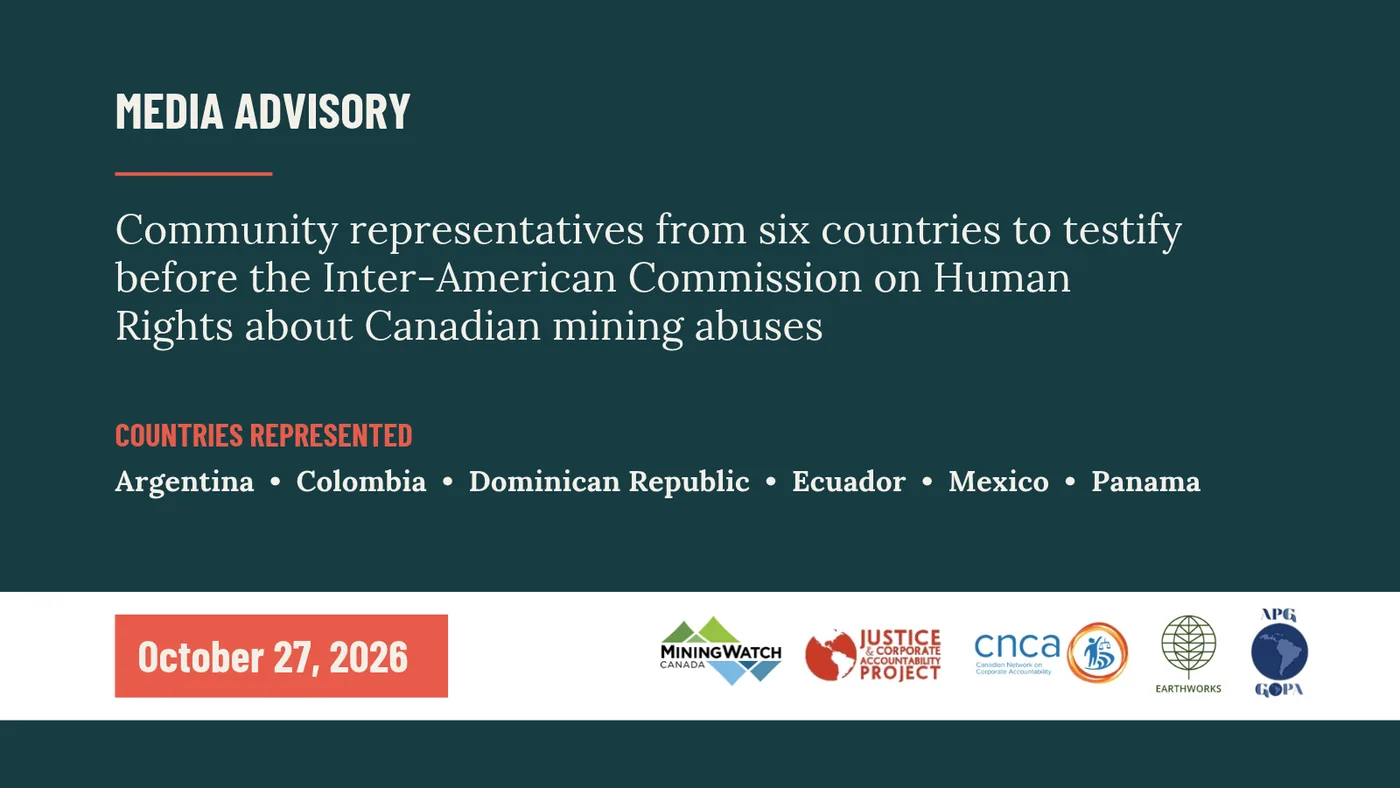
Community witnesses and legal advocates from six countries gathered before the Inter-American Commission on Human Rights on October 27 to detail violence and contamination linked to Canadian extraction projects. The hearing in Panama City examined how home-state policies affect residents living near resource concessions held by foreign firms. Canada hosts roughly half of the world’s publicly listed mining enterprises, but affected residents testified that diplomatic and financial backing continues even during serious local disputes. Community members told the regional panel that attacks against environmental defenders often go unpunished while federal oversight mechanisms in Ottawa remain voluntary [1].
Testimonies Presented at the IACHR Session
The regional session in Panama City brought forward community delegates from Mexico, Colombia, Ecuador, Panama, the Dominican Republic, and Argentina. Representatives described threats, travel limits, and water degradation tied to Canadian concessions. Witnesses explained that Canadian embassies regularly intervened for mining firms while local leaders faced criminal charges for staging peaceful assemblies [2].
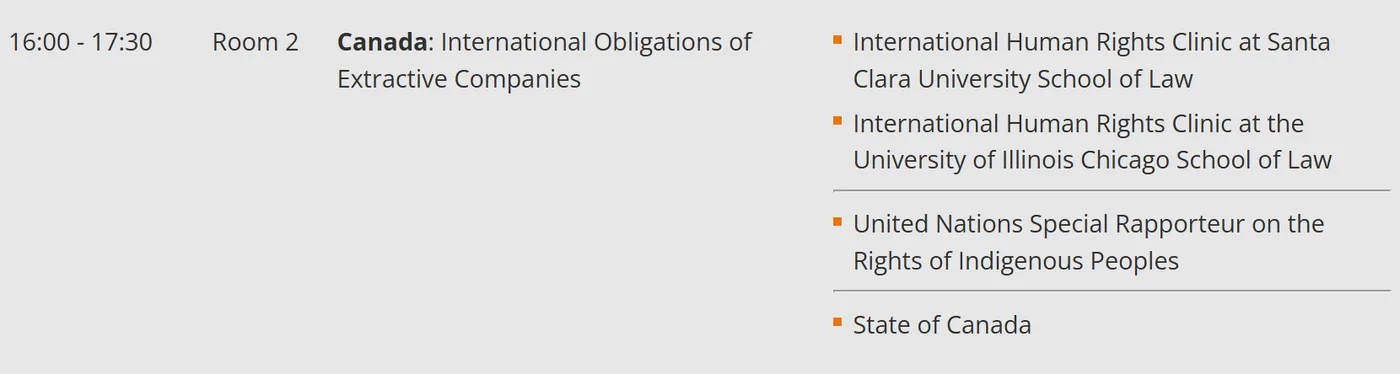
Civil society groups showed that diplomatic support from Canadian trade offices has shielded mining operators from accountability on the ground. Arturo Ezquerro-Cañete, interim Latin America Program Coordinator with MiningWatch Canada, said that public institutions continue to prioritize private mining over community safety. “These testimonies expose a long-standing and well-documented pattern of abuse that Canada helps enable by promoting and supporting its mining companies abroad while failing to hold them accountable,” Ezquerro-Cañete said during the joint session [3]. He stated that host nations often lack the leverage to compel compliance from multinational entities. As a result, rural residents must travel to international forums simply to present basic documentation of water loss and physical intimidation [6].
Contamination Risks Facing Environmental Defenders
In Ecuador, the development of the El Domo copper and gold project illustrates the disruption felt by rural families. Marco Manobanda, an Indigenous fish-farmer from Las Naves, testified that the project owned by Vancouver-based Silvercorp Metals Inc. and Salazar Resources Ltd. has caused deforestation and contaminated local streams where his family lives [1].
Manobanda explained that families who depend on clean water for agriculture and fish cultivation now face declining food security. “If this mining continues, they’re going to keep polluting our water, and we’ll run out of resources. And since we make our living from that land and its resources, where are we supposed to go?” Manobanda asked during his formal testimony [1]. Tensions around the concession previously escalated when security forces intervened against local demonstrations. In Ecuador, state military and police units used tear gas and rubber bullets to disperse a peaceful protest near the mining zone, leaving several community members injured [5]. Paulina Personius, lead international campaigner at Earthworks, said that environmental defenders should not have to gamble with their physical safety to protect their territories [3].
Can rural communities protect fragile headwaters when industrial operations expand without local consent? When commercial runoff enters local streams, peasant farmers lose the aquatic habitats that sustain their food supply. When environmental defenders organize peaceful pickets to question these impacts, security and police forces often label them as criminals to suppress legitimate public dissent [2].
Oversight Gaps After CORE Office Closure
The regional hearing in Panama took place four months after the federal government in Ottawa dissolved the Canadian Ombudsperson for Responsible Enterprise (CORE). Established to examine complaints involving Canadian apparel, mining, and oil operations operating abroad, the office had faced persistent criticism from civil society for lacking independent subpoena power and investigative authority [1]. Although CORE lacked independence, non-governmental groups had repeatedly asked Canadian lawmakers to strengthen the office rather than terminate it [3]. That official decision eliminated one of the few formal avenues where overseas communities could register formal grievances against Canadian extractive firms [5]. Aidan Gilchrist-Blackwood, coordinator of the Canadian Network for Corporate Accountability (CNCA), said that Canada still has no mandatory due diligence legislation to investigate corporate abuses [3].
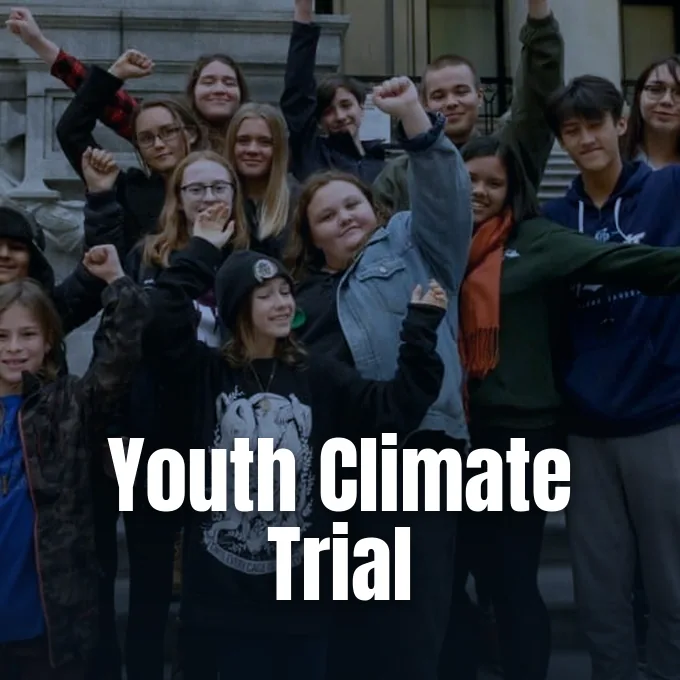
Gilchrist-Blackwood stated that affected groups face nearly insurmountable hurdles whenever they attempt to bring human rights claims into Canadian courts [3]. In Canada, systemic hurdles often restrict overseas plaintiffs from accessing federal tribunals, an accountability gap also visible when a Canadian youth climate trial opens over federal emissions policy to challenge government responsibility in domestic forums.
Legal Obligations Under the OAS Charter
Legal scholars presenting at the hearing argued that Canada’s hands-off posture breaches its core commitments under the Organization of American States (OAS) framework. Dr. Charis Kamphuis, a Canadian legal scholar and member of the Justice and Corporate Accountability Project (JCAP), testified that member states bear a clear legal duty to prevent, investigate, sanction, and remedy abuses carried out by companies within their territory. Kamphuis argued that Canada cannot evade international responsibility by claiming that foreign subsidiaries operate solely under host-nation laws. “As an OAS member and the home State of companies operating throughout the region, Canada has a responsibility to regulate the mining sector to prevent harm and ensure adequate access to remedy,” Kamphuis said [3].
The State of Canada stated that it expects all Canadian corporations operating abroad to respect international human rights standards, follow local laws, and utilize export credit due diligence reviews. Canadian officials pointed to the National Contact Point (NCP) as an established mechanism where stakeholders can raise concerns about company conduct overseas [2].

Community witnesses countered that the NCP process is voluntary, lacks enforcement sanctions, and offers no binding restitution for environmental contamination or physical assaults [3]. During the proceedings, representatives from the Special Rapporteurship on Economic, Social, Cultural, and Environmental Rights (REDESCA) joined the IACHR in reminding member states that business development must never override fundamental community welfare. The commission stated that resource extraction requires free, prior, and informed consent from Indigenous and rural populations before any ground work begins. Commissioners noted that diplomatic offices supported firms despite ongoing conflicts, urging Canada to establish effective mechanisms to hold companies accountable [2].
The Long Search for Justice in Mexico
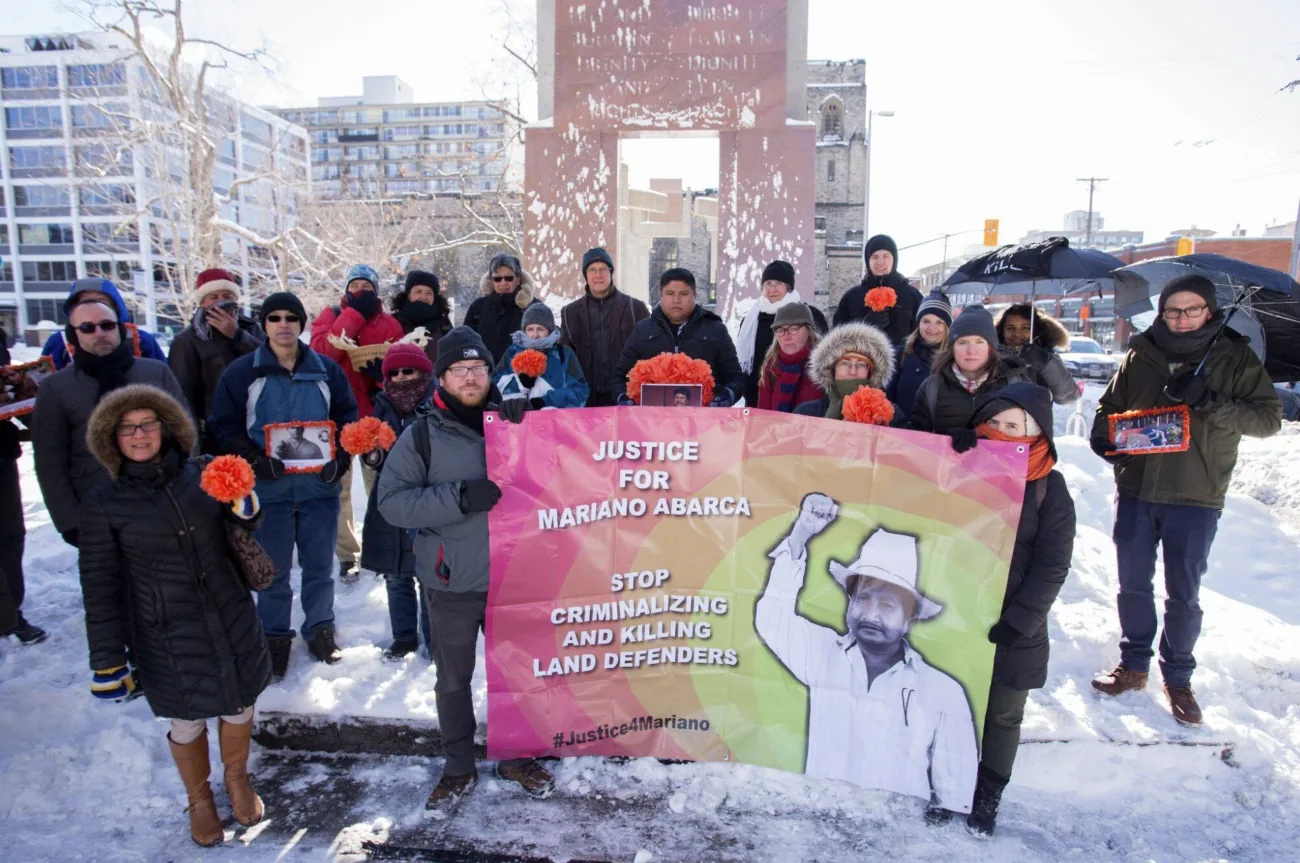
The human cost of unmonitored mining conflicts was shown by testimony about the murder of community leader Mariano Abarca. Abarca was shot and killed in Mexico on November 27, 2009, after leading community protests against a Canadian barite mining project. Family members documented that Canadian diplomatic staff supported the mining company despite knowing about violent local threats [2].
In Panama City, the activist’s son, José Luis Abarca, appeared before the commission to request that the IACHR formally admit a lawsuit filed against the Canadian government in 2023. As reported by Prensa Latina and Telesur, Abarca described the regional filing as a shared effort to end impunity for violence against rural community leaders. “We have come here to Panama City to request a hearing before the Commission so that a lawsuit that we have had before the Canadian government since 2023 is admitted. A demand, a struggle and a demand for justice on the part of the family, on the part of civil organizations and on the part of other human rights defenders and environmentalists,” Abarca said. Mexican authorities have not convicted the intellectual authors of the murder, and investigations continue while the family maintains that embassy support shielded the firm [2].
Because Canadian common law rarely permits foreign tort claims against parent entities for overseas subsidiaries, victims remain caught in procedural limbo. In regional watersheds, conservation policies frequently clarify why protecting endangered species needs rural community aid to sustain local habitats when industrial development alters natural water systems. Without statutory access to Canadian courts, families of environmental defenders turn to the Inter-American system for remedy [3].
What Environmental Defenders Demand from Canada
To halt recurring harms across Latin America and the Caribbean, community representatives submitted a unified set of legal demands to the IACHR. A coalition comprising MiningWatch Canada, JCAP, CNCA, Earthworks, and the Americas Policy Group (APG) urged Canadian authorities to pass mandatory human rights and environmental due diligence legislation [6]. Lisa Kowalchuk, co-chair of the Americas Policy Group, stated that international human rights norms must supersede commercial profitability in all cases. “Our member organizations and courageous partners in Latin America and the Caribbean have a long history of calling on the Canadian government to address extremely serious violations of the rights of communities and Indigenous peoples from Canadian mining projects,” Kowalchuk said [3].
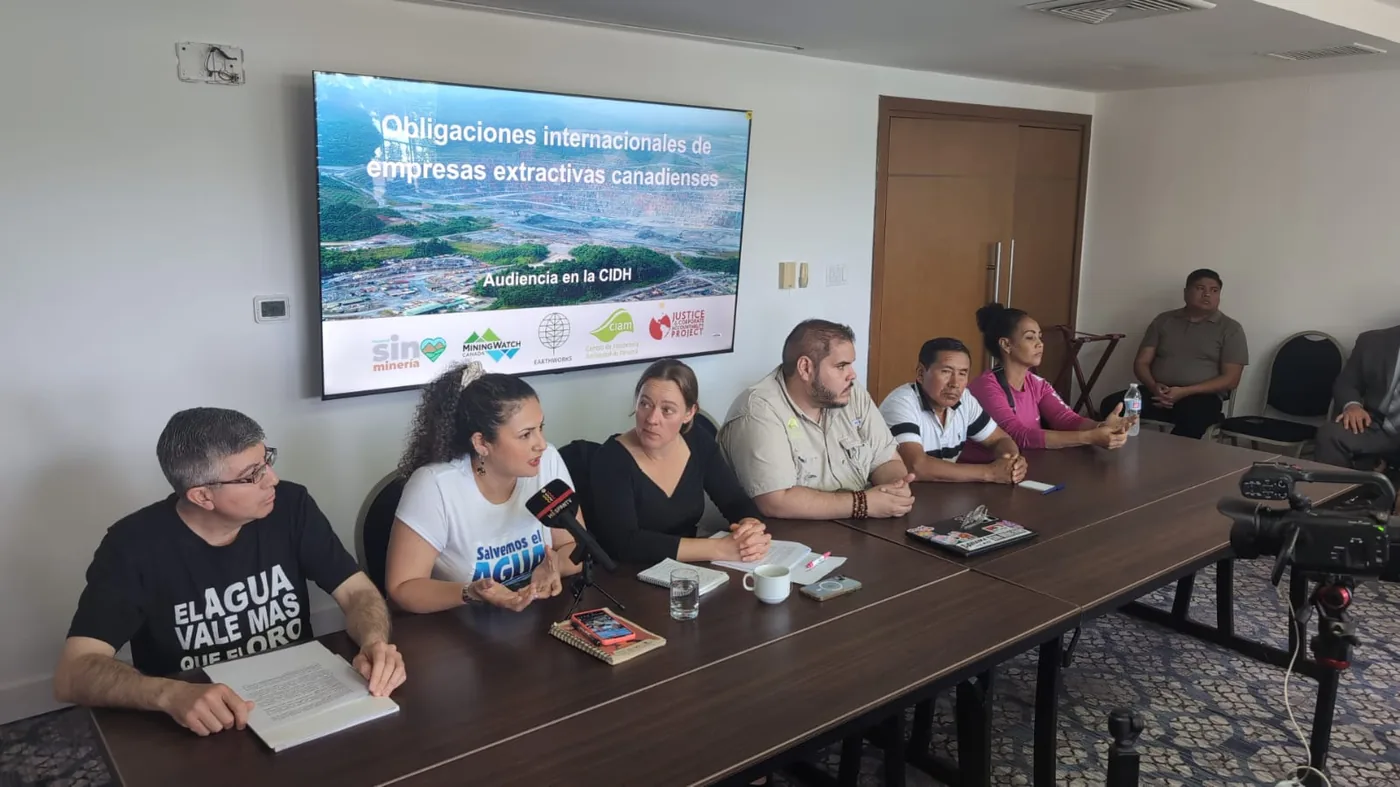
Witnesses asked the commission to issue formal findings calling on Canada to establish an independent oversight body equipped with real investigatory powers. Although IACHR recommendations are non-binding, civil society organizations view the international proceedings as a way to pressure federal lawmakers in Ottawa [5]. During a press conference in Panama organized by Panamá Vale Más Sin Minería, advocates affirmed that grassroots coalitions will continue monitoring extractive projects until binding accountability rules exist [4].
The hearing concluded with a renewed plea from community delegates that international oversight bodies hold home countries accountable for corporate abuses overseas. By documenting specific cases of river contamination, legal harassment, and physical violence, environmental defenders have placed direct evidence before the Inter-American system [1]. Whether Canada responds by reforming its extraterritorial legal framework will determine if affected mining communities ever obtain genuine remedy for documented harms [3].
- ONLINE NEWS Mongabay. (2026). Environmental defenders testify about attacks in Latin America linked to Canadian mining companies. [Article Link]
- WEBSITE Patterson, B. (2026). IACHR/CIDH is told about threats and violence against environmental defenders linked to Canadian mining across Latin America. Peace Brigades International Canada. [Article Link]
- PRESS RELEASE MiningWatch Canada. (2026). Witnesses Challenge Canada Over Mining Abuses Across Latin America and the Caribbean. [Article Link]
- PRESS RELEASE MiningWatch Canada. (2026). Media Advisory: Community Representatives from Six Countries to Testify on Canadian Mining Abuses at International Human Rights Hearing. [Article Link]
- ONLINE NEWS Matrix News. (2026). Witnesses allege harm linked to Canadian mining at regional hearing. [Article Link]
- PRESS RELEASE Americas Policy Group. (2026). Joint Press Release: Witnesses Challenge Canada at the IACHR over Mining Abuses across Latin America and the Caribbean. [Article Link]
APA 7: PerEXP Teamworks. (2026, November 1). IACHR Hearing Examines Threats to Environmental Defenders. PerEXP Teamworks. https://perexpteamworks.com/en/environmental-defenders-latin-america-mining/


