






ZeniMax Online Studios is overhauling its fantasy MMO after twelve years of operation, abandoning the traditional annual chapter expansion model in favor of a flexible seasonal system. Game director Nick Giacomini confirmed that the studio decided to break its predictable release cycle after recognizing that player expectations across the wider gaming industry have shifted dramatically. The team is steering The Elder Scrolls Online toward smaller episodic drops, community celebrations, and experimental exploration mechanics rather than relying solely on massive combat zones [1]. Update 51 is live. With that patch deployed, the studio is restructuring its development pipeline to sustain the title for years to come.
ZeniMax Shifts Elder Scrolls Online to Seasonal Drops
The transition comes during a turbulent corporate period across Microsoft’s gaming division. Earlier this year, Microsoft announced plans to eliminate over 3,200 jobs at Xbox, prompting Bethesda’s union representatives to disclose that dozens of programmers, artists, designers, and quality testers were laid off from the organization. Despite these workforce reductions, game director Nick Giacomini stated that the project is ‘here to stay,’ supported by additional production assistance from Bethesda [1].
Bethesda union representatives confirmed that staff reductions affected designers and testers across the studio. The remaining team pushed forward immediately [1].
Giacomini described the structural pivot as a renaissance born from candid self-assessment. He explained that after twelve continuous years of live support, the development team evaluated player engagement and realized that veteran adventurers felt fatigued by the repetitive cadence of yearly expansions. Players wanted developers ‘to excite them’ and ‘surprise them again,’ convincing leadership that abandoning the predictable chapter formula was necessary to revive enthusiasm across the broader community [1].

The game originally launched on April 4, 2014, earning a top critic average score of 71 on OpenCritic with only thirty-nine percent of reviewing critics recommending the release at launch. Over the following decade, iterative patches overhauled nearly every core system. The initial formula has evolved into an entirely different live-service experience [2].
Why Play Elder Scrolls Online as a Solo Adventurer?
Prospective players often hesitate to approach massively multiplayer online role-playing games because they dread the social friction, mandatory raiding commitments, or toxicity frequently found in shared lobbies. However, The Elder Scrolls Online accommodates solo adventurers remarkably well by allowing enthusiasts to complete vast questlines without grouping up. Players can explore wilderness zones, pursue fully voiced regional narrative arcs, and uncover hidden delves entirely at their own pace without coordinating schedules with strangers [2].
Single-player fans can explore alone. For players seeking to avoid the harassment that occasionally surfaces in multiplayer environments, treating the title as a solitary single-player role-playing game eliminates unwanted social pressures while waiting for The Elder Scrolls VI to complete its lengthy production cycle. The narrative design prioritizes personal decision-making, giving individual adventurers the freedom to wander Tamriel in peace [2].
At the same time, the cooperative components remain robust for those who seek group challenges. Dungeons provide cooperative boss encounters where helpful allies prove advantageous, while Cyrodiil and the Imperial City host large-scale player-versus-player battles between warring alliances. MMOs frequently face friction over monetization and crossover cosmetics, as seen when a Witcher 3 Geralt skin frustrated Diablo 4 players across Blizzard’s platform, but ZeniMax has maintained steady support through welcoming guild networks [2].

The established player base has earned a reputation for welcoming newcomers rather than gatekeeping high-level activities. Experienced veterans regularly guide beginners through early dungeons, distribute crafted starter gear, and answer mechanical questions without hostility. Bullying remains rare across daily activities [2].

Rich Lore and Scribing Expand the Second Era
Narrative depth represents one of the strongest arguments for immersing oneself in the live environment. The game takes place during Tamriel’s Second Era, roughly 1,000 years before the events depicted in mainline entries like Skyrim and Morrowind. This historical placement granted writers tremendous creative freedom to depict political conflicts, fractured empires, and Daedric incursions that were previously mentioned only in obscure in-game library books [2].
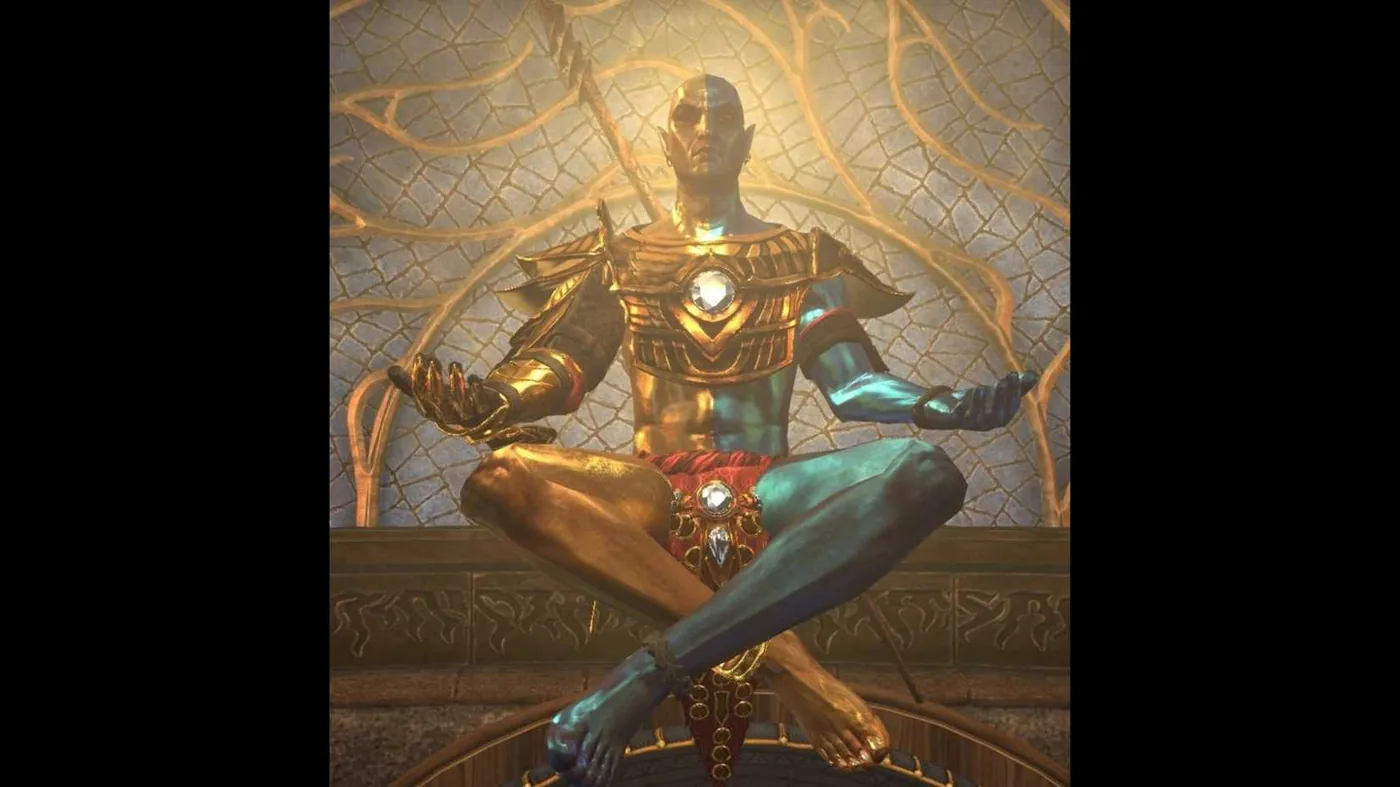
Rather than contradicting established franchise continuity, the writing aligns closely with Bethesda’s core worldbuilding while expanding the mythos surrounding prominent deities and historical figures. Fans of Morrowind can interact with the living god Sotha Sil, a pivotal figure largely absent from the original Tribunal expansion, while discovering detailed plotlines dedicated to powerful Daedric Princes like Molag Bal, Meridia, Hermaeus Mora, Peryite, and Sheogorath. Furthermore, the narrative introduced an entirely new Daedric Prince whose presence could carry future narrative implications when Bethesda eventually ships The Elder Scrolls VI. Twelve years of continuous worldbuilding have turned The Elder Scrolls Online into an indispensable archive for anyone seeking to understand the continent’s mythological roots [2]. Every questline enriches Tamriel’s heritage.
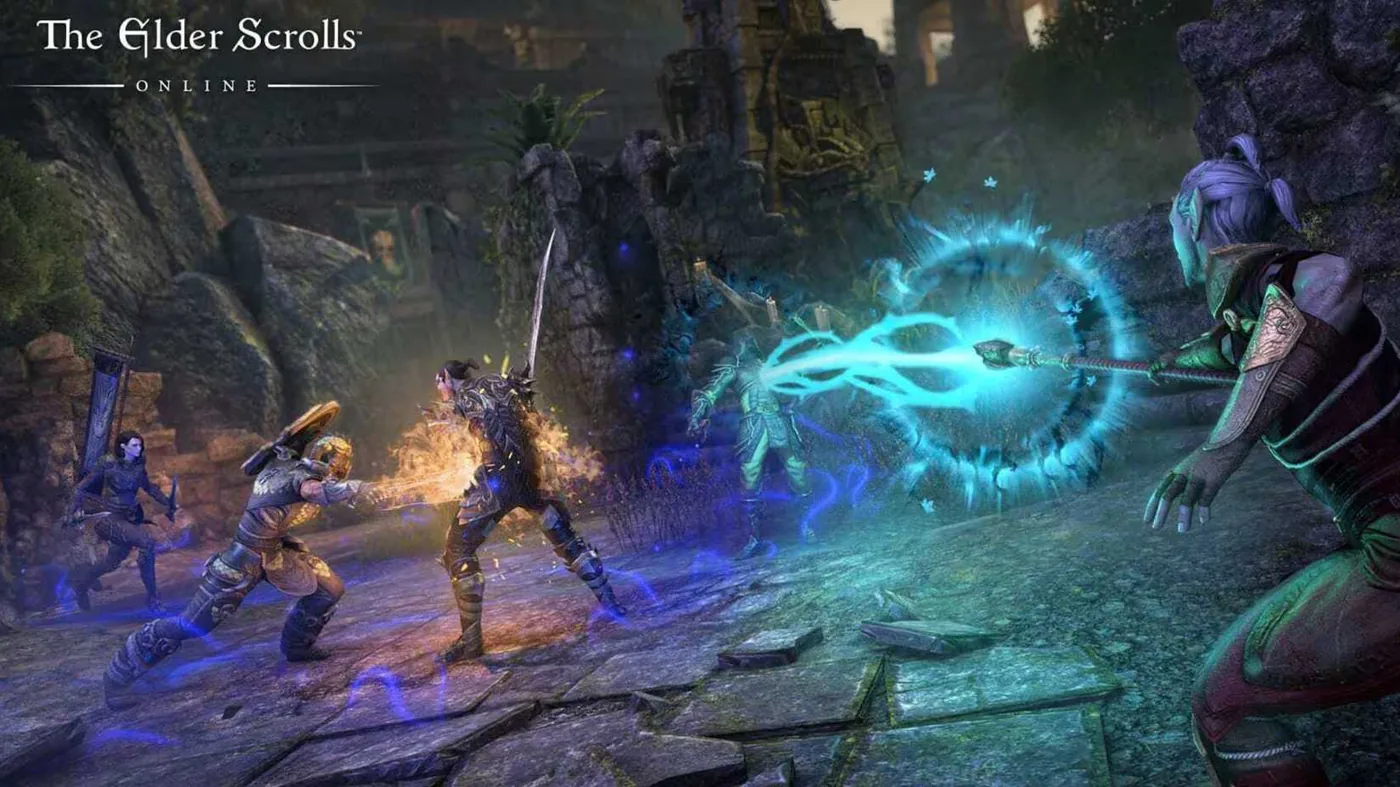
Mechanical progression has received matching attention through innovative character systems. The introduction of scribing allows adventurers to craft custom grimoires, combining primary scripts, secondary scripts, and tertiary scripts to tailor individual active abilities to specific combat situations. This customizable framework complements the game’s diverse class roster and weapon lines, allowing players to fine-tune combat builds while respecting traditional Elder Scrolls lore [2].
ESO Prepares for a Massive Return to Skyrim
While ZeniMax is moving away from formulaic annual expansions, major destination releases will still anchor the release calendar. Associate design director Jason Barnes revealed that the team is developing an ambitious new Skyrim zone designed to offer the cinematic spectacle that players previously expected from chapter releases. Barnes clarified that this upcoming northern territory will not represent a traditional zone template, departing from conventional map layouts while delivering substantial narrative weight [1].
‘There’s still a time and a place for some of the like kind of the bigger, more grand type of releases,’ Barnes explained during discussions about future content. ‘Like the new Skyrim zone that we’re working on.’ He noted that while the team is avoiding a rigid return to form, the project will match the theatrical grandeur that characterized earlier expansions, ensuring that veteran players experience high-stakes storytelling within iconic Nordic landscapes [1].
To bridge the gaps between major territorial updates, the studio is introducing fresh operational formats such as the Nowhere Vault, regional Rumors, and environmental puzzle activities. Nick Giacomini acknowledged that the gaming market has evolved significantly since 2014, with modern releases constantly raising quality standards for player engagement. ZeniMax revised its internal design ethos to prioritize organic exploration reminiscent of early Morrowind adventures, where players uncover environmental secrets rather than following static objective markers [1].
High Seas of Tamriel Event Welcomes Returning Explorers
The first tangible manifestation of this revised development philosophy arrives through the High Seas of Tamriel event, introduced in tandem with Update 51. The in-game celebration invites adventurers to embark on maritime salvage expeditions, solve naval mysteries, and recover sunken relics scattered across Tamriel’s coastal territories. This event emphasizes communal engagement and environmental discovery, giving returning veterans an immediate reason to log back into The Elder Scrolls Online [1] [3].
Modern geographical freedom distinguishes the current state of The Elder Scrolls Online from vintage entries in the franchise catalog. While early titles like The Elder Scrolls: Arena and The Elder Scrolls II: Daggerfall technically depicted every Imperial province, their primitive mechanics and dated interfaces make them exceedingly difficult for modern gamers to navigate comfortably. In contrast, the current engine enables seamless journeys across the Summerset Isles, Valenwood, Black Marsh, Morrowind’s mainland, Hammerfell, and Orsimer [2].
Arena and Daggerfall aged poorly. By blending seasonal episodic content like High Seas of Tamriel with comprehensive access to iconic historical regions, ZeniMax ensures that The Elder Scrolls Online remains dynamic twelve years after launch. As production continues on the mysterious Skyrim zone, players have unprecedented freedom to chart their own journey across the continent [1] [2].
- ONLINE NEWS Koselke, A. (2026, October 1). The Elder Scrolls Online is undergoing a “renaissance,” as the MMO’s devs say they saw what’s “been going for 12 years and decided to make some changes”. GamesRadar+. [Article Link]
- ONLINE NEWS Josi, S. (2026, October 1). 7 reasons to play Elder Scrolls Online right now. DualShockers. [Article Link]
- PRESS RELEASE Xbox Wire. (2026, September 30). The Elder Scrolls Online: Seek sunken treasures during the High Seas of Tamriel event. Xbox Wire. [Article Link]


1 comment