



The Federal Aviation Administration announced on November 5 that it will retire FAA floppy disks and replace aging 1980s computer setups with a digital network called the Enterprise Information Display System. The FAA plans to install the modern platform in 435 air traffic control facilities by late 2028 [1]. Air traffic controllers still load flight advisories, restricted airspace maps, and weather alerts into display consoles using 3.5-inch magnetic diskettes that date back four decades [2].
The 2028 E-IDS Upgrade Plan
The new Enterprise Information Display System, known as E-IDS, replaces four separate legacy display systems that first entered service in the 1980s. Under the older arrangement, FAA controllers had to consult disjointed consoles and paper logs to check equipment outages, airport runway statuses, and pilot weather reports [1]. The E-IDS upgrade consolidates those separate feeds onto a single digital interface that updates in real time [2]. “We’re moving away from outdated, manual processes and replacing technology that once relied on floppy disks with a modern system that allows controllers to instantly share critical flight alerts, restricted airspace schedules and pilot reports,” FAA administrator Bryan Bedford said [1]. Federal officials want to eliminate the delays that happen when information stays trapped inside local equipment [4].
Technicians started installing E-IDS displays at Atlantic City International Airport, Nashville International Airport, and Greater Rochester International Airport, while establishing FAA data processing hubs in Atlanta and Salt Lake City. Five early locations lead the nationwide rollout [1].
Bedford previously said that “every facility is a silo,” leaving FAA radar rooms cut off from neighbor centers during bad weather. If early testing succeeds, the FAA could expand E-IDS to 453 sites before the rollout window ends [1]. The software also pushes Notices to Airmen directly to terminal screens [5]. When storms shut down flight paths, instant data sharing lets FAA teams reroute passenger planes without waiting for phone calls or manual confirmations [1].
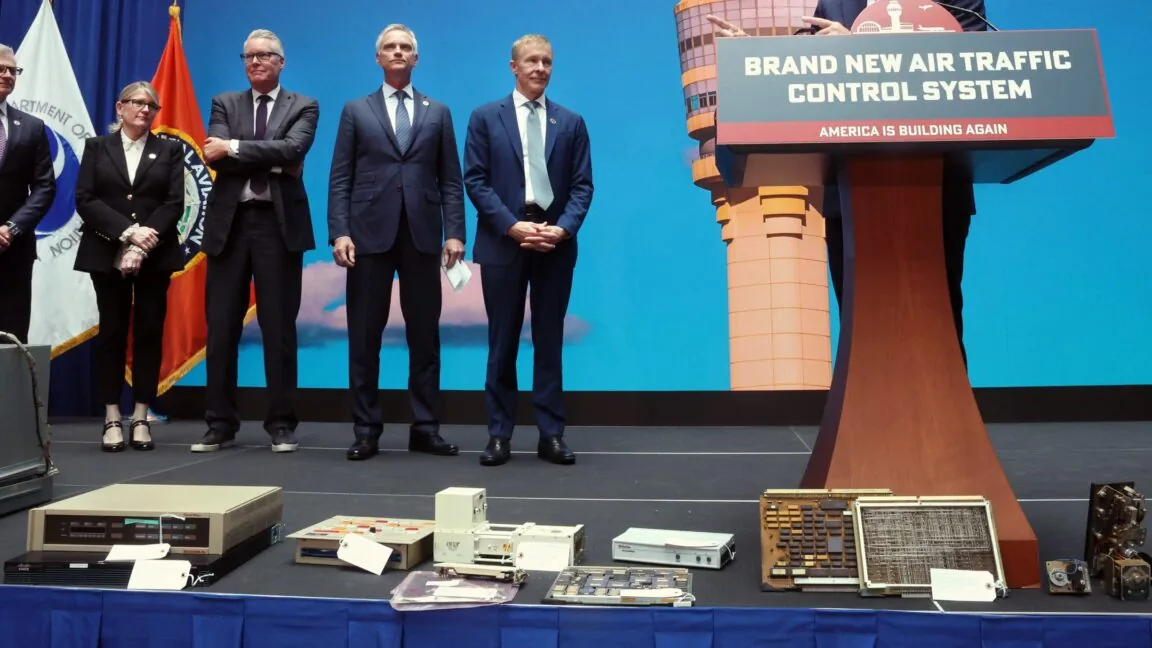
Why FAA Floppy Disks Remained for Decades
Aviation authorities kept 3.5-inch magnetic diskettes because recertifying safety equipment is both slow and expensive [2]. IBM developed the first commercial floppy disk in 1971, and by the 1980s the format served as the main way to move computer data between standalone terminals [3]. Federal aviation systems built during that era were approved under strict government standards that made updating any individual drive difficult. Because flight hardware must never freeze while guiding passenger planes, FAA managers often leave working IBM and 1980s computer setups untouched rather than risk software glitches during recertification [2].
Keeping older equipment running forced maintenance staff to improvise. Technicians often bought spare parts on eBay to keep vintage drives working inside FAA facilities. Some FAA towers still run computers that use Windows 95, an operating system Microsoft stopped supporting decades ago [1].
A Government Accountability Office report from September 2024 showed that 90 percent of vital US air traffic control systems were due or overdue for replacement. The Government Accountability Office surveyed 138 systems and found that nearly half were “considered unsustainable” or “potentially unsustainable” due to missing replacement parts and a shortage of trained technicians. Most veteran engineers familiar with 1980s microcode have retired from federal service, leaving airports without the skilled staff needed to diagnose circuit board breakdowns [2]. That maintenance bottleneck made replacing FAA floppy disks a pressing goal for agency leaders [1].
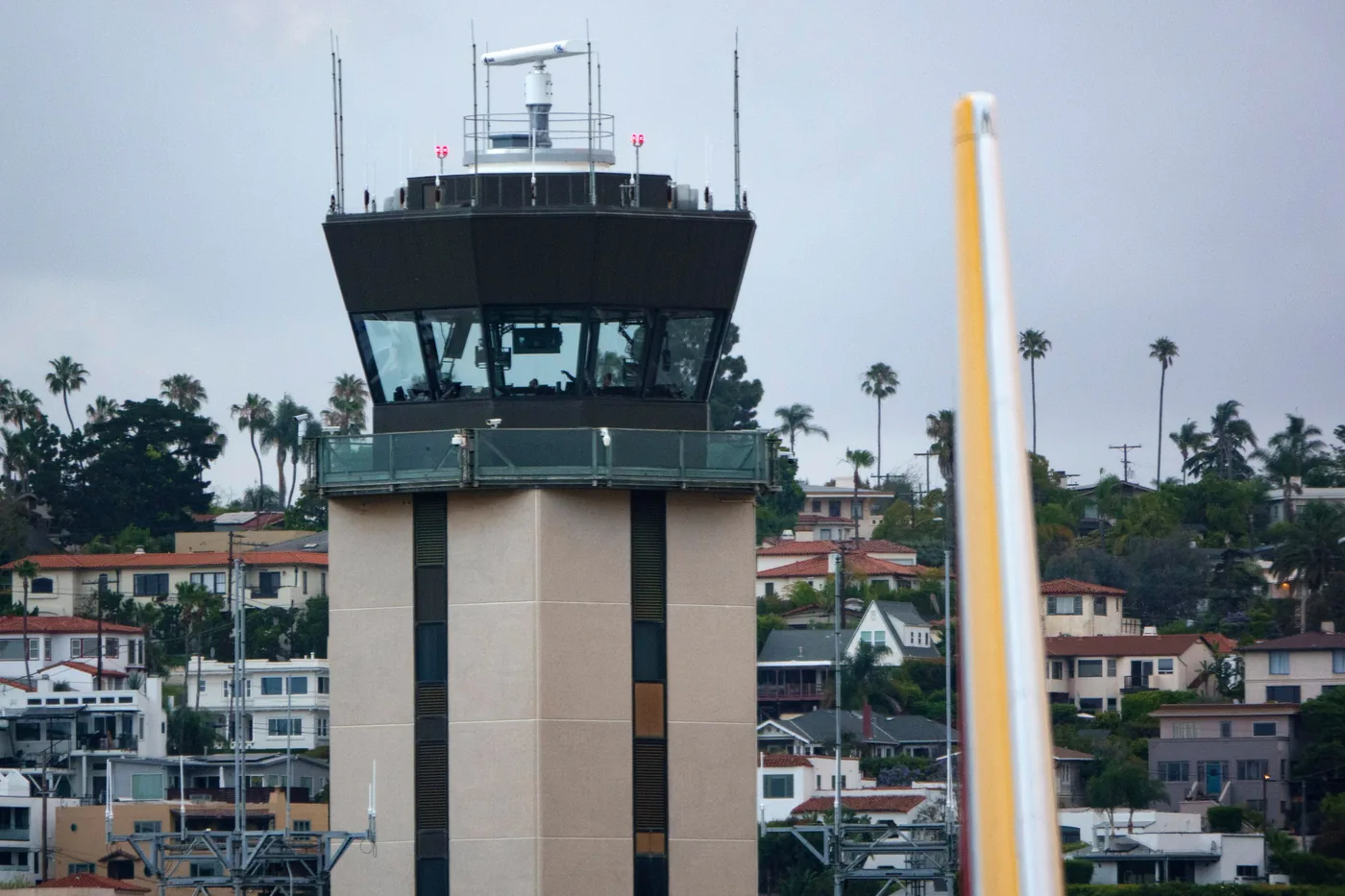


Contract Origins with Leidos
Although FAA leaders framed the floppy disk phaseout as a recent initiative, the replacement effort began years earlier. The FAA awarded the original development contract for E-IDS to Leidos, a defense contractor headquartered in Reston, Virginia, in August 2020 during the first Trump administration. Aviation software needs extensive simulation, bench testing, and safety reviews before engineers can install it in active towers. Because FAA controllers cannot afford software crashes while guiding passenger jets, moving from contract signing to live airport testing took six years [2].
Other federal modernization efforts have also moved at a cautious pace. An earlier FAA program to replace paper flight strips with electronic display strips aimed to reach 49 major passenger airports by 2028, but only 27 airports have adopted the electronic strips so far under the Biden administration [1].
The digital display transition aligns with broader modernization programs in American airspace [1]. That push connects with recent agency projects, such as when the FAA launched SMART AI across air traffic control corridors to track flight paths and forecast route bottlenecks. Providing FAA controllers with unified digital screens simplifies workload management and reduces errors during bad weather [4].

Retiring FAA Floppy Disks Across 435 Facilities
Transportation Secretary Sean Duffy announced the technology upgrade publicly on Thursday, celebrating the phaseout of outdated media. “Good news America: floppy disks are out, 21st century tech is in,” Duffy said in an official statement. During media interviews and political speeches, Duffy has frequently held up 3.5-inch disks to criticize aging federal systems, pointing to “copper wires and floppy disks” as symbols of neglect. Duffy argued that old hardware contributed to flight delays that disrupt travel for millions of passengers [2].
Yet air traffic delays often stem from infrastructure problems that new display panels cannot solve on their own. The FAA has faced intense public pressure over close calls on airport runways, including one incident involving President Donald Trump, along with software meltdowns such as the 2023 NOTAM outage [2]. Physical cable cuts also shut down radar facilities without warning. In mid-October, construction workers severed a fiber optic cable outside George Bush Intercontinental Airport, cutting data services between air centers and triggering a ground stop. Circuit failures in Philadelphia and New Jersey caused similar travel chaos in September, delaying thousands of flights in the Northeast corridor [1].
Controller burnout among overworked federal staff poses an equally serious challenge, with a shortage of thousands of certified FAA controllers forcing crews to work six-day weeks and long shifts [2]. Congress approved $12.5 billion for air traffic modernization last year, but Transportation Secretary Sean Duffy is seeking an additional $30 billion to upgrade deteriorating ground equipment [1]. The USDOT has recruited video gamers for open positions while consulting technology leaders such as Elon Musk and Peter Thiel [2].

Legacy Tech Beyond American Airspace
Relying on vintage computer media is surprisingly common in public transit networks. The San Francisco Muni Metro light rail network relied on floppy disks to load daily train track routines for decades. In 2024, the San Francisco municipal transit board agreed to pay Hitachi Rail $212 million to replace the aging setup with computerized train signaling equipment. Transit agencies like the San Francisco Muni Metro avoid replacing running software because taking systems offline risks halting daily commuter trains [1].
Military fleets have faced similar maintenance struggles. The German Navy still uses 8-inch floppy disks aboard its Brandenburg-class frigates to handle propulsion data and power generation [1]. The US Air Force only retired 8-inch floppy disks from nuclear missile silos in 2019 [3].
National regulations have also kept floppy disks alive in government paperwork. In June 2024, the Japanese government officially repealed 1,034 rules that had required citizens and corporations to submit legal records on floppy disks [1]. That regulatory change eliminated decades of paperwork mandates across Japanese ministries [3]. As modern digital terminals arrive at FAA air centers in the United States, phasing out FAA floppy disks marks a quiet farewell to the magnetic disks that shaped computing history [1].
- ONLINE NEWS Gitonga, N. (2026, November 7). US FAA to eliminate floppy disks from air traffic control by 2028. Tom’s Hardware. [Article Link]
- ONLINE NEWS Hawkins, A. J. (2026, November 5). The FAA is finally ditching floppy disks. The Verge. [Article Link]
- ONLINE NEWS Washenko, A. (2026, November 5). The FAA is finally phasing out floppy disks from air traffic control. Engadget. [Article Link]
- ONLINE NEWS Ars Technica. (2026, November 5). FAA to finally ditch floppy disks in what it calls “historic” tech upgrade. Ars Technica. [Article Link]
- ONLINE NEWS TechSpot. (2026, November 6). It’s almost 2027, and the FAA is finally replacing the floppy disks used by US air traffic control. TechSpot. [Article Link]


