





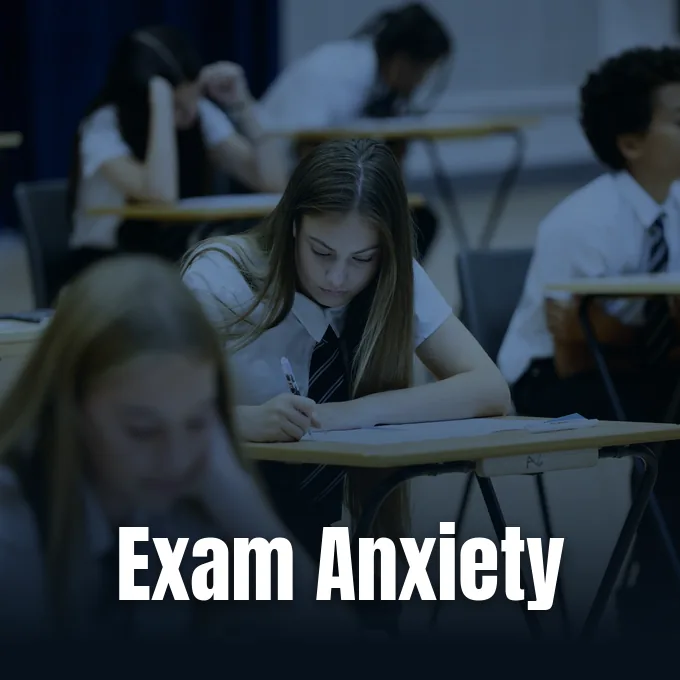
Does the arrival of major school tests inevitably cause overwhelming distress in young learners? In educational psychology, clinical forms of anxiety often overlap with test-specific dread, where exam anxiety describes a complex set of emotional, bodily, and behavioral reactions tied to the fear of negative evaluation. High school students facing Year 12 assessments or GCSE papers often experience racing pulses, mental blanks, and persistent dread before an exam. Research shows one in six students experiences extreme academic stress during the final years of schooling, disturbing sleep and daily wellbeing [1].
Why Does Academic Stress Peak Before Final Exams?
Academic stress peaks before final exams because high-stakes tests concentrate multiple pressures into a single evaluative window where students believe future career pathways are decided. Cher McGillivray observed that Australian Year 12 students sitting final examinations through October and November face compounding uncertainty regarding post-school identity and university entry. In a 2026 preliminary preprint awaiting formal peer review, McGillivray reported that anticipating negative outcomes fosters persistent dread when adolescents view grades as the sole measure of personal worth [2].
Prolonged worry disrupts basic cognitive functions that learners rely on during study sessions. Talkspace therapist Elizabeth Keohan explained that school environments repeatedly signal that test performance carries lasting consequences across personal and family spheres. Academic fatigue surfaces through poor concentration, social withdrawal, and deteriorating self-care. When pressure becomes overwhelming, it impairs working memory capacity, preventing examinees from consolidating the material they spent weeks reviewing [4].
Social comparison adds pressure when peers debate study hours and marks in school hallways. Educational platform PMT Education reported that pre-test chatter leads students to doubt their preparation. Finding an empty classroom before tests isolates learners from peer panic, shielding focus during revision intervals [7].

How the Body Generates Exam Anxiety Symptoms
When students encounter difficult assessments, the autonomic nervous system mobilizes an evolutionary fight-or-flight response, accelerating heart rate and breathing to prepare the body to confront danger rather than sit quietly at an examination desk. Jessica Belcher and Viviana Wuthrich noted that while these changes assist survival, they produce sensations such as dizzy spells, sweaty palms, and dry mouth during exams [1].
Elevated bodily arousal changes how the brain accesses stored knowledge during an assessment. In a 2026 preprint report awaiting peer review, Belcher and Wuthrich detailed how rapid bodily reactions often accompany cognitive blanks where examinees temporarily lose access to previously learned formulas [1]. Dr. Elizabeth Weiss, a licensed clinical psychologist who completed her doctorate in 2009 at the PGSP-Stanford PsyD Consortium in Palo Alto, observed that symptoms often include heart rates above 100 beats per minute, abdominal pain, and muscle tension in the upper back and neck. Weiss said, “Understand that sometimes anxiety can be a positive motivator. Every emotion has a purpose. If you’re anxious, sometimes it’s because there’s something you really need to take care of, and you have to figure out how you’re going to do that.” [3]
Mild stress can improve performance by sharpening mental alertness and motivation before a test starts [1]. The true challenge arises when bodily reactions grow so intense that they trigger full panic attacks. Case documentation from youth organization ReachOut Australia indicates that perfectionism often drives high-achieving learners toward debilitating bodily distress. Recognizing the boundary between helpful adrenaline and severe panic prevents physiological reactions from disrupting exam performance [6].
Can Cognitive Reframing Lower Exam Anxiety?
Cognitive reframing lowers exam anxiety by training students to identify and dismantle irrational catastrophic thoughts that magnify perceived testing dangers. When examinees face difficult prompts, internal dialogue often defaults to catastrophic predictions such as total failure, but challenging these automatic thoughts through structured self-questioning restores emotional balance and realistic perspective. Asking whether a single test can truly end future opportunities replaces panic with realistic perspective so working memory functions normally [1].
Reframing also involves altering how learners view the purpose of academic evaluations. Molly Wood of PMT Education explained that treating tests as platforms to showcase knowledge rather than traps designed to catch mistakes reduces subjective tension [7]. Expressive writing provides additional cognitive relief by encouraging adolescents to process intrusive worries on paper before entering the testing hall. Maintaining a brief gratitude log several times each week helps redirect cognitive attention away from constant threat monitoring [2].
Compassionate inner dialogue further stabilizes emotional resilience during stressful revision periods. Speaking words of compassion and courage protects student confidence [2]. Talkspace therapist Elizabeth Keohan said, “Remembering the fundamental truth that academics are not everything, can be a wonderful mantra for keeping the stress and anxiety manageable.” Grounding personal identity outside test scores preserves long-term psychological wellbeing [4].


Desk Strategies for Managing Acute Panic
During timed assessments, practical somatic methods help students deactivate acute panic without disrupting the exam hall. Controlled diaphragmatic breathing serves as a fast physiological reset by signaling safety to the autonomic nervous system. Belcher and Wuthrich outlined a pacing method where examinees inhale slowly across four beats and exhale over a matching four-beat duration. Repeating this slow cycle gradually lowers heart rate during reading time [1].
Strategic paper navigation also shields examinees from cognitive overload during the opening minutes of a test. Belcher and Wuthrich advised students to scan the exam during reading time to locate the questions they feel most comfortable with. Tackling easier questions first builds confidence and activates memory networks in the brain; this background priming helps retrieve relevant concepts for harder essay questions later. Orderly test progression prevents early panic from derailing performance [1].

Preparation inside the examination room extends to practical desk toolkits and invigilator communication. Carrying water, earplugs, and a simple breathing card grounds student senses during moments of tension [4]. If acute panic impairs the ability to write, notifying an invigilator allows trained staff to offer quiet assistance. Knowing that support remains available provides reassurance that calms rising distress [7].
Study Habits That Prevent Test Anxiety Build-Up
Long-term preparation habits establish a strong psychological defense against severe test anxiety by eliminating the chaos of cramming. Spaced practice and active recall consistently outperform passive rereading because testing oneself with flashcards consolidates memories into stable neural structures. A study of 309 medical students published in the Association for Psychological Science found that high trait test anxiety was associated with smaller knowledge gains during preparation, showing that early study routines protect learning [4].
Daily lifestyle habits provide the biological foundation needed for sustained academic concentration. Research highlighted by All Saints Grammar from the Sleep Health Foundation shows that getting 7 to 9 hours of quality sleep each night supports memory retention and mental health. Dietary findings from the Australian Institute of Health and Welfare suggest eating nutrient-dense foods such as berries, nuts, and fish while staying hydrated with water [5]. Avoiding sugary snacks prevents sharp energy crashes during study sessions [3].

Study environment design and pacing also limit cognitive fatigue during intense revision cycles. Research from the University of Sydney supports using the Pomodoro Technique, where students study for 25 minutes and take a 5-minute break, followed by a 15 to 30-minute rest after four sessions [5]. A reader poll of 924 students on wikiHow found that 69% agreed taking regular breaks increases productivity [3]. Furthermore, an attention experiment published in the Journal of the Association for Consumer Research demonstrated that participants who had smartphones in sight performed significantly worse on cognitive tasks than peers who stored phones out of sight in another room, confirming that mobile devices induce cognitive brain drain [5].
How Can Students Decompress After Difficult Exams?
Students can decompress after difficult exams by engaging in light physical exercise and stepping away from post-test discussions. Post-exam rumination often prolongs physical tension as students replay tricky questions in their minds, but going for a brisk walk or run burns up cortisol, helping the body recover more quickly. Physical movement signals the biological completion of the acute stress response [1].
Stepping away from social media discussions prevents unnecessary distress and second-guessing. Molly Wood of PMT Education warned that comparing answers with peers or reading online forums increases worry and damages confidence for upcoming assessments [7]. Evidence shows that how school connectedness protects high school mental health depends heavily on maintaining supportive, non-competitive peer relationships. Interacting with family pets also calms nervous tension [5].
When academic distress feels overwhelming, contacting professional support services provides practical coping guidance. Organizations like Lifeline (13 11 14) and Kids Helpline (1800 55 1800) offer telephone counsel for distressed young people and families [1]. Remembering that Year 12 tests do not determine personal worth helps students keep academic challenges in perspective. Diverse vocational pathways remain open through TAFE institutions and alternative university admissions regardless of final marks [2].
- PREPRINT Wuthrich, V., & Belcher, J. (2026). Worried about your Year 12 exams? 3 ways to help anxiety. [Article Link]
- PREPRINT McGillivray, C. (2026). Year 12 students might feel anxious as exams approach. Here’s what can help. [Article Link]
- WEBSITE Weiss, E. (2010). How to Deal With Exam Anxiety. GuideCentral / wikiHow. [Article Link]
- WEBSITE Keohan, E. (2026). Exam Anxiety: Coping Tips for Students. Talkspace. [Article Link]
- WEBSITE All Saints Grammar. (2024). 10 Strategies for Staying Calm and Focused at Exam Time. [Article Link]
- WEBSITE ReachOut Australia. (2023). How to Deal With Exam Anxiety. [Article Link]
- WEBSITE Wood, M. (2024). How to Manage Exam Anxiety. PMT Education. [Article Link]
APA 7: TWs Editor. (2026, October 12). Year 12 Students Face Exam Anxiety as Final Tests Approach. PerEXP Teamworks. https://perexpteamworks.com/en/exam-anxiety-year-12-coping-strategies/


