




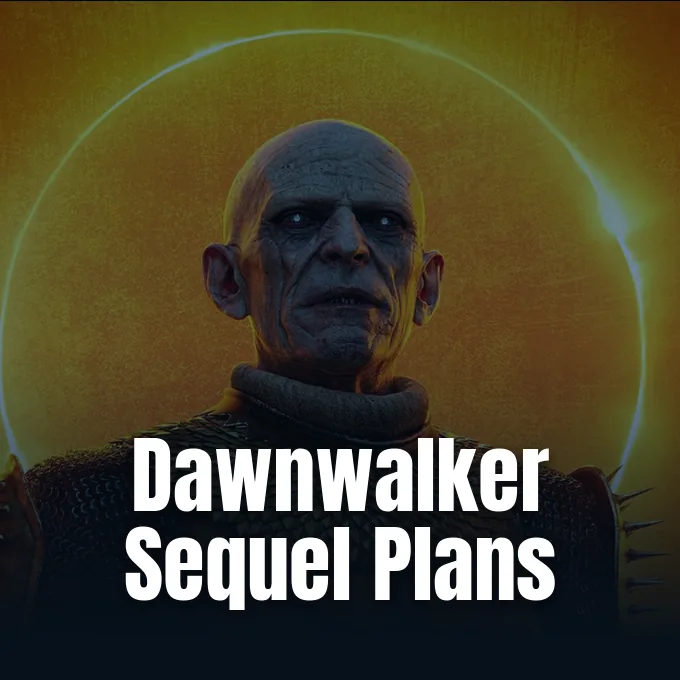
Rebel Wolves proved that Blood of Dawnwalker could achieve runaway success without ballooning costs, as a report from Bloomberg confirmed the vampire title carried a focused $40 million development budget. Conceived in Poland by director Konrad Tomaszkiewicz after directing The Witcher 3, the project shows that disciplined mid-budget execution can thrive against industry bloat. Backed by Chinese publisher NetEase, the debut entered Game of the Year contention while selling over 1 million copies during its first week [1].
Origins of the $40 Million NetEase Investment
The groundwork began when Konrad Tomaszkiewicz stepped away from CD Projekt Red to establish Rebel Wolves in Poland (established by CD Projekt Red veterans). He initially funded the fledgling enterprise out of his own pocket to create a comprehensive pitch document, assemble key personnel, and develop an early playable prototype [2]. Development began in 2022. Seeking external partners to guarantee creative independence without sacrificing production values, the team prepared a showcase that quickly attracted international attention [4].
NetEase provided $40 million. That decisive agreement arrived before the close of 2022, with the Chinese conglomerate securing a 26 percent stake in Rebel Wolves in exchange for fully underwriting the agreed development budget [4]. NetEase had already enjoyed massive multiplayer momentum through Marvel Rivals in 2024, yet backing this dark action RPG represented a deliberate venture into premium narrative experiences [1]. With stable financing locked in place, the studio dedicated the entirety of the following year to assembling specialized technical talent before full production commenced at the end of 2023 [2]. The partnership guaranteed creative security without compromising studio independence.
Publishing duties ultimately transferred to Bandai Namco, which handled global marketing and distribution across major retail networks. How did a newly formed Polish developer manage to secure major international backing without ceding creative control? The answer lay in total adherence to the initial pitch deck, enabling leadership to negotiate favorable distribution terms while keeping ownership firmly anchored to its founding vision [4].

Scaling Rebel Wolves Headcount to 160 Developers
Managing studio growth without triggering organizational paralysis required constant vigilance from the creative leads. Headcount expanded to 160. Although the studio operated with approximately 90 employees in 2024, the natural ambitions of the project prompted leadership to gradually bring specialized contractors onto the permanent payroll. “We sat in the production room and counted everything. When we started to work, the game — like always — grew,” Tomaszkiewicz explained regarding the calculated expansion of the workforce [2].
Tomaszkiewicz made a deliberate choice to cap the studio size so he could interact directly with staff on a daily basis (a working environment where the director remains a hands-on craftsman rather than a detached corporate executive). “We decided that the size of the team we have right now is the most fitting for our needs,” he noted to Bloomberg, emphasizing that he preferred staying a creator over becoming a pure administrator [2].
Discipline proved decisive. Writer Jakub Szamalek affirmed that leadership actively tracked headcount to prevent studio bloat [2].

Studio leadership applied the same discipline to the production calendar. Rather than forcing overtime for June, Rebel Wolves targeted September. Tomaszkiewicz later noted: “In the end, we landed in a really good production without a lot of big problems” [4].

Blood of Dawnwalker Gameplay and Critical Acclaim
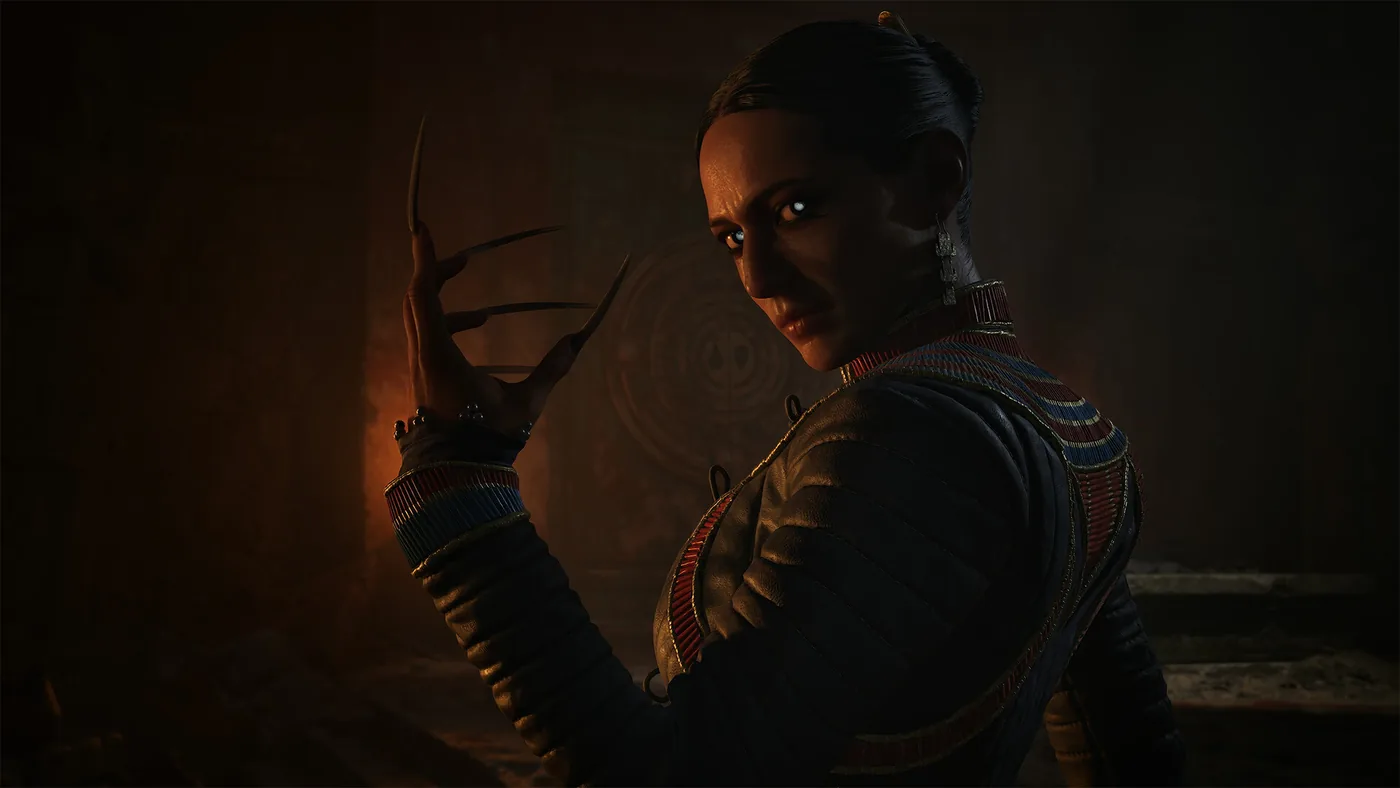
Instead of reinventing fundamental systems from scratch, Rebel Wolves leaned heavily on established design blueprints perfected during the development of The Witcher 3. The resulting third-person action framework incorporated a dynamic day-night cycle where sunlight restricts movement but nocturnal hours unlock lethal vampiric abilities across Gothic battlegrounds. Sticking rigidly to pillars established in the original pitch deck spared the Polish team from catastrophic mid-development reboots [3].
One central creative risk involved gating world exploration behind a strict in-game clock (a structural gating system limiting total quest completion), preventing players from finishing every side activity within a single narrative run [3]. While this finite structure intensified atmosphere and dramatic urgency, it also ignited debates over whether future entries will drop the divisive time mechanic as players sought greater freedom across subsequent playthroughs [2]. Production began in late 2023. By keeping those foundational pillars untouched, the Polish studio maintained clear milestone targets throughout development [3].
Critical reception justified the team’s unwavering creative choices as reviews poured in from global outlets. The title achieved an 84 on Metacritic, ranking among the highest-rated role-playing releases of 2026, while player sentiment on Steam settled at 86% positive. Despite carrying a premium $70 retail price tag, The Blood of Dawnwalker surpassed 1 million units sold in just a few days on the market [1].
How AA Budgets Challenge Triple-A Production Costs
The $40 million achievement of Blood of Dawnwalker highlights an escalating shift across the gaming landscape toward sustainable mid-tier production models. Analysts frequently compare the dark vampire adventure with notable hits like Kingdom Come: Deliverance 2, which carried a reported budget of roughly $41 million. In a related vein, the upcoming French release Clair Obscur: Expedition 33 moved through production with an agile budget just under $10 million [1].
These disciplined expenditures present a stark contrast to spiraling triple-A development investments revealed through court disclosures and executive estimates across the industry. A 2023 Sony legal filing disclosed that blockbuster PlayStation exclusives including The Last of Us Part 2 and Horizon Forbidden West each required upwards of $200 million to produce. Meanwhile, prolonged development cycles and multiple delays have prompted financial analysts to estimate that combined production costs for GTA 6 could surpass $1 billion. Even historical comparisons underscore this widening divide: when CD Projekt Red assembled The Witcher 3 during the 2010s, the landmark Polish title cost a combined $81 million across its entire multi-year production cycle [1]. That benchmark highlights how rapidly mainstream production costs have escalated over subsequent cycles.
Is spending hundreds of millions truly mandatory to capture commercial relevance in modern gaming? Jagex chief executive Jon Bellamy (who currently oversees the RuneScape franchise) argued that studios could take “a tenth” of a standard $400 million blockbuster budget and deliver comparable player satisfaction if development remains tightly organized. By steering clear of excessive scale, mid-sized teams protect their financial survival while maintaining distinct artistic identity [1].

Sequel Preparation and New Game Plus Plans
Early commercial success has already motivated Rebel Wolves to look beyond their maiden launch. The studio has begun advertising for a lead writer to shape the narrative direction of its upcoming sequel, signaling long-term commitment to expanding this dark universe. While the core team refines post-launch stability, storytellers have dropped preliminary hints regarding the protagonist Coen navigating modern settings in future storylines [2].
Save data carries forward. Tomaszkiewicz confirmed that player progression and key decisions recorded throughout The Blood of Dawnwalker will directly transfer into the planned follow-up, rewarding dedicated fans who invested in their vampiric journey. The gamble paid off quickly. Studio leadership nevertheless acknowledged that future entries might reconsider core mechanics, leaving open the question of whether the strict countdown framework returns [2].
For players currently immersed in Gothic warfare, near-term additions are already taking shape. Tomaszkiewicz promised that a dedicated New Game Plus mode remains in active development, even though Rebel Wolves has not yet attached a formal calendar window to the update. By balancing immediate post-launch support with measured franchise expansion, the independent studio proves that financial discipline can carve out an enduring legacy as Blood of Dawnwalker establishes its reputation across global platforms [2].
- ONLINE NEWS Wood, A. (2026, September 18). The Blood of Dawnwalker, one of the year’s top RPGs, was made on a budget of $40 million much like Kingdom Come: Deliverance 2. GamesRadar+. [Article Link]
- ONLINE NEWS Sinha, R. (2026, September 19). The Blood of Dawnwalker Had a $40 Million Budget, Development Began in 2022. GamingBolt. [Article Link]
- ONLINE NEWS Gach, E. (2026, September 18). Blood Of Dawnwalker Became A Dark-Horse GOTY Contender On Just A $40 Million Budget. Kotaku. [Article Link]
- ONLINE NEWS Sepiol, S. (2026, September 18). The Blood of Dawnwalker Had a $40 Million Budget. Insider Gaming. [Article Link]


