





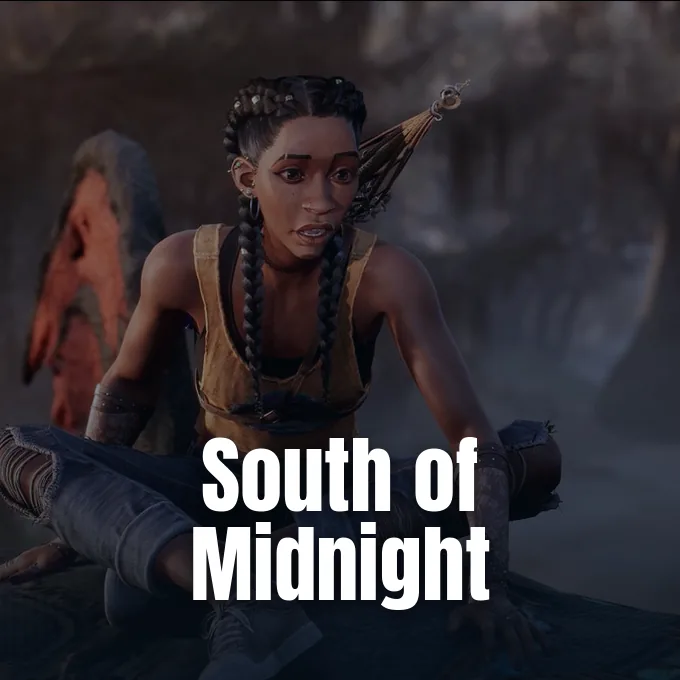
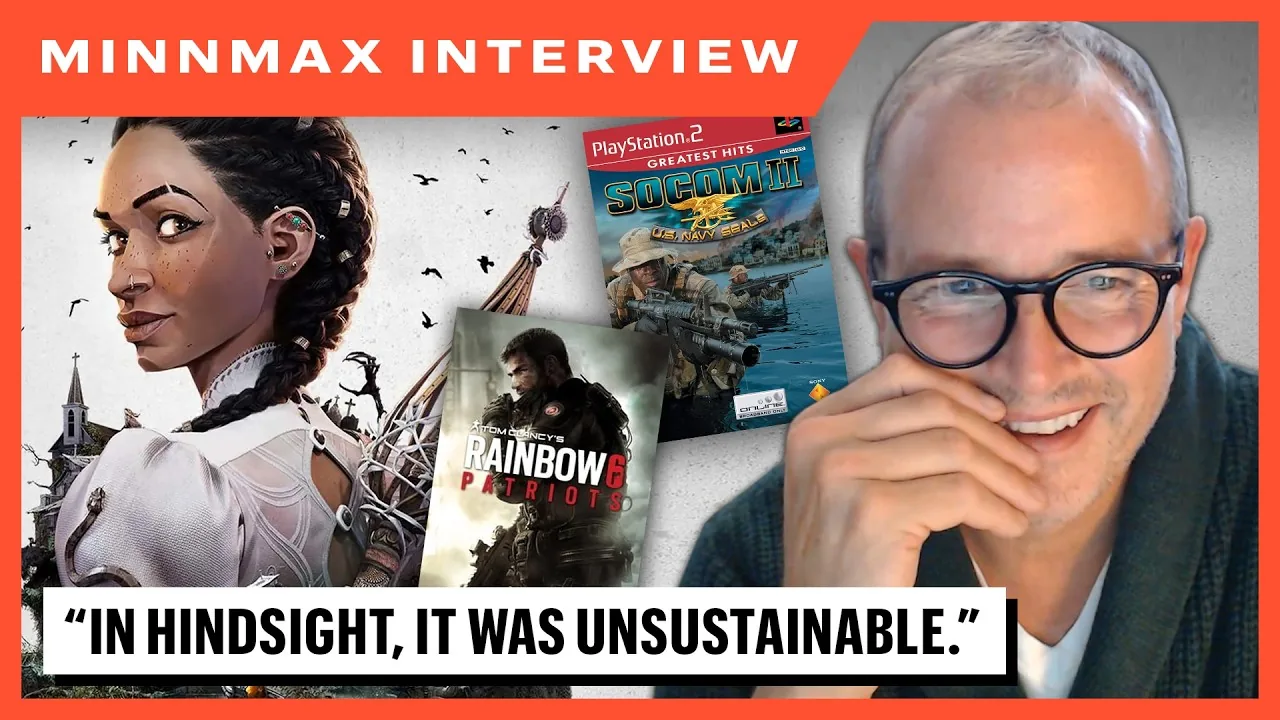
Former South of Midnight director David Sears said in an interview published on November 3, 2026, that he spent production worrying Microsoft would stop funding the game. Speaking with host Ben Hanson on the MinnMax show, Sears described the budget environment at Xbox as unsustainable in hindsight. He explained that if he had been in charge of the Xbox division, he probably would have halted funding on South of Midnight rather than sustaining such high project expenses [1]. Sears left Compulsion Games in March 2025, but his comments offer an unvarnished window into how shifting publisher priorities affected creative directors throughout Microsoft gaming studios [3].
South of Midnight Director on Studio Funding
During the production of South of Midnight, Xbox leaders told internal teams that their main goal was to build a catalog of non-mainstream releases. Sears recalled that Xbox leadership consistently told creative leads to focus on building a library of distinctive titles that could appeal to audiences beyond conventional action blockbusters. The publisher had brought in several teams, yet Sears questioned whether that level of spending could last over the long run. “They were funding a lot of games,” Sears said in the interview. “They were also funding a lot of studios that I was like “Well. Okay. Great, I guess you have infinite money, you do you. I want less.”” [1]
Sears deliberately shaped his team size and project goals around that cautious perspective, choosing to avoid massive production obligations that could endanger his studio if publisher priorities changed. He told MinnMax that he wanted to avoid taking on excessive responsibility, noting that heavy budgets bring steep demands for commercial returns. “I don’t want to feel the weight of the obligation of a giant budget, or an army of six hundred to be responsible for,” Sears said. “I want to make something that isn’t going to bankrupt Microsoft or the games division.” [1] Those comments came as former David Sears reflected on the ongoing tension between artistic goals and fiscal realities inside major game publishers, emphasizing that creative freedom often depends on keeping overhead manageable during long production cycles [3].
Big publishers typically sort new projects into two groups. One group aims to generate immediate commercial profit, while the second group seeks to elevate brand prestige by producing memorable cultural touchstones that endure through multiple console generations. Sears placed South of Midnight firmly in the prestige camp. Other releases, including Keeper from Double Fine and Pentiment from Obsidian, occupied that same creative space. When budgets tighten, games that show clear cash returns have an easier time defending their ongoing costs [3].

Turning Off the Money Tap
Sears admitted that he anticipated an eventual pullback from Microsoft throughout production. He cautioned fellow developers that Microsoft would not keep the money tap flowing forever, even as other studio leads celebrated what appeared to be an unconstrained golden era of creative funding. “I literally told people,” Sears recalled. “I was like, yeah, this could be terrible because somebody is going to say, one day, ‘The money tap, we’re closing those floodgates’ and that’s going to have really traumatic results downstream.” [3]
When other game directors asked him if the industry was experiencing a golden era of open budgets, Sears replied with caution. He told them the good times would last only “for now.” [3] Sears carried that concern as Xbox investments grew following multiple studio acquisitions. “There’s always a night when Rome burns,” Sears told Hanson during the interview, “and I didn’t know exactly when it would be, but I was always worried about it.” [1]
MinnMax host Ben Hanson asked Sears whether he would have cancelled funding for South of Midnight early if he had been sitting in the executive chair at the console maker. Sears conceded that from a purely business view, pulling back would have made sense earlier. “Yeah, probably,” Sears said. “I mean, I wanted to make it. No doubt.” “Obviously, because we made it.” “Would I have turned off someone else’s money flow before South of Midnight? Yeah, because I’m not completely selfless.” “It just seems like, in hindsight at least, it was unsustainable. So, of course, it was going to have a ‘shocking’ outcome.” [3]
Awards and the Executive Reset
Despite the financial unease behind the scenes, South of Midnight gathered major industry honors after launching in 2025 as an Xbox first-party release from developer Compulsion Games [2]. The game won a Game Award for Games for Impact, a Change Award, a (D.I.C.E.) award, and a BAFTA trophy. It added a 2025 Peabody Award to that collection [1].
Then-incoming CEO Asha Sharma praised the Peabody win on social media shortly after the announcement. That public applause did not shield the development team from shifting publisher strategies. Sharma soon announced plans for an Xbox “reset” initiative that cut Compulsion loose from the division. Sears observed that creative acclaim did not change the underlying business numbers once Microsoft decided to change course [1].
Other smaller first-party releases faced similar revenue questions inside Microsoft during that same period. Reports indicated the publisher was not satisfied with the sales return on South of Midnight, echoing the reception given to Double Fine projects like Keeper and Kiln [2]. Double Fine studio head Tim Schafer touched on that dynamic in an interview with Bloomberg, stating that while smaller games find loyal players, profitability would not necessarily save them from spending cuts. In an ecosystem where subscription catalogs demand high engagement, niche projects often face sharp scrutiny [1].
Wider Studio Cuts at Xbox
The departure of Compulsion Games arrived amid a much larger wave of restructuring at Microsoft. The publisher parted ways with multiple acquired studios, including Double Fine, Undead Labs, and Ninja Theory, as part of thousands of layoffs across its gaming teams [3]. The wider downsizing also left Arkane Lyon facing buyout deadlines under increasing pressure to find outside buyers.
Sears took note of how Microsoft handled Compulsion’s separation compared to older industry shutdowns. He praised the company for letting the studio spin off independently rather than closing its doors completely [1]. Sears described the current leadership at Microsoft as “more humane” than the management styles seen during the 1990s and early 2000s [3]. “It’s remarkable and commendable, and the fact they didn’t do what their predecessors might have done,” Sears said about the decision to let the team leave intact [1].

Giving a studio independence allows developers to keep their staff together and retain creative rights. Many gaming teams hit by previous waves of industry layoffs simply vanished when parent companies pulled funding. By granting Compulsion permission to leave as a standalone business, Microsoft avoided a complete closure of the team. Sears welcomed that outcome even as he recognized the difficult commercial road ahead for newly independent developers [3].
Why the South of Midnight Director Left
Sears stepped down from his creative leadership role at Compulsion in March 2025, months before Microsoft finalized the studio divestiture. Because he had already left the studio months prior, he did not take part in the formal negotiations that ultimately saw Compulsion transition back into an independent development house [1]. His departure meant he would not direct the studio’s next project, but his earlier guidance helped establish the tone that defined South of Midnight [3]. He watched the later restructuring from outside the organization while maintaining respect for the people still working there [1].
Compulsion Games now controls its own catalog once again after parting ways with Xbox. The developers regained the rights to all their games after leaving Microsoft, and they have started early planning on a new game. Without a giant owner bankrolling operations, the team needs to balance creative ambitions with everyday business survival. To help sustain development, Compulsion is exploring work as a co-development or support partner for other publishers. The team must keep a close watch on revenue as an independent entity, navigating an industry where even award-winning releases can struggle to stay funded [3].
Looking back at the entire development cycle, Sears viewed the outcome as inevitable given the high costs of game production. His reflections illustrate how vulnerable non-traditional and prestige projects remain when large platform holders decide to re-evaluate their financial commitments and trim production budgets. While Sears remains grateful that Microsoft financed South of Midnight, he recognized that open-ended spending could not last indefinitely [1]. The experience proved that even well-received projects must ultimately justify their existence on the balance sheet [3].
- ONLINE NEWS Khan, I. (2026, November 3). South of Midnight director was worried about ‘Rome burning’. Game Developer. [Article Link]
- ONLINE NEWS Pure Xbox. (2026, November). South of Midnight Director Reflects On Why He Was ‘Always Worried’ About Funding At Xbox. [Article Link]
- ONLINE NEWS Warren, M. (2026, November 3). ‘There’s always a night when Rome burns’: South Of Midnight director says that Xbox funding it was ‘unsustainable’, at least in hindsight. Rock Paper Shotgun. [Article Link]


