





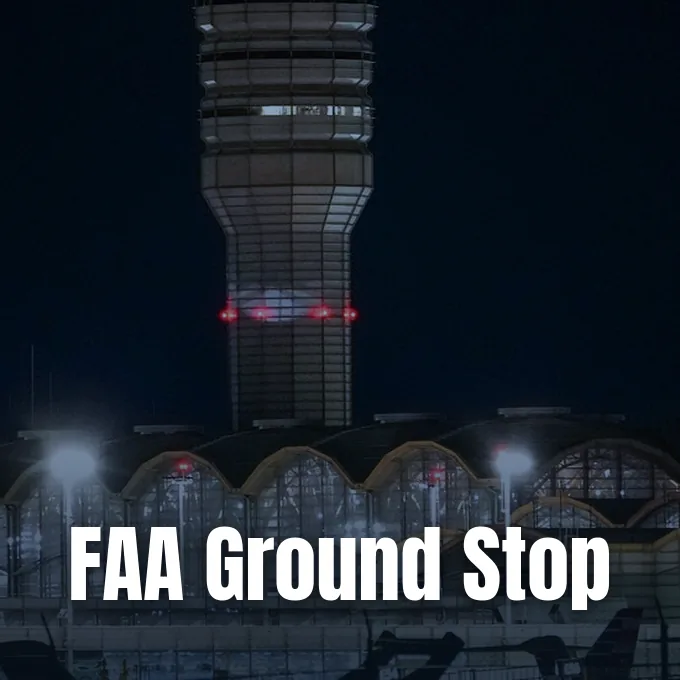
The Federal Aviation Administration grounded all domestic flights in the United States on the afternoon of Nov. 13, 2026, leaving thousands of travelers stranded at airports from the East Coast to Texas [2]. Federal officials called the nationwide pause after outdated communication lines overloaded and cut off contact between air traffic controllers and pilots [3]. The event was only the third time this century that the agency ordered a complete domestic shutdown, following the terrorist attacks of Sept. 11, 2001, and an equipment failure three years ago [1, 2]. While planes remained parked on runways, federal leaders held press briefings to calm travelers, but their choice of words raised fresh doubts. The chaotic FAA ground stop showed how public reassurance can falter when spokespeople try to dismiss threats that travelers had not yet considered [1].
Shutdown on a Friday Afternoon
The federal directive arrived at about 4 p.m. Eastern time, instructing all departing aircraft across the country to stay on the runway. The Federal Aviation Administration cited emergency safety reasons for the order, which lasted for about four hours before technicians cleared flights shortly after 8 p.m. [3]. Stranded passengers crowded boarding gates at major hubs, including Raleigh-Durham International Airport in North Carolina and George Bush International Airport in Houston [2]. The disruption hit travelers during peak Friday traffic and disrupted weekend schedules, including college sports travel in the Southeastern Conference [1]. Homeland Security Secretary Markwayne Mullin said that flights were held “out of an abundance of caution” while technicians worked to restore normal operations [3].
College athletic trips felt the immediate shock of the travel halt. The University of South Carolina football team had flown out earlier on Friday, but the university marching band remained trapped at the airport for hours [1]. Transportation Secretary Sean Duffy posted on X that communications problems hit all air route traffic control centers. Duffy said that technicians were investigating the issue as departures stalled [3]. The sudden pause left travelers searching for answers while airport terminals filled with confused crowds [1].
Messaging Flaws in the FAA Ground Stop
During an afternoon briefing, Homeland Security Secretary Markwayne Mullin told reporters that “everybody’s safe” and that flights were accounted for as they landed. Mullin insisted that the United States faced no immediate threat and stressed that the event was not “another 9/11”. He repeated to the press that there was no indication of a “nefarious attack” behind the shutdown [3]. By repeating the word nefarious across national networks, federal spokespeople introduced an idea that alarmed listeners instead of calming them. Crisis communications scholar Shannon A. Bowen from the University of South Carolina said that introducing criminal or foreign interference into the briefing created an unintended controversy [1].
Shannon A. Bowen, writing in The Conversation with Naomi Schalit, pointed out that bringing up nefarious actors suggested state hackers or cyber threats might be involved. Bowen said it would have been better to state plainly that evidence showed a hardware problem rather than a cyberattack [1]. When asked later if a cyberattack or artificial intelligence intrusion occurred, Mullin said officials were not ruling anything out [3]. That comment fueled public anxiety instead of resolving it [1].
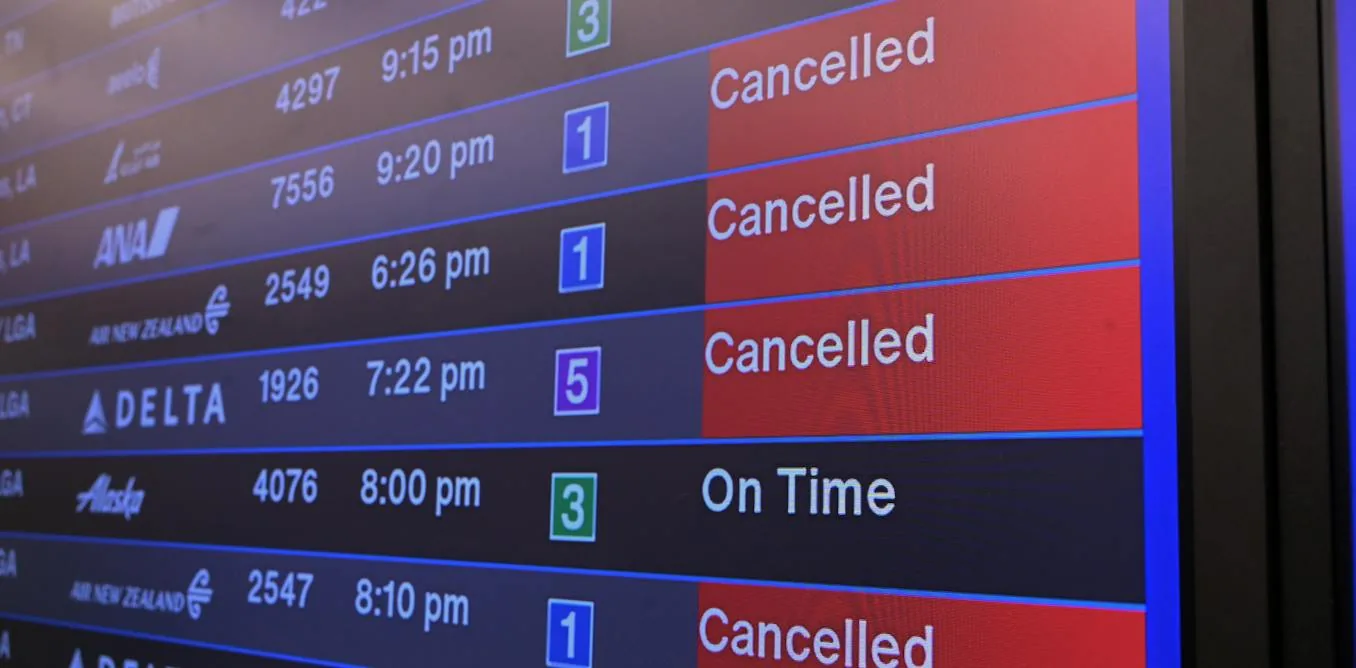
Effective crisis response requires spokespeople to fill an information vacuum quickly and with accuracy. As Bowen said, delaying public comments invites false rumors, but introducing frightening ideas creates new panic. The early briefing turned a technical hardware failure into a debate about national security. Instead of explaining the overloaded router breakdown, federal officials spent valuable briefing airtime denying public comparisons to the terrorist attacks of Sept. 11, 2001 [1, 3]. That messaging misstep overshadowed the operational work of restoring flight schedules [1].
Decades of Aging Equipment
The root cause of the crisis involved analog telecommunications equipment that has operated for decades [2]. Outdated switches and routers overloaded and began sending inconsistent data, forcing the agency to halt departures. Technicians discovered that routers became overwhelmed by data traffic, leading directly to the decision to shut down the nationwide network [3]. The New York Times reported that federal air traffic communications still depend on analog copper wire, floppy disks, and alphabetical keyboards so old that the FAA struggles to find spare parts [2]. Transportation Secretary Sean Duffy said at the White House that the agency operates “an incredibly old air traffic control system” that needs comprehensive modernization [3].
Last year, Congress approved $12.5 billion in funding to modernize federal air traffic control facilities after earlier equipment outages disrupted flights at Newark Liberty International Airport [2]. Duffy told reporters that the agency needs Congress to authorize $50 billion to overhaul the national system [3]. Shannon A. Bowen noted that officials have requested $30 billion or more for long-term repairs. While federal leaders asked for money, stranded passengers wanted to know why malfunctioning hardware (amounting to 17 of 22 key routing units) forced a total national shutdown instead of regional diversions [1].


Early Warning Signs and Past Outages
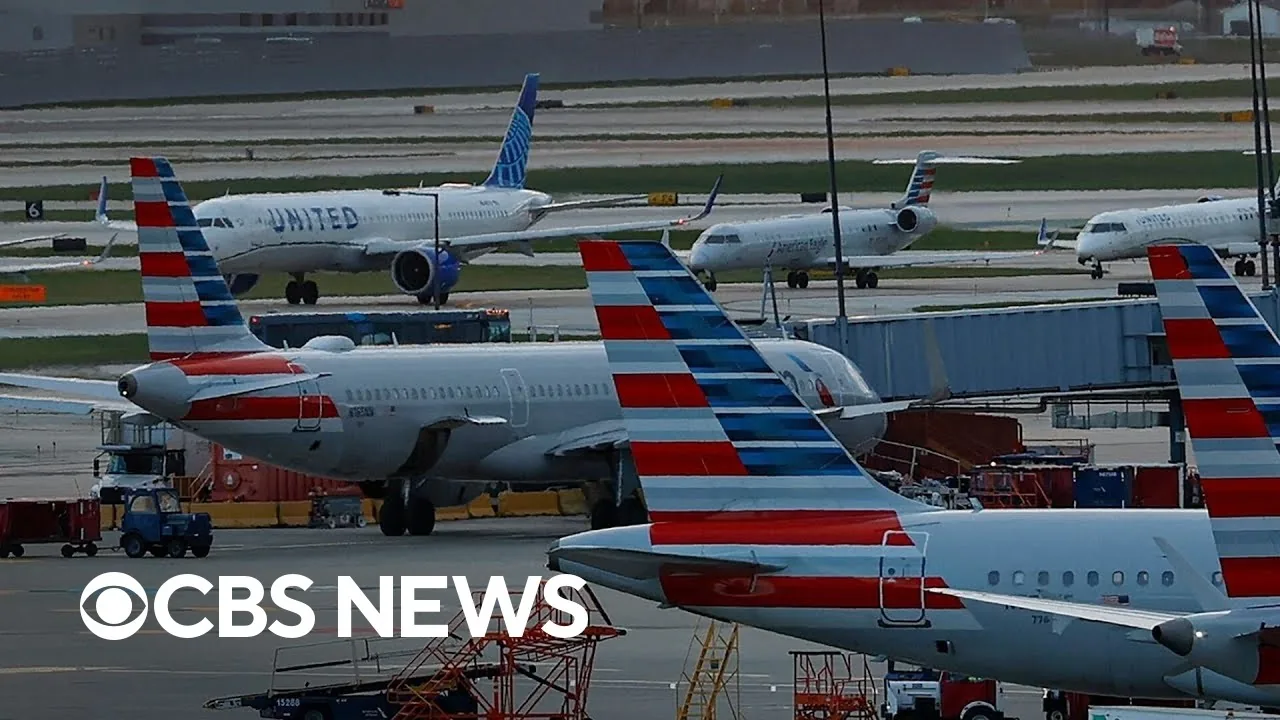
Recent travel disruptions offered clear signs of trouble before the November shutdown. Less than two months earlier, a circuit failure and a severed fiber optic cable caused major ground stops and delays at airports along the East Coast. In October, contractors accidentally cut fiber lines near Raleigh-Durham International Airport in North Carolina and George Bush International Airport in Houston. These recurring episodes highlighted persistent vulnerabilities in communication links between air traffic controllers and commercial cockpits. Federal authorities faced repeated warnings that backup systems lacked the redundancy needed to prevent widespread travel interruptions [2].
Crisis scholars classify these earlier breakdowns as prodromes, or early warning signs of an impending systemic emergency [1]. Steven Fink outlined this pattern in Encyclopedia of Crisis Management, showing how organizations often overlook warning signals before acute failures occur [4]. Bowen said that the ground stop three years ago served as an unmistakable warning sign for the FAA. Transportation Secretary Sean Duffy acknowledged these persistent infrastructure risks, warning travelers that “you will have more” ground stops until the agency replaces its fragile network [1, 3].
Public Trust After the FAA Ground Stop
Public trust suffered because federal officials mixed political funding requests with emergency updates. Transportation Secretary Sean Duffy and Homeland Security Secretary Markwayne Mullin addressed the media from the White House, where they pressed lawmakers for billions of dollars in infrastructure funding [1, 3]. Bowen argued that while cabinet secretaries have the prerogative to raise policy goals, they should have prioritized the immediate needs of stranded passengers. Travelers needed practical details about flight safety and departure schedules rather than political debates about federal budgets [1].
Travelers also questioned the timing and scope of the response. Shannon A. Bowen asked why technical teams failed to restart overloaded routers overnight before travelers arrived at gates. Bowen also noted that releasing bad news on a Friday afternoon fits a common organizational habit. Companies and public agencies often disclose negative developments on Friday the 13th because public expectations of misfortune can soften the initial shock. For thousands of stranded passengers, however, the timing offered little comfort [1].

The handling of the FAA ground stop left lingering doubts among air passengers. Federal spokespeople claimed the system was safe, yet they admitted that more shutdowns could happen at any moment [1, 3]. Mullin also had to dismiss rumors connecting the flight stoppage to recent widespread technical problems with Microsoft Outlook [3]. When agencies send mixed signals during a crisis, travelers find it hard to feel secure about future flights [1].
How Agencies Can Improve Response
Crisis communication experts recommend that agencies adopt transparent, proactive protocols to protect public confidence. Shannon A. Bowen advised that federal authorities should notify the public in advance whenever technicians consider a nationwide pause. Giving advance notice allows families and business travelers to adjust plans or delay trips before arriving at crowded airport terminals. Federal agencies should also consult commercial airline industry representatives to coordinate ground logistics and minimize passenger disruption during unexpected system outages across major transit hubs [1].
Aviation leaders must also refine their operational contingency plans. If 17 out of 22 routers fail, the Federal Aviation Administration could implement partial, regional ground stops rather than halting air traffic across the entire country. Clear, factual messaging remains the best safeguard against public panic during an unexpected technical failure. Instead of denying dramatic rumors, officials build lasting credibility when they explain technical problems simply, share known facts promptly, and treat travelers with direct respect [1, 3].
- ONLINE NEWS Bowen, S. A., & Schalit, N. (2026). National ground stop response highlights critical errors in public reassurance – saying ‘nothing nefarious’ did the opposite of quelling public concern. The Conversation. [Article Link]
- ONLINE NEWS Demirjian, K. (2026). Ground Stop Highlights Chronic Vulnerabilities in Air Traffic System. The New York Times. [Article Link]
- ONLINE NEWS Garrison, J. (2026). FAA’s nationwide ground stop not ‘another 9/11,’ federal officials say. USA TODAY. [Article Link]
- ACADEMIC JOURNAL Fink’s Crisis Life Cycle. (2013). Encyclopedia of Crisis Management. [Article Link]
- WEBSITE Bowen, S. (2026). National ground stop response highlights critical errors in public reassurance – saying ‘nothing nefarious’ did the opposite of quelling public concern. [Article Link]
APA 7: PerEXP Teamworks. (2026, November 15). FAA Ground Stop Sparked Public Alarm After Network Failure. PerEXP Teamworks. https://perexpteamworks.com/en/faa-ground-stop-reassurance-errors/


