






British semiconductor startup Fractile has raised $720 million in Series C funding to speed up development of its purpose-built artificial intelligence hardware. The transaction values the four-year-old firm at $7 billion, up from the $1.1 billion valuation it secured six months earlier when closing its prior funding round [2]. Backed by Britain’s Sovereign AI Fund, the company will use the capital to build Fractile AI chips designed to relieve chronic memory bandwidth bottlenecks in data center clusters. First chip shipments remain scheduled for next year [1].
Investors Backing Fractile AI Chips
Thrive Capital, Founders Fund, Lightspeed Venture Partners, and Redpoint led the syndicate. Alphabet backed the round [2]. Redpoint also contributed. Institutional backers joined the investment group, including DST Global, BlackRock, and the British Business Bank, while early venture backers Accel, Conviction, Cocoa, Factorial, Felicis, Gigascale, and Kindred returned to provide additional capital [3].
The $7 billion valuation grew from May 2026, when Fractile secured $220 million at a valuation of roughly $1.1 billion. That funding jump multiplied the company’s valuation more than six times in roughly half a year [5]. People familiar with the transaction told the Financial Times that private funds wanted exposure to silicon startups that target machine learning inference rather than model training. British government officials estimated the valuation at over £5 billion, placing Fractile on par with major British tech businesses such as Revolut. Other participants in the syndicate included Bain Capital Ventures, T. Rowe Price, Shopify Ventures, and Balderton, giving the company resources to expand operations across Britain as it prepares to commercialize its technology [2].

Venture investors have funded several alternative architectures this year, including when SiMa.ai reached a $1.45 billion valuation for physical AI chips designed for edge workloads. British officials have paired software research with local compute systems to keep home-grown developers from relying solely on foreign infrastructure. Founder Walter Goodwin described state backing as a driving force for building frontier technology in London, where the company maintains core engineering teams with additional design offices in Bristol, Palo Alto, and Taipei to recruit international chip talent [2]. The startup continues to hire chip designers in all four locations [3].
The Memory Bandwidth Bottleneck
Fractile was founded in 2022 by Walter Goodwin, a former researcher at the University of Oxford who saw memory access as the true barrier for artificial intelligence models. Goodwin studied at Oxford [5]. While computing performance surged over the past 25 years by roughly a millionfold, memory bandwidth grew only about 40 times over that same period. That created a 25,000-fold gap between how fast processors can calculate data and how quickly they can pull that data out of memory banks. Goodwin told the Financial Times that today’s frontier models are effectively “drinking through a straw” when processing complex user queries [2].
Inference is the computational stage where trained models evaluate incoming prompts, generate text, and execute digital agent workflows. Most servers struggle during this phase because neural networks spend more time waiting for parameter data to travel across memory buses than performing actual arithmetic calculations. Goodwin argued that real-world AI utility will remain capped until processors retrieve memory fast enough to match compute throughput [2].
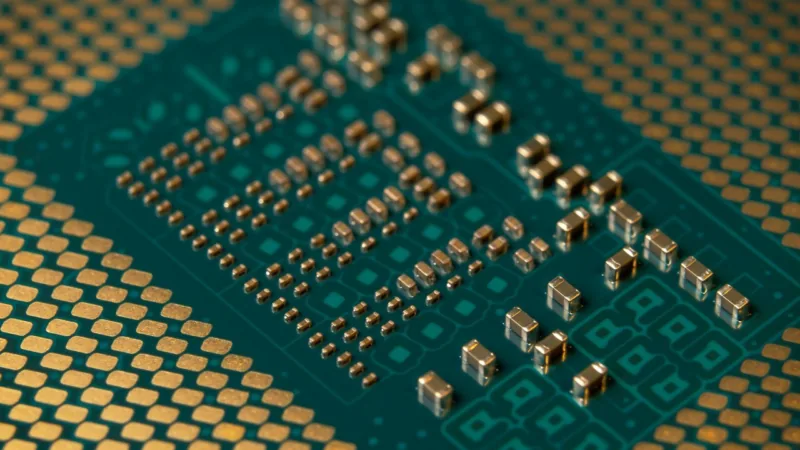
The memory bottleneck has grown more troublesome with the rise of agentic AI, where autonomous software agents tackle chained reasoning tasks that run continuously for hours or days. When software agents execute multi-step tool calls, generate software code, and parse long documents, memory bandwidth limits create expensive delays that drive up operating costs. Philip Clark of Thrive Capital said the inference market could soon become at least as large as the market Nvidia is addressing today. Clark noted that autonomous agents require sustained, low-latency memory access that conventional server clusters struggle to supply without heavy performance penalties [2].


Stacked DRAM Architecture
Most suppliers of AI accelerators rely on high-bandwidth memory, known as HBM, to move information between memory stacks and processor cores. SK Hynix and Micron supply most of that memory. HBM remains expensive. The technology puts heavy supply pressure on fabrication facilities, limiting hardware availability across the industry. Fractile chose a different approach after executing an architectural pivot away from conventional memory modules [2].
Instead of relying on standard HBM modules placed next to the processor, the company packages dynamic random-access memory directly on top of logic in a three-dimensional stack. Placing memory straight onto the silicon die shortens the physical distance that electrical signals must travel across the chip, which reduces latency while bypassing the traditional compromise between storage capacity and communication bandwidth that limits standard accelerator architectures in high-throughput environments [2]. Fractile AI chips use this custom DRAM approach to achieve higher memory bandwidth than HBM while offering far more storage capacity than static random-access memory, or SRAM [3]. Goodwin claims this stacked configuration can make inference runs up to 10 times faster than existing server configurations [2]. To support this hardware, the engineering team built a custom machine learning compiler that optimizes how large language models execute instructions directly on the layered silicon [1].

The British government backed the venture as part of its broader technology initiatives, following state funding for an AI biosecurity lab with OpenAI and Anthropic to examine digital safety. Ministers stated that the Sovereign AI Fund aims to secure a greater British stake in the physical hardware underpinning the national economy. Officials view domestic chip design as an important asset for economic resilience, especially as global demand for artificial intelligence infrastructure continues to outpace available semiconductor supply [1].
Competing in the Inference Market
Fractile enters a semiconductor landscape where Nvidia holds dominant control over data center infrastructure [6]. Groq sold to Nvidia. Nvidia also introduced a dedicated inference chip in March to solidify its position against custom silicon projects [2]. Cloud hyperscalers have deployed custom silicon to lower their reliance on commercial graphics processors [6].
Google relies on its proprietary Tensor Processing Units, Amazon deploys its Trainium and Inferentia chips, and Microsoft is rolling out its Maia accelerators to power internal AI services [6]. Venture capital has also backed a wave of specialized hardware startups aiming to challenge established suppliers. Companies such as Etched, Axelera, MatX, and fellow British developer Olix are building custom architectures tailored for deep learning workloads [2]. Older chip ventures like Cerebras, Graphcore, and SambaNova have similarly spent billions of dollars attempting to break into production data centers. The competitive environment carries serious risks, as tech executive Elon Musk recently warned that dozens of compute providers could fail if infrastructure supply exceeds paying market demand in the coming years [6].

Despite the crowded field, Fractile generated early interest from frontier AI developers [2]. The Financial Times reported that Anthropic held preliminary talks about becoming an early customer for the startup’s hardware, though the discussions remain exploratory and no binding commercial contract has been finalized between the two companies. Anthropic has not signed a finalized deployment deal [5]. Securing early customer commitments is necessary for new chip designers because model builders must adapt their software pipelines to run on novel architectures. If Anthropic or other major lab operators adopt the hardware, Fractile would gain a proven reference deployment to attract cloud operators and enterprise clients [2].
Roadmap for Fractile Chips
Fractile’s multibillion-dollar valuation rests on architectural designs and laboratory prototypes, as the startup has not yet delivered a commercial product to market [2]. Turning a novel chip layout into functional silicon requires clearing fabrication milestones, securing production slots at major foundries, and delivering stable software drivers that developers trust [6]. In a public message on LinkedIn, founder Walter Goodwin acknowledged that “there is still a lot of work ahead” before the company can prove its stacked DRAM design at scale [1].
The company stated that the new capital will allow it to produce its first hardware systems next year, targeting initial silicon fabrication and data center trials in 2027. Initial commercial deployments are planned for 2027. Fractile AI chips will face close scrutiny once benchmark samples reach testing labs, where independent engineers will measure whether the 3D-stacked DRAM delivers its promised tenfold speed boost during real-world inference runs on demanding frontier models [5]. To bridge the gap between raw hardware and model execution, the startup is hiring engineers across London, Bristol, Palo Alto, and Taipei to polish its compiler and integration toolkits [3]. The compiler stack must ensure that standard machine learning frameworks can execute models directly on the custom architecture without requiring developers to rewrite core algorithms or alter existing training workflows [1].

Building custom semiconductors requires patience and steady capital, especially when competing against established incumbents with mature software ecosystems like Nvidia’s CUDA [6]. If Fractile delivers on its efficiency targets, its stacked DRAM architecture could offer cloud operators a cost-effective alternative for running continuous agentic workflows. For now, the British startup holds $720 million in fresh capital and the backing of global venture firms as it prepares to turn its memory-first prototypes into working hardware [2].
- ONLINE NEWS Heim, A. (2026, November 11). With $720M round, Britain’s Fractile gets a leg up in the race for AI chips. TechCrunch. [Article Link]
- ONLINE NEWS Stanciuc, A.-M. (2026, November 11). London’s Fractile raises $720M for memory-first AI chips and hits $7B valuation. The Next Web. [Article Link]
- ONLINE NEWS BusinessCloud. (2026, November 11). AI chip company Fractile reveals investors behind $720m Series C. BusinessCloud. [Article Link]
- ONLINE NEWS Gate AI Horizon. (2026, November 11). Fractile Raises $720M Series C for AI Chips Backed by UK Sovereign Fund. Gate.com. [Article Link]
- ONLINE NEWS Lopez, D. A. (2026, November 11). Fractile raises $720M to advance AI chip development. Crypto Briefing. [Article Link]
- ONLINE NEWS Oretan, B., & The Tech Buzz Team. (2026, November 11). Fractile Lands $720M to Challenge Nvidia in AI Chip Race. The Tech Buzz. [Article Link]


