






Google published a showcase of outside developers on October 23, detailing interactive tools and games created with its flagship model [1]. The public demonstration shares five projects built after the company widened access beyond initial cybersecurity partners [2]. Through Google Antigravity and public developer interfaces, Gemini 4 Argon builders generated real-time hazard globes, flight physics, and multiplayer browser environments [1]. Before opening access to creative builders, Google initially restricted the model to enterprise security partners, as detailed in coverage of the Gemini 4 Argon cyber defense launch. The rollout comes as Google releases its first major flagship model in about ten months [3].
How Gemini 4 Argon Builders Model 3D Scenes
Google writer Kimberly Fusaro shared the five community projects on October 23, presenting them as evidence of multi-step reasoning across visual coding tasks. Independent tester Lumina tested the model by asking it to simulate a seaplane floating on open water. Instead of outputting static images, the model rendered three-dimensional motion with water movement, reflections, and ambient lighting coordinated at the same time [1]. Tech analyst Yash Thakker said the seaplane build echoed physics scenes that leaked on Arena prior to launch, turning that test into an informal benchmark for visual coding. The model balanced physics equations and geometry calculations in a single script without human intervention, helping Lumina simulate vehicle movement on open water [1, 4].
The showcase stands as the first official post where Google credited developers outside its own research labs [4]. RuntimeWire reported that these creator demos make Google’s pitch for extended coding tangible, but left commercial reliability and long-term costs untested. Alex Patrascu, co-founder of MASSIVE Studios, joined the showcase after building a hazard monitor [2].
Creator The Bugged Dev supplied a single image of a Gothic Victorian carriage. Gemini 4 Argon generated a working three-dimensional asset with functioning doors, movable windows, flickering oil lamps, and an undercarriage suspension that reacts realistically when traveling over bumps in the simulated road [1]. AI investor Justine Moore tested visual synthesis without supplying any image files or historical data. The model autonomously gathered machine specifications, cleaned up archival photos, and assembled an interactive museum timeline that charts Apple hardware developments from the 1976 Apple I to the 2024 Mac mini. Each computing era featured interface styling matched to that decade [5].
Hazard Globes and Turbofan Simulations
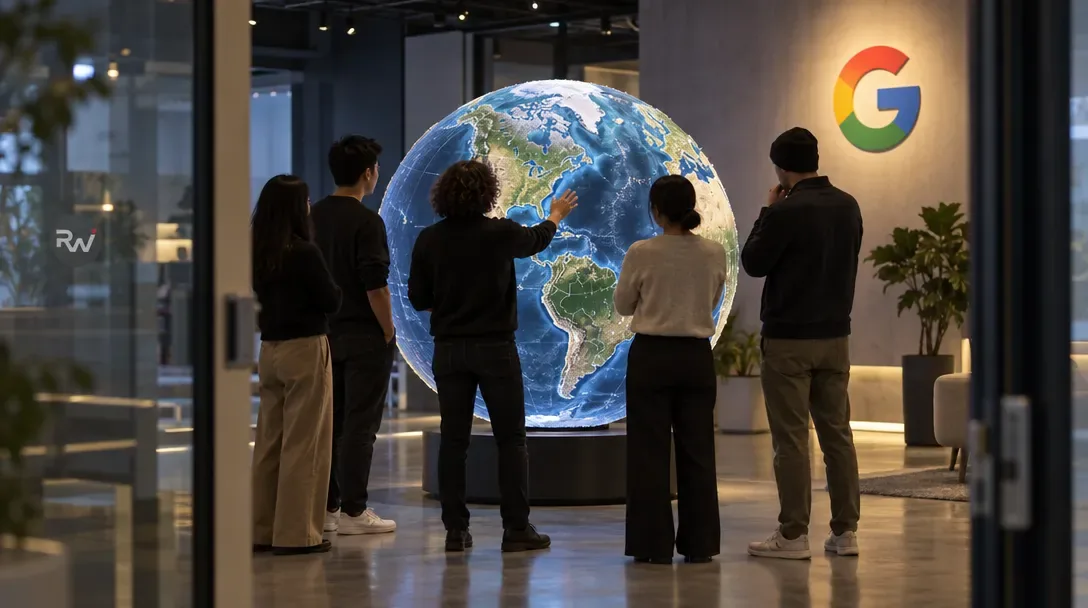
Turning scientific data feeds into three-dimensional graphics served as a core demonstration for the model. Using Google Antigravity on his local machine, Alex Patrascu combined wildfire feeds from NASA with earthquake data from the U.S. Geological Survey [1]. Patrascu built the interactive visualization in under five minutes [5].
His project, The Living Heartbeat of Earth, animates seismic shockwaves and wildfire hotspots across a globe. Patrascu tested the model for a week [5]. Ashutosh Shrivastava paired the model with Blender and Three.js to construct an interactive simulation of a high-bypass turbofan jet engine, complete with live measurement readouts and part-by-part component specifications. The system rendered every turbine blade before assembling the engine [1].
Sundar Pichai revealed earlier that internal Google teams used a similar Blender workflow through the Model Context Protocol to create an exploded-view animation from a raw Pixel CAD file. That internal project ran 1,000 iterative review loops, driving Blender to check renders and refine camera paths until every component aligned [4]. Physics engines built by community developers showed similar mechanical precision. Linus Ekenstam used the model to write a full three-dimensional physics engine from scratch in Rust. The entire engine weighed just 83 KB, and its compiled WebAssembly package came to 61.5 KB while including physics calculations, lighting, shadows, and a rough water plugin. When tested in a web browser on a MacBook Pro M5, the engine computed 20,000 physical elements and 2,000 concurrent impacts at 120 frames each second [5].

Playable Browser Games and Legacy Ports
Game demos pushed the model beyond single-player mechanics into real-time networking and legacy code recompilation. Developer Chong-U built Backyard Rascals, a multiplayer capture-the-flag browser game where cartoon animals sprint, collide, whack opponents, and cheer in real time. The build required coordination of player states across web sockets [1].
On Google’s official launch thread, the company demonstrated a playable Three.js horror game with jump scares and a WebGL Mahjong game with spring physics effects created on Antigravity [3]. Creator Bijan Bowen tested the model on legacy software preservation by giving it source files for the year 2000 Windows game Insane. Bowen prompted the model: “We will need a byte-identical recompile of it so it will run natively and smoothly on this system, included in the mods packaged within. Improve performance as well.”. Argon required about 2.5 hours to complete the initial Linux port [5].
Native screen resolution adjustments took only minutes. Using the /goal mode in Antigravity, Matthew Berman generated a ten-level obstacle course inspired by Fall Guys, pushing the agent through iterative correction loops to eliminate character collision glitches until the title became fully playable. Aditya Shrivastav generated a 60-second JavaScript animation explaining how transformer attention layers process tokens. Educator Krish Naik also built a virtual heritage tour app covering 56 giant pillars at Vitthala Temple and 957,000 bulbs at Amba Vilas Palace, finishing the TypeScript project in 30 minutes [5].
What Gemini 4 Argon Builders Pay for API Access
Access to the new system depends on subscription tiers and API developer agreements [1]. General users can’t run Argon on free plans; Google requires a paid Google AI Pro or Google AI Ultra subscription to use the model in the Gemini app and AI Mode in Search [3].
For Gemini 4 Argon builders using the API in AI Studio or the Gemini platform, Google established promotional launch pricing running through November 30, 2026. Under this introductory rate, developers pay $2 per million input tokens and $10 per million output tokens. Starting December 1, 2026, API pricing will rise to standard list rates of $4 per million input tokens and $20 per million output tokens, matching list rates for Claude Opus 5.5 [3]. Cached input tokens offer savings for extended agent sessions, costing 95% less than standard input pricing [5].

The model supports a shared context window of 1,048,576 tokens for input and output, raised from 64,000 tokens in prior releases [3, 5]. Google also offered 10,000 research scientists six months of free access to the top Antigravity tier through academic selection programs. Yash Thakker pointed out that long multi-agent review loops consume significant token volume during development [4].
Engineering Benchmarks on Real Codebases
Independent benchmarks present a mixed picture of where Argon leads and where it trails competing frontier models. According to the Google DeepMind model card, Argon leads the field on DeepSWE v1.1 with a score of 77.9% for long-horizon software engineering. It also tops the Vals Index for economic and legal tasks at 68.9%, ahead of Claude Opus 5.5 at 67.0% and GPT-6 Astra at 63.1%. However, Argon trails Opus 5.5 on Terminal-bench 4.0 by 57.4% to 66.4%, and falls behind Astra on FrontierSWE v2 by 55.0% to 65.5%. The independent composite intelligence index by Artificial Analysis ranks Argon behind both Claude Opus 5.5 and Sonnet 5.5 [3].
Google tested the model on its own infrastructure to measure real software engineering gains. In an overnight test on the open-source google/adk-python repository, Google engineers George Weale, Bo Yang, and Andrew Biernat tasked Argon with removing framework overhead across roughly 205,000 lines of code and 800 source files. Running unattended for 11 hours with /goal mode active in Antigravity, the model audited 16,892 unit tests and proposed six code optimizations across 32 files. Maintainers accepted two changes, speeding up package imports by 21% while reducing session initialization delays by roughly 40% across extended runs [6].

Internal telemetry showed similar production impact across Google’s engineering teams, where code submitted by agents rose by more than 35% and code rollbacks dropped by nearly one-third [3]. Profiling in Antigravity helped reduce processor usage for YouTube comment feeds by half, after the model identified redundant emoji rendering accounting for 45% of server overhead [4]. Early feedback from Gemini 4 Argon builders shows that human code review remains necessary, as maintainers rejected four of six proposed ADK changes to prevent breaking public schemas. The tool speeds up refactoring, but developers still need to subtract what doesn’t fit maintainer rules [6].
- PRESS RELEASE Fusaro, K. (2026, October 23). See what 5 builders are making with Gemini 4 Argon. Google Blog. [Article Link]
- ONLINE NEWS RuntimeWire Staff. (2026, October 24). Five builders use Google’s Gemini 4 Argon to make interactive 3D projects. RuntimeWire. [Article Link]
- ONLINE NEWS Bisc. (2026, October 15). Google Gemini 4 Argon Is Now Fully Available: 5 Official Examples Show How to Generate 3D Games from a Single Prompt. Gate News. [Article Link]
- WEBSITE Thakker, Y. (2026, October 14). Top 10 Gemini 4 Argon Use Cases (With Demos). explainx.ai Blog. [Article Link]
- WEBSITE Saini, K. (2026, October 15). How Good is Gemini 4 Argon? Users Share Real Examples. FavTutor. [Article Link]
- WEBSITE Weale, G., Yang, B., & Biernat, A. (2026, October 13). Optimizing a 200,000-line Python codebase overnight with Gemini 4 Argon. Google for Developers Blog. [Article Link]


