




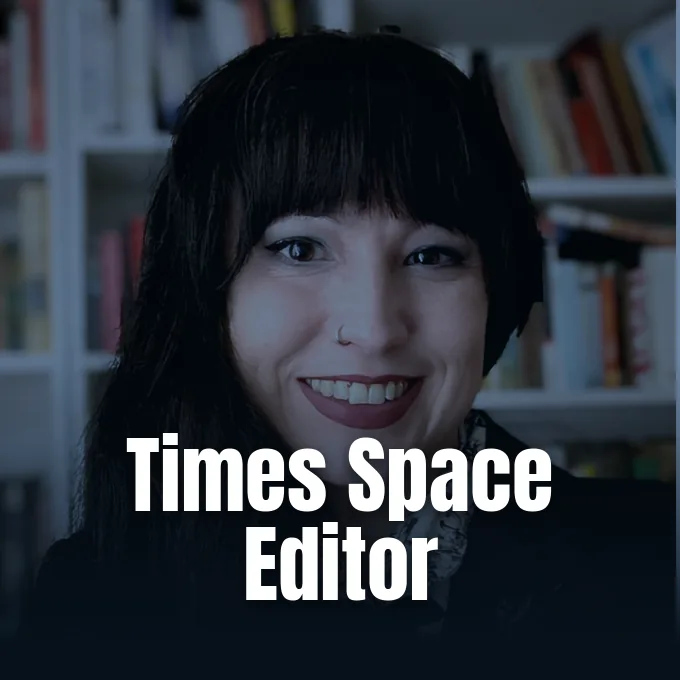
The New York Times appointed science journalist Victoria Jaggard as its new Times space editor to lead astronomy and space exploration coverage on the Science desk. The move follows months of planning after the splashdown of Artemis II in April prompted staff changes across the newsroom [1]. Science editor Bill Wasik announced that Jaggard would guide cosmic coverage, with her first day set for Monday, Sept. 14 [2].
Who Is the New Times Space Editor?
Victoria Jaggard is a science journalist and editor who previously led newsroom reporting teams at Science News, The Washington Post, and National Geographic before arriving at the Science desk [1]. She built her career around translating difficult scientific research into clear, engaging stories for the public, before taking on the position of Times space editor to oversee coverage of the cosmos [2]. Her background combines broad newsroom leadership with an eye for both breaking news and longer feature reporting as robotic probes and human missions travel deeper into space. The Science desk sought a leader who could guide reporters through fast-moving missions and complex astronomical findings [1].
Colleagues point to her strong science background and approachable editorial style as central strengths for newsroom reporting. Carolyn Johnson, a science writer at The Washington Post who also joined The New York Times, worked closely under Jaggard and described her unique approach to newsroom science journalism [1]. “Victoria brings a deep well of science knowledge, strong instincts for great stories and a deft touch as an editor. The real secret about her is that while she’s proudly geeky, she is also preternaturally cool — a quirky, stylish colleague who can go deep on the nerdiest topics but also spot and elevate ideas, concepts and news to make the world of science interesting and relevant to pretty much anyone,” Johnson said [2].
Her editorial perspective connects factual accuracy with everyday relevance, helping readers understand why fundamental research matters as national space agencies and private aerospace companies prepare new expeditions [1]. On the Science desk, she directs coverage of astronomy and planetary science as missions push farther into space [4]. She emphasizes clear explanations of scientific methods so readers see how researchers reach their conclusions [1]. Her hiring gives the newsroom a focused leader for an active era in space exploration [2].

New York Times Space Editor Transition Follows Artemis II
The opening on the Science desk emerged when Michael Roston transferred to the Express desk after guiding coverage of the lunar flight. Roston had coordinated reporting during an ambitious period of work surrounding Artemis II, which concluded when the spacecraft splashed down in April after circling the Moon. The Science desk had planned to fill multiple seats with editors, but leadership recognized that one hire would need to step into major responsibilities for space coverage. In short, the newsroom needed a permanent space editor [1].
Four months after Artemis II splashed down, the company completed its search and announced the hire [1]. The public announcement was published on August 19, 2026, and distributed through Public Technologies (PUBT) at 14:33 UTC [3]. Wasik said that Jaggard was among the brilliant minds in science journalism, bringing confident skills and big ideas that stretch far beyond astronomy to benefit the entire newsroom [1]. Her arrival concluded a four-month search for an editor who could manage coverage of lunar flights and robotic missions [2].
The transition comes during an active era for space missions as agencies plan new voyages to the Moon and deep space. Visual and contextual storytelling plays a central role in how newsrooms cover the cosmos, much like orbital views of Earth captured by astronauts at night show the planet from orbit [1]. Now, as the new Times space editor, she guides the desk through breaking launch news and ongoing cosmic surveys [2].
From Chemical News to National Geographic Missions
Jaggard began her career in science journalism after graduating from Lehigh University, joining Chemical & Engineering News as a reporter and editor where she first explored science communication. During her time with the publication, she launched Reel Science, a column evaluating commercial films according to their factual scientific accuracy. The Times published a feature discussing the project, showing her early ability to bridge pop culture and scientific inquiry. She showed that popular entertainment could serve as an entry point for teaching basic scientific concepts [1].
She then moved to National Geographic, where she reported on several prominent space missions. Her reporting covered the touchdown of the Phoenix Mars lander on Martian soil, the final flight of the space shuttle program, and how pressurized spacesuit gloves cause finger pain for astronauts. Her earlier career also included supervising physical science reporting for New Scientist and managing online science stories for Smithsonian magazine before she returned to National Geographic [1].

After returning to National Geographic, Jaggard earned successive promotions until becoming executive editor for science. In that leadership position, she organized an extensive editorial series commemorating fifty years since the Apollo 11 lunar landing, directing packages that examined the legacy of lunar exploration. That anniversary effort combined print features, online articles, and multimedia assets to examine the legacy of lunar exploration [1]. The project showed her skill in coordinating complex editorial packages around key moments in space history [2].


What Stories Shaped Her Washington Post Tenure?
At The Washington Post, Jaggard served as deputy editor on the health and science desk, leading a team of reporters covering a wide range of scientific disciplines. Her reporters explored varied beats ranging from how ground espresso behaves under pressure to workforce shortages at the country’s leading rocket development facility. She guided her team to find the human and scientific stakes behind both small experiments and large aerospace institutions [1]. Her editing helped connect laboratory research with general interest [2].
Her work at the paper put particular emphasis on multimedia storytelling and responsive digital coverage. While editing at the paper, she spearheaded an online multimedia presentation that examined international warnings sparked by the massive volcanic explosion in Tonga during 2022. She also coordinated collaborative real-time digital reporting during the 2024 total solar eclipse, organizing updates across newsroom desks as the lunar shadow crossed North American communities. Those efforts proved how digital formats can enhance scientific reporting during live events [1].

Her background in digital storytelling prepared her to handle fast-moving astronomical events on the Science desk. Similar editorial coordination is needed when newsrooms report on studies of stellar illumination through NASA’s Roman mission to understand the distribution of stars across the Milky Way [1]. Jaggard showed that live blogs and interactive tools can keep readers informed during major scientific events [2]. She carried those newsroom lessons forward into her subsequent editorial roles [1].
Digital Strategy and Science News Leadership
Before joining The Times, Jaggard served as executive editor of Science News, where she guided long-term editorial planning for the 105-year-old magazine as it expanded onto digital platforms. Her goal was to expand the publication’s reach across digital channels while maintaining its longstanding standards for factual accuracy. She created a revamped format for the weekly subscriber email newsletter, which she authored directly to discuss current research findings [1]. The newsletter established a direct platform connecting research news with readers outside traditional magazine pages [2].
In addition to the newsletter, she directed production of vertical video series designed to explain research findings to mobile audiences on newer social platforms. Short video storytelling allowed the publication to explain complex findings in quick, visual formats. She showed that rigorous science reporting could adapt to online video channels without losing depth [1]. Her work helped Science News connect with a broader readership on multiple digital platforms [2].

That background in digital platforms aligns with the operations of The New York Times Company. The company publishes its print edition newspaper seven days a week in the United States while distributing digital content through its website, specialized mobile apps, and podcasts. It also produces podcasts and products like Audio, Cooking, Games, Wirecutter, and The Athletic [3]. Jaggard brings experience across multiple formats to support the Science desk’s multimedia storytelling goals [1].
How the Space Editor Explores the Cosmos
On the Science desk, Jaggard now spends her days pondering the universe’s most pressing mysteries as she directs cosmic coverage [4]. In her new assignment as Times space editor, she oversees stories on planetary science, astrophysics, and spaceflight. She guides reporters as they explain fundamental physics and report on robotic missions exploring other worlds [1]. Her role helps keep complex research accessible and exciting for a general audience [2].
Astronomers continue to gather new data from space telescopes, prompting questions about how planetary systems form and how stars evolve. Reporting on these cosmic questions requires careful context, much like coverage of celestial debris investigations by NASA telescopes examining stellar remnants to reveal how massive stars explode. Jaggard works with reporters to explain what researchers observe and what questions remain unanswered [1]. That measured approach prevents overstating preliminary findings while showing genuine scientific progress [2].
With her background in magazines, newspapers, and multimedia platforms, her role as Times space editor brings seasoned direction to the Science desk. Her first day on Monday, Sept. 14 marked the start of a new chapter in the paper’s space journalism [1]. As private flights and international missions explore the Solar System, Jaggard is positioned to guide readers through the next generation of cosmic discovery across deep space [2]. Her leadership helps the newsroom report on the mysteries of the universe with curiosity and precision [1].
- PRESS RELEASE The New York Times Company. (2026, August 19). A New Times Space Editor. [Article Link]
- ONLINE NEWS Wasik, B. (2026, August 20). The New York Times names space editor. Editor and Publisher. [Article Link]
- ONLINE NEWS MarketScreener. (2026, August 19). New York Times : A New Times Space Editor. [Article Link]
- ONLINE NEWS The New York Times. (2026, October 11). The Times’s New Space Editor Has Her Eye on the Cosmos. [Article Link]
APA 7: TWs Editor. (2026, October 12). Victoria Jaggard Joins Science Desk as Times Space Editor. PerEXP Teamworks. https://perexpteamworks.com/en/times-space-editor-victoria-jaggard/


