




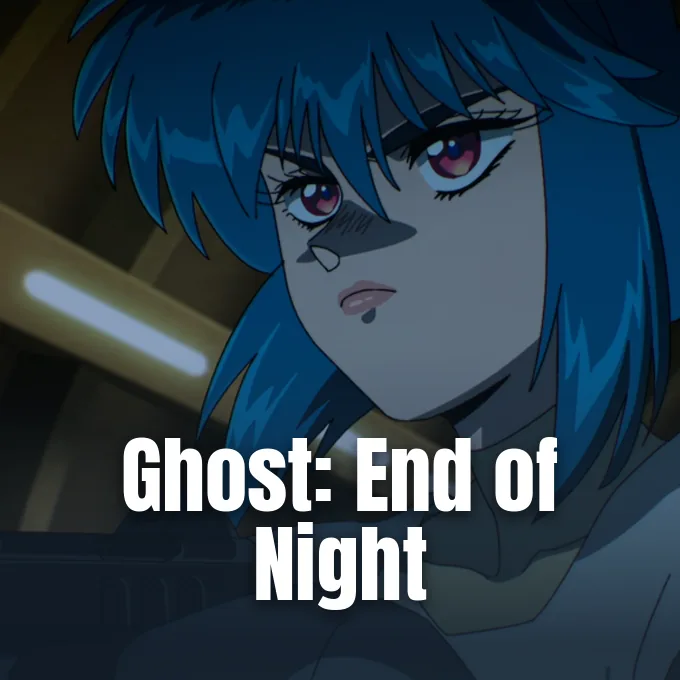
Director Shingo Natsume and animation studio Madhouse screened Ghost: End of Night at the Animation is Film festival in California on October 16, 2026, marking the director’s big screen debut ahead of an upcoming Japanese theatrical run. The science fiction feature, known in Japan as Ghost: Yoru no Hate, pairs existential storytelling with psychedelic visual sequences to explore a future where human beings no longer fear death [2]. Early critical reviews and casting updates arrived as distributor Bandai Namco Filmworks set its Japanese cinema release for February 11, 2027 [1].
Critical Response to Ghost: End of Night
The screening at the Animation is Film festival gave western moviegoers an early look at the production months before its Asian theatrical release. Critic Stephen Shin reviewed the movie for Anime News Network, writing that Natsume brings both arthouse sensibilities and blockbuster experience to his cinematic debut after directing television hits like Space Dandy and One-Punch Man. Shin gave the movie a B- overall grade, praising its visual polish while questioning its loose story structure. He described the creative vision by asking “What if Haruhi Suzumiya had an Emo Phase?”, contrasting its teenage angst against classic light novel power fantasies. The production avoids simple exposition, leaving viewers to piece together how society reached its state [1].
Natsume previously directed the original television series Sonny Boy, which explored parallel universes with math rock group Toe. His early background under Shinichirō Watanabe helped shape that loose pacing. With Ghost: End of Night, Madhouse gave him freedom to craft an unconventional movie that challenges mainstream anime conventions [1].
Shin wrote that in commercial animation, rare experimental movies of this kind usually come only from industry titans like Hayao Miyazaki with The Boy and the Heron or outside creators like Jinsei. He compared the thematic depth to the feature film Everything Everywhere, All At Once, noting how both stories use multiverse ideas to process personal dread. But Ghost: End of Night approaches existential themes through quiet detachment instead of swift comedic action. Key story beats arrive without familiar connective tissue, asking the audience to absorb mood and color rather than tracking a tight plot. Characters wander through realistic urban spaces that feel cold and distant [1].

Voice Cast Additions
Following the festival screening, the producers announced three additional voice actors through their official social media account. Kenjiro Tsuda plays Moby Dick, bringing his deep vocal delivery to the roster. Hiroki Yasumoto voices Karate, while Hiroshi Kamiya plays Ito. The trio joins a core lineup that drives the central dialogue [2].
The main roles feature Mayu Hotta as the young protagonist Nike and Issei Takahashi as her mentor Mas, who appears as Masu in festival notes [2]. Both actors bring years of live-action and voice acting backgrounds to their performances. Manga creator Natsume Ono developed the original character designs with sleepy eyes and subtle expressions [1]. Norifumi Kugai adapted those drawings for animation at Madhouse, continuing their creative partnership from the television series ACCA: 13-Territory Inspection Dept.. Scriptwriter Tomohiro Suzuki, who wrote Frieren: Beyond Journey’s End and ACCA: 13, shares original story credit with Natsume, Bandai Namco Filmworks, and Madhouse [2]. Suzuki gave the cast quiet, restrained lines that emphasize isolation [1].
The voice cast reflects Natsume Ono’s minimalist aesthetic, restricting emotional outbursts in favor of quiet tension. Characters speak with calm detachment, resembling people who feel alienated from their surroundings. This acting style matches the eerie stillness that defines the world of the film [1].

Virtual Reality in the Storyline
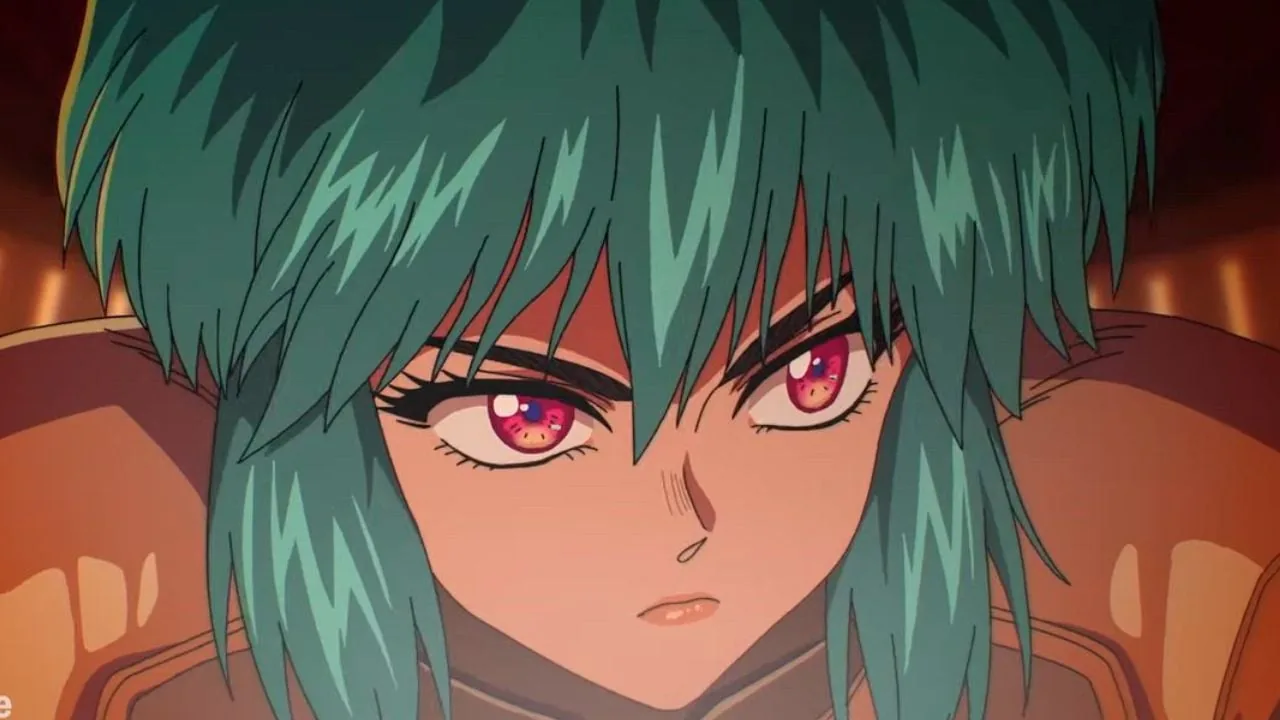
The story takes place in a future where technological advances have eliminated manual labor and fundamentally altered human culture. People upload their consciousness into a vast virtual network called the Starry Sky before dying, enabling memories to live forever so that society no longer fears death [2]. Survival ceases to be a daily struggle. Citizens pass their time with distractions. Nike works in a lauded post as an administrator of this system, holding the administrative authority to decide when living individuals must pass into the virtual afterlife. At night, she connects to the cosmos and watches kaleidoscopic flowers unfold across her vision, interpreting the strange blooms as spiritual filth produced by meaningless lives [1].
Nike believes she carries a sacred mission to cleanse this cosmic filth from reality. Her self-image borders on grand delusion, setting her apart from ordinary citizens who accept passive amusement. She keeps her distance from neighbors who seem content with routine diversions [1].
Her predecessor Mas offers a grounded perspective that challenges Nike’s detachment. Mas understands that anyone he cares for could disappear into the Starry Sky at any time, but he continues to value everyday tactile moments. He tattoos maps of visited places onto his skin, drinks coffee with milk and sugar to soften bitterness, and comforts a grieving pet owner with candy that never runs out. When Nike asks what makes something real in such an ethereal world, Mas answers that reality is “something you obtain with your own hands”. But he soon admits that holding onto anything stays impossible to guarantee. That realization forms the emotional core of their bond [1].

Visual Aesthetic and Soundtrack
Visually, Madhouse contrasted Nike’s vivid inner visions against bleak real-world backdrops. Psychedelic landscapes unfold whenever she taps into cosmic energy, while city streets appear muted and hazy. Shin wrote that the urban setting shares the isolating atmosphere of Silent Hill, making characters seem like strangers in their own town [1].
The musical direction stands out as a prominent aspect of the production, led by Japanese rock trio hitsujibungaku. The band rose to prominence with the song “When the Light Shines” for The Heike Story, later producing “More than words” for Jujutsu Kaisen and “Burning” for Oshi no Ko. For Ghost: End of Night, hitsujibungaku wrote six original insert tracks that channel raw grief into expressive rock anthems. Collaborator Ohzora Kimishima contributed a droning synthesizer score that ties the music together into a cohesive package. Shin wrote that the result feels like an animated concept album similar to Pink Floyd’s The Wall, building on the musical heights Natsume reached with Toe on Sonny Boy [1].
The audio design earned an A+ grade from Anime News Network, marking the soundtrack as the standout element of the screening. Kimishima’s synth textures underscore quiet scenes of contemplation, balancing the energetic rock songs. This rich soundscape keeps viewers anchored during slower narrative stretches [1].
Japanese Cinema Window for Ghost: End of Night
Japanese audiences will evaluate the movie when it arrives in domestic theaters on February 11, 2027 [2]. Distributor Bandai Namco Filmworks scheduled that winter date after screening the work at the Animation is Film festival to gauge international reactions ahead of domestic promotion. The winter schedule allows Madhouse months of preparation. Shin suggested that while casual moviegoers might struggle with the fragmented plotting and surreal pacing, dedicated animation fans will value its bold arthouse commitment. It remains an uncompromising personal statement [1].
The release joins a wider lineup of speculative science fiction backed by Bandai Namco Filmworks. The distributor recently announced that Science SARU entered production on a new Ghost in the Shell anime project under a tentative working title. That parallel announcement shows growing investment in stories that probe identity and cybernetic consciousness [5].
Voice actor Hiroki Yasumoto connects the two productions directly, voicing Karate in Ghost: End of Night while simultaneously portraying the cyborg Batou in Science SARU’s television adaptation [4]. Flyers for that companion project were distributed to visitors attending the OPEN HOUSE preview at DOVER STREET MARKET GINZA in Tokyo on October 23, 2026 [3]. Director Mokochan oversaw the first season. That series streamed on Amazon Prime Video across more than 240 countries and territories [5]. While Ghost: End of Night takes an arthouse path through virtual reality and mortality, both anime productions examine how digital systems reshape human identity in speculative futures [3]. Madhouse and Bandai Namco Filmworks are backing both creative ventures [2].
- ONLINE NEWS Shin, S. (2026, October 24). ghost – end of night Anime Movie Review. Anime News Network. [Article Link]
- ONLINE NEWS Moo, W. (2026, October 21). Ghost – End of Night Anime Film Adds 3 New Voice Cast Members. Anime Trending. [Article Link]
- ONLINE NEWS Jovanovic, M. (2026, October 23). Ghost in the Shell New Anime Project by Science SARU Announced. Anime Corner. [Article Link]
- ONLINE NEWS Tan, M. (2026, October 23). Another Science SARU-Produced The Ghost in the Shell Anime Is on the Way. Anime Trending. [Article Link]
- ONLINE NEWS Nair, R. (2026, October 24). The Ghost In The Shell Gets New Anime By Science Saru Following Season 1 Conclusion. Animehunch. [Article Link]


