






Google announced an agreement with the United Service Organizations to place Google Beam booths at 20 military support centers around the world. The effort expands an earlier pilot that linked troops in Poland with families at Fort Bliss in Texas, allowing deployed soldiers to share big family moments on a life-size screen without wearing bulky headsets [1]. People sit down, look ahead, and talk.
Google Beam at Twenty USO Sites
The United Service Organizations plans to set up HP Dimension systems at 20 USO locations on bases in the United States and overseas. Field trials started earlier this year between Trzebień, Poland, and Fort Bliss, Texas. Troops abroad spend months away from home. Standard phone calls make it hard to feel close after long work shifts [2]. For military families, missed moments add up fast over a long tour. Being able to sit down for a real talk helps soldiers stay part of daily home life despite thousands of miles of distance [1].
Google is now adding new sites in Grafenwöhr, Germany—also spelled Grafenwöehr in coverage by 9to5Google reporter Andrew Romero—and Fort Hood, Texas. Google product director Josh Woodward explained that long tours force families to spend months apart while small domestic events slip by unnoticed. The new booths let troops drop in during scheduled visits. USO Chief Executive Officer Mike Linnington, who leads an organization that has served troops for more than 80 years, invited the public to hear his first reactions after testing the 3D setup, pointing out that modern tools keep family bonds strong [4].
The initial link between Poland and Texas showed that real-time video cuts the emotional strain of overseas service. Families visiting the Fort Bliss center in El Paso could see their loved ones at full scale. That visual clarity helped ease the daily strain caused by an eight-hour time difference [5].

The 65-Inch Screen and Camera Setup
The tech inside these booths began at Google as Project Starline before moving to commercial hardware with HP. As TechEBlog writer Jackson Chung reported, the unit uses a 65-inch screen that shows the person opposite at true life size. Six tracking cameras sit right in the frame to follow face movements, gestures, and body shifts [3].
An AI model takes data from all six cameras to build a 3D digital shape of the user in real time. The screen sends slightly different light to each eye, so users see depth and space without wearing 3D goggles. Head tracking tracks eye position at all times; when either person shifts in their chair, the view shifts with them, so eye contact stays true. Sound also matches space. Mics and speakers place each voice right where the speaker sits, so words seem to come straight from the other person’s mouth rather than from a flat bar under the glass [3].
Standard apps make people look flat and push users to stare at camera dots instead of human eyes. By lining up light beams with head spots, the booth feels like looking through an open window at someone sitting across the table [3].
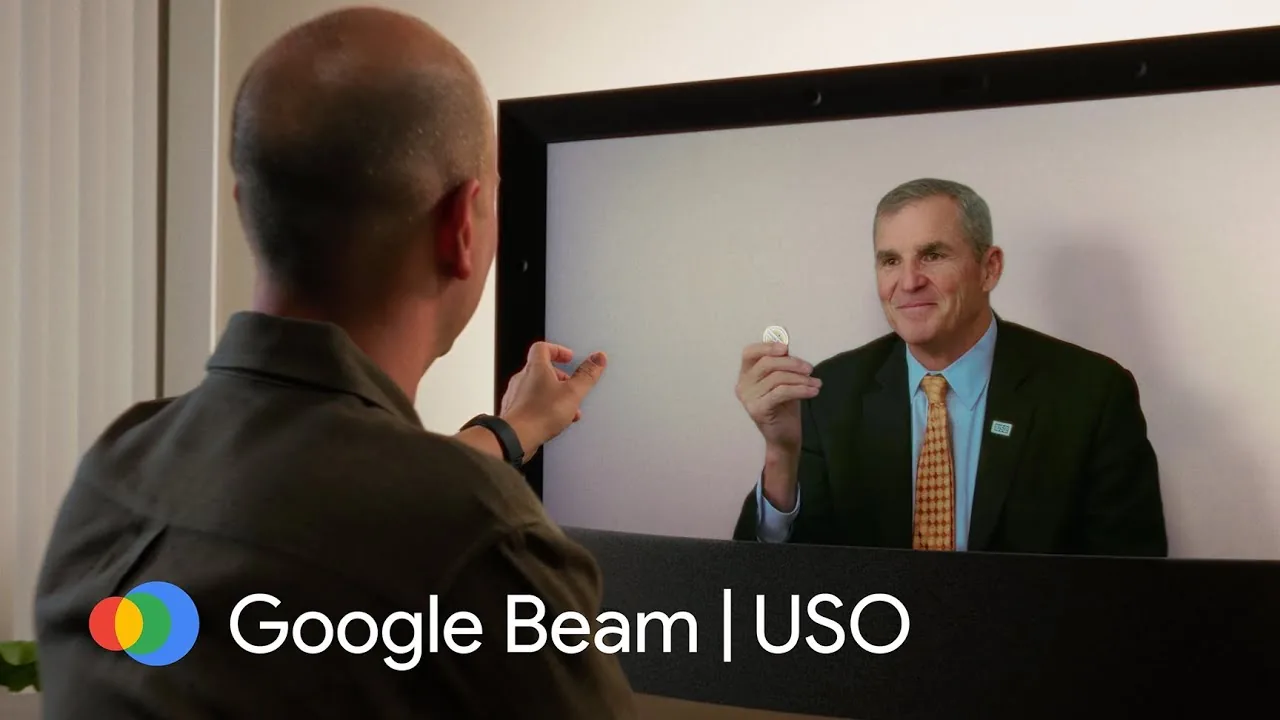


Docuseries on the Iron Dukes in Poland
To show how this setup works in real life, Google hired filmmaker and army veteran Kyle Hausmann-Stokes to direct a docuseries. The episodes follow four soldiers from the 2nd Battalion, 37th Armored Regiment, known as the Iron Dukes, during their stay in Trzebień, Poland. Instead of focusing on tech specs, the films look at how lifelike video chats help military homes deal with long absences [1].
The soldiers in the docuseries faced long tours abroad while their partners ran homes and jobs at Fort Bliss in El Paso. Daily calls between Poland and Texas meant fighting noisy phone lines and bad connections. When service members stepped into the Google Beam booths, the life-size view made talks feel direct and close [1].
Hausmann-Stokes centered each scene on small everyday moments. On flat phone screens, young children often lose interest within two minutes because flat glass cannot show eye contact or body cues. The docuseries proves that when parents appear at life size, kids stay engaged, show off school drawings, read books, and talk without walking away [5].

Reunions for Four Military Families
The docuseries follows four soldier households. Sergeant Amoy Brown served in Poland as a Bradley Gunner while his wife, Tiyanna Orane, worked at Fort Bliss as an aviation logistics specialist. An eight-hour time difference made celebrating career milestones hard. Through the 3D booth, the couple shared Tiyanna’s military promotion, and Amoy played with their young son, Azeal [1].
Another episode focuses on Army Chaplain Roland Kassales, who served away from home for 15 months during his first two years of military duty. Staying in touch with his family was tough during such long trips. When his daughter Blythe read stories she wrote out loud, the 3D screen let him see her smiles and gestures in real time. Kassales shared his experience: “Being able to incorporate feeling and body language—all those things that make communication meaningful—will go a long way towards overall well-being for soldiers” [5].
The Jennings family had similar hurdles. Mayra Jennings took care of a home of seven people while working 12-hour shifts. Her husband, SFC Matthew Jennings, spent long stretches away from daily home life. Regular phone calls made it hard to bond with 4-year-old son Dimitri, newborn baby Lilly, and Matthew’s two sisters. The system let Matthew watch his newborn daughter grow and hear his sister play guitar, which gave Mayra real comfort during a hard tour [1].
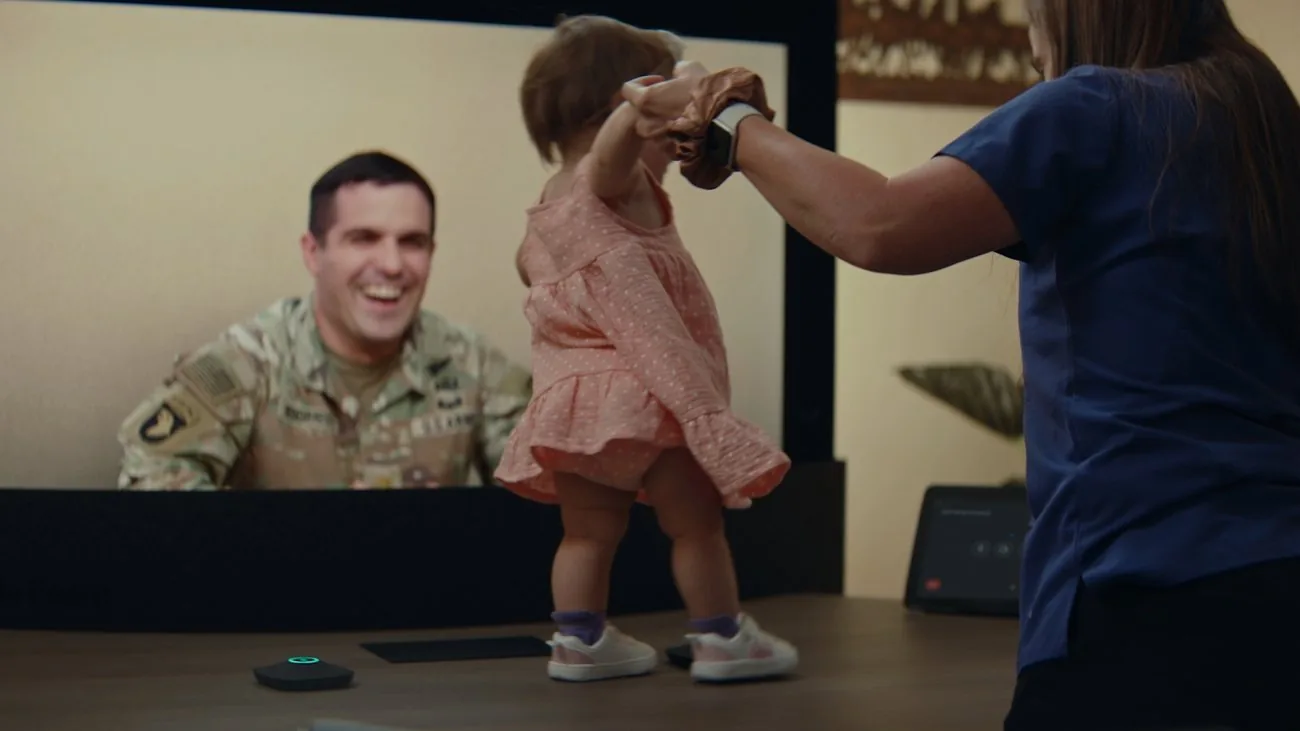
Major Michael Rodriguez has spent 12 years in uniform as an armor battalion operations officer. Deployments place a heavy burden on his home life in El Paso, where his wife Jessica works as a pediatric physical therapist while caring for their four young children alone. Through the video booth, Major Rodriguez watched his one-year-old daughter Kathryn practice taking her first steps [1].
Google Beam in Enterprise Offices
Google also sells the booths for work. Working with HP, the team ships units to corporate buyers and shared co-working spaces where business teams use the 3D booths for board reviews, code discussions, and client presentations that feel too cold on ordinary flat screens [2]. Without headsets, eye contact stays natural.
The hardware setup needs fast internet pipes and good room acoustics to keep video clean and audio in sync. As Google product manager Andrew Nartker noted when the USO partnership was first outlined, Google Beam operates as an AI-powered 3D video communication platform designed to bring people together for both big milestones and simple daily chats [4]. In a separate push for connected spaces, Google built the Google CC Agent for household coordination to help families organize daily tasks. At military bases, the USO handles booth schedules so troops can book private time slots around duty hours [1].
Placing booths in 20 USO centers moves 3D telepresence out of tech labs into everyday life. By giving soldiers far from home a clear window into their living rooms, the program proves how immersive gear can serve family needs [3].
- PRESS RELEASE Woodward, J. (2026, October 26). How Google Beam connects military families globally. Google Blog. [Article Link]
- ONLINE NEWS Romero, A. (2026, October 26). Google Beam 3D meeting booths will expand access for military families. 9to5Google. [Article Link]
- ONLINE NEWS Chung, J., & Staff. (2026, October 26). Google Beam Brings Lifelike 3D Video to Military Families at Twenty USO Sites. TechEBlog. [Article Link]
- PRESS RELEASE Nartker, A. (2025, October 27). Google Beam is working with the USO to support military families. Google Blog. [Article Link]
- WEBSITE Google. (2025). USO connects military families with Google Beam. Google Beam. [Article Link]
- ONLINE NEWS Worldnewsdotcom. (2026, October 26). How Google Beam connects military families globally. Worldnewsdotcom. [Article Link]


