





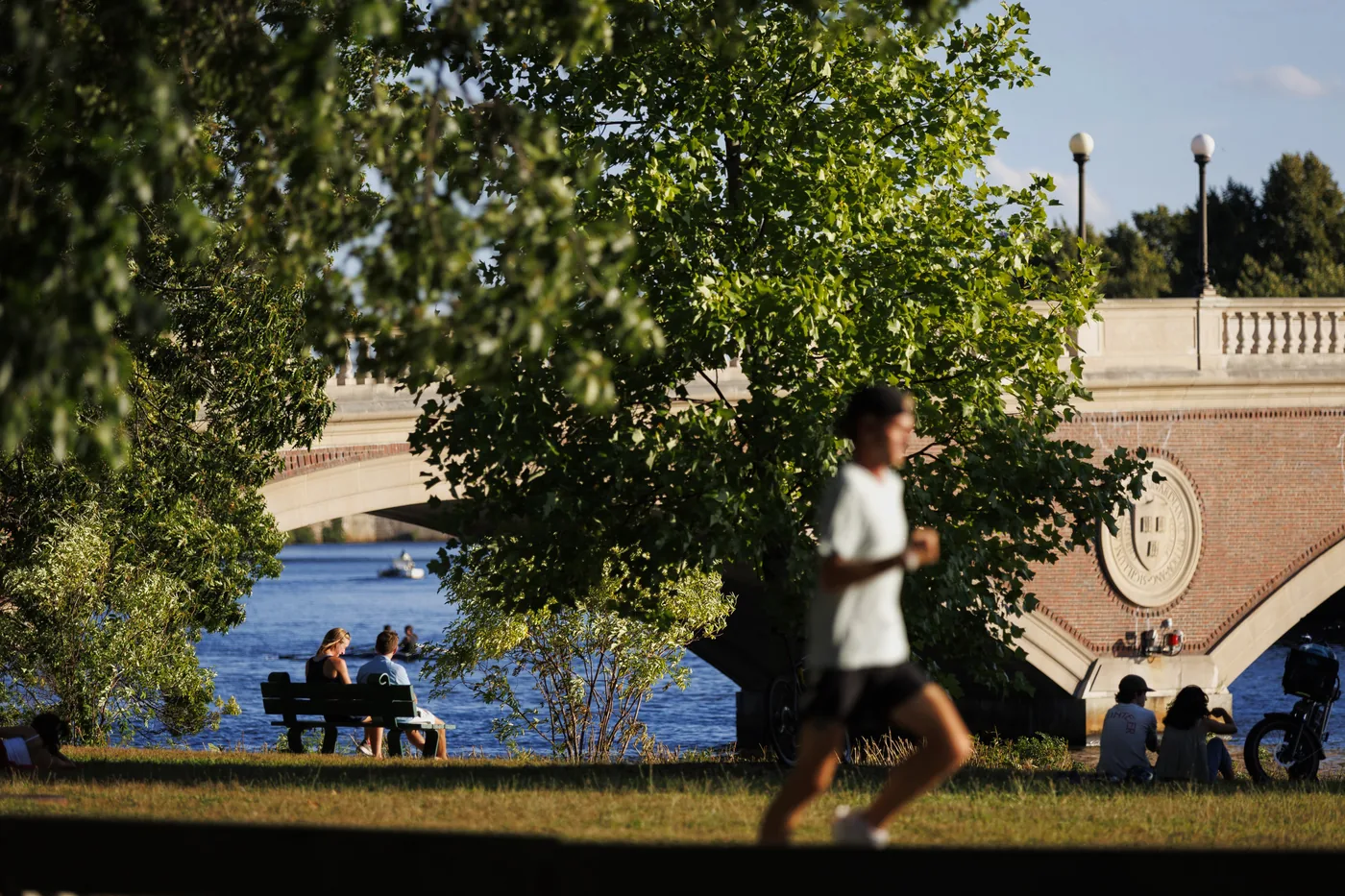
While campus visitors often view Harvard Yard as the historic heart of academic life, the Charles River forms an equally vital geographical and emotional center spanning Cambridge and Allston sides. From dawn to dusk, its winding banks remain thronged with joggers, rowers, cyclists, and dog-walkers seeking quiet contemplation beside open water. Why do thousands of urban residents routinely seek out this historic waterway for emotional equilibrium? Beyond bustling lecture halls, the gentle water currents deliver an enduring sanctuary where physical recreation and personal restoration continually intertwine [1].
Why Do Visitors Love the Charles River?
Visitors love the Charles River because its expansive banks and steady waters provide a powerful antidote to academic intensity and metropolitan overload. Evelyn Huang, a graduate student at the Harvard Graduate School of Education who recently moved from Columbus, Ohio, discovered that the shoreline offers a reliable refuge whenever campus schedules become overwhelming. While intense university commitments frequently generate a fear of missing out, Huang explained that sitting on the grassy bank produces what she terms the joy of missing out (JOMO). She noted: “I love sitting here and watching the river and just let everything in my mind flow like the river.” [1]
Leo Moradi studied philosophy in Boston. Leo Moradi, a recent Boston University Ph.D. graduate in philosophy, has eaten lunch more than 100 times along the Charles River. Moradi observed: “I believe a city without a river is not worth living in.” He still vividly recalls photographing an extraordinary sunset where the lowering sun and the winding river channel perfectly aligned across the horizon [1].
Such quiet moments illustrate how personal well-being depends on dedicated natural spaces where individuals can momentarily disengage from demanding schedules. These restorative habits parallel the psychological themes explored in our discussion of self-acceptance and personal care. Solitude near water restores mental focus [1].

Campus Life and the Charles River Sanctuary
Campus life at Harvard moves at a relentless tempo, making the nearby shoreline an indispensable release valve for undergraduates, summer visitors, and local volunteers. When Ellie Stallings arrived from San Francisco to attend Harvard Summer School, walking down to the Charles River was one of her very first acts. Stallings returns continually to read course assignments, complete homework, run along the paths, observe wild bunnies in the grass, and pause before walking toward her volunteer job in Central Square. “It feels like part of the Harvard experience,” Stallings observed regarding her daily waterfront routines [1].
Undergraduate student Micah John ’28 grew up rowing on the Charles River with her siblings and continues to rely on the shoreline to decompress from heavy coursework. John often grabs a quick meal on the grass or takes study breaks to sit in the sunlight. She fondly remembers an evening during finals last year when she and her roommate watched the sunset and played acoustic music in the freezing cold. John emphasized that finding stillness amidst university bustle is essential: “There’s a lot of hustle and bustle at Harvard. It’s a lot of nonstop, and you have to take a minute sometimes and sit out and enjoy the sun.” [1]
These shared family memories mirror the interpersonal devotion explored in expressions of close relational bonds. Micah John rowed with siblings [1].
How Cleanup Efforts Restored the Charles River
Decades of coordinated environmental cleanup have fundamentally transformed the Charles River from a contaminated industrial drainage basin into a flourishing urban aquatic ecosystem. Longtime Cambridge residents remember an era when pollution severely restricted direct contact with the river. Several miles downstream, the classic garage rock anthem Dirty Water by The Standells still blares from the sound system at Fenway Park after every Boston Red Sox home win, preserving cultural memories of a troubled industrial past. Near the university campus, modern visitors encounter a remarkably revitalized natural asset where diverse aquatic species thrive [1].
Local Cambridge resident Omar Silas, who grew up fishing regional waters, now visits the Charles River daily to cast his line for perch, crappie, smallmouth bass, and largemouth bass. Silas recently landed a prized 3-pound bass, demonstrating the ecological vitality that now characterizes the lower basin. Silas highlighted the visible progress: “The river’s been through a lot, so it’s cool to see the cleanup efforts are starting to pay off. Each year, it’s getting better and better.” Consistent environmental stewardship has converted once-degraded currents into a vibrant public resource for recreational anglers and wildlife observers alike [1].
Angler Omar Silas landed that catch. Each season brings clearer water and healthier fish populations to the lower river basin [1].


Weeks Footbridge as a Contemplative Crossroads
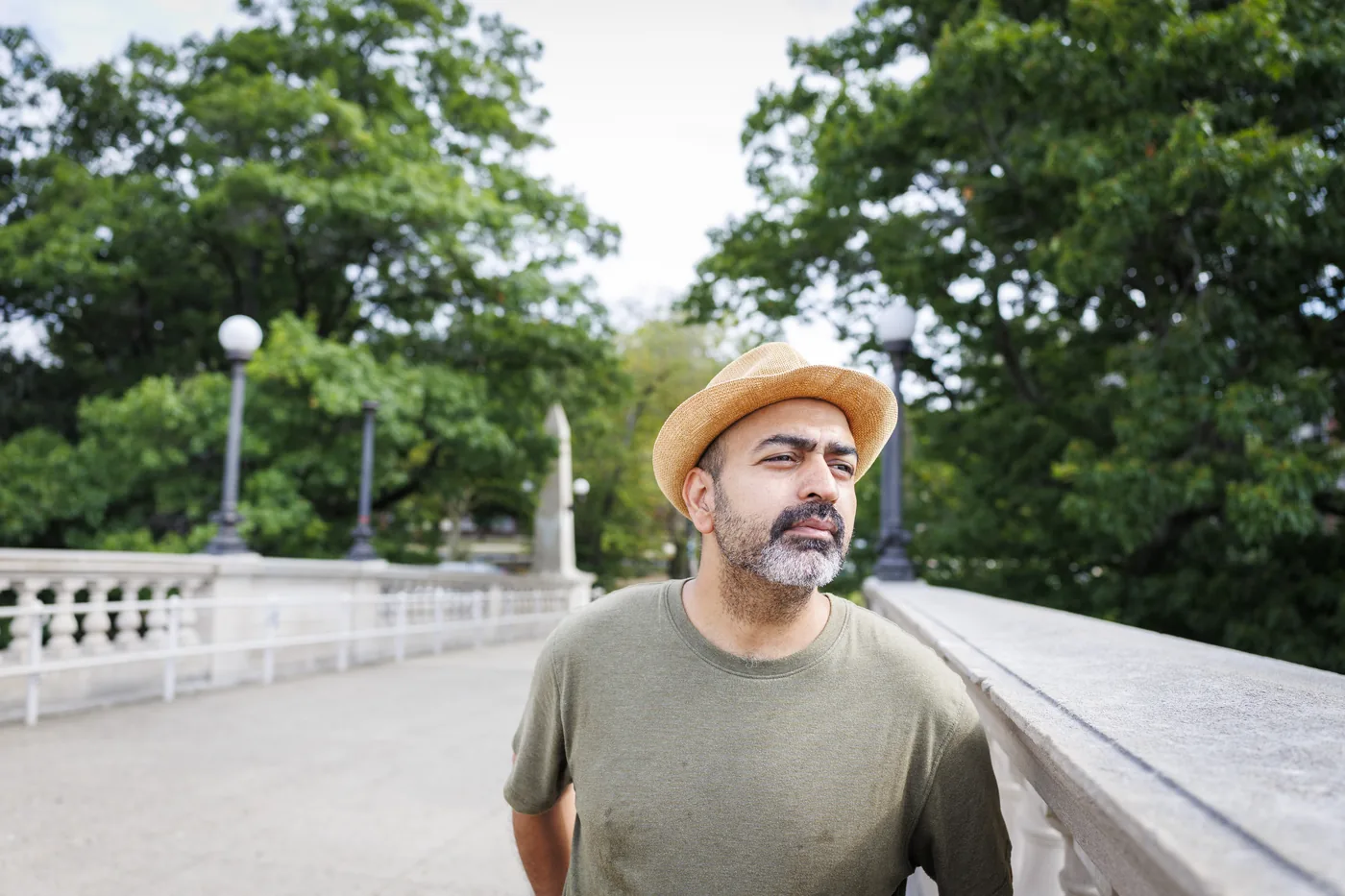
The historic Weeks Footbridge arches gracefully above the Charles River, connecting university residential houses in Cambridge with academic facilities across the Allston boundary. Beyond functioning as a pedestrian thoroughfare, the footbridge serves as an open-air observation deck where students and international scholars pause to reflect. Graduate student James Bedford ’20, M.B.A. ’25 often perches along the bridge railings because the expansive horizon reminds him of his upbringing on a sailing boat in the southwest of England. Living thousands of miles away from family, Bedford finds profound tranquility in the familiar lap of the waves beneath the stone arches [1].
Bedford perceives a poetic parallel between his own development and the restless water: “There’s something unique about the fact that every day the water that I’m looking at is different, and yet, there is something so familiar and so homely about it.” Having arrived in this country and attended university programs twice across the last decade, Bedford reflected on personal change: “I have changed as much as this river has, and yet in many ways, I occupy the same shape and the same outline, and I’m watching myself change as the water does.” [1]
New arrivals find equal comfort on the bridge. Lindsay Lu, a new student at Harvard Law School, stops regularly on the Weeks Footbridge to admire the sunset reflected across the rippling surface. Lu observed: “I like to watch the sun and how it reflects on the water. There’s a nice breeze. It’s nice to stop for a moment.” [1]

Daily Rhythms Along the Boston Waterway
Daily life along the shoreline provides an accessible connection to nature that dense urban neighborhoods in Boston and Cambridge rarely afford. Cambridge resident Sarah Griffin, who grew up in Colorado surrounded by expansive mountain wilderness, values having an organic landscape within easy walking distance. Griffin explained that metropolitan environments often lack immediate green space: “Being in Boston and Cambridge, there are not as many easily accessible points of nature, and so it’s actually such a lovely place that I can just come by foot anytime that I feel like it to escape the noise a little bit.” [1]
For longtime community members, regular visits along the Charles River become meaningful personal rituals that mark significant life milestones. Ellen Birnbaum, who worked at Harvard for more than 20 years, visits the shoreline at least once every week and recently spent her birthday walking beside the water. For Birnbaum, the setting evokes Simon & Garfunkel’s lyrical adaptation of the biblical phrase Peace Like a River. She noted: “I find it very calming. There’s a line that Simon & Garfunkel made famous, ‘Peace like a river ran through the city.’ It’s biblical, but it feels that way. It feels that there’s peace here. Sometimes it is very still, sometimes it ripples, and sometimes the currents are strong. It’s different every time. It has a certain character, and I just like to be near it.” [1]
Longtime staff members find continuous renewal here. Ellen Birnbaum visits every week [1].
Can Urban Rivers Anchor Human Well-Being?
Urban rivers anchor human well-being by providing continuous natural movement that grounds stressed city dwellers in a larger ecological rhythm. Isabelle Lent, a New Yorker visiting friends in Cambridge, found herself deeply moved by the river’s relentless 24/7 journey toward Boston Harbor. Lent remarked: “There’s something about the river’s continuous movement that amazes me. It makes me feel serene, free, and at peace. I’m so amazed that these things keep flowing all the time, 24/7. When we’re sitting at our desks, stressed about the day, these things are still going.” [1]
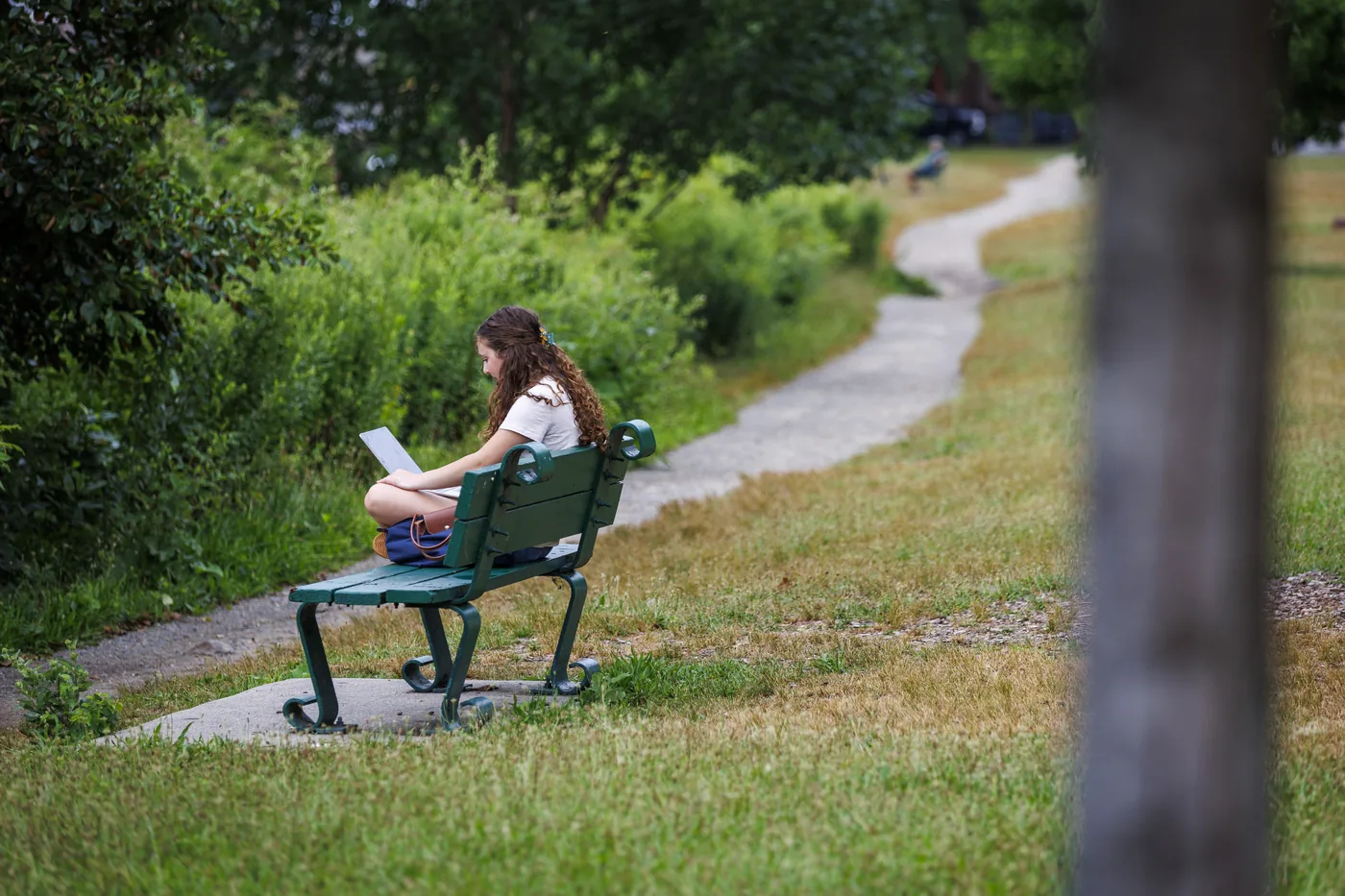
Visiting traveler Mary Stargel from Tennessee felt an identical sense of planetary interconnectedness while writing on a park bench beside the Charles River at twilight. Stargel reflected: “There’s the interconnectedness of it. I’m sitting at this body of water. I know that it’s going into the next body of water that is bigger, and it’s come a long way. When I come here, I remember other bodies of water, and that’s very calming. It connects me to the other places I’ve been.” [1]
As metropolitan populations face escalating daily pressures, protected riverfronts remain indispensable public sanctuaries. The Charles River endures as an essential communal refuge uniting movement, nature, and peaceful reflection [1].
- ONLINE NEWS Mitchell, S. (2026, October 1). Why we love the Charles. The Harvard Gazette. [Article Link]
- ONLINE NEWS The Harvard Gazette Editorial Staff. (2026, October 1). Why we love the Charles. The Harvard Gazette. [Article Link]
APA 7: PerEXP Teamworks. (2026). How the Charles River Offers Peace and Escape to Cambridge. PerEXP Teamworks.


