



Most medical discussions treat body fat as an unwanted liability, but clinical research reveals that brown adipose tissue serves a very different biological purpose. Unlike common white fat that stores excess energy, brown fat burns calories to produce heat and help regulate internal body temperature [2]. Now, a large clinical investigation published in Nature shows that natural brown fat activation is linked to lower odds of developing type 2 diabetes, coronary artery disease, anxiety, and depression [1]. Lead investigator Paul Cohen and his team at Rockefeller University in the United States also found that a common blood pressure drug triggers this metabolic process. Losartan was the medication identified in the hospital records [3].
Two Opposite Types of Body Fat
The human body contains two main types of adipose tissue that perform opposite metabolic tasks in daily life. White fat gathers surplus dietary calories and stores them as large lipid droplets, which can lead to cardiovascular complications when it accumulates around abdominal organs [1]. By contrast, brown fat is packed with iron-rich mitochondria that give the cells their dark appearance and convert stored calories into thermal warmth during cold exposure. Newborn babies rely heavily on brown fat because they cannot shiver efficiently to stay warm in chilly nursery environments [2].
Medical textbooks long claimed that human brown fat vanished after infancy [3]. However, when PET and CT imaging revealed functional depots near the neck and clavicles in adult patients, science writer David Nield reported for ScienceAlert that dormant pockets persist into old age [2]. Working at the Laboratory of Molecular Metabolism at Rockefeller University, Paul Cohen investigated whether brown fat activation could shield older adults from coronary disease and diabetes. Cohen’s team pursued that clinical hypothesis [3].
Tracking Brown Fat Activation with AI
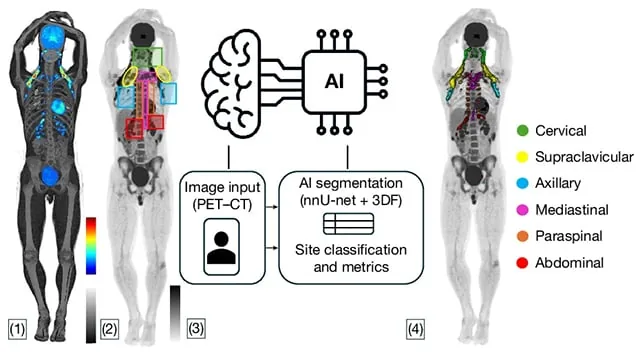
Detecting active brown fat in living patients presented a major logistical obstacle because the tissue consumes substantial glucose on PET/CT scans only when activated by chilled rooms or chemical tracers. Standard screenings proved impractical [1]. To overcome this challenge, Paul Cohen partnered with oncologic radiologists Heiko Schöder and Daniel Lafontaine at Memorial Sloan Kettering Cancer Center (MSKCC). Schöder and Lafontaine deployed a deep machine learning algorithm across thousands of retrospective patient files to identify subtle deposits of brown adipose tissue [3].
Endocrinologist Nicolás Gómez-Banoy led the computational analysis with co-authors Jorge A. Barrero, Luiza Rachel Pinheiro de Carvalho, and Caroline S. Jiang. The team examined records from 101,243 patients who underwent cancer surveillance scans at MSKCC between routine diagnostic visits [1]. The AI system detected active brown fat in nearly 8,900 of those individuals [2]. This expanded an earlier 2021 study where Cohen’s lab evaluated roughly 50,000 patients across just a few diagnostic codes. “We only looked for a few diagnostic codes in that study, mainly focusing on cardiovascular disease since that’s what this tissue has historically been associated with,” Cohen said. “The scope of this new analysis is far more expansive. We doubled our number of patients and considered more than 500 codes, which allowed us to unearth many new insights” [3]. The study was published in Nature [1].
The automated scans confirmed that brown fat presence drops steadily as patients grow older, remaining asleep under ordinary climate-controlled conditions. By analyzing tens of thousands of scans with machine learning, Gómez-Banoy, Schöder, Lafontaine, and Cohen mapped biological variations that human radiologists had never systematically documented during cancer reviews [2].

Cardiovascular and Mental Health Perks
When the research team matched participants who possessed brown fat against demographic controls lacking the tissue, clear health advantages surfaced. Patients with detectable brown fat demonstrated significantly lower rates of type 2 diabetes and coronary artery disease [1]. Their blood profiles revealed better blood glucose regulation, superior lipid measurements, and noticeably lower levels of systemic inflammation [3]. Tara Doma Lama, Nakul Karandikar, Burcin Agridag Ucpinar, Jennifer E. Liu, and Rohit Sharma assisted with the clinical and cardiac matching at MSKCC. These protective metabolic patterns suggest that active brown fat buffers the circulatory system against stress, functioning much like clinical efforts to prevent heart disease with statins in high-risk patients [1].
The retrospective study also identified an unprecedented link between brown fat and psychological wellness. Patients with detectable brown fat experienced lower rates of depression and anxiety than matched peers in the MSKCC cohort [2]. “We know that metabolically healthy people tend to have lower incidence of psychiatric diseases, so it could be that having brown fat makes you more metabolically healthy, and this correlates with fewer psychiatric issues,” Gómez-Banoy said. Furthermore, the AI model evaluated six anatomical zones, discovering that brown fat in the axillary region under the armpits provided the strongest protection against chronic high blood pressure [3]. Gómez-Banoy, Tara Doma Lama, and Caroline S. Jiang evaluated these diagnostic codes at MSKCC, while reporting from PerEXP Teamworks tracks how these multi-organ connections influence systemic metabolic health [1].


The Blood Pressure Drug Connection
A breakthrough occurred when the research team cross-referenced patient imaging with outpatient prescription records [3]. Individuals taking blood pressure medications were significantly more likely to display brown fat activation during PET scans [2]. SciTechDaily reporter Vincent L detailed how Paul Cohen’s lab isolated angiotensin receptor blockers as the primary drug class responsible for this statistical spike. In particular, Losartan is a widely prescribed generic medication used to lower blood pressure, reduce stroke risk, and preserve kidney function in patients with chronic diabetes. Patients taking losartan showed higher rates of active brown fat than those taking other cardiac drugs [3].
To investigate whether the medication actively turned on dormant fat cells, Paul Cohen’s group at Rockefeller University in New York adopted a reverse translational research model by taking clinical observations from 100,000 Memorial Sloan Kettering Cancer Center patients and testing them directly in molecular laboratories [3]. Nicolás Gómez-Banoy led these experimental laboratory tests [1]. Earlier research into brain appetite circuits that shape obesity illustrates how neural and hormonal signals govern peripheral fat storage, which prompted Cohen, Heiko Schöder, and Daniel Lafontaine to design new cellular assays [2]. Losartan acted rapidly in dishes [3].
Testing Brown Fat Activation in Cells
Laboratory scientists at Rockefeller University placed cultured mouse and human brown fat cells into Petri dishes and treated them with losartan. The treated cells exhibited immediate metabolic surges, burning more energy through enhanced oxygen consumption. At the Rockefeller Bio-Imaging Resource Center in the United States, Mascha Koenen, Tiffany Lam, and Kaja Plucińska observed these cellular shifts in vitro using a CSR Biotech Cell Xtreme microscope [3]. Crucially, molecular assays confirmed that losartan stimulated metabolic activity through biological pathways distinct from the angiotensin receptors it targets to reduce vascular blood pressure [1]. “The fact that its different effects are mediated by different molecular pathways is advantageous, since it means we could potentially isolate them in future therapies,” Gómez-Banoy said. “That way you would be able to stimulate brown fat in people with normal blood pressure” [3].
Next, Cohen and Gómez-Banoy administered losartan to living, healthy mice to evaluate whole-body metabolic changes in vivo. Treated mice consumed noticeably more oxygen, produced more carbon dioxide, and generated higher levels of body heat than untreated control animals. Treated mice showed higher levels of brown fat activation while maintaining stable body weights across weeks of testing [3]. This metabolic surge suggests that pharmacological agents might one day work with mechanical innovations such as vibrating capsules designed to treat obesity to burn extra calories safely [2].

Clinical Caveats and Next Steps
Despite the encouraging laboratory results, the investigators stressed that several caveats must be addressed before applying these findings to human patient care. The retrospective data came entirely from patients undergoing cancer monitoring at MSKCC, where more than 75 percent of participants were female. Female biology and oncology therapies could skew metabolic observations in unknown ways. In addition, mice rely far more heavily on brown adipose tissue for thermal survival than adult humans do, meaning human metabolic responses to losartan could prove less pronounced [2]. Whether losartan causes meaningful weight loss or metabolic improvements in healthy people remains unproven in clinical trials [3].
The MSKCC medical records also revealed unexpected clinical trade-offs that require extensive follow-up research. Patients with active brown fat had slightly higher rates of osteoporosis and inflammatory skin disorders, suggesting that chronic brown fat stimulation might produce unintended biological side effects [3]. Furthermore, ScienceAlert editor Peter Dockrill documented that co-authors Ksenia Morozova, Stephanie Chahwan, and Gustavo Barraza observed lower brown fat activity in patients taking selective serotonin reuptake inhibitors [1]. Griffin Rodgers, director of the National Institute of Diabetes and Digestive and Kidney Diseases (NIDDK) at the NIH, praised Cohen, Schöder, and Gómez-Banoy for their study design. “The unique reverse translational approach of this study, enabled by large clinical datasets and next-generation analytical tools, provides a much-needed clinical rationale for exploring brown adipose tissue as a therapeutic target in humans across a spectrum of diseases,” Rodgers said [2].
- ACADEMIC JOURNAL Gómez-Banoy, N., Barrero, J. A., Pinheiro de Carvalho, L. R., Jiang, C. S., Lama, T. D., Karandikar, N., Koenen, M., Lam, T., Plucińska, K., Morozova, K., Chahwan, S., Barraza, G., Agridag Ucpinar, B., Liu, J. E., Sharma, R., Lafontaine, D., Schöder, H., & Cohen, P. (2026). Artificial intelligence-enabled clinical phenotyping of human brown fat. Nature. [Article Link]
- ONLINE NEWS Nield, D. (2026). Brown fat can be beneficial for the body – and a blood pressure drug could turn it on. ScienceAlert. [Article Link]
- ONLINE NEWS Rockefeller University. (2026). Scientists discover a surprising new effect of a popular blood pressure drug. SciTechDaily. [Article Link]
APA 7: PerEXP Teamworks. (2026). Losartan triggers brown fat activation in metabolic study. PerEXP Teamworks.


