




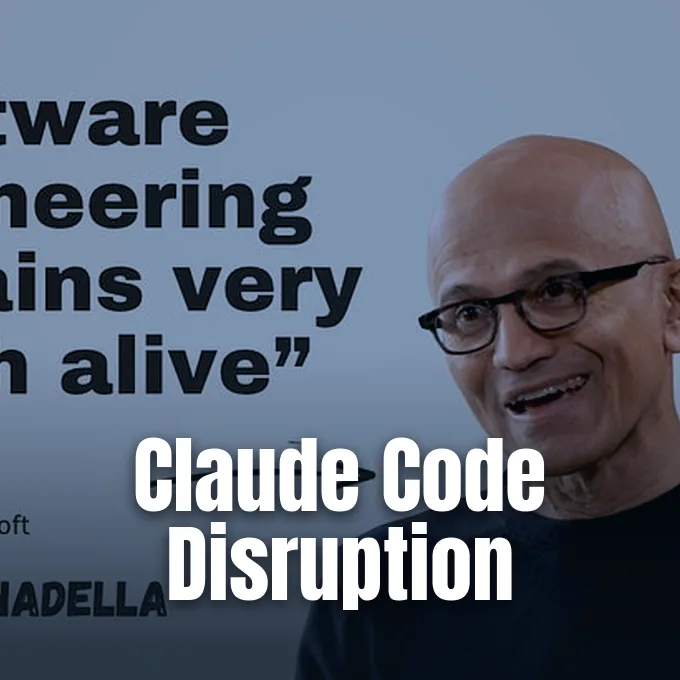
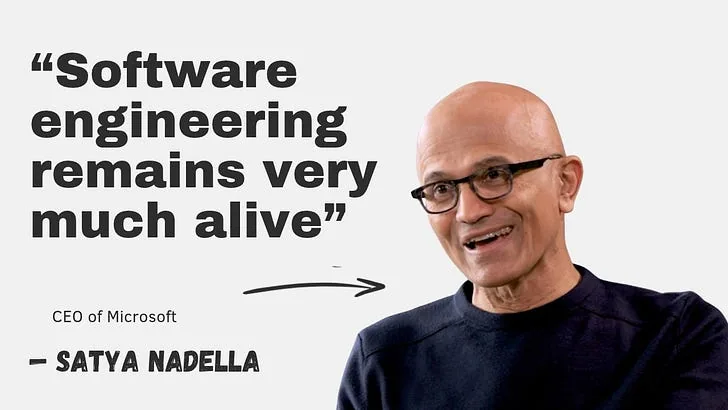
Microsoft Chief Executive Satya Nadella said Anthropic’s Claude Code caught the company off guard by moving daily development out of code editors and into the terminal. Speaking on The Pragmatic Engineer podcast, Nadella acknowledged that software building had changed at a speed his own teams did not foresee. The swift Claude Code IDE disruption highlighted how quickly command-line agents displaced classic code editors across engineering teams. In an hour-long conversation recorded in Redmond, Nadella explained why rapid model jumps make product strategies obsolete overnight and how cheap automated code creation inevitably shifts the primary engineering bottleneck toward rigorous verification of developer output [1].
Why Claude Code Displaced the Traditional IDE
The interview was hosted by former Microsoft engineer Gergely Orosz, who asked why Microsoft lacked an immediate answer when Anthropic launched its coding tool in 2025. Microsoft had built strong momentum with GitHub Copilot and VS Code. Nadella explained that Copilot started as code completion before rival products like Cursor introduced an agent mode that Microsoft engineering teams had to work quickly to match. Anthropic then surprised the industry by making the command line the primary workspace for software creation. Microsoft watched the Claude Code IDE transition unfold over six months as developers adopted command-line workflows [1]. Programmers favored the terminal because agents could run terminal commands, inspect directories, and edit files without interface bloat.
Model capability drove the rapid shift away from editors. “The thing that hit us was obviously the great work that Anthropic did with their model, which then truly made the CLI the form factor,” Nadella said. When model performance leaps forward, user interfaces must adapt immediately, which is why the traditional development environment “kind of faded away” within about half a year [1].
The discussion was published on YouTube, Apple Podcasts, and Spotify with full transcripts and timestamps detailing each topic [2]. Techmeme highlighted the exchange as part of an industry-wide discussion on whether established platforms can maintain developer loyalty when underlying reasoning models evolve faster than product roadmaps anticipate. The conversation took place just hours before a network defect triggered an Outlook outage, an incident that never came up during the recording [1].
Lessons from Fast Model Shifts
For Nadella, the sudden move away from visual editors taught an important lesson about building software in the AI era. “When model jumps happen nonlinearly, the form factor has to change quickly. AI-first product building in that sense is unforgiving,” he said. Desktop interfaces cannot rely on past user habits. He summed up his philosophy in a blunt rule: “Don’t be in love with what you built.” That mindset means letting go of existing designs when newer models make alternative workflows far more productive, even if those older products took years of engineering effort to build [1]. Teams must abandon features that an autonomous model now handles with greater efficiency.
The speed of change also reshapes how engineers spend their working hours. Nadella advised programmers to spend less time reading commentary about artificial intelligence and dedicate more effort to building real projects with available models to understand their practical behavior. “If I could change the ratio of my talk to do, I would do it. This is the time,” he told Orosz [1].
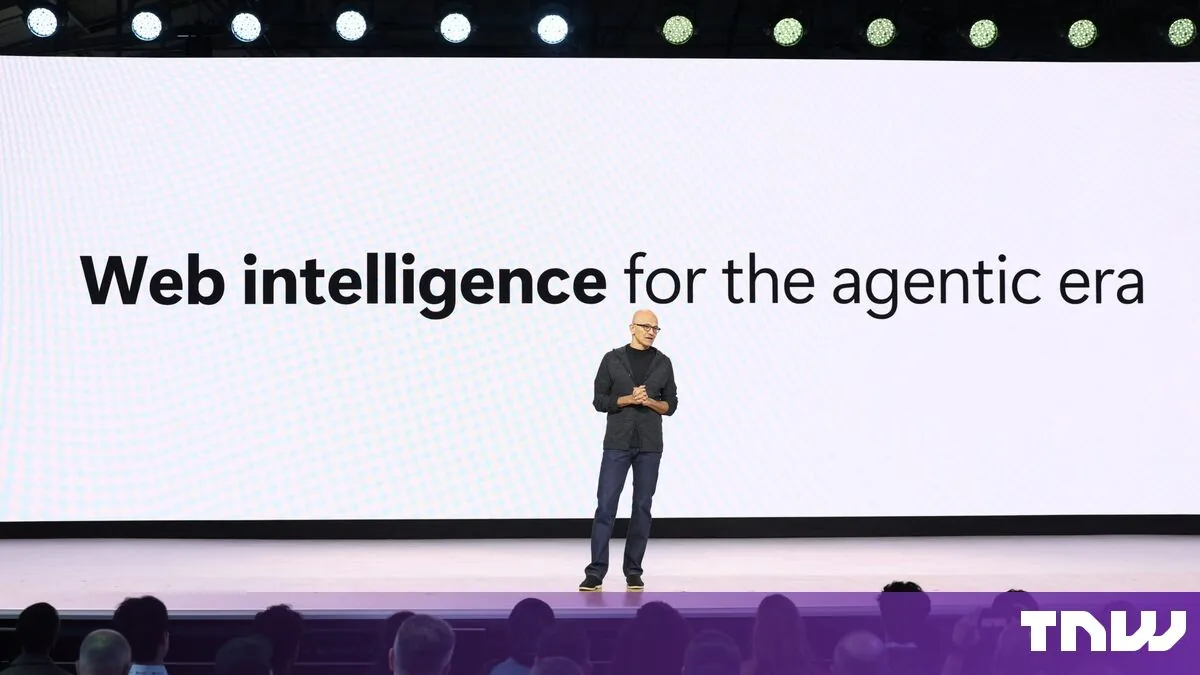
Small startups proved that they could outmaneuver established industry giants by betting on command-line simplicity rather than complex interface menus. When Anthropic paired its model with terminal execution, it stripped away visual overhead and gave the agent direct control over system files and command execution. Developer loyalty belongs to tools that reduce daily friction. Microsoft now tests hybrid tools that bridge command-line agents and cloud copilots so developers keep working within its ecosystem [1].

Voluntary Exits and Reorganizing Teams
Beyond tooling, the interview tackled internal labor restructuring across Microsoft’s global workforce of 200,000 people. Orosz asked directly whether voluntary exit packages offered to employees were a quiet prelude to broader layoffs. Nadella declined to confirm or deny future cuts, framing the buyout offers instead as a way to give staff agency to pursue roles with long-term economic viability. “If you’re in a team where you feel stuck professionally, you can vote with your feet,” Nadella said. “I wish I could just sit here and say it’ll all be the same. I can’t.” He admitted that not every department had “got the memo” on adapting to autonomous workflows [1]. Workflows must adapt as automated routines handle basic coding.
Workplace reorganization has also changed the roles Microsoft seeks to expand. One of the fastest-growing job titles inside the company is the forward-deployed engineer, who works directly with customer engineering teams to implement and customize complex automated intelligence pipelines. Hiring for junior programmers has slowed during this organizational rebuild [1].
Nadella explained that teams need to establish their “software factories” before they can effectively absorb and train junior talent into newly configured engineering workflows. To support early-career engineers, Microsoft created a mentorship programme with Carnegie Mellon University called PRAISE. Tensions over workplace shifts and AI messaging previously drew scrutiny when Brandon Stirrup deleted his X account after Xbox AI comments provoked criticism from gaming communities. Nadella maintained that team structures must continue to evolve as coding tasks become increasingly automated across product lines [1].
Code Verification and Tamper-Proof Logs
While automated models produce vast amounts of code in seconds, ensuring that generated software remains secure, accurate, and maintainable has become the defining technical bottleneck for development teams worldwide. “In a world where code generation has become cheap, what has become hard is verification,” Nadella said. He warned that models used to check code often carry alignment blind spots, making it risky to rely on a single system. To solve this, he advocates using different model families to critique and verify one another. He also highlighted his reliance on production traces feeding a continuous fix-verification loop, an engineering mechanism he nicknamed “my RSI” during the interview [1]. Independent critique loops catch subtle bugs before deployment.
Nadella argued that enterprises must treat autonomous software agents as an “insider risk” rather than harmless productivity helpers. He reiterated a point from an earlier appearance on 20VC, noting that while foundation models steadily grow more capable, they do not automatically grow more reliable in production environments. Companies need audited, tamper-proof logs that record the reasoning steps an agent took before modifying code [1].
To prevent vendor lock-in, Nadella urged businesses to decouple their agent orchestration software, persistent memory, and underlying foundation models. An enterprise should be able to swap any model out while continuing to improve on its private benchmark evaluations. “If you can’t do that, then you have to ask yourself how are you a sovereign firm,” he said. Software sovereignty prevents overreliance on a single AI provider [1].
Reviving the IDE After Claude Code
Although command-line agents dominate today’s discussions, Nadella believes traditional development environments may still enjoy a resurgence. He suggested that the IDE could return as engineers begin embedding specialized decision models directly into enterprise software architectures to govern real-time operational logic. Nadella referred to these models as the modern equivalent of stored procedures from relational database systems [1].
The evolving Claude Code IDE dynamic could shift once again as hardware capabilities catch up to developer needs. Nadella noted that frontier models from last year can already run smoothly on consumer laptops, while recent quarterly model releases can run effectively on standard desktop workstations. He described local execution as “unmetered intelligence” because developers can iterate without incurring cloud API costs or latency delays. Testing alternative local tools has surged across the community, with reports detailing how OpenCode rivals Claude Code CLI in local GPU tests on accessible consumer hardware. Local processing gives developers privacy and predictable computing budgets without subscription overhead [1].
Nadella anticipates a hybrid future where intelligent routers like GitHub Copilot Fusion split developer workloads between local machines and cloud clusters. Simpler completions and sensitive code tasks can stay on local hardware, while massive reasoning requests route to scalable cloud backends. By embracing both command-line autonomy and local hardware execution, Microsoft hopes to stay relevant whether developers work inside classic editors or directly in the terminal [1]. Hybrid tooling will define how modern code gets constructed.
- ONLINE NEWS Constantin, A. M. (2026, November 16). ‘AI-first product building is unforgiving’, says Satya Nadella. The Next Web. [Article Link]
- WEBSITE Techmeme. (2026, November 16). Q&A with Satya Nadella on code verification becoming more important as code generation gets cheap, Microsoft’s voluntary exit offers, decision models, and more. [Article Link]


