




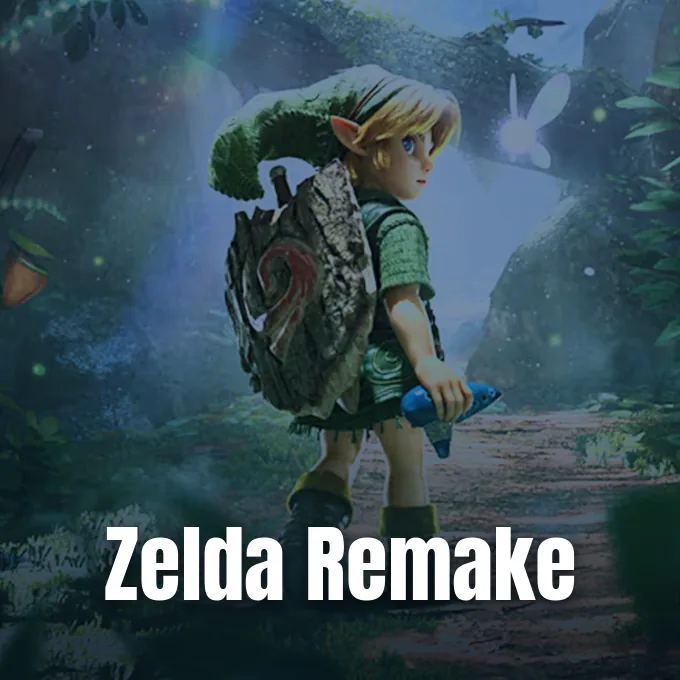
Nintendo released The Legend of Zelda: Ocarina of Time remake worldwide on November 5, 2026, updating the classic Nintendo 64 adventure with rebuilt visuals and altered traversal on Nintendo Switch 2. The publisher confirmed the launch window during a Nintendo Zelda Direct broadcast, bringing the fantasy kingdom to modern displays with upgraded lighting. As players push through the opening hours of the campaign, their journey leads them up the rugged slopes of Death Mountain toward Goron City, a subterranean settlement carved out of stone. Inside this cavernous hub, progress stalls until Link uncovers a sequence of musical melodies and environmental puzzles to placate Darunia, the stressed leader of the Goron tribe [1].
Reaching Goron City
Arriving at Death Mountain brings Link to the rocky gateway of Goron City, where the Goron people face severe food shortages because monsters have overrun their food source inside Dodongo’s Cavern. The town descends through multiple tiers connected by slopes, yet the atmosphere feels tense because Darunia has retreated into his private living quarters and refuses to speak with outsiders [1].
To gain an audience with the Goron chieftain, players must guide Link down to the bottom floor of the settlement and head straight toward the northern wall. At the foot of a sealed doorway, a golden Triforce symbol sits embedded into the floor tiles. Equipping the fairy ocarina and playing the royal melody known as Zelda’s Lullaby triggers the door mechanism, lifting the heavy stone barrier to reveal Darunia pacing inside his throne room. The chamber door opens right away. Link can then step inside to speak with the troubled leader face to face without delay, learning what trouble plagues the subterranean community [1].
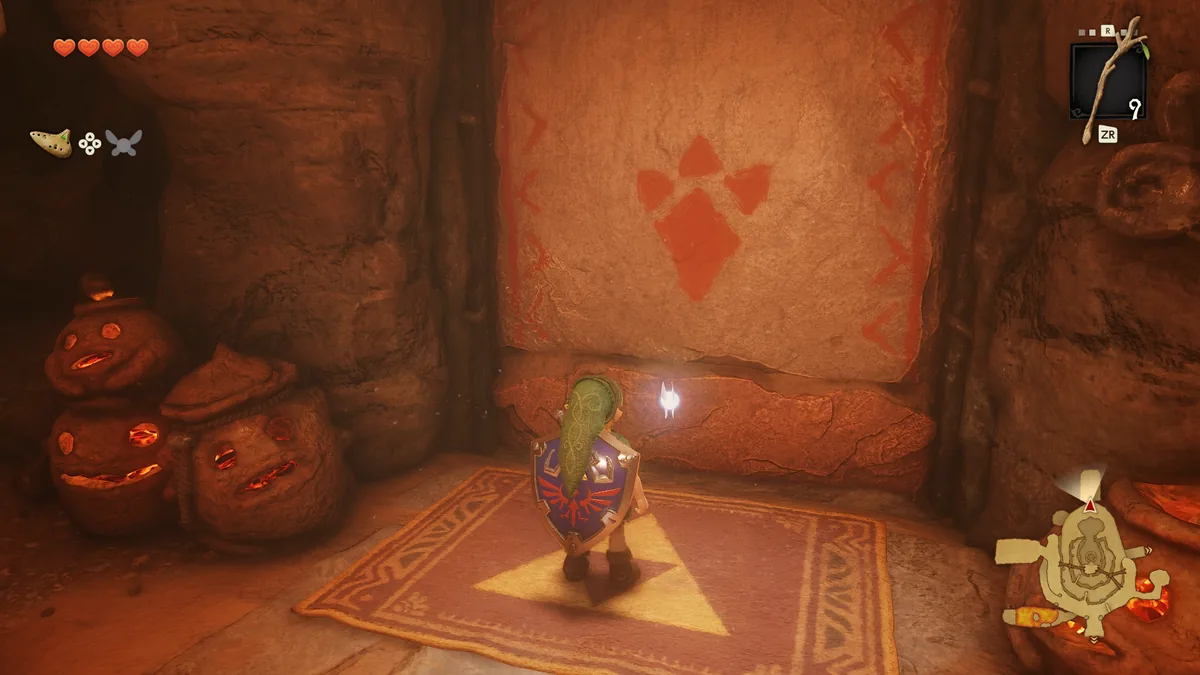
Darunia greets Link with frustration, explaining through an animated cutscene that hunger and stress have pushed his people to the brink of despair. Although Darunia holds the key to solving the volcanic crisis, he refuses to help until someone finds a way to lift his gloomy spirits. The chamber door stays open after the song, but speaking with the angry chief fails to yield the needed assistance until Link tracks down energetic music from another region of Hyrule [1].
The Torch Run
Restoring good humor to Darunia calls for an excursion to the Lost Woods, yet the shortcut leading there from the city upper level remains blocked by heavy boulders. On the eastern perimeter of the middle terrace, players can hear upbeat forest tunes leaking through a rock wall flanked by volatile bomb flowers. Opening this blocked passage demands fire, which Link must transport from the burning braziers situated inside Darunia’s private room on the floor below. This puzzle challenges players to navigate curving ramps quickly before their flame flickers out [1].
Completing this task involves lighting a Deku Stick at one of Darunia’s braziers and running up the curving ramps before the wood burns down to ash. Because a single stick burns away in seconds, players must touch the flame to unlit wall sconces placed along the path, creating intermediate checkpoints that sustain the fire up to the higher landing. Pressing the burning tip against a bomb flower ignites its fuse, sparking a blast that clears the rubble and reveals the open tunnel. The explosion clears the path instantly. Players can now pass through freely [1].
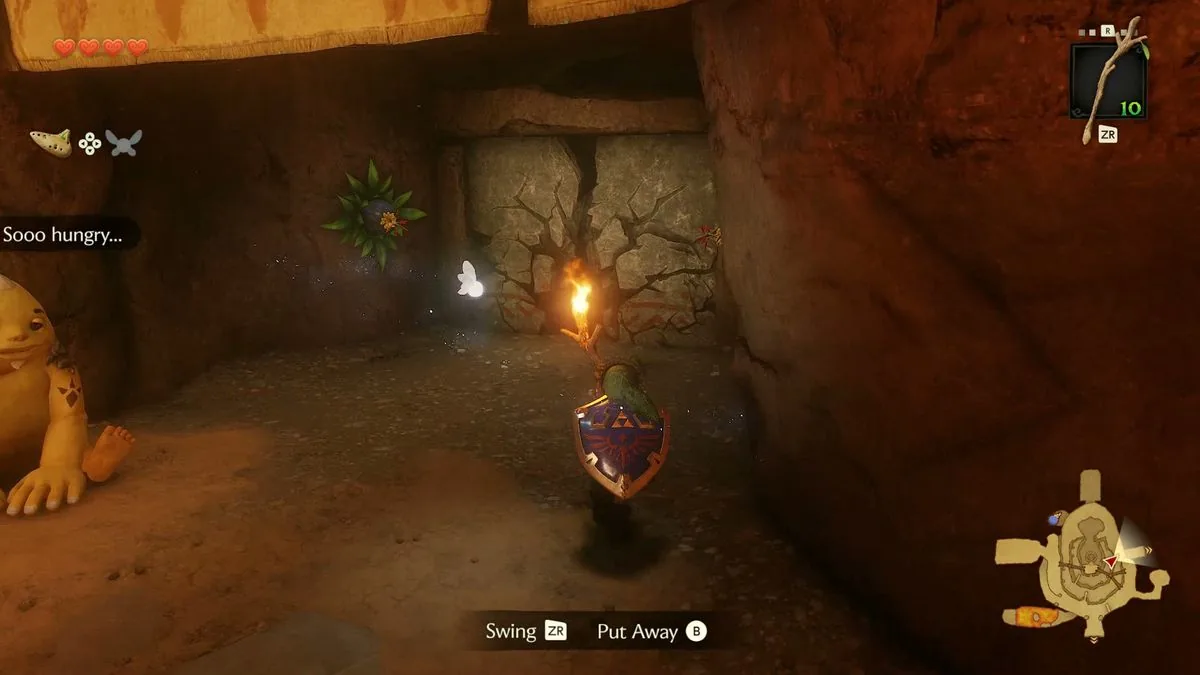
Joel Franey said in his GamesRadar+ walkthrough that this flame run serves as one of the earliest environmental timing puzzles in the remake. The layout gives players enough room to steer past wandering Gorons without extinguishing the flame against rock walls. Once the rock barrier crumbles, Link can step straight through into the leafy clearings of the Lost Woods without trekking back through Hyrule Field [1].
Finding Saria in the Sacred Grove
Stepping through the newly opened shortcut drops Link into the misty labyrinth of the Lost Woods, where wrong turns send travelers back to the entrance. Following the sound of cheerful woodwinds, players must take an immediate left turn into an opening to enter the Sacred Grove. This secluded zone features narrow stone corridors patrolled by hostile Deku Scrubs, who spit nuts from patches of grass whenever Link approaches their perches [1].
Navigating past these leafy sentries is simple if Link raises his shield to bounce incoming nuts back at attackers, stunning them so they flee into their burrows. The trail winds steadily northward past stone fences and mossy tree trunks until reaching a wide staircase. Climbing the stone steps brings Link face to face with his childhood friend Saria, who sits perched atop a stone stump surrounded by ancient forest ruins. Saria welcomes Link warmly to her quiet forest sanctuary and offers him guidance [1].
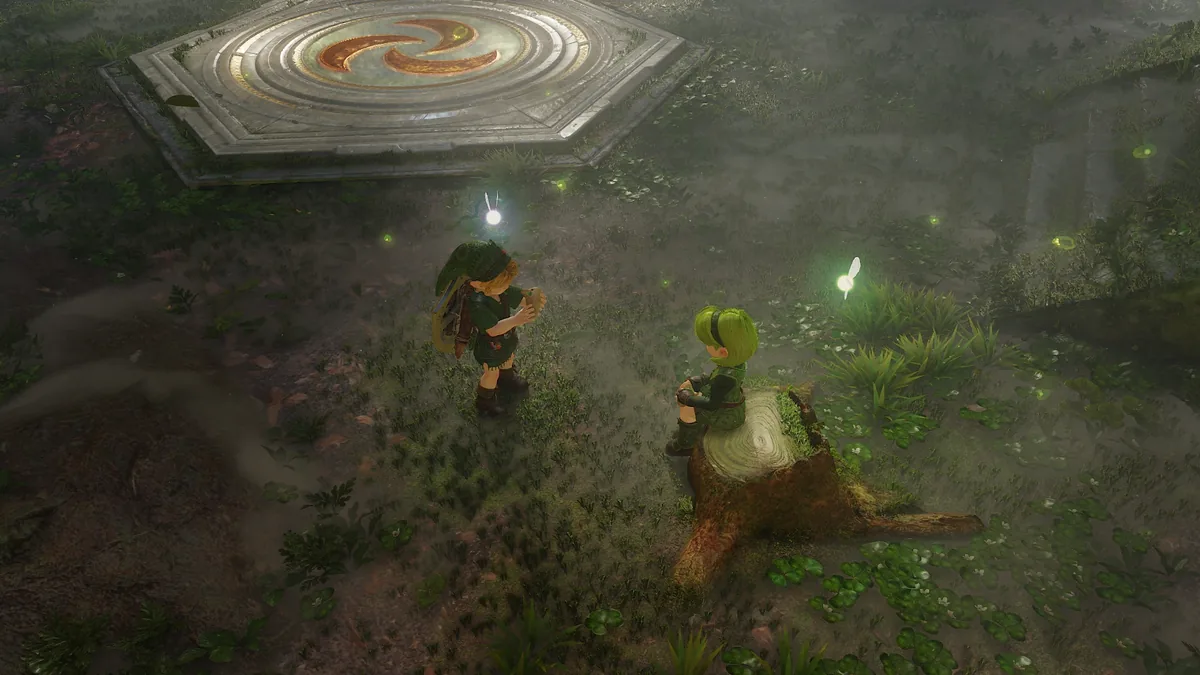
Speaking with Saria triggers a heartfelt dialogue sequence where she teaches Link Saria’s Song, a jaunty tune that communicates friendship and brings joy to anyone who listens. Saria explains that playing the melody on the ocarina lets Link speak with her from anywhere in Hyrule, providing helpful clues whenever the player feels lost during their travels. With the song memorized on his ocarina, Link can retrace his steps through the grove and head straight back to Goron City to confront Darunia once more. The cheerful tune echoes through Link’s memories as he departs the woodland glade [1].
Earning the Goron Bracelet
Back in the fiery cavern, Link returns to Darunia’s private quarters on the ground floor to test the new forest melody on the stubborn leader. Standing in front of the chieftain and playing the notes of Saria’s Song produces an unexpected shift in tone as Darunia suddenly bursts into an energetic dance, shaking the room with goofy footwork while Gorons outside begin cheering. The music lifts his foul mood completely, convincing him that the green-clad boy holds the bravery needed to rescue the mountain people. Darunia dances with infectious joy throughout the chamber as the lively tune plays on [1].
Darunia explains that while he wants to hand over the sacred Spiritual Stone of Fire, the artifact remains locked inside Dodongo’s Cavern behind giant boulders. To help Link breach the cavern entrance, Darunia presents him with the Goron Bracelet, a magical band of golden strength. This piece of equipment upgrades Link’s lifting power, allowing him to pluck heavy bomb flowers straight from the soil and carry them around before throwing them at stone barriers. The golden band slips securely onto Link’s wrist [1].

Armed with the bracelet, Link leaves the room to clear the boulder blocking the path to the second dungeon. Franey noted that picking up bomb flowers also opens optional paths and shops on other tiers of the mountain city, rewarding curious players with supplies. The bracelet permanently changes Link’s puzzle-solving capabilities, turning explosive flora into portable tools for the trials waiting inside Dodongo’s Cavern [1].
New Controls Around Goron City
While the story progression in the remake stays faithful to the 1998 Nintendo 64 original, Nintendo altered core traversal after Nintendo cut fast travel from Ocarina of Time remake to emphasize overland foot travel. The biggest mechanical change is the addition of a manual jump button, which replaces the classic automated jump that previously launched Link whenever he ran off a ledge. Oscar Taylor-Kent said in GamesRadar+ that the new button takes adjustment, writing that he repeatedly walked Link straight into lava pools within Dodongo’s Cavern because muscle memory expected the game to leap automatically. The manual jump demands precise timing on every platform ledge [2].
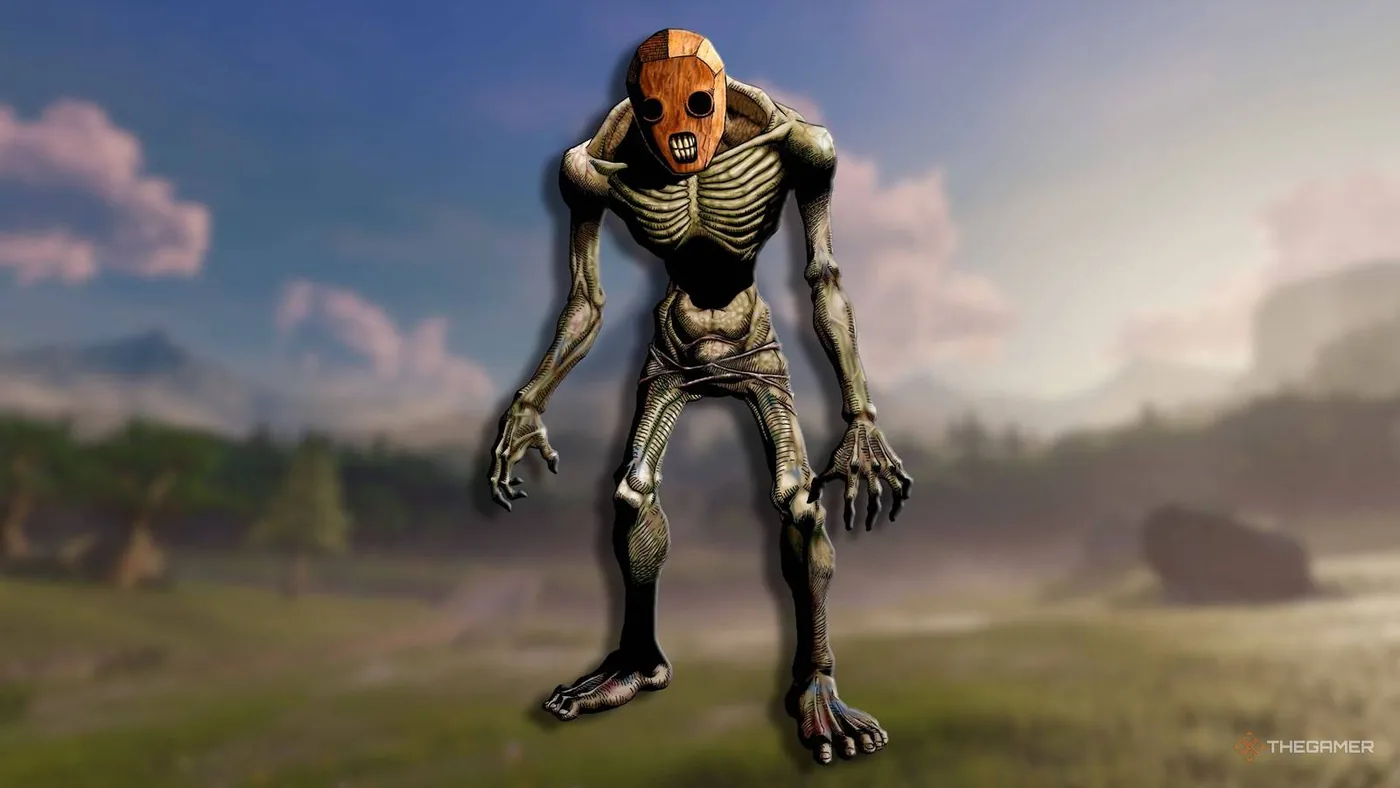
Beyond platforming tweaks, Nintendo refreshed character models and enemy lore throughout Hyrule, settling long-running debates among series followers. Reporting for TheGamer, George Foster explained that the remake’s in-game Hall of Foes officially describes ReDead enemies as “walking corpses with masks on their face”, refuting an old trophy description from Super Smash Bros. that labeled them clay monsters. The release launched to widespread enthusiasm on November 5, 2026, earning an OpenCritic top critic average of 95 out of 100 with 100 percent of critics recommending the game. Critics praised the faithful recreation of classic locations and these subtle narrative clarifications [3].
Aden Carter observed in DualShockers that the title ranks among the most impactful remakes Nintendo has ever produced, sparking discussions about other retro classics like Capcom’s Dino Crisis from 1999 or Obsidian’s Fallout: New Vegas from 2010 [4]. Meanwhile, players exploring the depths of the mountain continue mastering the flame routes, rhythmic songs, and boulder puzzles that define this memorable chapter of Link’s quest. Goron City stands as a memorable proving ground in Link’s quest [1].
- ONLINE NEWS Franey, J. (2026, November 6). Full Goron City walkthrough for Zelda Ocarina of Time Remake. GamesRadar+. [Article Link]
- ONLINE NEWS Taylor-Kent, O. (2026, November 6). I keep forgetting to jump in Ocarina of Time remake, and two dungeons in I’m yearning for classic controls. GamesRadar+. [Article Link]
- ONLINE NEWS Foster, G. (2026, November 7). Super Smash Bros. Just Got Proven Wrong By Ocarina Of Time Remake. TheGamer. [Article Link]
- ONLINE NEWS Carter, A. (2026, November 6). 8 Remakes That Would Be Just As Meaningful As The Ocarina Of Time Remake. DualShockers. [Article Link]


