






Ubisoft Montreal has reportedly started early production on a new Rainbow Six Vegas game under the internal codename Spades, eighteen years after the release of Vegas 2 [1]. According to an Insider Gaming report by Tom Henderson, the tactical shooter is one of three unannounced projects in production at the Canadian studio [2]. While Ubisoft hasn’t announced Spades publicly, sources indicate the game is likely a third numbered entry rather than a remake [3].
Early Reports on Project Spades
The report from Insider Gaming reveals that Ubisoft Montreal recently greenlit three separate productions to expand its future development lineup [2]. One effort carries the internal codename Spades, which sources familiar with the team link directly to the classic Rainbow Six Vegas lineage [1]. Henderson stated that a second game among the three is also planned to take place in the wider Rainbow Six universe, giving Ubisoft Montreal multiple tactical experiences in simultaneous production [3]. Ubisoft hasn’t confirmed the report, but the leak indicates that early conceptual work is already moving forward behind closed doors in Canada. Insider Gaming expects that several years will pass before an official announcement arrives [1].
Gaming outlets reacted with cautious interest because early production phases can shift before developers show footage. Eurogamer couldn’t verify the claims independently [1]. However, Wccftech evaluated the leak and gave it an 80% Probable rating on its rumor scale, which denotes strong supporting evidence from credible sources rather than idle internet chatter [2].
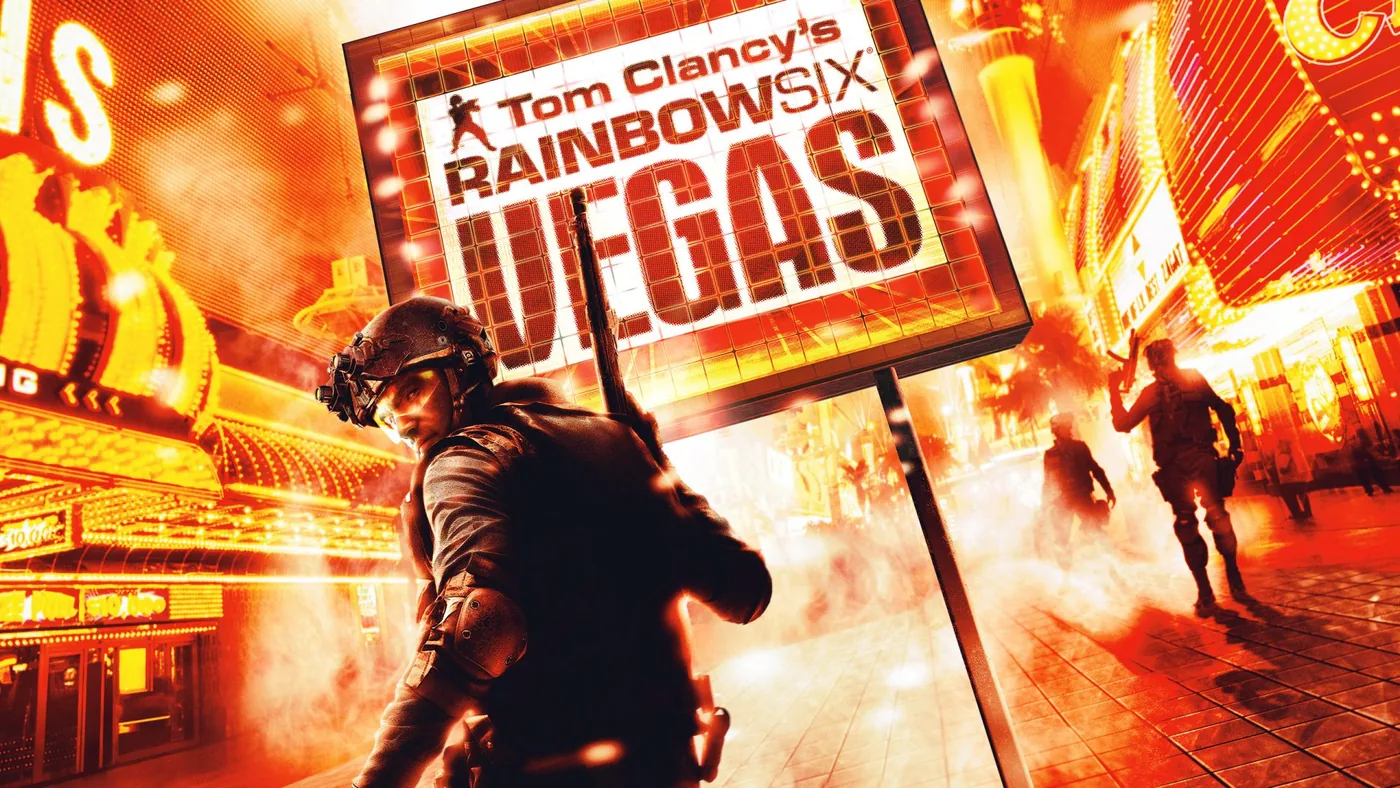
Rainbow Six Vegas Tactical Innovations
When the original Tom Clancy’s Rainbow Six Vegas launched in 2006, it transformed a series that had spent years as a methodical PC-only tactical simulation [2]. Ubisoft Montreal brought the game to PC, Xbox 360, PlayStation 3, and the portable PSP, opening tactical action to millions of console owners [4]. Instead of punishing players with unforgiving instant deaths, the game adopted accessible mechanics that were reshaping popular shooters of the era. Those design choices included regenerating health and unlimited revives for wounded squadmates, which kept tactical tension high without forcing entire squads to restart long missions after a single stray bullet [2].
The signature innovation of the game was a flexible cover mechanic that blended first-person shooting with a third-person camera perspective. Whenever an operative moved against a low wall, the camera pulled back over the shoulder so players could survey corridors and blind-fire over barricades. Leaving cover immediately snapped the view back into first-person targeting for crisp aiming [2].
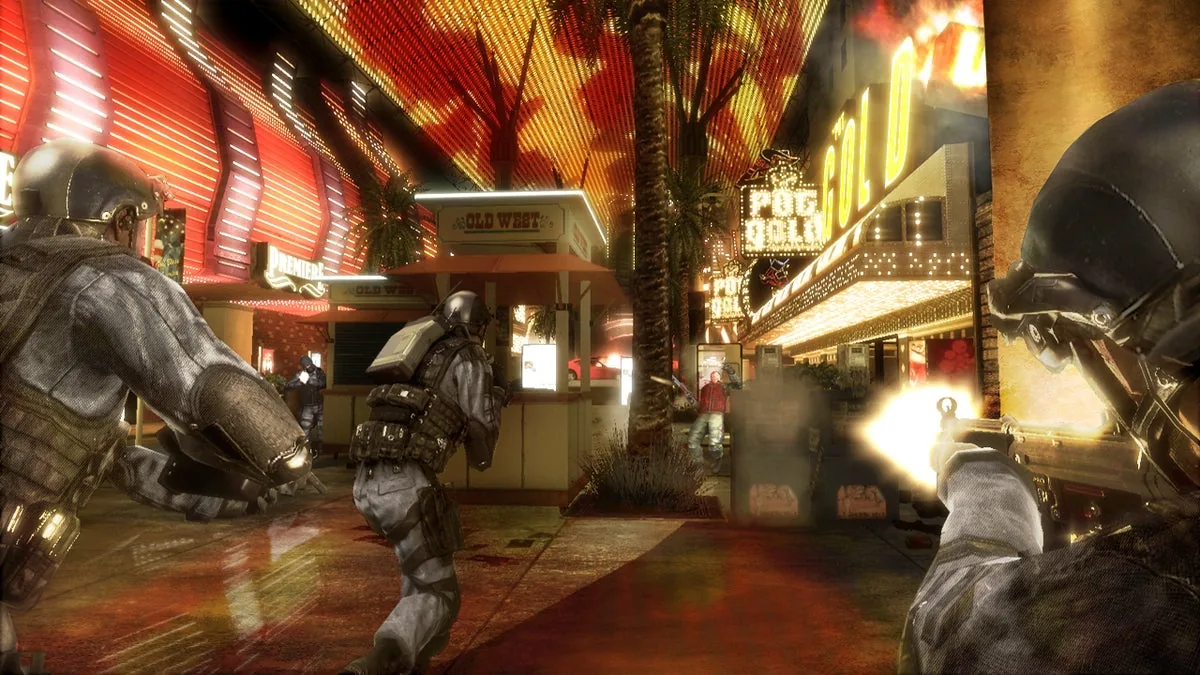
Fighting inside glitzy casino floors across Las Vegas, Nevada gave the tactical gunplay a distinct atmosphere that older military settings couldn’t match, and Henderson’s report suggests that returning to Nevada reflects a desire to recapture that balance [2, 4]. The neon aesthetic stood out immediately in 2006. By choosing the Spades codename, Ubisoft Montreal appears ready to revisit the visual identity that defined its seventh-generation console hits [1].


Vertical Spaces and Cover Mechanics
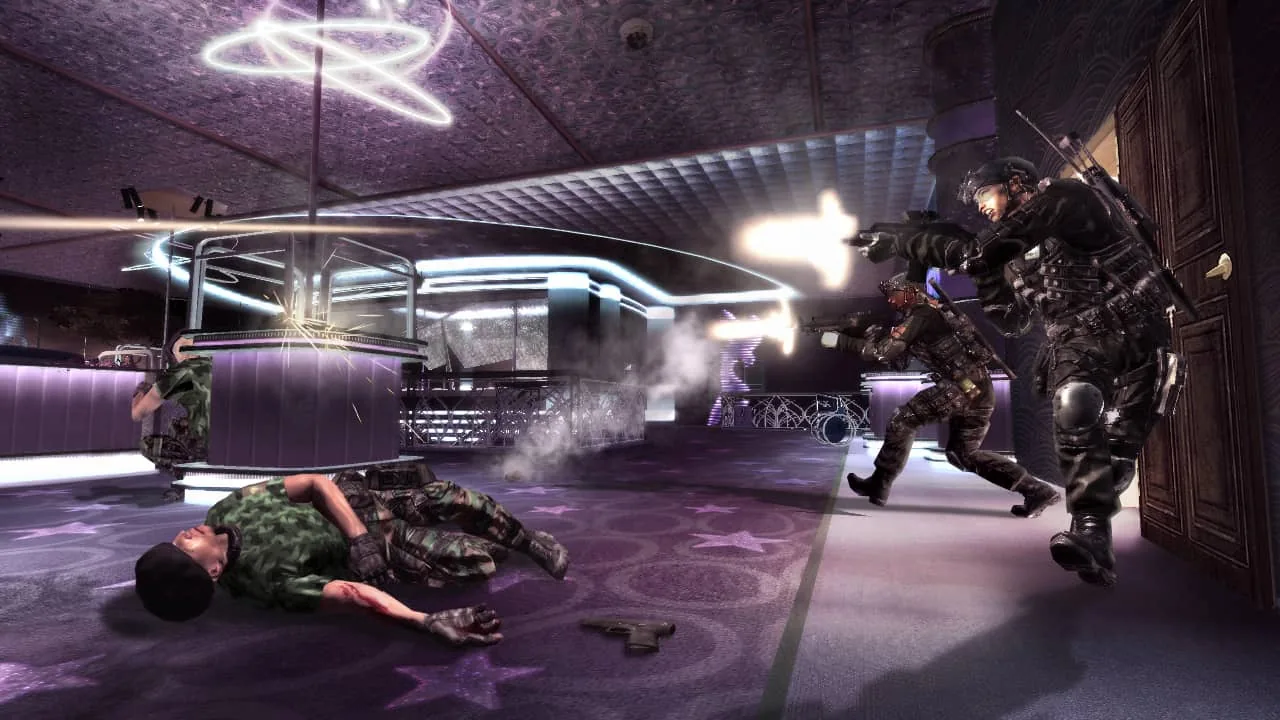
Combat in the casinos didn’t just unfold across flat carpets and slot machine rows; the level design pushed firefights into complex vertical spaces that forced operatives to check every angle above and below them. Operatives and their AI squadmates used climbing ropes on building exteriors, sliding past glass skylights and down elevator shafts before swinging upside down into an inverted rappel to eliminate sentries through high windows from unexpected angles [2]. Teams breached penthouses from above. Simultaneous entries—combining ceiling skylight drops with explosive charges at the front doors—became the defining tactical rhythm of the campaign.
A persistent progression system tied the entire experience together, allowing players to unlock body armor and weapon attachments across both solo and multiplayer modes [2]. Unlocks carried over seamlessly [4]. That unified progression loop gave players constant incentive to experiment with different tactical gear as they leveled up [2].
When Tom Clancy’s Rainbow Six: Vegas 2 followed in 2008 for PC, PlayStation 3, and Xbox 360, it expanded that progression loop with a dedicated sprint button and deeper character customization [1]. Destructoid recalled that the competitive multiplayer became so popular among console players that the game earned a featured spot on Major League Gaming’s Pro Circuit [4]. The sequel was well received overall, but critics pointed out that it felt more like an iterative expansion than a true generational leap [2]. Despite those criticisms, the game sold well and cemented Vegas as a high point for tactical co-op shooters [3].
Critical Reception and Competitive Play
Both Nevada shooters earned strong critical praise. IGN awarded the original 2006 game a 7.6/10 on PlayStation 3 and Xbox 360, later scoring the sequel’s limited edition release at 8.4/10 due to refined multiplayer options. The reviews validated blending cover shooting with squad tactical commands on consoles [3].
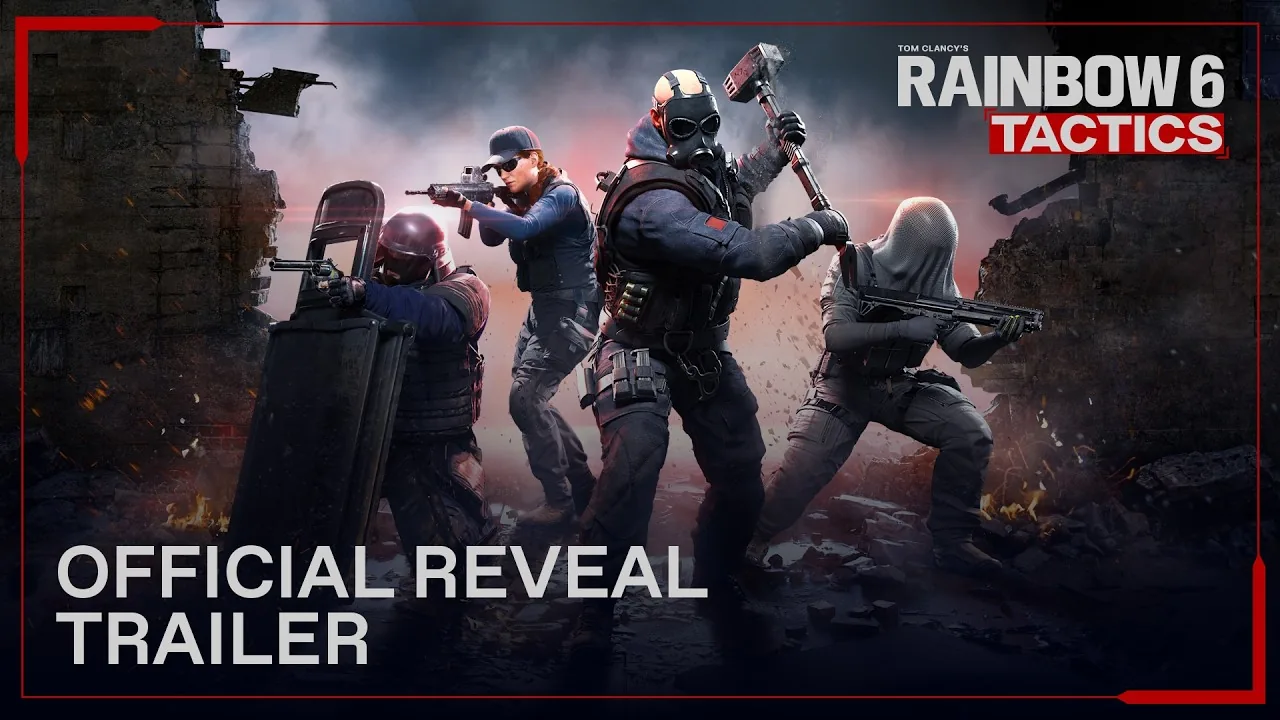
Ubisoft shifted direction in 2015 with Rainbow Six Siege, prioritizing close-quarters multiplayer with destructible environments that became a massive live-service hit, followed later by Rainbow Six Extraction in 2022 [1, 3]. However, handheld initiatives stumbled when Ubisoft had to sunset Rainbow Six Mobile only seven months after its rollout [4]. Not all tactical experiments succeeded on phones. Meanwhile, Ubisoft Paris is developing Rainbow Six Tactics, an upcoming tactical strategy game revealed at Gamescom 2026 that adopts turn-based solo missions [1, 2].
Despite the passage of eighteen years without a new installment, the Vegas era remains a cherished chapter in Rainbow Six history. Tom Clancy’s tactical brand dates back to the late 1990s, but it has splintered into varied gameplay formats over time [3]. Destructoid observed that returning to the Las Vegas strip would satisfy long-time enthusiasts who still consider the Rainbow Six Vegas games to be among the finest tactical shooters of their generation [4].
Rainbow Six Vegas Future at Vantage Studios
The emergence of Project Spades coincides with organizational changes in how Ubisoft manages its largest gaming brands. Rainbow Six now operates under Vantage Studios, a subsidiary Ubisoft formed last year to oversee major properties like Far Cry and Assassin’s Creed. Tencent holds an equity stake. The Chinese tech group owns a 26.32 percent share in Vantage Studios, supporting multi-year production cycles while Ubisoft also develops new Assassin’s Creed adventures set in ancient Rome and Jerusalem [1].
Reports about the historical projects arrived shortly after Ubisoft issued an official statement insisting that no other Assassin’s Creed remakes are currently in the works [1]. Ubisoft also has a Splinter Cell remake in development at Ubisoft Toronto, though updates on that stealth project have remained infrequent [3]. With Spades still in its earliest planning phase at Ubisoft Montreal, Insider Gaming expects that several years will pass before an official announcement arrives [1]. That timeline means more than two decades will have passed since Vegas 2 hit store shelves, but tactical shooter fans now have clear evidence that Ubisoft hasn’t forgotten its high-rolling past [3].
- ONLINE NEWS Blake, V. (2026, November 14). Ubisoft is reportedly heading back to Vegas, 18 years after Rainbow Six’s last trip. Eurogamer. [Article Link]
- ONLINE NEWS Palumbo, A. (2026, November 14). Tom Henderson Says Ubisoft Montréal Has Spun Off Three New Projects, Including the Return of Rainbow Six Vegas With a Third Entry. Wccftech. [Article Link]
- ONLINE NEWS Cripe, M. (2026, November 13). Ubisoft Reportedly Greenlights New Rainbow Six: Vegas Game After 18 Years Without a Another Installment. IGN. [Article Link]
- ONLINE NEWS Duwe, S. (2026, November 13). Viva Las Vegas, baby: Rainbow Six reportedly set to return to its high-rolling heights. Destructoid. [Article Link]


