





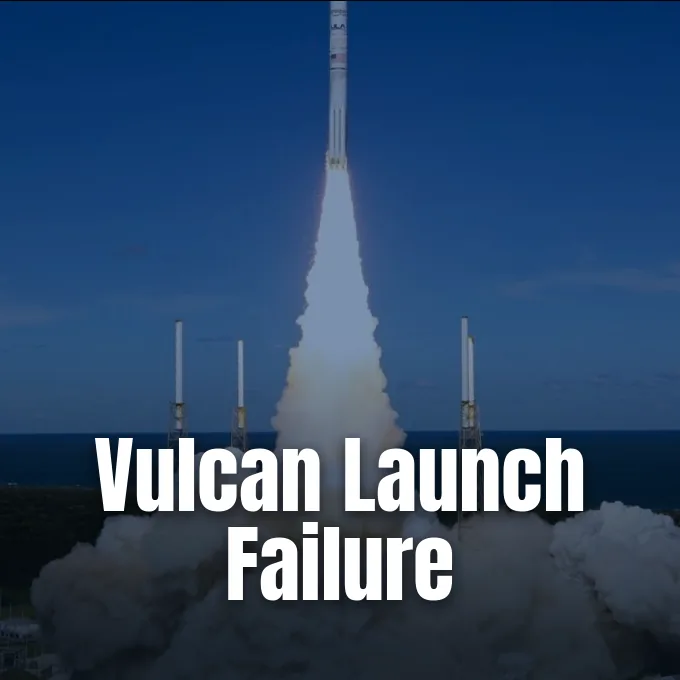
United Launch Alliance lost 40 Amazon Leo satellites on Sunday after its Vulcan Centaur rocket suffered a flight anomaly roughly 10 minutes after lifting off from Florida [1]. The mission was the first of 38 contracted flights intended to deploy Amazon’s low Earth orbit internet constellation, which aims to provide broadband coverage to customers around the globe [3]. Launch controllers tracked normal booster performance through solid motor separation, but the vehicle suffered an unexpected anomaly roughly 10 minutes into the flight, spinning out of control and failing to deliver its payload into low Earth orbit [1]. The accident delays Amazon’s deployment schedule and marks a tough setback in Jeff Bezos’ race against Elon Musk and SpaceX’s Starlink [3].
How the Vulcan Flight Failed
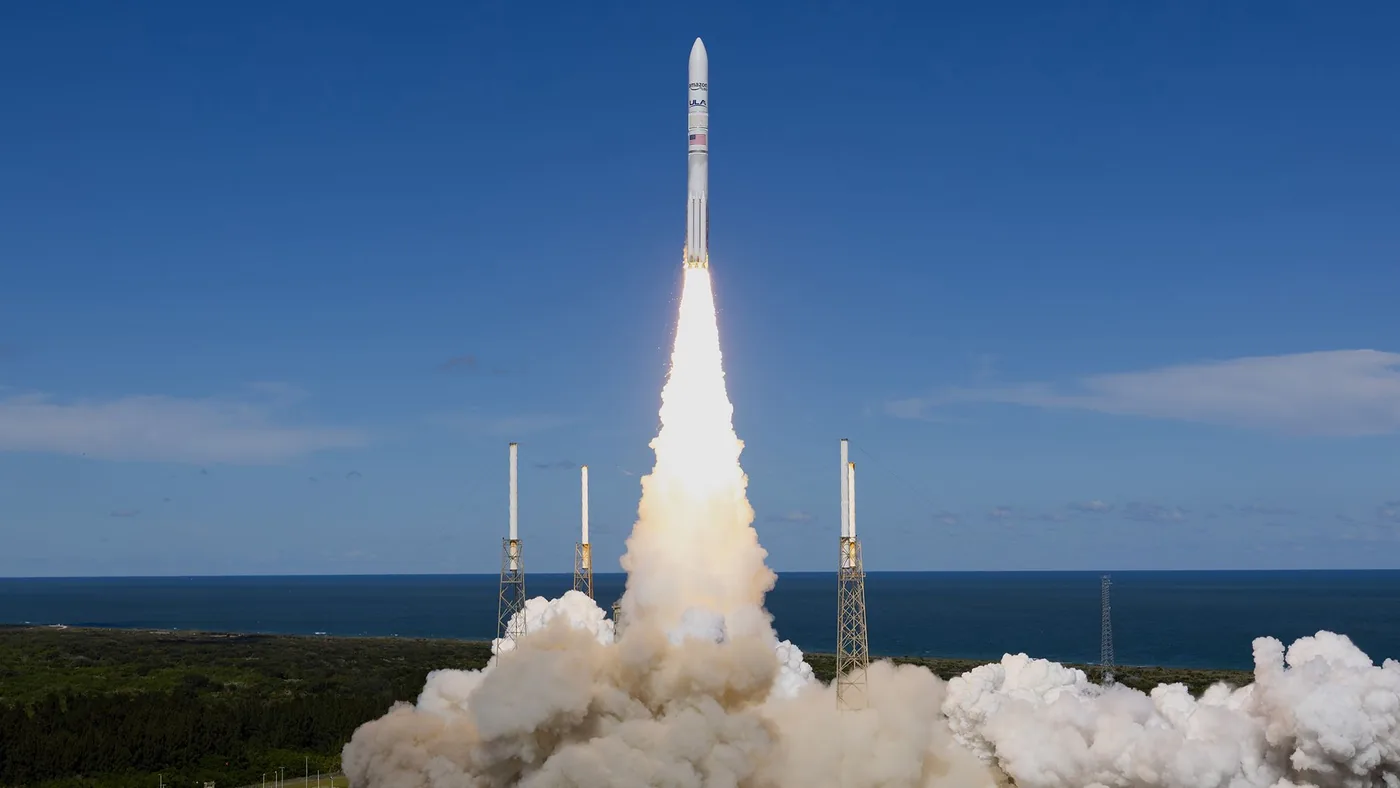
The heavy-lift core stage of the Vulcan Centaur rocket lifted off from Space Launch Complex 41 at Cape Canaveral Space Force Station at 12:40 p.m. local time (1740 GMT) on Sunday under clear Florida skies [3]. Flight controllers monitored the vehicle as it cleared the launch tower and climbed into clear skies under the power of its core booster and six strap-on solid rocket motors. The early ascent looked smooth as the solid motors separated as planned, but telemetry data showed severe problems about 10 minutes into flight. The rocket began to deviate from its planned path, prompting ULA to cut its live video feed a few minutes later [1].
United Launch Alliance (ULA) confirmed the loss through its Launch Director shortly after the anomaly occurred. The space launch provider, run as a joint venture between Boeing and Lockheed Martin, said that teams are studying the flight data to find what went wrong [1].
The company was founded in 2006. Sunday’s accident marks its first total failure. Over the past two decades, ULA built a dependable launch record flying dozens of flights for the U.S. military and the Pentagon. The setback comes at a difficult time because ULA had hoped Sunday’s flight would prove that Vulcan was ready to resume regular launches for the U.S. Space Force [1].
How 40 Amazon Leo Satellites Were Lost
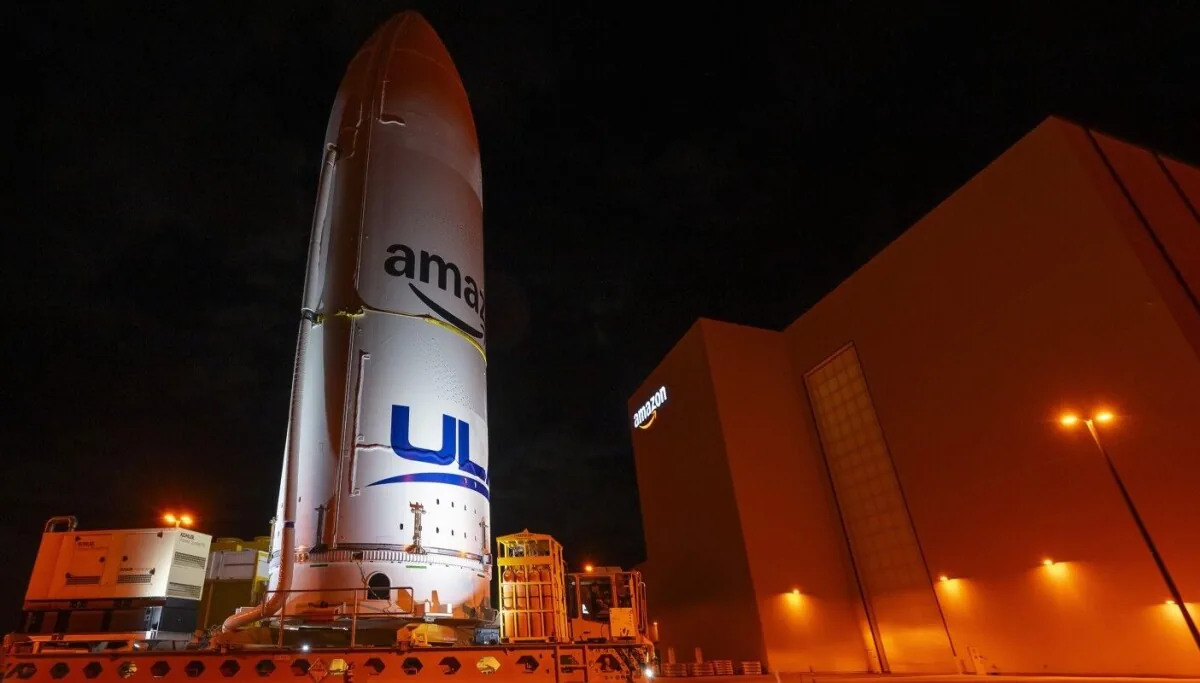
The lost payload carried 40 Amazon Leo satellites, which was the largest batch of spacecraft that Amazon had ever loaded onto a single rocket [3]. Amazon purchased 38 Vulcan launches to carry at least 40 satellites per mission, counting on the heavy rocket to put up nearly half of its first-generation constellation. All 40 satellites were destroyed [1]. The company hadn’t launched any satellites since July, making this flight a key step toward opening commercial internet services to the public in 2026. Losing the entire batch wipes out months of orbital preparation and deprives Amazon of 40 operational spacecraft meant to link ground stations with test users [3].
Amazon struck an upbeat tone after the accident and praised ULA [2]. “There is risk with any launch, and that’s especially true for inaugural missions like LV-01,” the Amazon Leo team posted on X. The team said it believes ULA will learn from the mishap [1].
ULA also pledged to work with Amazon to resolve vehicle issues before trying to fly again. “We will work closely with our customer and other appropriate organizations to find the cause, determine the appropriate corrective action, and return to flight as quickly as possible,” the rocket manufacturer said in a statement. Both Boeing and Lockheed Martin leadership stated that the mishap won’t disrupt their long-term supply agreements or their shared launch plans for future Amazon Leo constellation orbits [2].


Booster Telemetry and Engine Timing
Early flight data reported by Ars Technica sheds light on what went wrong during the booster stage of Sunday’s launch from Cape Canaveral. Sources familiar with the telemetry said that the two BE-4 core engines, built by Blue Origin, kept firing for at least 30 seconds longer than planned. Engineers believe the engines burned extra propellant to compensate for weaker-than-expected thrust as the rocket pushed through the heavy air of the lower atmosphere. The prolonged burn threw off the flight profile and left the vehicle struggling to maintain its planned course into low Earth orbit [1].
Telemetry animations showed the rocket began to spin shortly after the main Blue Origin BE-4 engines shut down. The vehicle kept rolling after the core booster fell away, and lighting the Centaur V stage’s pair of RL10 engines failed to stabilize the flight. Controllers couldn’t stop the spin. The stage failed to reach orbit [1].
Sunday’s accident wasn’t the first time the Vulcan rocket suffered flight troubles. Vulcan debuted in 2024 and completed four missions before Sunday, but two of those earlier flights had problems with their solid rocket boosters. Following an incident in February, the U.S. Space Force suspended national security launches on Vulcan as ULA worked to fix the issue. Sunday’s launch was designed to prove the vehicle was ready for regular service, but the fresh failure will extend scrutiny from federal investigators as ULA works to return the heavy rocket to regular service [1].
Amazon Leo Satellites Face Stalled Launch Fleet
The launch failure threatens Amazon’s schedule for opening public broadband access in 2026. Amazon has placed around 400 satellites in orbit since April 2025, but the full network requires 3,232 spacecraft to maintain low-latency internet coverage across global markets. The company hadn’t launched any satellites since July, and Sunday’s mission was intended to kick off a steady cadence of heavy launches. Ground teams had spent months testing the 40 satellites before shipping them to the Florida spaceport for payload integration [3]. Amazon plans to expand its constellation rapidly, building on milestones where Amazon builds its 1,000th satellite for low Earth orbit operations.
Amazon can’t easily switch its remaining satellites to other rockets because alternative launch vehicles aren’t ready to fly. Jeff Bezos founded Blue Origin, but its New Glenn heavy rocket has been grounded since an engine explosion during a test in May. That testing mishap leaves Amazon without a reliable heavy-lift backup in the United States [3].
Amazon also contracted flights with European provider Arianespace, which plans to launch 36 Leo satellites on a European Ariane 6 rocket from Kourou in French Guiana (no earlier than November 23). Amazon is the top customer for the French launch provider, but European rockets can’t replace the 38 launches booked with ULA. Losing the first batch of 40 Amazon Leo satellites means Amazon must build replacement hardware as ULA works to clear the Vulcan rocket for flight [3].
Rivalry in the Commercial Launch Market
The loss of Vulcan’s payload highlights the steep challenge competitors face when trying to match SpaceX’s pace in space [2]. Just one day before Vulcan failed, SpaceX launched a test flight of its Starship megarocket and deployed 26 Starlink satellites into orbit [3]. During that same flight on Saturday, SpaceX made aerospace history by catching the rocket’s giant booster out of the air using giant mechanical arms on its Texas launch tower [2]. The setback widens the gap with SpaceX, where Starlink satellites deliver broadband from low Earth orbit to millions of active subscribers worldwide.
Elon Musk offered sympathies on X, wishing ULA a swift return to flight, but he also pointed out SpaceX’s competitive lead. Musk posted on social media that his company can catch returning starships out of mid-air and ferries 85% of all Earth payload to orbit with its Falcon rockets, adding that Blue Origin is not yet able to launch reliably [2].
The market needs viable rocket alternatives. Astranis CEO John Gedmark said the United States needs another launch option for private customers and future NASA missions like Artemis IV [2]. The Space Force previously awarded ULA contracts for 19 national security missions compared to 28 for SpaceX, but Vulcan must prove it can fly reliably before it can carry those sensitive payloads into orbit [1].
- ONLINE NEWS Gil, B. (2026, November 16). ULA Vulcan Rocket Launch Fails, Losing 40 Amazon Leo Satellites. Gizmodo. [Article Link]
- ONLINE NEWS Nield, D. (2026, November 16). Amazon Leo rocket launch ends in disaster as 40 satellites are destroyed — as Elon Musk boasts that SpaceX can ‘catch giant starships from orbit with chopsticks’. TechRadar. [Article Link]
- ONLINE NEWS Zinin, A. (2026, November 16). Amazon loses 40 satellites in failed rocket launch. Tech Xplore. [Article Link]
- ONLINE NEWS Sharwood, S. (2026, November 16). Amazon loses first batch of broadband satellites launched on custom rocket. The Register. [Article Link]


