






Throughout cultural history, iris goddess stories have captured the human imagination by transforming transient atmospheric light into a divine messenger bridging the divide between heaven and earth. Can ancient celestial allegories truly resonate with modern astrophysics? Researchers today study how energetic solar dynamics observed by NASA mirror the vivid meteorological drama recorded by classical poets. In both ancient Greek cosmology and modern heliophysics, the name Iris represents a dynamic conduit conveying critical signals across complex boundaries [1].
Solar Interface Physics and NASA’s IRIS Mission
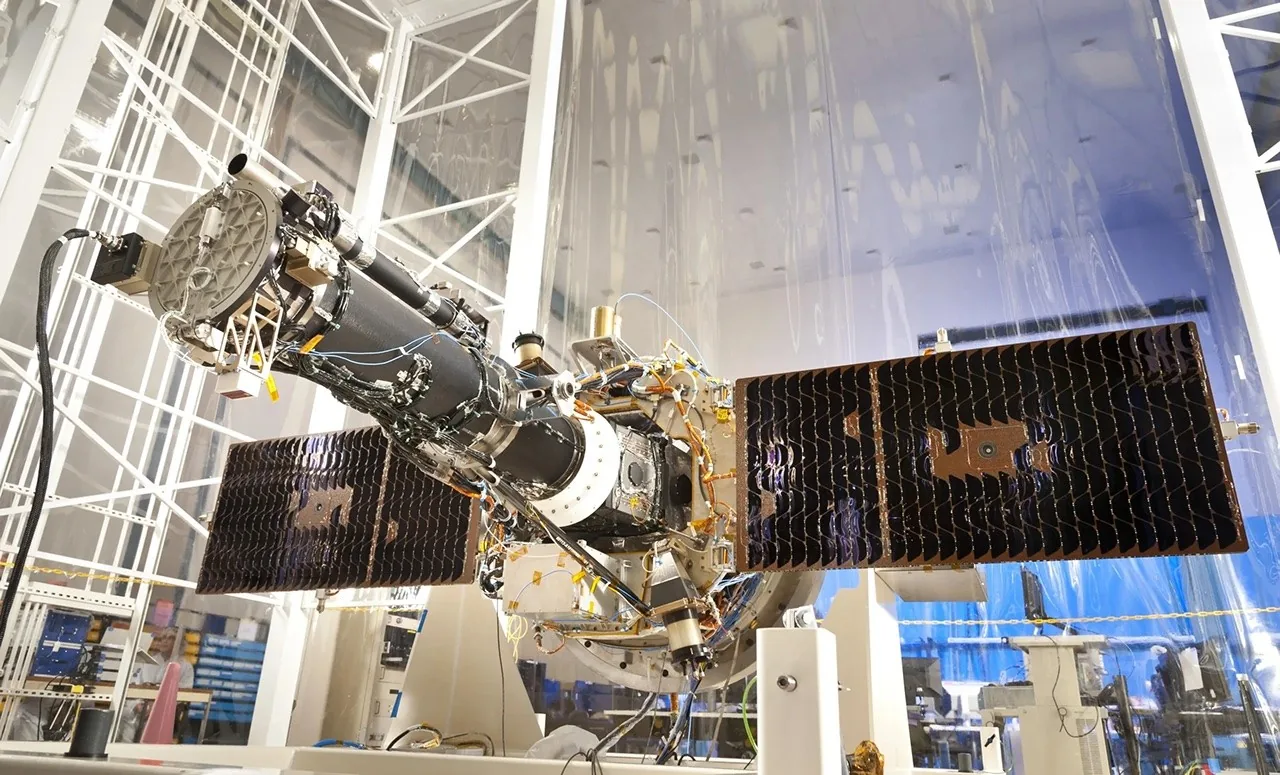
NASA deployed the Interface Region Imaging Spectrograph (IRIS) to investigate the energetic transition region where the solar atmosphere shifts from the cooler chromosphere into the blistering corona. Solar physics relies on high-resolution ultraviolet imaging to track how matter and energy flow through these turbulent layers. In November 2024, a major data outage disrupted scientific operations when severe flooding struck the mission data center housed at Stanford University [1]. Critical archives went offline.
Stanford University engineers and NASA mission specialists worked tirelessly to safeguard hardware integrity and restore the data pipeline. While telemetry confirmed that both spacecraft remained completely healthy, solar scientists temporarily lost access to critical real-time observations from IRIS and the Solar Dynamics Observatory (SDO) during the restoration. Successful restoration efforts eventually brought the complete IRIS archive back online. This milestone reestablished an essential observational stream for solar physicists worldwide who depend on uninterrupted spectroscopy [1].
Spacecraft health never wavered. Both IRIS and SDO weathered the Stanford facility flood without hardware damage, securing decades of solar observational records [1].

Coronal Nanojets and Solar Moss Discoveries
Beyond routine monitoring, the spacecraft captures intricate plasma formations that challenge theoretical astrophysics. Solar researchers identify small-scale, bright, patchy structures of hot plasma in the solar atmosphere as “moss” due to their sponge-like visual resemblance to terrestrial vegetation [1]. First identified in 1999, this solar moss forms low in the corona above magnetic sunspots. Scientists track these glowing patches to map energy distribution throughout magnetized atmospheric loops.
A rare orbital alignment on Jan. 17, 2021 provided an unprecedented opportunity to correlate spaceborne and close-proximity measurements when Parker Solar Probe reached its perihelion during its seventh swing by the Sun. The geometric configuration positioned Parker Solar Probe along the same magnetic trajectories monitored remotely by Earth-orbiting observatories [1]. In a study published in Nature Astronomy, astrophysicists documented the first definitive images of nanojets moving perpendicular to magnetic structures within the corona. These fast, slender bursts of light represent rapid magnetic reconnection events that release enormous thermal energy into the solar atmosphere. By capturing these microscopic explosive bursts, IRIS demonstrated how localized magnetic disruptions contribute to coronal heating.
Do nanojets hold the key to solving the longstanding coronal heating paradox? High-velocity reconnection jets reveal how magnetic fields store and abruptly release kinetic energy across the Sun’s outer layers [1]. Solar physics demands precision. These observations demonstrate that microscopic magnetic snapping drives macro-scale solar temperature spikes.
Iris Goddess Stories Across Ancient Greek Myth
The scientific impulse to decipher atmospheric light shares ancestral roots with classical mythology. In archaic Hellenic religion, Iris personified the rainbow as a shimmering, swift-footed herald connecting Mount Olympus to humankind. An ancient Corinthian inscription preserves her early name as Ϝῖρις (Wîris), featuring an archaic digamma that linguists note was later dropped. According to Hesiod’s Theogony, Iris was born to the sea god Thaumas and the Oceanid Electra, establishing her lineage as an elemental bridge between marine depths and atmospheric skies [2, 3].
Throughout classical antiquity, iris goddess stories depicted the winged messenger executing divine commands with absolute fidelity and speed. Mythological traditions describe how she sided with the Olympian deities during the Titanomachy while her sister Arke defected to the Titans. When the Olympians triumphed under sovereign ruler Zeus, Arke was stripped of her wings, which were subsequently presented to the Nereid Thetis and eventually worn on the swift feet of Achilles (podarkes) [2]. Unlike Hermes, who operated primarily under Zeus, Iris maintained an impartial station serving all Olympian gods while functioning as Hera’s personal attendant [3].

In domestic legends, Iris married Zephyrus, the western wind deity, bearing Pothos to personify longing and desire [2, 3]. Her role extended beyond passive symbolism into active celestial mediation. She replenished storm clouds by lifting sea water in her golden pitcher [3].


Classical Epics, Sacred Oaths, and Delos Rites
Classical literature frequently cast Iris as an indispensable intermediary during moments of crisis and divine judgment. In Homer’s Iliad, Zeus commands her to carry an ewer containing water from the River Styx, which served as a binding draught to induce slumber in any immortal who swore falsely. Homer records her dispatching Achilles’ prayer to Boreas and Zephyrus to ignite Patroclus’ funeral pyre, as well as guiding King Priam through hostile camps to ransom Hector’s body. When Demeter withdrew to Eleusis and caused famine after Persephone’s abduction, Iris flew to plead for agricultural restoration. Roman epic poet Virgil featured her repeatedly across the Aeneid, notably in Book 4 where Juno dispatches her to clip a sacred lock of hair from dying Queen Dido to release her spirit into the underworld [2].
Physical evidence of cult worship remains exceptionally scarce across archaeological sites. Unlike major Olympian deities who commanded sprawling marble temples and public festivals, Iris received modest offerings primarily recorded on the island of Delos. The ancient scholar Athenaeus records in Scholars at Dinner that islanders offered her simple cheesecakes called basyniae, made from wheat flour, suet, and honey boiled together. Approximately 15 black-and-red-figure vase paintings from the fifth century BC depict satyrs confronting the winged herald, reflecting scenes dramatized in lost theatrical satyr plays like Achaeus’ Iris [2].
Ritual traditions stayed remarkably local. While formal shrines never multiplied, earlier records of Iris documented her carved presence upon the western pediment of the Parthenon in Athens [2]. Surviving fragments preserve her image as a winged maiden holding her sacred pitcher.
Modern Narrative Shift and the IRIS Initiative
In the modern public sphere, the evocative legacy of Iris continues through collaborative initiatives that treat storytelling as a vehicle for systemic change. The International Resource for Impact and Storytelling (IRIS) operates as a global hub designed to exchange knowledge and build capacity among independent creators. Founded on the enduring principle that societies must imagine a better future before constructing it, the organization coordinates international narrative shift strategies to empower marginalized communities overcoming injustice. Storytellers do not create social progress in isolation, yet meaningful transformation rarely takes root without their visionary narratives [4].
Creative collaboration underpins the organization’s mission. IRIS partners with independent creators such as photographer Hervé Simon and artist Sêma Lao to translate local community realities into universal artistic expressions. By connecting civic innovators and narrative practitioners, these cultural programs expand audience reach and dismantle entrenched social barriers. Highlighted initiatives feature collaborations like photographer Kwame Lestrade’s work with Purposeful, showing how purposeful visual documentation amplifies community justice [4].
Narratives cultivate lasting public awareness. By embedding independent journalists and storytellers within grassroots campaigns, modern media initiatives transform regional struggles into shared human concerns [4]. This structured narrative design demonstrates how ancient concepts of messaging adapt to modern civic empowerment.
Fictional Reimagining From Bedtime Lore to Digital Worlds
Beyond civic media and astrophysical observatories, Iris thrives across popular literature and contemporary gaming lore. In gentle folklore adaptations written for young readers, bedtime tales depict Iris flying gracefully through vibrant clouds carrying royal message scrolls between Zeus and Aphrodite across ancient Greece. When she descends to mortal fields, children learn songs under shimmering arcs while the rainbow guards their peaceful play. Much like the mythical bird’s profound symbolism celebrated in cultural legends, the rainbow herald remains an enduring symbol of renewal, hope, and protective wonder [6].
Digital worldbuilding similarly reimagines the mythological archetype through nuanced narrative characters. In the fantasy lore of Stella Sora, a character named Iris serves as an analytical Trekker within the New Star Guild alongside companions Noya and Amber. Her affinity archives detail her early career as a diligent apprentice at the Senander Accounting Firm in Emor City and a sales representative at Grace Imperium Emor Soul Store No. 305. After missing the Year 994 Grace Light Academy entrance cutoff by just 1 point, she channeled her formidable computational discipline into guild exploration [5].
During challenging guild climbs, Iris mapped enemy encounters and calculated energy expenditures to clear three formidable Boss rooms in a single excursion. She acquired the coveted External Brain artifact from the Wishing Box to assist with complex mathematical filing, completing 20 commissions with a 100% satisfaction rate before selling the relic to fund guild operations [5]. Her pragmatic reliance on strict calculation inside the Lucky Oasis illustrates how contemporary fiction translates classical heraldic traits of precision and speed into modern narrative identities. Whether measuring coronal plasma, delivering Olympian decrees, or calculating guild budgets, Iris embodies the enduring bridge between complex systems and human understanding.
- ACADEMIC JOURNAL Thomas, V., & NASA Science Editorial Team. (2026, September 16). IRIS stories. NASA Science. [Article Link]
- WEBSITE Wikimedia Foundation, Inc. (2002, September 15). Iris (mythology). Wikipedia. [Article Link]
- WEBSITE Greek Gods & Goddesses. (2024, February 21). Iris • Facts and information on the goddess Iris. Greek Gods & Goddesses. [Article Link]
- REPORT IRIS – the International Resource for Impact and Storytelling. (2010, March 4). International Resource for Impact and Storytelling. IRIS. [Article Link]
- WEBSITE Stella Sora Wiki. (2026, August 12). Iris stories. Miraheze. [Article Link]
- WEBSITE sleepystory.net. (2025, March 3). Iris Rainbow – Children’s bedtime story. sleepystory.net. [Article Link]
APA 7: PerEXP Teamworks. (2026, September 17). How Iris Goddess Stories Span Solar Science and Ancient Myth. PerEXP Teamworks. https://perexpteamworks.com/en/iris-goddess-stories/


