





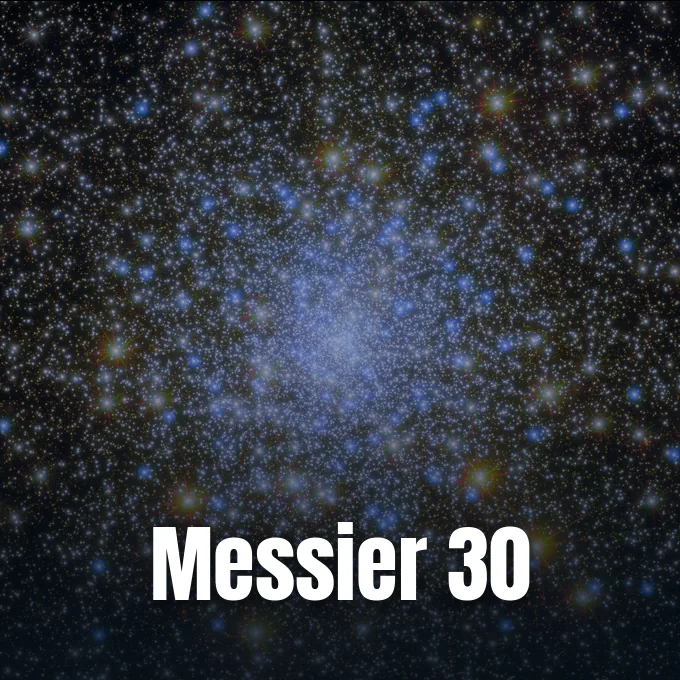
Astronomers with NASA and the European Space Agency studying cosmic evolution have gained fresh insight into the deep history of our Milky Way galaxy through new composite imagery from the Hubble Space Telescope [2]. By examining the glittering stellar collection known as Messier 30, researchers can trace how ancient star systems assembled during the earliest cosmic epochs and joined the outer reaches of the Milky Way [1]. Hubble data show how ancient stellar swarms help scientists reconstruct major assembly events spanning billions of years [2].
Ancient Star Swarms in Capricornus
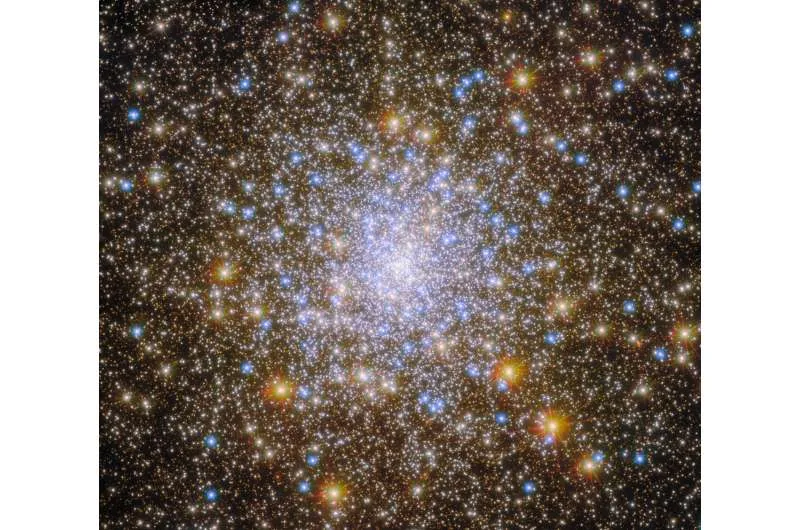
French astronomer Charles Messier first cataloged this sparkling grouping of stars to prevent observers from mistaking diffuse sky objects for passing comets as they searched the night sky with early telescopes [1]. The cluster is also recorded in official astronomical catalogs as NGC 7099 [2]. It forms a globular cluster, gathering tens of thousands to millions of stars into a tightly packed sphere bound by mutual gravity. Most of these giant structures do not stay inside the thin galactic disk. Instead, they orbit far out in the diffuse galactic halo, circling the Milky Way like moths around a distant light [1].
Messier 30 sits roughly 27,500 light-years away from Earth toward the southern constellation Capricornus [1]. NASA records confirm that at least 150 globular clusters orbit our Milky Way, each holding clues about conditions when the first stars began to ignite [2]. The nearest cluster sits 6,000 light-years away. Measurements indicate that globular clusters are ancient, with estimated ages ranging between 11.5 and 13.5 billion years [1]. Because certain clusters formed when the universe was young, they act as sealed chemical vaults that preserve the gas composition of our early galaxy [2]. Similar questions about early galactic architecture arise when researchers investigate Milky Way-like galaxies found in early universe surveys. Astronomers compare these distant structures to learn how cosmic disks and vast diffuse halos assembled over billions of years [1].
Harlow Shapley and Galactic Mapping
Globular clusters have guided astronomers in mapping the structure of our galaxy for over a century [1]. More than a hundred years ago, astronomer Harlow Shapley tracked specific variable stars inside these clusters to measure distances to dozens of star swarms [2]. His calculations showed that our Sun does not sit at the center of the Milky Way, shifting the known galactic center toward the constellation Sagittarius [1]. His measurement altered how scientists understood the true scale of our cosmic home [2].
Shapley made genuine errors in his distance calculations, however, which led him to conclude that our Milky Way was roughly twice as large as its actual size [1]. Even with those flawed distances, his core realization about the off-center position of our solar system held true [2]. Today, ground observatories and Hubble space instruments continue to rely on globular clusters to probe galactic dimensions and origin stories [1]. In a related line of inquiry into how individual stars scatter through space, researchers have developed techniques for tracing orphaned stars back to their Milky Way origins with stellar paternity tests. Reconstructing stellar journeys helps scientists piece together ancient cosmic events that shaped the Milky Way [2].
Origin Clues from Retrograde Orbits
Did all globular clusters orbiting the Milky Way form from the same parent gas clouds? Recent dynamic surveys suggest they did not [1]. While clusters born locally preserve the chemical ingredients of the early galaxy, several outer swarms follow unusual paths [2]. Orbital tracking shows that Messier 30 travels in a direction opposite to the rotation of the galactic disk, a backward trajectory astronomers describe as retrograde motion [1]. Such backwards motion offers strong evidence that the cluster was not born here [2].
Instead of forming inside the newborn Milky Way, Messier 30 was likely swallowed by our galaxy in the distant past [1]. Theorists explain that our galaxy grew by pulling in dwarf galaxies along with their native star clusters [2]. When a smaller satellite galaxy fell inward toward the galactic core, gravitational tides stripped away its loose stars, leaving dense cores like M30 to circle in the outer halo [1]. The retrograde orbit tells researchers that this cluster is an immigrant from another system, providing a direct record of galactic cannibalism [2]. Such merger events were common when the universe was younger and denser, showing that the outer halo is populated by captured stellar groups [1].


Deep Imaging of Messier 30 with ACS
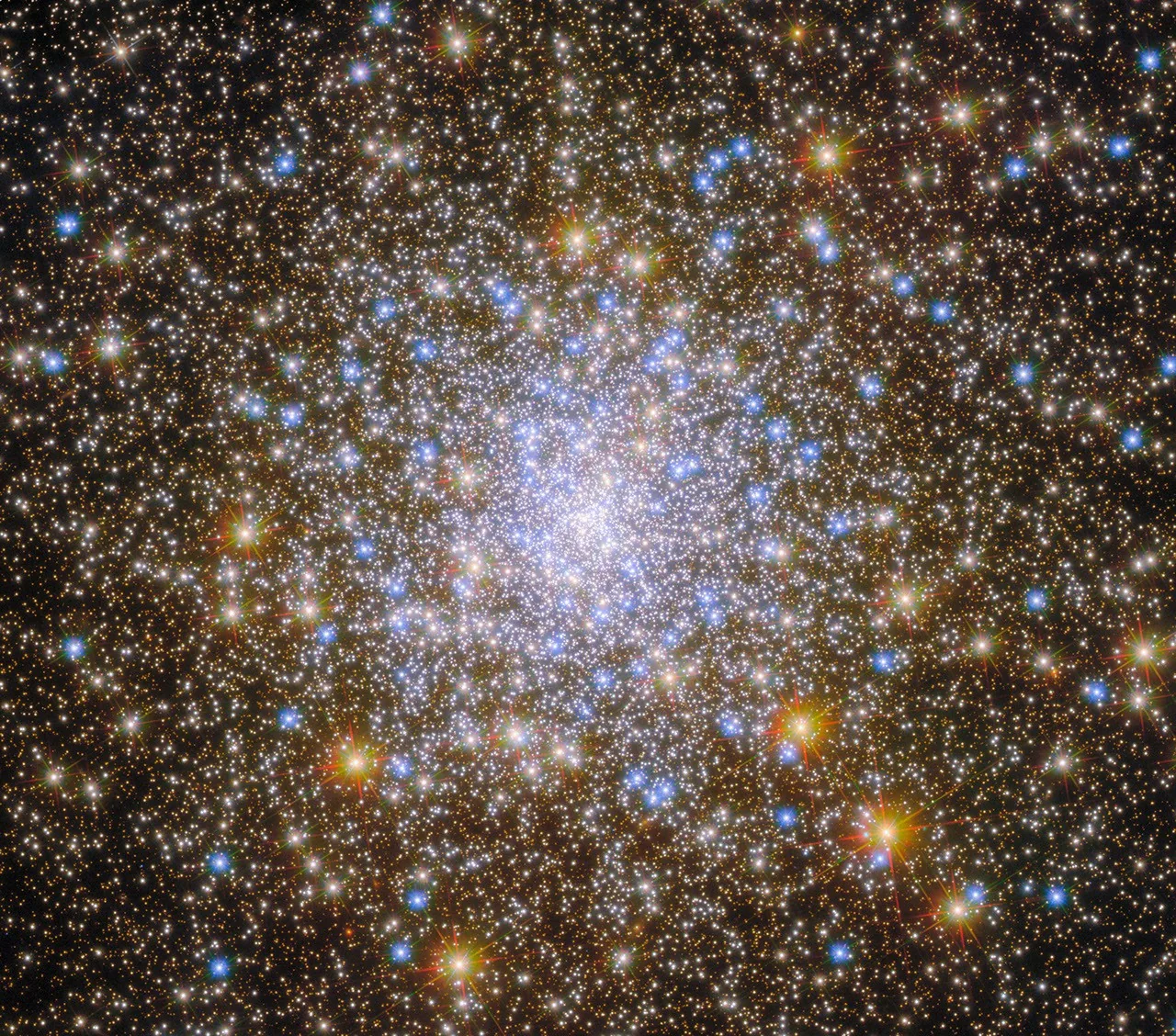
Hubble has returned to Messier 30 multiple times over several decades to resolve individual stars in its crowded heart [1]. An earlier observing campaign, designated program #10775 under principal investigator Ata Sarajedini, used the Advanced Camera for Surveys to photograph dozens of Milky Way globular clusters [2]. That survey focused on red and near-infrared light, peering through dust to count faint stars down to 20% of the mass of our Sun [1]. Low-mass stars burn fuel slowly [2].
When ACS detected stars at one-fifth the solar mass, the survey enabled astronomers to build detailed stellar census charts for halo clusters [1]. Because these low-mass stars shine steadily across billions of years without exhausting their core hydrogen, their presence gives observers a reliable baseline for calibrating cluster ages and chemical evolution [2]. Clear views of these dim members confirmed that M30 had maintained its structural stability through billions of orbits around the Milky Way [1]. Researchers can compare these survival rates against theoretical models of cluster disruption, confirming how gravitational forces affect low-mass stellar populations over cosmic time spans [2].
Ultraviolet Filters Reveal Blue Stragglers
A later Hubble program, registered as program #13297 under principal investigator Giampaolo Piotto, revisited the cluster using the Wide Field Camera 3 to inspect stars at shorter wavelengths [2]. The team used three filters [1]. These instruments captured bluer and ultraviolet light, which is essential for uncovering exotic stellar types like “blue straggler” stars that appear unexpectedly younger and hotter than their aging neighbors [2]. Normal stellar evolution suggests that massive blue stars should have burned out long ago, yet these anomalous objects remain intensely luminous [1].
Data collected by Piotto’s team also allowed astronomers to isolate multiple stellar populations living inside a single globular cluster [2]. Scientists once thought that all stars in a globular cluster formed in a single brief burst from the same primordial cloud [1]. Hubble observations disproved that idea [2]. The telescope revealed that clusters like Messier 30 contain distinct generations of stars with differing chemical signatures, demonstrating that star birth inside crowded clusters occurred over extended epochs rather than during an isolated initial flash [1]. Ultraviolet imaging separated younger secondary populations from ancient first-generation stars [2].
Tracking Messier 30 Stars Over 15 Years
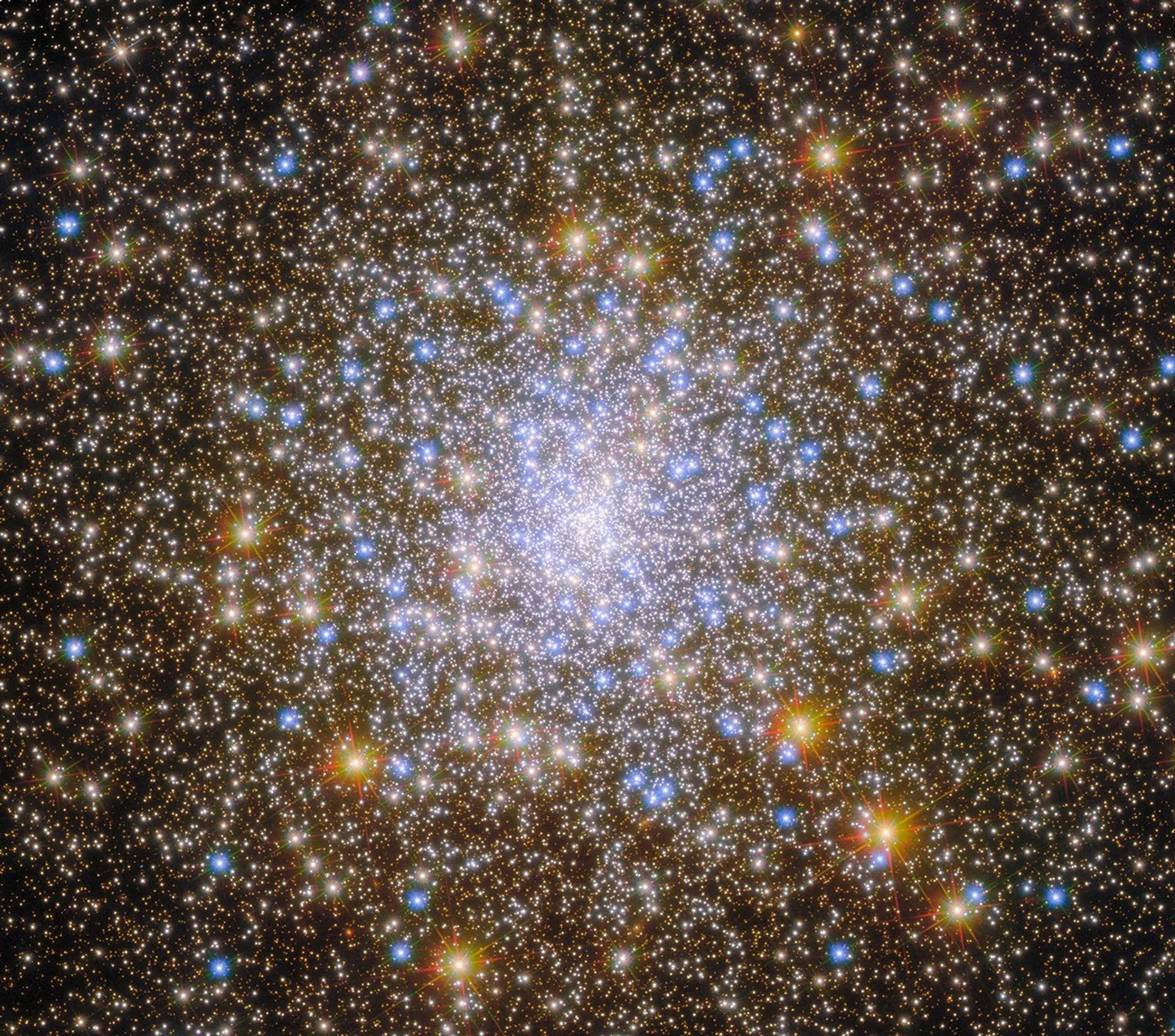
Astronomers returned to these globular clusters under program #16298, led by principal investigator Mattia Libralato [2]. Researchers used Hubble’s Advanced Camera for Surveys once again to compare new exposures against observations collected 15 years earlier [1]. Stellar proper motion studies demand exceptional optical precision and years of steady baseline data [2]. Hubble observed the cluster three separate times [1].
The latest composite image of Messier 30 combines data from all three observing programs, spanning ultraviolet, visible, and near-infrared wavelengths [1]. Each slice of the light spectrum reveals different stellar traits, from cool low-mass stars to hot blue stragglers crowded near the cluster center [2]. The combined 15-year dataset from ACS and Wide Field Camera 3 gives astronomers a detailed historical record of how stellar populations evolve inside tightly bound gravitational systems [1]. Beyond cluster studies, Hubble measurements continue to inform wider astronomical debates, including ongoing evaluations of the Hubble tension across cosmological models. NASA science writer Andrea Gianopoulos and media contact Claire Andreoli at Goddard Space Flight Center in Greenbelt, Maryland, emphasize that these multi-wavelength archives demonstrate how ancient stellar swarms unlock the assembly history of the Milky Way [2].
- ONLINE NEWS Phys.org. (2026, November 5). Hubble learns galactic history from stars. [Article Link]
- WEBSITE Gianopoulos, A., & NASA Hubble Mission Team. (2026, November 5). Hubble learns galactic history from stars. NASA Science. [Article Link]
APA 7: PerEXP Teamworks. (2026, November 6). Hubble Studies of Messier 30 Trace Ancient Galactic History. PerEXP Teamworks. https://perexpteamworks.com/en/messier-30-galactic-history-hubble/


