



Google updated its privacy terms on October 16, 2026, adding rules that let user data from Gmail, Google Drive, and Google Photos shape targeted ads when linked to AI tools. The change applies to account holders who activate Google Personal Intelligence, an AI system built to link user data between Google Search and everyday Google Workspace apps. In past years, Google promised that it would not build custom ads on files stored in cloud storage or email inboxes, but the new policy carves out an explicit exception for data shared with services that display advertising. Account holders who link these apps to gain smarter search answers may now see those personal details shape the product ads delivered to them [3].
How Google Personal Intelligence Connects App Data
Google began rolling out Google Personal Intelligence in beta at the start of 2026 to make its chat tools more helpful. Instead of returning generic answers, Gemini and Google Search draw context from linked services. The feature taps into messages in Gmail, image albums in Google Photos, and files saved on Google Drive [1].
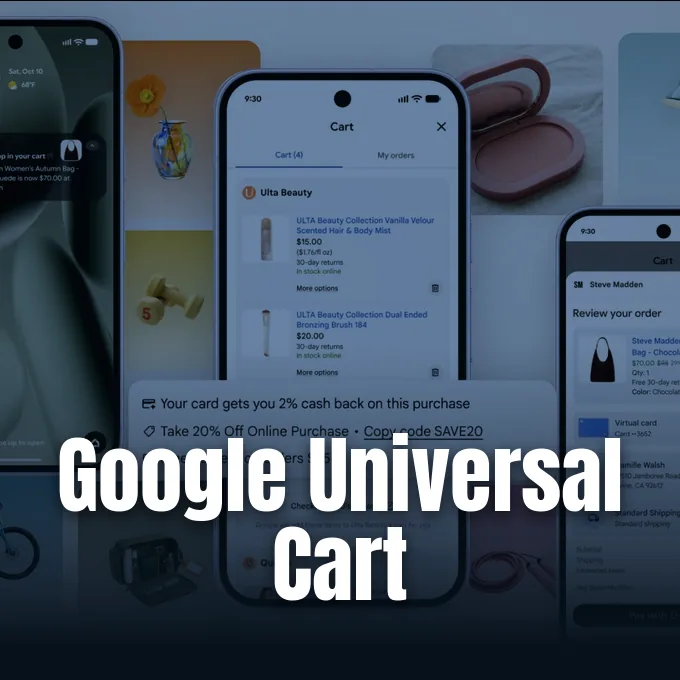
Practical use cases show how this works. For instance, someone planning a trip might ask Google Search for dinner spots near their lodging, allowing Search to scan Gmail for the hotel booking and highlight nearby cafes without making the traveler search twice. Google has linked similar machine learning tools to web shopping through universal shopping checkout tools in Google Search and Gemini. The system turns private records into quick shortcuts within several products [3].
Engineers linked AI Mode and web tools designed to summarize long queries into this shared pipeline. The Verge reported that these tools rely on continuous data sharing to refine their answers over time [2]. When Google Search gains access to private notes and cloud files, that user data enters a space built around ad delivery [3].
The Updated Terms for Personalized Ads
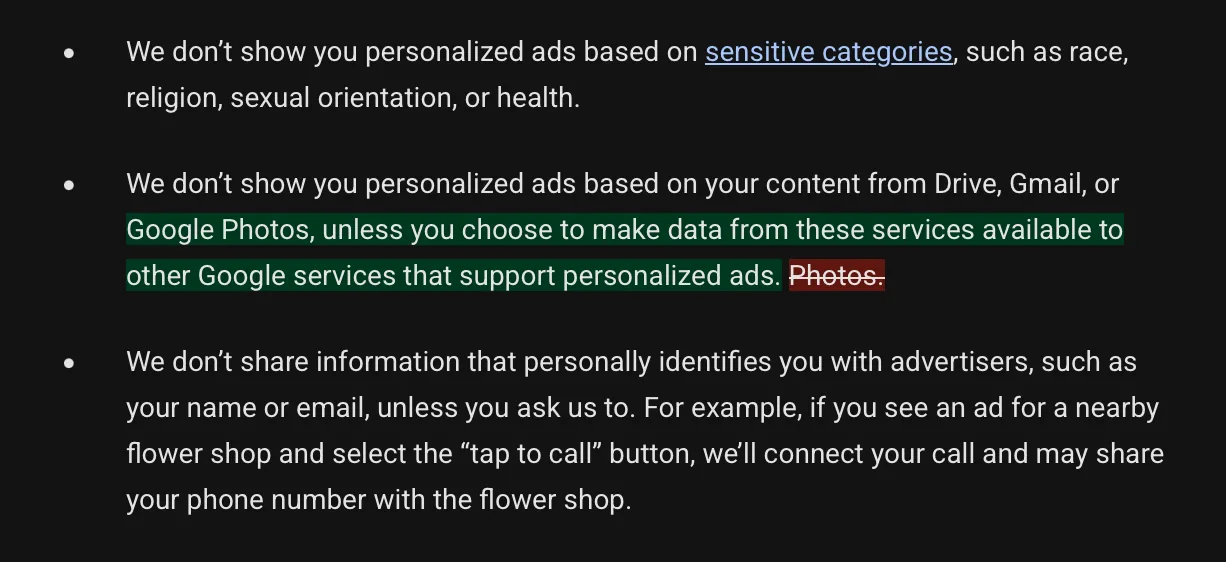
Google updated its official legal terms with a quiet policy revision that alters how user data interacts with ad algorithms, an update that Android Authority spotted on October 23, 2026, after finding that its enforcement began on October 16 [3]. In older terms, Google promised that personalized ads were not “based on your content from Drive, Gmail, or Photos”. That baseline changed. Google added an explicit exception to the policy: “unless you choose to make data from these services available to other Google services that support personalized ads” [1]. Turning on AI features opens formerly protected files to ad systems [2].
Under the revised policy rules, when account holders grant Search permission to pull data from Workspace or Photos, Search can evaluate those details to customize marketing messages. Google explained that interactions with linked tools allow Search to personalize content, “including ads,” based on user interests and activities [2].
Google gave an example of how interest-based targeting operates between linked platforms. If a user searches for “mountain bikes” in Google Search, the system may present ads for sports gear while that person browses YouTube [2]. The new terms extend that logic to private files. When someone books flights or buys gear and leaves receipts in Gmail, linked AI tools can interpret those buys to inform future marketing pitches, creating targeted ad categories derived from personal schedules [3].


Protections for Personal Identifiers
Despite the policy shift, Google keeps limits on advertiser access. Ad buyers do not gain entry to inbox messages, private image albums, or files stored on Google Drive [1]. The company stated that it does not share identifying details, such as account names or email addresses, with advertisers without explicit user consent [3].
Google ad guidelines also bar tailoring marketing around sensitive categories, including religion, race, health status, or sexual orientation [2]. The policy language distinguishes between automatic inbox scanning and user-selected AI connections. Google does not scan emails or photo galleries by default to display ads [3]. Instead, the data flow begins only after a user turns on linked features to assist with search tasks. Technology writer Will Sattelberg of 9to5Google wrote that while Google has not opened cloud storage to advertisers, it built a path where linked content within Search can shape ad delivery based on personal archives [1].
Consumer advocates remain cautious about the boundary between helpful answers and marketing delivery. As Android Authority reporter Shimul Sood pointed out, there is a clear difference between using personal records to answer an immediate prompt and using that history to decide which ads to display. Account holders who welcome automated travel assistance might feel uneasy knowing those same travel details could trigger promotional pitches from luggage brands or airlines [3].
Managing Google Personal Intelligence Settings
Because Google Personal Intelligence remains an opt-in system, users can manage their connections through Google account settings. Those who prefer to keep their inbox and photo albums separate from ad algorithms can disconnect single services without losing general search tools [3]. The settings menu sits within the Data & privacy dashboard on the Google Account page [1].
To adjust access rules, account holders open Personalization & activity and choose Personalization settings to view controls for linked tools. Under the Additional Personal Intelligence heading, users can find the Connected Content menu, where toggling off Google Workspace and Google Photos blocks Search from indexing incoming messages, sheets, and private images [3]. Users can also click the Turn off button on the page to halt all custom recommendations. This stops ad modeling. Every linked app has its own toggle [1].
Account holders gain these privacy controls as Google tests new uses for its machine learning software, including Gemini phone call testing for Pixel users on modern hardware. However, adjusting permissions inside Personal Intelligence does not automatically restrict other ad trackers tied to web history or device location [2]. Account holders who want thorough privacy must examine their general ad personalization preferences as well [3].

Data Retention in Search History
Disconnecting Workspace apps or Google Photos stops future data gathering, but it does not wipe records that Google already cataloged. Android Authority observed that information stored in Search Services History can linger long after an app gets unlinked. Deleting an original email from Gmail or removing an image from Google Photos does not guarantee that Search instantly discards the cached inferences generated from that content [3].
Past interactions with Gemini or Search tools may continue shaping user profiles unless account holders manually clear their saved activity records. People must visit their account history settings to purge saved queries and delete past search logs [1]. For individuals who relied on Gmail and Google Photos for years, those digital archives contain detailed records of family life, financial transactions, and medical appointments, meaning that historical data can persist in ad targeting models until explicitly purged by the user [3].
Google’s rollout reflects a constant trade-off between user convenience and data visibility. Personal Intelligence aims to save time by interpreting personal plans without requiring users to explain context from scratch during every prompt [3]. Yet reporter Jess Weatherbed at The Verge pointed out that connecting personal data to obtain better recommendations should not obscure how that information gets used [2]. Knowing what permissions are granted matters just as much as getting faster answers [3].
- ONLINE NEWS Sattelberg, W. (2026). Google will target ads based on Gmail, Photos data if Personal Intelligence is enabled. 9to5Google. [Article Link]
- ONLINE NEWS Weatherbed, J. (2026). Now Google says it might use your Gmail and Google Photos data to target ads. The Verge. [Article Link]
- ONLINE NEWS Sood, S. (2026). Google makes a privacy policy exception to use your Gmail and Photos data for ads. Android Authority. [Article Link]


