





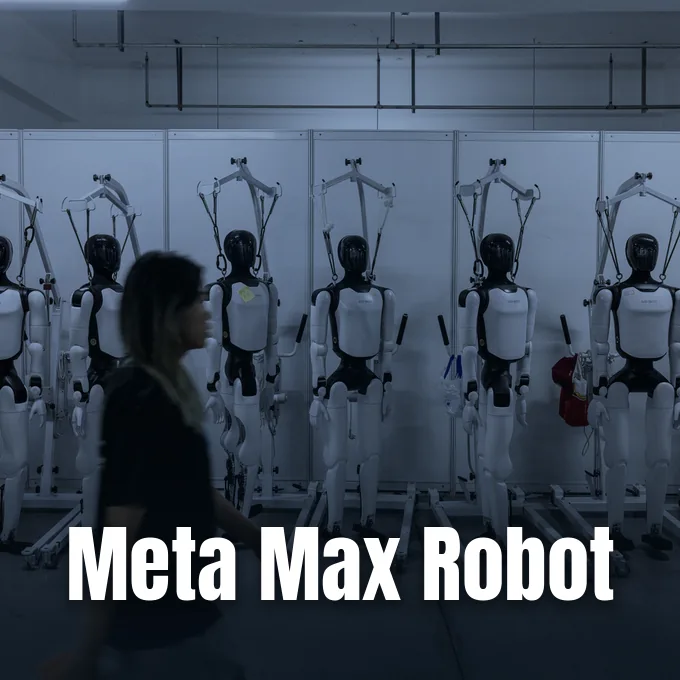
Meta Platforms built a working Meta humanoid robot prototype codenamed Max to see whether AI can help with household chores, according to an investigative report published by The Information on October 31, 2026 [1]. Meta built it with Fourier in three months. The Shanghai company supplied the hardware [3]. Meta hasn’t announced a public launch date, and company representatives said the early machine serves lab research rather than a store rollout [4].
The Meta Humanoid Robot Build in Shanghai
Meta moved fast by sending Li-Chen Miller to Shanghai. Miller, Meta’s vice president of product for robotics, worked at Fourier’s factory for nearly two months [3]. That close stay helped Fourier and Meta build a working bipedal unit in about 90 days. The speed came from the supply network across China’s Yangtze River Delta. In Silicon Valley, ordering custom parts like harmonic reducers, coreless motors, and high-dexterity robotic joints often takes months of back-and-forth negotiation with distant overseas fabricators. Miller tested fixes on site. Having leadership on the factory floor let Fourier and Meta check hardware revisions in days, giving Meta a quick way to test AI models on real robot bodies [4].
Meta showed Max at a closed robotics summit in late August 2026 [6]. The company’s hardware push began last year. Bloomberg reported then that Meta had formed a group to build home robot hardware [1]. Andrew Bosworth, Meta’s CTO, spoke with American startup Figure AI and Chinese robotics vendor Unitree before Meta ultimately decided to partner with Fourier in Shanghai [4].
In May 2026, Meta bought Assured Robot Intelligence. Researchers Lerrel Pinto and Xiaolong Wang founded that startup to build AI software for robot bodies. As trade outlet SiliconANGLE reported, their team joined Meta Superintelligence Labs and now works with Meta Robotics Studio [5]. The partnership with Fourier gave Meta an operational bipedal chassis in roughly three months without needing to build costly mechanical assembly plants across the state of California [4].

Hardware Features in the First Unit
Max stands nearly five feet tall. It weighs 106 pounds, or about 48 kilograms [1]. To run perception models and motion planning in real time, Meta picked Nvidia’s Jetson Thor computing chip. Fourier provided the basic bipedal frame, but Meta engineers changed its height, head shape, and camera mounts before fitting shoes and five-fingered hands suited for living rooms [3]. Meta chose those compact dimensions so the unit can reach counters and tables without towering over people sitting nearby. The smaller frame also helps the machine move through standard room doors without bumping into walls [4].
Max has two speakers in its chest. Its head screen shows facial expressions with digital eyes and a mouth. Each arm ends in a dexterous five-fingered hand built specifically to lift and manipulate everyday domestic items like water bottles, ceramic cups, and children’s toys. The fingers grip objects gently so they don’t break [3].
Meta gave Max clear sensing goals. The prototype can recognize a human voice from approximately five meters away and accurately interpret user hand signals from a distance of three meters. It makes eye contact and uses its face screen to show if it is listening, thinking, or unsure [3].

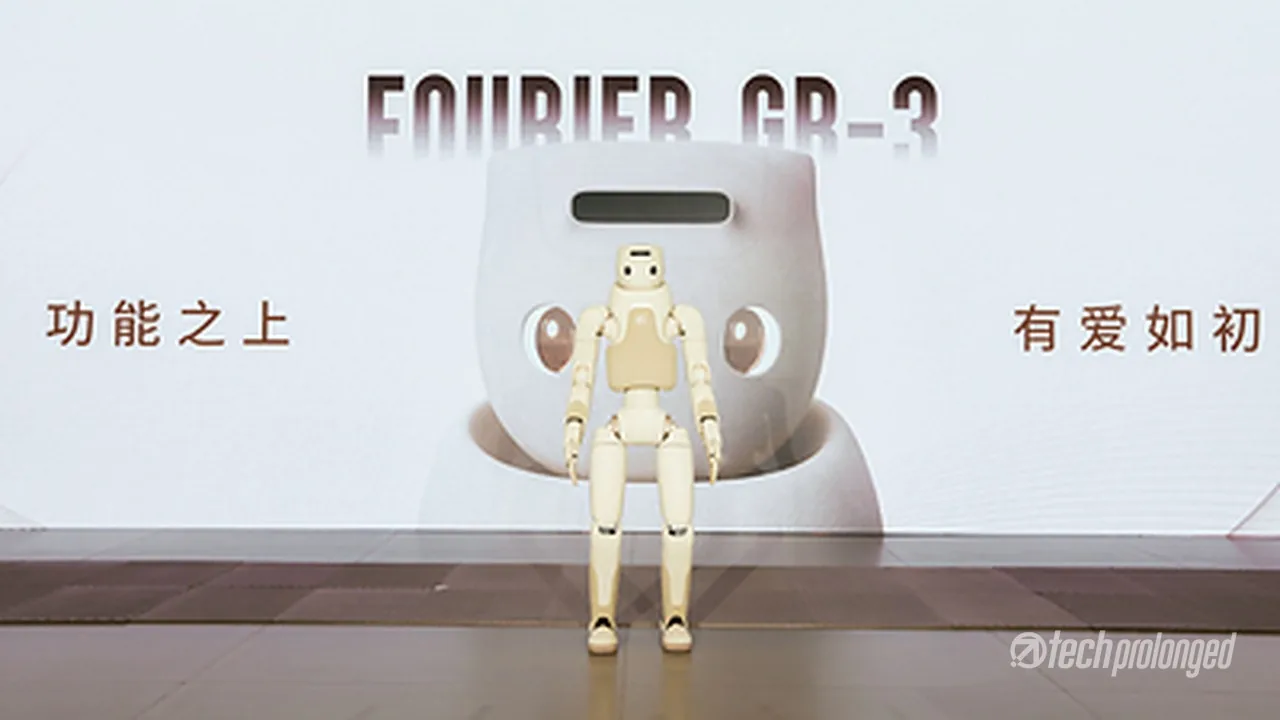
Fourier launched its own GR-3 robot in August 2025 as a Care-bot for older adults. Fourier’s production GR-3 stands 165 centimeters tall, weighs 71 kilograms, and features up to 55 degrees of freedom paired with 12-joint dexterous robotic hands. Max is smaller and lighter [5]. It drops weight and height so it won’t hurt people or break furniture if it loses its footing [4].


Meta Max Robot Upgrades for Max 2
Meta didn’t stop with that first build. In September 2026, Meta and Fourier started work on a second model called Max 2 [6]. The new build aims to fix flaws that cropped up during early home trials [3].
Max 2 brings four major hardware updates. Engineers redesigned the torso. Engineers also upgraded the five-fingered hands so the bipedal robot can grip slippery mugs, smooth bottles, and oddly shaped toys without dropping them on tile floors [4]. To help the bipedal machine climb stairs without falling, Fourier and Meta added extra sensors tuned for steps [1]. Most American homes have second floors. A helper that stops at the bottom step is half as useful. The team also built a micro-projector into the head. The projector beams interactive cooking timers, dinner recipes, and text alerts onto kitchen walls or flat counters so family members do not need to look at a phone screen [4].
Training robots is harder than training chat tools. Chat models learn from web pages. Bipedal machines require thousands of hours of physical trial and error to learn how shirts fold, how smooth bowls slide, and how rugs slip underfoot [7]. Building sturdier test units gives the Meta humanoid robot team the data it needs to train better models [3].
Hardware Integration with Muse AI
Meta wants its AI agents to have physical bodies [3]. In leaked internal audio recordings, CEO Mark Zuckerberg admitted that Meta’s generative AI progress had moved slower than expected, yet he continued to direct capital toward robotics. But he still backed larger investments to put software into real machines [2].
The software connects Fourier’s hardware to Meta’s Llama models and the Meta Muse Wonder frontier model agent system. Assured Robot Intelligence brought algorithms that help the robot predict how people move in hallways. Hearing a voice command is simple for modern AI, but turning words into safe joint torque without dropping a glass plate takes hours of tuning [3].
Other tech firms are racing down the same track. Nvidia sells Jetson Thor chips and simulation tools to robotics teams around the globe. Meanwhile, Tesla manufactures several hundred Optimus units each week, though delicate hand dexterity and automated assembly lines continue to pose difficult production challenges. Chinese automakers are also building humanoid robots as car sales slow down [2].

Regulatory Review and Lab Testing
Meta said its work with Fourier is only for research. A Meta spokesperson said the company has no plans to sell the current prototype. The public statement keeps Meta clear of trade fights [3].
Washington is watching Chinese robotics closely. The Federal Communications Commission has set strict limits on foreign-made smart devices over security fears and supply chain risks [3]. A home robot carries cameras and microphones into private rooms. Because of those rules, Mashdigi reported that Meta could shift eventual mass production to American or Taiwanese factories if it ever decides to sell the machine in stores [4].
Neither Meta nor Fourier has shared a price, a launch date, or plans for markets like the United Arab Emirates [2]. Turning a lab prototype into a home product means fixing battery life, parts costs, and safety issues [3]. For now, the Meta humanoid robot serves primarily as an experimental testbed for software models that need to walk on real floors instead of staying trapped on glass screens [1]. Whether these bipedal machines ever reach consumer living rooms depends on how effectively Meta and Fourier can solve mechanical puzzles while avoiding political backlash in Washington [4].
- ONLINE NEWS Chen, J. (2026, November 1). Meta reportedly built a humanoid robot prototype that can do household chores. Engadget. [Article Link]
- ONLINE NEWS Ali, A. J. (2026, November 1). Meta Humanoid Robot Prototype for Household Chores. Tbreak Media UAE. [Article Link]
- ONLINE NEWS Rawat, R. (2026, November 1). Meta Builds Prototype Humanoid Robot Max With Chinese Partner Fourier. Lapaas Voice. [Article Link]
- ONLINE NEWS Yang, Y. (2026, November 1). Meta Reportedly Partners with Chinese Startup Fourier to Build Humanoid Robot Prototype Max: Powered by NVIDIA Chips and Muse AI. Mashdigi Global. [Article Link]
- ONLINE NEWS TPRO Team. (2026, November 1). Meta reportedly built a humanoid home robot with China’s Fourier. Tech Prolonged. [Article Link]
- ONLINE NEWS Nair, R. (2026, October 31). Meta builds humanoid robot with China’s Fourier as home robot push expands: report. Yahoo Tech. [Article Link]
- WEBSITE X. (2026, October 31). Meta Builds Humanoid Robot Prototype with Chinese Partner in Three Months. X. [Article Link]


