






How do suburban neighborhoods treat the drifting volume of tree foliage that drops each autumn? Homeowners usually treat fallen leaves as unsightly yard debris that demands hours of raking and bagging, but conservation writer Portia Bharath of the National Wildlife Federation Blog views this autumn cover as valuable ground for local wildlife [1]. Keeping this seasonal foliage in place protects backyard soil from frost, cycles plant minerals, and provides shelter for beneficial insects throughout winter [2].
Why Leaving Fallen Leaves Builds Resilient Soil
Deciduous forests across North America built deep topsoil layers over centuries using fallen leaves. Native trees pull nitrogen, phosphorus, potassium, calcium, and magnesium from deep soil during the growing season and store those minerals inside their foliage. Forest canopies stretching from New England to the Pacific Northwest shed biomass that bacteria, earthworms, and fungi break down into rich humus [5]. Sugar Maple trees shed roughly 30,000 leaves each autumn. This foliage delivers 60 to 70 pounds of dry biomass to the earth, whereas trees in urban parks where seasonal leaves are removed show measurable declines in fine-root density and drought tolerance within three years [7].
Soil organic carbon rose 18% over five years at the Delaware Long Term Ecological Research site. Microscopic root partners benefit even more from unbroken leaf blankets. Research in Ecological Applications showed that intact leaf cover maintained 3.2 times greater arbuscular mycorrhizal fungal diversity compared to raked lawns after eight years [7].
These symbiotic fungi colonize the roots of almost 90% of land plants, expanding root surface area up to 1,000 times to help perennials take in phosphorus during summer droughts. Spongy leaf layers soften heavy raindrop impacts to reduce surface runoff by 35% in field trials documented by the USDA Natural Resources Conservation Service, while NRCS Conservation Practice Standard 314 indicates ground leaf cover cuts soil loss on steep slopes by 60% to 80% to shield shallow roots from frost heaves [7].
How Leaf Litter Shelters Overwintering Insects
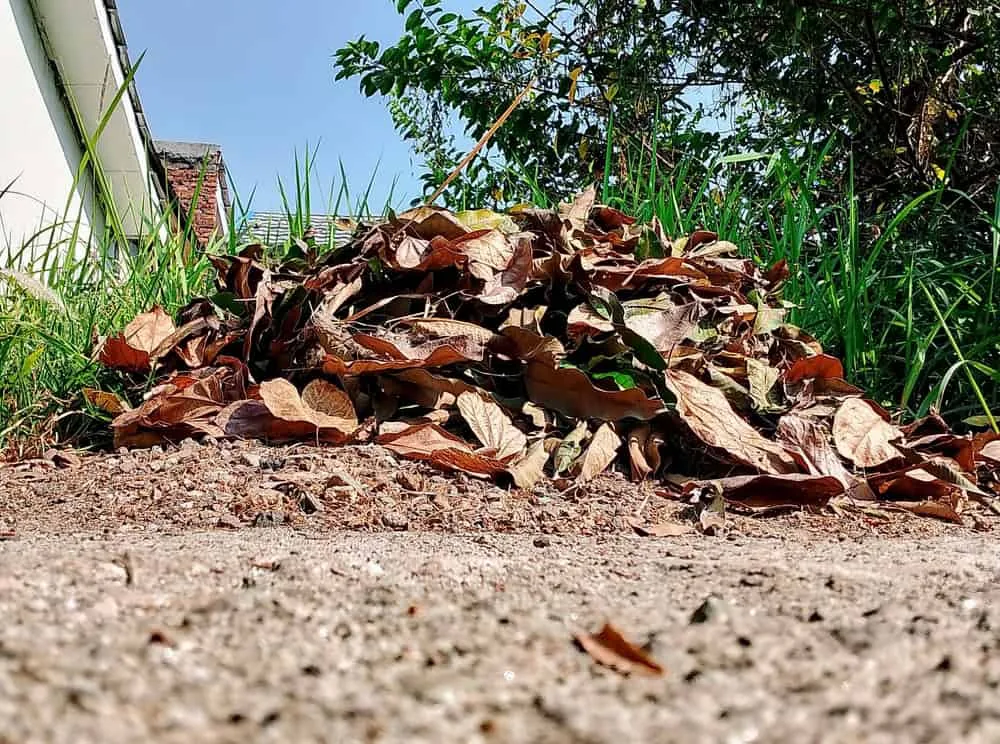
Insects can’t generate internal heat. Hundreds of native species enter diapause (a state of suspended development with reduced metabolic activity) right where they live, while monarchs migrate south to Central America. A thick blanket of fallen leaves acts as a thermal buffer to shield dormant invertebrates from harmful freeze-thaw cycles [3].
Different insect orders overwinter at their own stages of development. The woolly bear caterpillar overwinters beneath thick leaves, producing glycerol (a biological antifreeze) that allows its body fluids to freeze and thaw safely at temperatures as low as -90 degrees Fahrenheit [3]. Xerces Society emergence cages across 12 states confirmed that a single three-by-three-foot leaf patch shelters over 20 native insect species through winter [7]. Related ecological studies on ants and plant diversity show that layered ground habitats foster balanced insect communities [3].
Ground beetles in the family Carabidae hunt crane fly larvae in the litter, while rove beetles consume small gnats and mites. Firefly larvae hunt snails and cutworms before emerging as luminous adults in June [3]. Native bumblebee queens dig shallow burrows beneath fallen foliage in late autumn, relying on undisturbed leaf cover to survive until they establish new colonies in spring [7].
What Species Rely on Autumn Ground Cover?
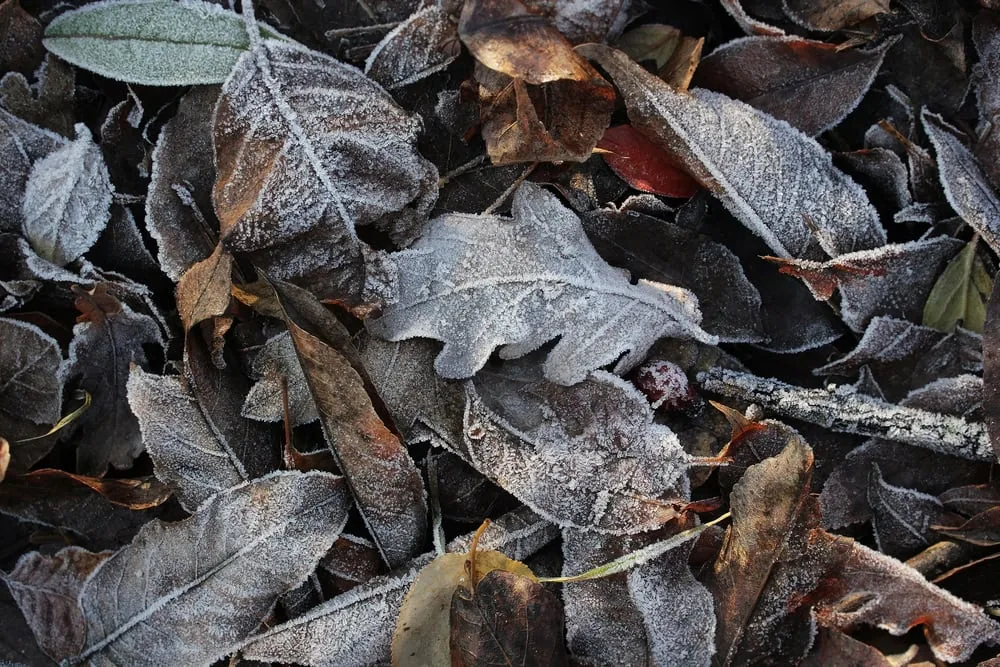
More than 94% of North American butterfly and moth species depend on leaf cover during winter, relying on fallen leaves to conceal their eggs, caterpillars, or cocoons [7]. Alan Branhagen reported severe Midwestern insect declines during an educational seminar. Branhagen serves as executive director of the Natural Land Institute. “Lepidoptera numbers have collapsed to the point where several species in the Midwest now are really endangered of extinction,” Branhagen said. He explained that autumn raking removes the foundation of pollinator survival, threatening species such as the Karner Blue butterfly. “So many of these things overwinter as caterpillars in the leaf litter,” Branhagen said. “People who are raking up their leaves don’t realize what they’re destroying, from fireflies to butterflies” [4].
Science writer Sharon Parry highlighted field sampling showing that autumn yard raking reduced spring-emerging arthropods by 17 percent in residential areas. The order Lepidoptera suffered a 40% decline in species richness and a 45% drop in total abundance, with leaf-mining and parasitic moths experiencing the sharpest losses. Silkworm moths spin intricate waterproof cocoons on fallen branches within the leaf litter, while foraging songbirds depend directly on those concealed caterpillars and spiders to survive early spring cold spells [3].
Wood frogs and salamanders burrow under damp leaf piles in forested yards, relying on constant moisture and insulation to survive subzero winter spells [7]. Centipedes deposit clutches beneath leaf piles, with mothers wrapping their bodies around eggs to shield them from predators [3]. Toads, lizards, shrews, and chipmunks hunt through leaf litter for dormant prey, turning garden beds into miniature nature reserves. Aerial surveys help map canopy density in large forests, though research on observing Earth’s greenery and shadows shows that ground-level biodiversity stays hidden beneath tree canopies [6].



Landfill Waste and the True Ecological Cost of Bagging
Data from the Environmental Protection Agency shows that yard trimmings, including leaves, account for around 13% of municipal solid waste in the United States [5]. Landfills receive 35 million tons of yard waste annually. This volume equals roughly 1.4 billion standard yard bags dumped into municipal waste sites that could otherwise hold non-compostable trash [2].
When leaves get buried deep under trash piles in municipal landfills, they decompose anaerobically without oxygen. This oxygen-starved decomposition produces methane, a greenhouse gas that traps 28 times more atmospheric heat than carbon dioxide over a 100-year timescale. In addition, gasoline leaf blowers and municipal transport trucks burn fossil fuels and release emissions that homeowners can avoid simply by letting autumn foliage decompose where it falls [5].
Reporting for Northern Public Radio, environment journalist Jess Savage documented how municipal educators are addressing suburban lawn traditions alongside news director Jenna Dooley. Amy Freeman organized public educational presentations with the Illinois Prairie Wild Ones Chapter and DeKalb Public Works after observing a similar initiative at the Bloomington Public Library. Freeman directs Adult Services at the DeKalb Public Library in northern Illinois. “I feel sometimes that having a nice lawn is tied to being rich or being manly or being some kind of elite,” Freeman said, urging community members to reconsider traditional lawn aesthetics and embrace small yard changes that protect overwintering pollinators [4].
How to Manage Fallen Leaves Without Harming Turfgrass
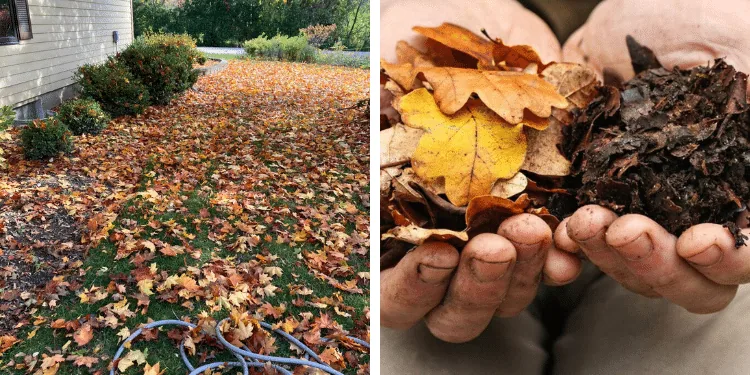
Property owners do not need to let dense leaf mats smother lawn grass to help the environment [5]. Running a mulching mower over dry leaves two or three times chops foliage into fine flakes no larger than half an inch. In field trials conducted by the Massachusetts Extension team, lawns treated with mulched leaves needed 30% less nitrogen fertilizer and showed 22% higher earthworm counts than raked control plots [7]. The Illinois Extension similarly advises homeowners to shred leaves directly onto lawn turf, where finely chopped flakes feed soil microbes and stop crabgrass seeds from taking root [4].
Moving excess fallen leaves into planting beds creates an ideal mulch layer. Horticultural author Linda Parker recommends spreading shredded leaves two to four inches deep around shrubs and perennials to block weed seed germination while keeping winter soil temperatures steady. Homeowners can also pile extra leaves in a corner to produce crumbly leaf mold over 12 to 18 months [5]. Passive piles break down slowly through fungal activity, yielding a soft soil conditioner [7].
Oak leaves decay slowly over 18 to 36 months due to high tannin content, making them durable mulch for woodland beds and host material for over 500 native moth species. Maple leaves break down in 6 to 12 months, delivering quick nutrient release that earthworms prefer. Fresh oak leaves have a mild acidity near pH 4.5 to 5.0, but they neutralize quickly during decomposition and will not harm established shrubs. Mixing fast- and slow-decomposing tree species creates a balanced, layered habitat that replicates natural forest floors [7].

When Does Backyard Leaf Cover Require Intervention?
Backyard leaf cover needs mindful management when diseased foliage, excessive lawn depth, or poor drainage threatens plant health. Leaves carrying fungal issues such as apple scab, dogwood anthracnose, or phlox powdery mildew should be removed and destroyed rather than left on garden beds. Furthermore, unbroken leaf layers thicker than four inches on lawn grass create soggy mats that suffocate turfgrass and promote snow mold during damp winters. Mowing thick layers chops dense foliage into manageable flakes that nourish soil without choking underlying turfgrass [7].
Homeowners must also consider practical safety guidelines when managing yard foliage in late autumn [7]. Landscape designer Patrick Lamb of Ecological Regenerative Landscape Designs advises keeping leaf piles away from building foundations [6]. Research from the Cornell Cooperative Extension confirms that leaves must remain at least 12 inches away from masonry walls and basement window frames. Pulling leaves two to three inches back from rose canes and tomato stems prevents collar rot in humid climates. In apartment courtyards, a single 32-gallon barrel of leaves turned once a month generates 10 gallons of leaf mold [7].
Municipal collection pickups in DeKalb conclude each November. Bags of yard waste travel to local farms for agricultural composting [4]. More than 42 states maintain right-to-mulch ordinances that protect ecological yard management, allowing property owners to keep organic matter on site [7]. By putting the rake away and allowing fallen leaves to decompose naturally, homeowners save weekend labor while protecting the living food web right outside their doors [6].
- ONLINE NEWS The New York Times. (2026, October 10). The underappreciated benefits of leaving fallen leaves alone. [Article Link]
- WEBSITE Bharath, P. (2026, August 5). 5 benefits of using fallen leaves in your garden. The National Wildlife Federation Blog. [Article Link]
- ONLINE NEWS Parry, S. (2025, November 17). The surprising reason you should leave fallen leaves alone. A-Z Animals. [Article Link]
- ONLINE NEWS Savage, J. (2025, November 14). Why leaving your leaves alone could have benefits for the ecosystem and your yard. NPR Illinois. [Article Link]
- WEBSITE Parker, L. (2025, September 9). Why you should leave fallen leaves on your soil (not bag them up!). Gardening Soul. [Article Link]
- WEBSITE Lamb, P. (2026, July 3). Why leaving fallen leaves benefits your garden and wildlife. Ecological Regenerative Landscape Designs. [Article Link]
- WEBSITE Oliver. (2026, January 16). Why leave fallen leaves: Science-backed benefits for gardens & ecosystems. Lifetips. [Article Link]
APA 7: PerEXP Teamworks. (2026). Why Fallen Leaves Shield Garden Soil and Overwintering Insects.


