





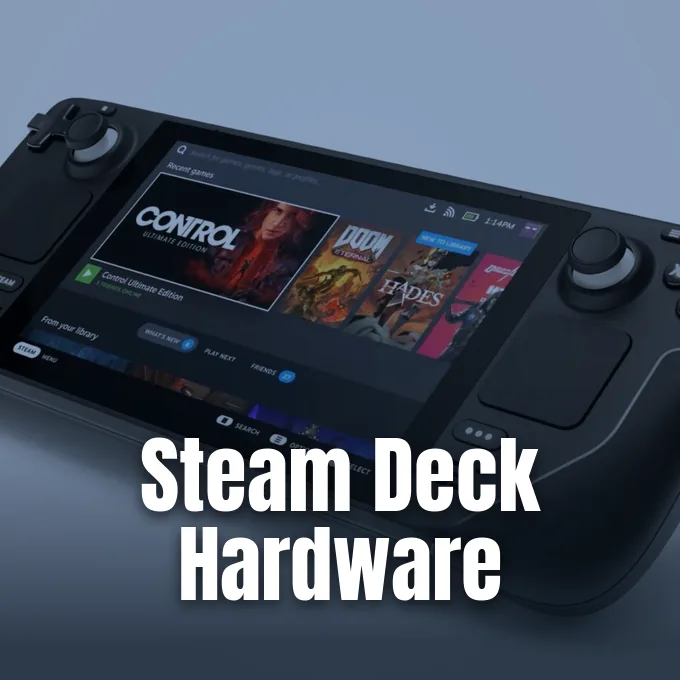
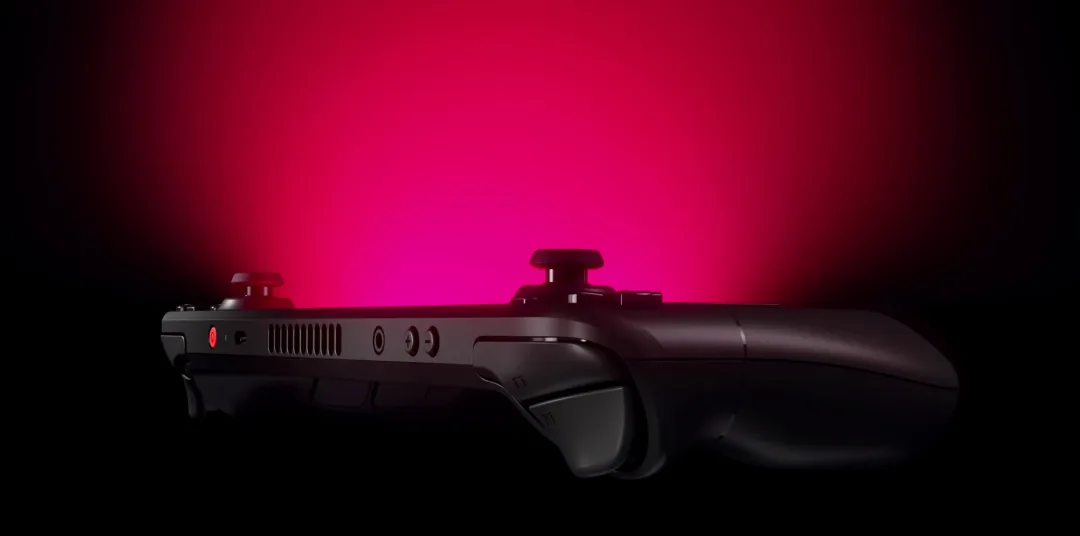
The Steam Deck is a portable personal computer created by Valve to run desktop games without relying on the Microsoft Windows operating system. It combines a custom AMD processor with SteamOS 3.0, an Arch Linux distribution that relies on the Proton compatibility layer to execute Windows software in real time [14]. Instead of asking software studios to rebuild their games for Linux, the handheld translates Windows graphic instructions and system calls in real time so desktop software runs directly from the user’s existing Steam library [15]. The system combines laptop-grade Steam Deck hardware with dedicated gamepad controls, bringing desktop PC libraries to a mobile form factor [4].
Lessons Learned From Steam Machines
Valve began exploring dedicated gaming hardware long before building its first handheld computer. In 2015, Valve president Gabe Newell launched the Steam Machines initiative alongside Alienware and other OEM partners. Those systems ran Debian Linux [15]. Commercial sales lagged because developers refused to write native Linux ports for major Windows releases [3].
Scott Dalton summarized the core dilemma. Dalton said “there was always kind of this classic chicken and egg problem with the Steam Machine”, as players wanted games before buying Linux hardware while studios waited for player adoption before supporting the operating system [3]. Valve pulled back on Steam Machines by April 2018 [14]. Designers Greg Coomer and Lawrence Yang pointed out that the handheld project grew directly out of the hard lessons learned from those earlier initiatives. When Valve developed the Steam Controller in 2015, early prototypes featured a small LCD screen in the center of the gamepad, where engineers considered placing Steam Link streaming parts [3].
Working with outside manufacturers had created friction, leading Valve to conclude that building hardware internally was the only way to deliver a unified product [3]. Developing the device in-house gave Valve direct authority over the physical case, the processor choices, and the system software [10]. The team drew upon audio lessons from the Valve Index VR headset and ergonomic feedback gathered from the Steam Controller trackpads [3]. Those experiences convinced Valve that handheld PC gaming was viable [10].
Custom AMD Silicon Architecture
At the heart of the system sits a custom accelerated processing unit developed in partnership with AMD [10]. The silicon die measures 163 mm². TSMC manufactured the chip on a 7-nanometer process node [14]. Inside Valve, engineers gave the chip the codename Aerith, naming it after the character Aerith Gainsborough from the classic game Final Fantasy VII. AMD referred to the same processor design as Van Gogh [12]. The processor combines a four-core, eight-thread CPU built on the Zen 2 architecture with an eight-compute-unit graphics core built on the RDNA 2 architecture. The CPU operates at clock speeds between 2.4 GHz and 3.5 GHz, while the GPU clocks between 1.0 GHz and 1.6 GHz based on thermal demands. The silicon delivers up to 1.6 teraflops of graphical compute performance, rivaling discrete graphics cards [2].
The processor operates within a flexible thermal envelope of 4 to 15 watts. Valve paired the APU with 16 gigabytes of LPDDR5 memory running in a quad-channel 32-bit layout [2]. The memory delivers an operating transfer speed of 5,500 MT/s and a combined memory bandwidth of 88 gigabytes per second [14].
When Valve first announced the hardware, early specifications listed dual-channel memory, but the company updated its technical documentation after observers clarified the quad-channel bus layout [9]. Valve engineer Yazan Aldehayyat said quad-channel memory prevents the CPU and GPU from fighting over memory bandwidth while sharing the same unified pool on the chip. Pierre-Loup Griffais said “this is the first time we’ve achieved the level of performance that is required to really run the latest generation of games without problems” [8].
Proton Compatibility on SteamOS
Custom hardware alone could not solve the fundamental challenge of running PC games without Windows [3]. For the operating system, Valve built SteamOS 3.0 on top of an Arch Linux foundation rather than the Debian base used in older versions. Arch Linux uses a rolling release model, which gave Valve faster access to the newest Linux kernel updates, graphic drivers, and hardware patches [15]. The critical software piece is Proton, an open-source compatibility layer developed by Valve that translates Windows application instructions into Linux instructions on the fly so games run without native code modifications [14].
Proton incorporates components from Wine, DXVK, and VKD3D to translate Windows DirectX graphic calls directly into native Vulkan code [15]. Because Proton translates system commands at runtime, users download and play existing Windows purchases on Linux without waiting for studios to recompile their code [14]. Games interact with the operating system as if running on Windows, while the Linux kernel manages hardware directly [15]. Recent platform work, such as the Steam Linux client 64-bit beta update, reflects how Valve continuously modernizes its software stack for 64-bit gaming. Valve also worked directly with Easy Anti-Cheat owner Epic Games and BattlEye so multiplayer titles run smoothly under Proton [4].
Digital forensics researchers have also studied this software environment. In an academic study, Eichhorn, Schneider, and Pugliese examined the file architecture and forensic artifacts generated by SteamOS and its customized Steam platform. Their analysis showed how user accounts, local save files, and game data remain structured across the underlying ext4 Linux file system [16].
Precision Controls on Steam Deck Hardware
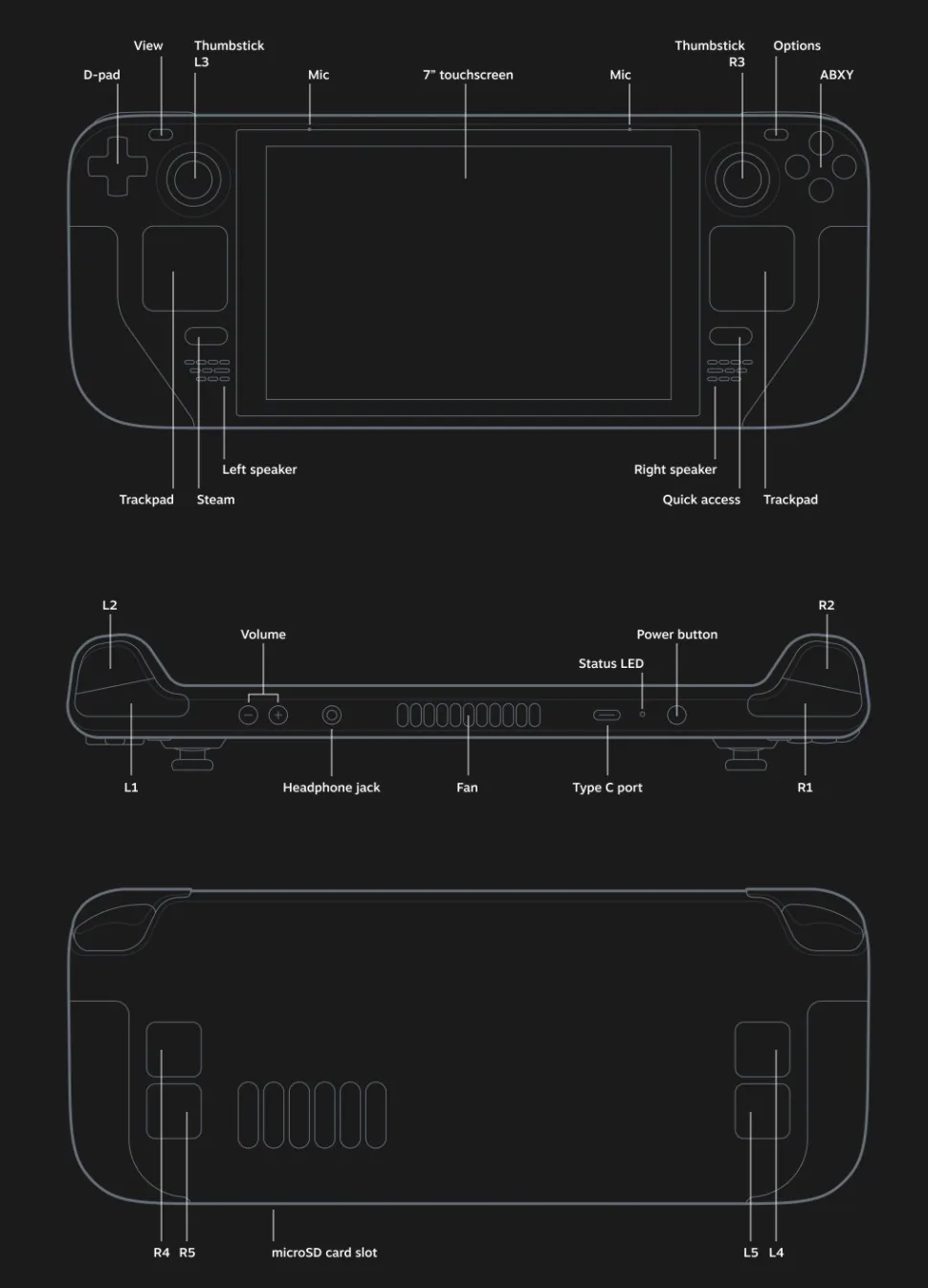
PC games rely on diverse control schemes that go beyond traditional console gamepads [10]. To support everything from real-time strategy games to first-person shooters, Valve built an extensive array of physical inputs into the Steam Deck hardware chassis [4]. The front of the unit features two full-size thumbsticks equipped with capacitive touch sensors, a directional pad, and standard ABXY face buttons [2]. Two 32.5-millimeter square trackpads sit beneath the thumbsticks, providing mouse cursor emulation with configurable pressure sensitivity and haptic feedback driven by dual linear resonant actuator motors [1]. Valve reported that these trackpads offer 55 percent better latency than the original Steam Controller pads [7].
The capacitive sensors on top of each thumbstick work directly with the internal 6-axis inertial measurement unit [2]. When a user rests their thumb on a stick, the system activates gyro aiming automatically, allowing subtle motion adjustments during shooting sequences without holding down a separate button [4]. Dual integrated microphones and stereo speakers handle in-game audio [2].
The rear of the casing includes four assignable grip buttons that let users trigger complex key bindings without lifting their thumbs from the primary controls. Analog shoulder triggers and digital bumpers complete the standard input layout [2]. Valve designer John Ikeda pointed out that the team refused to sacrifice the tactile feel and durability of the controls during manufacturing. Ikeda prioritized build quality [5]. The initial LCD model weighs approximately 669 grams. The front display uses an optically bonded 7-inch LCD with a resolution of 1280 by 800 pixels and ten-finger multitouch input [7].


Can Handheld Hardware Replace a Desktop PC?
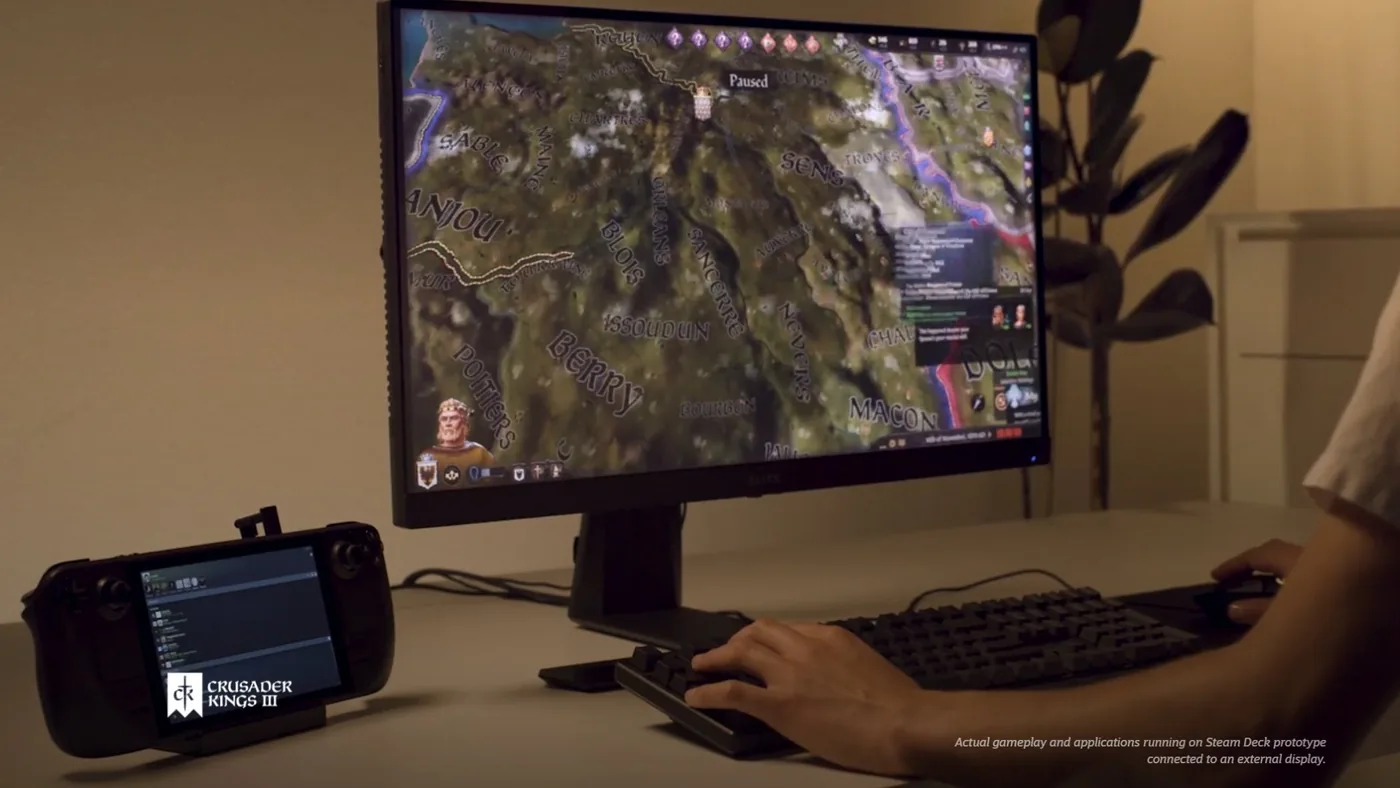
Valve designed the hardware as an open personal computer rather than a closed console ecosystem [3]. Could a portable system built around mobile power limits handle full PC workloads without major compromises? Valve chief executive Gabe Newell emphasized that open architecture is the defining superpower of the personal computer market [14]. Users are never locked inside the Steam storefront, and they can press a menu option to switch into a standard KDE Plasma desktop environment [15]. In desktop mode, users can connect peripherals, install independent web browsers, run productivity applications, and even install third-party digital storefronts [7].
The physical connection hub is a single USB-C port located on top of the handheld [4]. This port supports USB 3.2 Gen 2 data transfers and DisplayPort 1.4 alternate mode, allowing video output up to 8K at 60 Hz or 4K at 120 Hz to external monitors [2]. Valve sells an official docking stand equipped with Ethernet, HDMI 2.0, DisplayPort 1.4, and USB-A ports, but standard USB-C hubs also work without proprietary restrictions [7]. Unlike the Nintendo Switch, docking the device does not raise clock speeds or alter graphical performance. Designer Greg Coomer confirmed that the custom APU runs at its full operational capacity whether running on portable battery power or plugged into a desktop dock [1].
Multi-boot functionality in the BIOS allows advanced users to install alternative operating systems on the internal drive or boot them from a high-speed microSD card. The storage slot supports UHS-I microSD, SDXC, and SDHC formats formatted with ext4. Users can also use the device as a controller for another computer through Valve Remote Play [1].

Battery Management and Power Profiles
Balancing battery life against portable compute power was one of Valve’s primary engineering hurdles [10]. The original LCD model carries a 40 watt-hour battery, which Valve estimated would provide between 2 and 8 hours of continuous gameplay depending on workload intensity [7]. For lighter use cases, such as streaming via Remote Play, running 2D indie titles, or browsing the web, battery life reaches 7 to 8 hours. When running visually demanding 3D games like Portal 2, the unit provides about 4 hours of playtime at native frame rates, but limiting the display to 30 frames per second extends that duration to 5 or 6 hours [4].
To help users balance power consumption on a per-game basis, SteamOS incorporates quick-access performance menus [14]. Users adjust the maximum refresh rate, engage a system-level frame-rate cap, and dial the processor power draw between 4 and 15 watts [2]. Limiting processor wattage reduces fan noise and prevents heat build-up while playing less demanding games [10].
The operating system also features a fast suspend and resume mode built into the power button. The power button suspends gameplay mid-session into low-power sleep mode, waking moments later to resume gameplay without restarting the title [4]. The bundled charger outputs 45 watts [2]. Charging relies on the USB Power Delivery 3.0 standard with a 1.5-meter captive cable (about 4.9 feet) [1]. Because the hardware draws power through standard USB-C protocols, users can recharge the console using compatible third-party laptop chargers or high-capacity power banks [7].
Steam Deck Hardware Refinements in OLED
In November 2023, Valve released an upgraded revision that refined the display, internal cooling, and power efficiency [11]. The updated unit replaced the 7-nanometer Aerith chip with a 6-nanometer AMD processor codenamed Sephiroth. Continuing Valve’s playful nods to Final Fantasy VII, the Sephiroth revision shrank manufacturing dimensions to generate less heat and draw less power while maintaining the same target processing speed [12]. The system RAM runs at 6,400 MT/s [2].
The central improvement was the new 7.4-inch HDR OLED panel, replacing the original 7-inch LCD screen. The OLED display achieves a peak brightness of 1,000 nits in HDR mode and 600 nits in standard dynamic range, backed by a contrast ratio exceeding 1,000,000 to 1 and 110 percent coverage of the P3 color gamut [2]. The refresh rate climbed from 60 Hz to 90 Hz, providing noticeably smoother animations in titles that exceed 60 frames per second. Because the OLED panel is physically thinner than the older LCD stack, Valve fitted a larger 50 watt-hour battery inside the chassis while shaving 29 grams off the total system weight [11]. Battery tests show the OLED model lasting between 3 and 12 hours depending on the game [2].
Internal connectivity also received major upgrades, including a dedicated Bluetooth 5.3 module with its own antenna and tri-band Wi-Fi 6E support [2]. Despite these physical improvements, Valve made clear that a full next-generation successor would require a true performance leap. While global memory shortages and market shifts, like the Valve RAM crisis, prompted questions about future manufacturing, Valve remained committed to waiting for silicon advancements that deliver substantial generational gains before building a true sequel. Designer Lawrence Yang said the team wants a distinct computing leap [14].
Verified Games in the Steam Catalog
To help players navigate compatibility across thousands of catalog releases, Valve introduced the Deck Verified program. The review system tests games against four primary standards: input support using default controls, readable text on the smaller display, seamless graphical defaults, and proper Proton runtime support. Valve places evaluated games into four categories: Verified for titles that run smoothly out of the box, Playable for games requiring minor manual tweaks, Unsupported for software that fails to run, and Unknown for untested games [4]. Popular action titles like Control showed early on that complex modern games could operate on mobile silicon [13].
Storage capacity plays an important role in which titles users can install on the go [13]. The original launch lineup offered a base 64 GB eMMC model for $399, with 256 GB NVMe SSD ($529) and 512 GB NVMe SSD ($649) configurations [4]. Large modern games quickly fill basic storage space: Star Wars Jedi: Fallen Order requires 55 gigabytes of drive space, while releases like Doom Eternal take up 80 gigabytes. All models feature a high-speed microSD slot, allowing users to expand their game library using inexpensive memory cards [13]. The OLED refresh later streamlined storage options, offering 512 GB and 1 TB SSD tiers while keeping the 256 GB model as the budget entry point [11].
Industry figures responded with strong enthusiasm to Valve’s Steam Deck hardware strategy. Epic Games chief executive Tim Sweeney called the launch an “amazing move” that pushed PC gaming into new territory [6]. Gabe Newell acknowledged that setting the entry price at $399 was “painful” financially, but he called it a “critical” move to establish the handheld PC market for the entire industry [5]. Newell said Valve expects to sell millions of units over the long term, creating a sustainable hardware category that benefits players and developers alike [6].
- WEBSITE Valve Corporation. (2022). Steam Deck FAQ. Steam Deck. [Article Link]
- WEBSITE Valve Corporation. (2022). Steam Deck Tech Specs. Steam Deck. [Article Link]
- ONLINE NEWS Marks, T. (2021). Valve Explains How The Failure of Steam Machines Helped Build The Steam Deck. IGN. [Article Link]
- ONLINE NEWS Peters, J., Lawler, R., Gartenberg, C., & Hollister, S. (2021). Valve’s gaming handheld is called the Steam Deck and it’s shipping in December. The Verge. [Article Link]
- ONLINE NEWS Bailey, K. (2021). Gabe Newell: Hitting Steam Deck Price Was ‘Painful’ but ‘Critical’. IGN. [Article Link]
- ONLINE NEWS Chalk, A. (2021). Gabe Newell expects Steam Deck to sell ‘millions of units’ but the pricing was ‘painful’ to pick. PC Gamer. [Article Link]
- ONLINE NEWS Phillips, T. (2021). Valve announces Steam Deck, a £349 handheld PC. Eurogamer. [Article Link]
- ONLINE NEWS Weatherbed, J. (2021). Valve claims the Steam Deck can handle any game you throw at it, including AAAs. TechRadar. [Article Link]
- ONLINE NEWS Loeffler, J. (2021). Steam Deck gets a spec update, and it’s good news for gamers. TechRadar. [Article Link]
- ONLINE NEWS Castle, K. (2021). The Steam Deck interview: Valve’s designers on all things hardware, software, and knowing when to stop. Rock Paper Shotgun. [Article Link]
- ONLINE NEWS Archer, J. (2023). Valve announce the Steam Deck OLED with an upgraded screen and longer battery life. Rock Paper Shotgun. [Article Link]
- ONLINE NEWS Bailey, D. (2023). Steam Deck OLED kills the original’s Aerith processor with a Sephiroth upgrade as Valve flexes its Final Fantasy 7 fandom. GamesRadar+. [Article Link]
- ONLINE NEWS Marshall, C. (2021). The cheapest Steam Deck has a great price, but you’re gonna need more storage. Polygon. [Article Link]
- WEBSITE Wikipedia contributors. (2026). Steam Deck. Wikipedia. [Article Link]
- WEBSITE Wikipedia contributors. (2026). SteamOS. Wikipedia. [Article Link]
- ACADEMIC JOURNAL Eichhorn, M., Schneider, J., & Pugliese, G. (2024). Well Played, Suspect! – Forensic examination of the handheld gaming console “Steam Deck”. Forensic Science International: Digital Investigation, 48, 301688. [Article Link]


